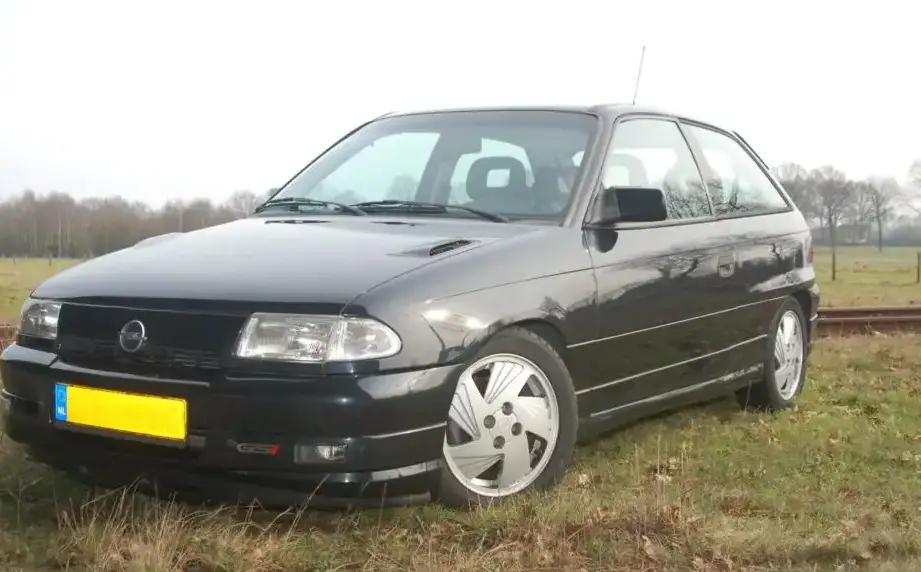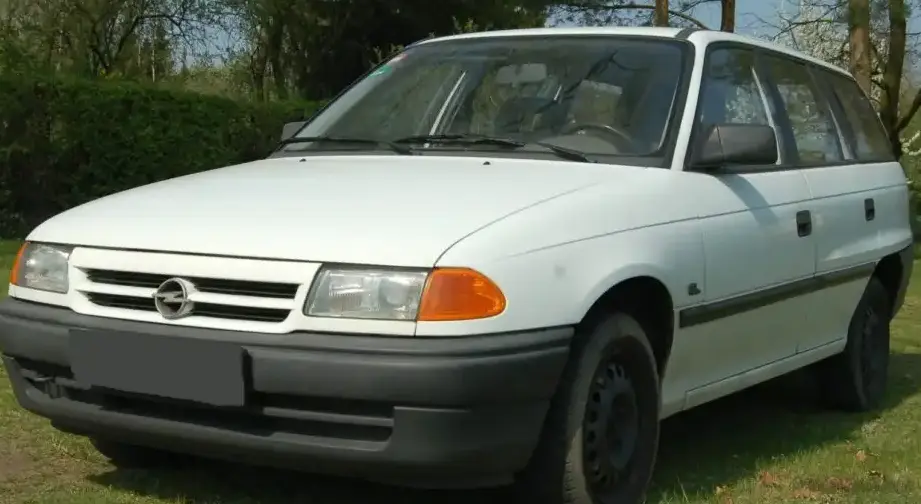
The Opel Astra F Caravan 1.8i 16V, produced from June 1993 to 1994, represented a significant offering within the broader Astra F (1991-1998) range. This variant, a five-door station wagon (estate), was positioned as a practical and reasonably well-equipped family vehicle, appealing to buyers seeking space and versatility. It was part of the first generation of the Astra to be offered as a wagon, expanding the model’s appeal beyond the hatchback. The Astra F series itself was a crucial model for Opel, representing a substantial leap forward in design, safety, and technology compared to its predecessor, the Astra GTE. This particular 1.8i 16V trim aimed to balance performance with affordability, slotting in between the base models and the more powerful, performance-oriented versions.
Technical Specifications
| Brand | Opel |
| Model | Astra |
| Generation | Astra F Caravan |
| Type (Engine) | 1.8i 16V (125 Hp) |
| Start of production | June, 1993 |
| End of production | 1994 |
| Powertrain Architecture | Internal Combustion engine |
| Body type | Station wagon (estate) |
| Seats | 5 |
| Doors | 5 |
| Fuel consumption (urban) | 11.5 l/100 km (20.5 US mpg, 24.6 UK mpg, 8.7 km/l) |
| Fuel consumption (extra urban) | 7.6 l/100 km (30.9 US mpg, 37.2 UK mpg, 13.2 km/l) |
| Fuel consumption (combined) | 9.9 l/100 km (23.8 US mpg, 28.5 UK mpg, 10.1 km/l) |
| Fuel Type | Petrol (Gasoline) |
| Acceleration 0 – 100 km/h | 9.8 sec |
| Acceleration 0 – 62 mph | 9.8 sec |
| Acceleration 0 – 60 mph | 9.3 sec |
| Maximum speed | 200 km/h (124.27 mph) |
| Weight-to-power ratio | 9.2 kg/Hp, 109.2 Hp/tonne |
| Weight-to-torque ratio | 6.8 kg/Nm, 146.7 Nm/tonne |
| Power | 125 Hp @ 5600 rpm |
| Power per litre | 69.5 Hp/l |
| Torque | 168 Nm @ 4800 rpm (123.91 lb.-ft. @ 4800 rpm) |
| Engine layout | Front, Transverse |
| Engine Model/Code | C18XE |
| Engine displacement | 1799 cm3 (109.78 cu. in.) |
| Number of cylinders | 4 |
| Engine configuration | Inline |
| Cylinder Bore | 81.6 mm (3.21 in.) |
| Piston Stroke | 86 mm (3.39 in.) |
| Compression ratio | 10.8:1 |
| Number of valves per cylinder | 4 |
| Fuel injection system | Multi-port manifold injection |
| Engine aspiration | Naturally aspirated engine |
| Valvetrain | DOHC |
| Engine oil capacity | 4 l (4.23 US qt | 3.52 UK qt) |
| Coolant | 7 l (7.4 US qt | 6.16 UK qt) |
| Kerb Weight | 1145 kg (2524.29 lbs.) |
| Max. weight | 1640 kg (3615.58 lbs.) |
| Max load | 495 kg (1091.29 lbs.) |
| Trunk (boot) space – minimum | 500 l (17.66 cu. ft.) |
| Trunk (boot) space – maximum | 1630 l (57.56 cu. ft.) |
| Fuel tank capacity | 50 l (13.21 US gal | 11 UK gal) |
| Length | 4278 mm (168.43 in.) |
| Width | 1688 mm (66.46 in.) |
| Width including mirrors | 1795 mm (70.67 in.) |
| Height | 1475 mm (58.07 in.) |
| Wheelbase | 2517 mm (99.09 in.) |
| Front track | 1424 mm (56.06 in.) |
| Rear (Back) track | 1423 mm (56.02 in.) |
| Ride height (ground clearance) | 135 mm (5.31 in.) |
| Drag coefficient (Cd) | 0.34 |
| Minimum turning circle | 10.5 m (34.45 ft.) |
| Drivetrain Architecture | ICE to front wheels |
| Drive wheel | Front wheel drive |
| Number of gears | 5 gears, manual transmission |
| Front suspension | Wishbone |
| Rear suspension | Coil spring |
| Front brakes | Ventilated discs |
| Rear brakes | Drum |
| Assisting systems | ABS (Anti-lock braking system) |
| Steering type | Steering rack and pinion |
| Tires size | 175/65 R14 82H |
| Wheel rims size | 5.5J x 14 ET49 |
Powertrain & Engine Architecture
The heart of the Astra F Caravan 1.8i 16V was the C18XE engine, a 1.8-liter inline-four cylinder powerplant. This engine was a member of Opel’s ‘E’ family of engines, known for their robustness and relatively simple design. The ‘XE’ designation indicated a 16-valve, dual overhead camshaft (DOHC) configuration, which contributed to its improved breathing and power output compared to earlier 8-valve versions. Fuel delivery was handled by a Bosch Motronic multi-port fuel injection system, optimizing fuel atomization and combustion efficiency. The engine produced 125 horsepower at 5600 rpm and 168 Nm (124 lb-ft) of torque at 4800 rpm. The engine’s 10.8:1 compression ratio was relatively high for the time, contributing to its performance. The transmission was a five-speed manual, providing a good balance between fuel economy and driver control. While an automatic transmission was available on other Astra F models, it wasn’t commonly paired with the 1.8i 16V, making the manual the predominant choice.
Driving Characteristics
The 1.8i 16V offered a noticeable step up in performance compared to the base 1.4-liter models. Acceleration to 60 mph took around 9.3 seconds, and it could reach a top speed of 200 km/h (124 mph). While not a sports car, the engine provided sufficient power for comfortable highway cruising and overtaking. The five-speed manual transmission allowed drivers to keep the engine in its optimal power band. Compared to the more powerful 2.0-liter 16V or the turbocharged versions, the 1.8i 16V felt less urgent, but it offered a more forgiving and accessible driving experience. The gear ratios were well-matched for everyday driving, providing adequate acceleration in each gear. The Caravan’s estate body style did add some weight, slightly impacting acceleration and handling compared to the hatchback version.
Equipment & Trim Levels
The Astra F Caravan 1.8i 16V typically came with a reasonable level of standard equipment. This included power steering, central locking, electric front windows, and an adjustable steering column. Interior upholstery was usually cloth, with a relatively simple but functional dashboard layout. Optional extras included air conditioning, a sunroof, and upgraded audio systems. The trim level often dictated the quality of the interior materials and the availability of additional features. The 1.8i 16V was generally positioned as a mid-range trim, offering a good balance of features and affordability.
Chassis & Braking
The Astra F Caravan featured a MacPherson strut front suspension and a coil spring rear suspension. This setup provided a comfortable ride while maintaining reasonable handling characteristics. The front brakes were ventilated discs, offering good stopping power, while the rear brakes were drums. ABS (Anti-lock Braking System) was often included as standard equipment, enhancing safety. The chassis was relatively lightweight, contributing to the car’s agility. Stabilizer bars were fitted to both the front and rear axles to reduce body roll during cornering.
Market Reception & Comparison
The Astra F Caravan 1.8i 16V was generally well-received by automotive critics. It was praised for its spacious interior, practical estate body style, and reasonably refined engine. Fuel economy was considered acceptable for its class, averaging around 28.5 mpg (UK) or 23.8 mpg (US) in combined driving. Compared to the 1.4-liter models, the 1.8i 16V offered a significant performance improvement, making it a more appealing option for drivers who frequently carried passengers or cargo. However, it wasn’t as sporty or fuel-efficient as the diesel versions, such as the 1.7 TDI. The 1.8i 16V offered a good compromise between performance, practicality, and affordability.
Legacy
The Opel Astra F Caravan 1.8i 16V has proven to be a relatively reliable vehicle over the long term. The C18XE engine is known for its durability, and with regular maintenance, it can withstand high mileage. Parts availability is generally good, making it relatively easy and affordable to keep these cars on the road. Today, the Astra F Caravan 1.8i 16V is a popular choice among classic car enthusiasts and those seeking a practical and affordable used vehicle. Its spacious interior, comfortable ride, and relatively simple mechanicals make it a compelling option for those looking for a dependable and versatile estate car.