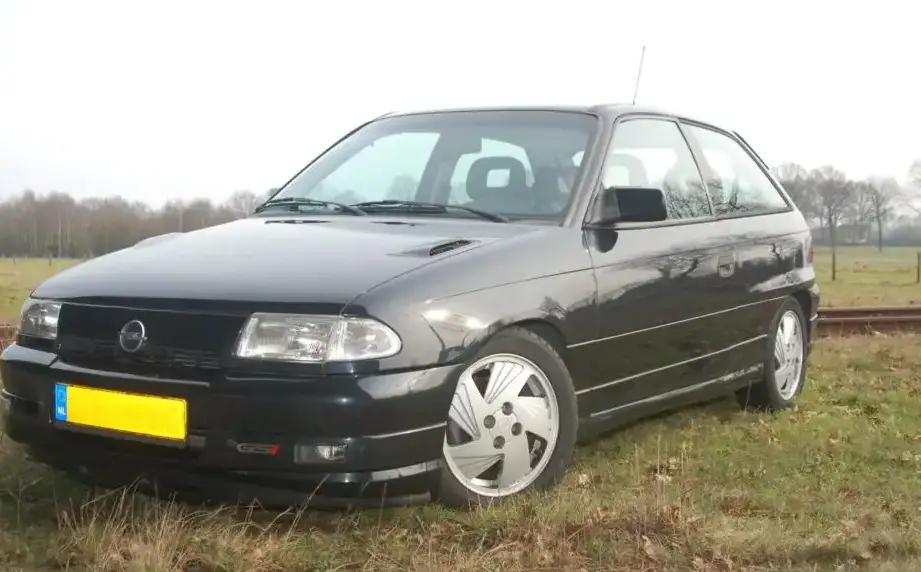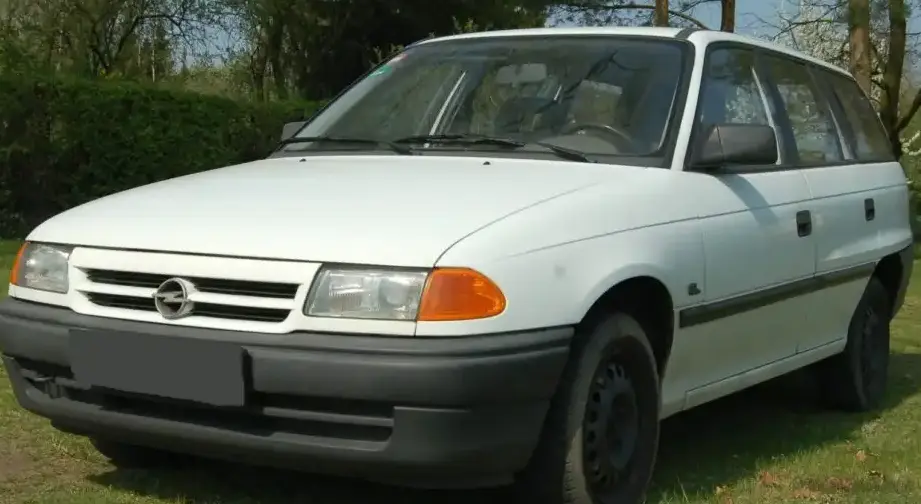
The Opel Astra F Caravan 1.8i (90 hp) Automatic, produced between October 1991 and July 1994, represented an entry-level offering within the broader Astra F Caravan range. Positioned as a practical and affordable family vehicle, it catered to buyers prioritizing comfort and ease of use over outright performance. This variant was part of the Astra F generation (1991-1998), a significant model for Opel, and utilized the GM T-platform, also known internally as the 1HX0/A3 platform. The Caravan body style, a station wagon or estate, was popular in Europe for its increased cargo capacity, making it a versatile choice for families and those needing to transport larger items.
Technical Specifications
| Brand | Opel |
| Model | Astra |
| Generation | Astra F Caravan |
| Type (Engine) | 1.8i (90 Hp) Automatic |
| Start of production | October, 1991 |
| End of production | July, 1994 |
| Powertrain Architecture | Internal Combustion engine |
| Body type | Station wagon (estate) |
| Seats | 5 |
| Doors | 5 |
| Fuel consumption (urban) | 10.6 l/100 km (22.2 US mpg, 26.6 UK mpg, 9.4 km/l) |
| Fuel consumption (extra urban) | 7.3 l/100 km (32.2 US mpg, 38.7 UK mpg, 13.7 km/l) |
| Fuel consumption (combined) | 9.4 l/100 km (25 US mpg, 30.1 UK mpg, 10.6 km/l) |
| Fuel Type | Petrol (Gasoline) |
| Acceleration 0 – 100 km/h | 15 sec |
| Acceleration 0 – 62 mph | 15 sec |
| Acceleration 0 – 60 mph | 14.3 sec |
| Maximum speed | 170 km/h (105.63 mph) |
| Weight-to-power ratio | 12.4 kg/Hp, 80.4 Hp/tonne |
| Weight-to-torque ratio | 7.7 kg/Nm, 129.5 Nm/tonne |
| Power | 90 Hp @ 5400 rpm |
| Power per litre | 50.1 Hp/l |
| Torque | 145 Nm @ 3000 rpm (106.95 lb.-ft. @ 3000 rpm) |
| Engine layout | Front, Transverse |
| Engine Model/Code | C18NZ |
| Engine displacement | 1796 cm3 (109.6 cu. in.) |
| Number of cylinders | 4 |
| Engine configuration | Inline |
| Cylinder Bore | 84.8 mm (3.34 in.) |
| Piston Stroke | 79.5 mm (3.13 in.) |
| Compression ratio | 9.2:1 |
| Number of valves per cylinder | 2 |
| Fuel injection system | Single-point injection |
| Engine aspiration | Naturally aspirated engine |
| Valvetrain | SOHC |
| Engine oil capacity | 4 l (4.23 US qt | 3.52 UK qt) |
| Coolant | 6.9 l (7.29 US qt | 6.07 UK qt) |
| Kerb Weight | 1120 kg (2469.18 lbs.) |
| Max. weight | 1625 kg (3582.51 lbs.) |
| Max load | 505 kg (1113.33 lbs.) |
| Trunk (boot) space – minimum | 500 l (17.66 cu. ft.) |
| Trunk (boot) space – maximum | 1630 l (57.56 cu. ft.) |
| Fuel tank capacity | 50 l (13.21 US gal | 11 UK gal) |
| Length | 4278 mm (168.43 in.) |
| Width | 1688 mm (66.46 in.) |
| Width including mirrors | 1795 mm (70.67 in.) |
| Height | 1475 mm (58.07 in.) |
| Wheelbase | 2517 mm (99.09 in.) |
| Front track | 1424 mm (56.06 in.) |
| Rear (Back) track | 1423 mm (56.02 in.) |
| Ride height (ground clearance) | 135 mm (5.31 in.) |
| Drag coefficient (Cd) | 0.34 |
| Minimum turning circle | 10.5 m (34.45 ft.) |
| Drivetrain Architecture | ICE to front wheels |
| Drive wheel | Front wheel drive |
| Number of gears | 4 |
| Gearbox type | automatic transmission |
| Front suspension | Wishbone |
| Rear suspension | Coil spring |
| Front brakes | Ventilated discs |
| Rear brakes | Drum |
| Steering type | Steering rack and pinion |
| Tires size | 175/65 R14 82T |
| Wheel rims size | 5.5J x 14 |
Powertrain & Engine Architecture
The heart of the Astra F Caravan 1.8i Automatic was the C18NZ engine, an 1.8-liter inline-four cylinder gasoline engine. This engine featured a single-point fuel injection system (throttle body injection), a relatively simple and cost-effective technology for the time. The engine utilized a single overhead camshaft (SOHC) valvetrain, operating two valves per cylinder. The C18NZ was known for its durability, but its single-point injection system limited its overall efficiency and power output compared to later multi-point injection systems. The engine produced 90 horsepower at 5400 rpm and 145 Nm (107 lb-ft) of torque at 3000 rpm. Paired with this engine was a four-speed automatic transmission, providing smooth, albeit not particularly quick, gear changes. This transmission was chosen to appeal to drivers seeking convenience and ease of driving, particularly in urban environments.
Driving Characteristics
The 1.8i Automatic offered a comfortable, but uninspiring, driving experience. Acceleration from 0-60 mph took around 14.3 seconds, and top speed was limited to 170 km/h (106 mph). The automatic transmission, while convenient, contributed to a noticeable loss of power compared to the five-speed manual version. Gear ratios were optimized for fuel economy and smooth cruising rather than spirited driving. The engine felt strained when pushed hard, and overtaking maneuvers required careful planning. Compared to the more powerful 2.0-liter 16V or the torquey 1.7 Diesel versions, the 1.8 Automatic was significantly slower. However, it provided a more relaxed driving experience, particularly on long journeys.
Equipment & Trim Levels
The 1.8i Automatic trim typically included basic features such as central locking, power steering, and an adjustable steering column. Interior upholstery was usually cloth, and the dashboard featured a simple, functional design. Optional extras included air conditioning, electric windows, and a radio/cassette player. The trim level was generally considered to be mid-range, offering a good balance of features and affordability. It was positioned above the base models but below the more luxurious trims with upgraded interiors and additional equipment.
Chassis & Braking
The Astra F Caravan featured a front-wheel-drive layout with independent wishbone suspension at the front and a coil spring rear suspension. The braking system consisted of ventilated discs on the front wheels and drum brakes on the rear. This configuration was typical for vehicles in this weight class during the early 1990s. The suspension provided a comfortable ride, absorbing bumps and imperfections in the road surface effectively. However, the rear drum brakes offered less stopping power and fade resistance compared to disc brakes.
Market Reception & Comparison
The Astra F Caravan 1.8i Automatic was generally well-received as a practical and affordable family vehicle. Critics praised its spacious interior, comfortable ride, and fuel efficiency. However, the engine’s lack of power and the automatic transmission’s sluggishness were common criticisms. Compared to the manual transmission version, the automatic offered slightly worse fuel economy. The 1.7 Diesel version provided significantly better fuel economy, while the 2.0-liter 16V offered superior performance. Despite these drawbacks, the 1.8i Automatic remained a popular choice for buyers prioritizing comfort and convenience.
Legacy
The C18NZ engine and the four-speed automatic transmission used in the Astra F Caravan 1.8i are generally considered reliable, although age and maintenance history are crucial factors. Parts availability is still reasonable, making repairs relatively straightforward. Today, these vehicles are often found as affordable used cars, appealing to those seeking a classic European station wagon. While not a performance icon, the Astra F Caravan 1.8i Automatic represents a practical and dependable vehicle from a significant era in Opel’s history, offering a glimpse into the automotive landscape of the early 1990s.