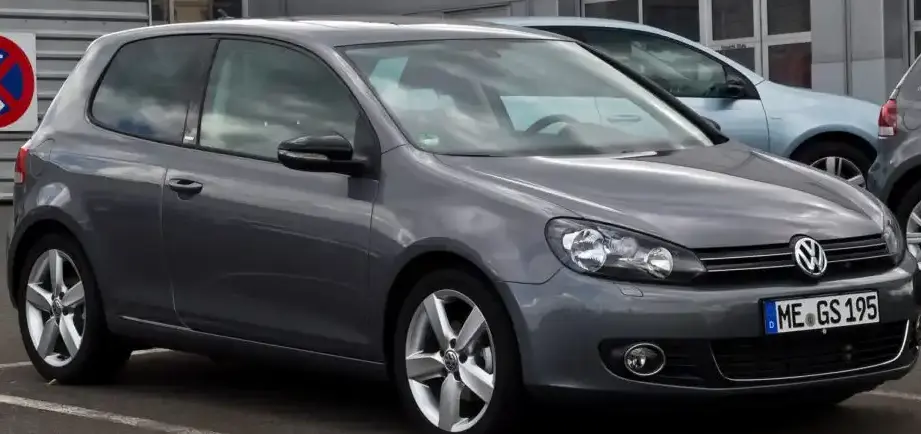
The Volkswagen Golf VI 1.2 TSI (105 hp) 3-door hatchback, produced from 2009 to 2012, represented an entry point into the sixth generation of Volkswagen’s iconic Golf model range. Positioned as a fuel-efficient and accessible option, it catered to buyers seeking a practical and modern hatchback without the higher costs associated with more powerful engines or premium trim levels. This variant was primarily sold in Europe, where smaller displacement, turbocharged engines were increasingly popular due to tax incentives and fuel economy concerns. It sat below the 1.4 TSI and 1.6 TDI models in the lineup, offering a balance between affordability and acceptable performance.
Technical Specifications
| Brand | Volkswagen |
| Model | Golf |
| Generation | Golf VI (3-door) |
| Type (Engine) | 1.2 TSI (105 Hp) |
| Start of production | 2009 |
| End of production | 2012 |
| Powertrain Architecture | Internal Combustion engine |
| Body type | Hatchback |
| Seats | 5 |
| Doors | 3 |
| Fuel consumption (urban) | 7.1 l/100 km (33.1 US mpg, 39.8 UK mpg, 14.1 km/l) |
| Fuel consumption (extra urban) | 4.9 l/100 km (48 US mpg, 57.6 UK mpg, 20.4 km/l) |
| Fuel consumption (combined) | 5.7 l/100 km (41.3 US mpg, 49.6 UK mpg, 17.5 km/l) |
| CO2 emissions | 134 g/km |
| Fuel Type | Petrol (Gasoline) |
| Acceleration 0 – 100 km/h | 10.6 sec |
| Acceleration 0 – 62 mph | 10.6 sec |
| Acceleration 0 – 60 mph | 10.1 sec |
| Maximum speed | 190 km/h (118.06 mph) |
| Emission standard | Euro 5 |
| Weight-to-power ratio | 11 kg/Hp, 90.7 Hp/tonne |
| Weight-to-torque ratio | 6.6 kg/Nm, 151.1 Nm/tonne |
| Power | 105 Hp @ 5000 rpm |
| Power per litre | 87.7 Hp/l |
| Torque | 175 Nm @ 1550-4100 rpm (129.07 lb.-ft. @ 1550-4100 rpm) |
| Engine layout | Front, Transverse |
| Engine Model/Code | CBZB |
| Engine displacement | 1197 cm3 (73.05 cu. in.) |
| Number of cylinders | 4 |
| Engine configuration | Inline |
| Number of valves per cylinder | 2 |
| Fuel injection system | Direct injection |
| Engine aspiration | Turbocharger, Intercooler |
| Valvetrain | SOHC |
| Engine oil capacity | 3.6 l (3.8 US qt | 3.17 UK qt) |
| Kerb Weight | 1158 kg (2552.95 lbs.) |
| Max. weight | 1790 kg (3946.27 lbs.) |
| Max load | 632 kg (1393.32 lbs.) |
| Trunk (boot) space – minimum | 350 l (12.36 cu. ft.) |
| Trunk (boot) space – maximum | 1305 l (46.09 cu. ft.) |
| Fuel tank capacity | 55 l (14.53 US gal | 12.1 UK gal) |
| Max. roof load | 75 kg (165.35 lbs.) |
| Permitted trailer load with brakes (8%) | 1500 kg (3306.93 lbs.) |
| Permitted trailer load with brakes (12%) | 1200 kg (2645.55 lbs.) |
| Permitted trailer load without brakes | 610 kg (1344.82 lbs.) |
| Permitted towbar download | 75 kg (165.35 lbs.) |
| Length | 4199 mm (165.31 in.) |
| Width | 1779 mm (70.04 in.) |
| Width including mirrors | 2048 mm (80.63 in.) |
| Height | 1480 mm (58.27 in.) |
| Wheelbase | 2578 mm (101.5 in.) |
| Front track | 1541 mm (60.67 in.) |
| Rear track | 1514 mm (59.61 in.) |
| Ride height (ground clearance) | 150 mm (5.91 in.) |
| Minimum turning circle | 10.9 m (35.76 ft.) |
| Approach angle | 13.1° |
| Departure angle | 17.6° |
| Ramp-over angle | 8.8° |
| Drivetrain Architecture | The Internal combustion engine (ICE) drives the front wheels of the vehicle. |
| Drive wheel | Front wheel drive |
| Number of gears and type of gearbox | 6 gears, manual transmission |
| Front suspension | Independent type McPherson, Transverse stabilizer |
| Rear suspension | Independent multi-link suspension, Transverse stabilizer |
| Front brakes | Ventilated discs |
| Rear brakes | Disc |
| Assisting systems | ABS (Anti-lock braking system) |
| Steering type | Steering rack and pinion |
| Power steering | Electric Steering |
| Tires size | 195/65 R 15 |
| Wheel rims size | 6 J x 15 |
Powertrain & Engine Architecture
The heart of the Golf VI 1.2 TSI was the CBZB engine code, a 1.2-liter inline-four cylinder gasoline engine. This engine utilized direct fuel injection and a turbocharger with an intercooler to achieve a relatively high output for its size. The direct injection system, a key feature, allowed for precise fuel delivery, improving efficiency and reducing emissions. The single overhead camshaft (SOHC) valvetrain kept the engine relatively simple and cost-effective. The turbocharger boosted power output, compensating for the small displacement. The engine’s 175 Nm (129 lb-ft) of torque was available from a low 1550 rpm, providing decent responsiveness in everyday driving situations. This variant was typically paired with a 6-speed manual transmission, although a 7-speed dual-clutch gearbox (DSG) was also available as an option. The DSG offered quicker shifts and a more refined driving experience, but at an additional cost.
Driving Characteristics
The 1.2 TSI 105 hp engine, when coupled with the manual transmission, provided adequate performance for typical urban and highway driving. Acceleration from 0-60 mph took around 10.1 seconds, and the top speed was 190 km/h (118 mph). While not particularly sporty, the engine offered sufficient power for overtaking maneuvers and maintaining comfortable cruising speeds. The low-end torque made it feel more responsive than its horsepower figure might suggest. Compared to the more powerful 1.4 TSI, the 1.2 TSI felt noticeably slower, especially at higher speeds. However, it offered a more economical driving experience. The gear ratios in the 6-speed manual were well-chosen, providing a good balance between acceleration and fuel efficiency. The steering was light and precise, making it easy to maneuver in tight spaces.
Equipment & Trim Levels
The Golf VI 1.2 TSI 3-door typically came with a reasonable level of standard equipment. This included power windows, central locking, air conditioning, and an audio system with CD player. Safety features such as ABS, airbags, and electronic stability control were also standard. Higher trim levels, such as Trendline and Comfortline, added features like alloy wheels, climate control, and upgraded upholstery. Optional extras included a sunroof, parking sensors, and a navigation system. The interior was generally well-built and functional, with a focus on practicality rather than luxury. The 3-door configuration offered a slightly sportier look compared to the 5-door model, but it also meant sacrificing some rear passenger access.
Chassis & Braking
The Golf VI utilized an independent McPherson strut suspension at the front and an independent multi-link suspension at the rear. This setup provided a comfortable ride and good handling characteristics. The front suspension featured a transverse stabilizer bar to reduce body roll. The braking system consisted of ventilated discs at the front and solid discs at the rear. ABS (Anti-lock Braking System) was standard, providing enhanced braking performance in emergency situations. The suspension was tuned to prioritize comfort over outright sportiness, making it well-suited for everyday driving. The chassis was relatively lightweight, contributing to the car’s overall efficiency.
Market Reception & Comparison
The Golf VI 1.2 TSI was generally well-received by critics as a practical and economical hatchback. It was praised for its fuel efficiency, comfortable ride, and well-built interior. However, some critics found the engine to be underpowered, especially when fully loaded or driving uphill. Compared to the 1.4 TSI, the 1.2 TSI offered lower running costs but less performance. The 1.6 TDI diesel variant provided even better fuel economy but at the expense of refinement. The 1.2 TSI appealed to buyers who prioritized fuel efficiency and affordability over outright performance.
Legacy
The 1.2 TSI engine proved to be generally reliable, although some owners have reported issues with the turbocharger and fuel injectors. Regular maintenance, including oil changes and timing belt replacements, is crucial for ensuring long-term reliability. Today, the Golf VI 1.2 TSI can be found on the used car market at relatively affordable prices. It remains a popular choice for buyers seeking a practical and economical hatchback. Its fuel efficiency and relatively low maintenance costs make it an attractive option for those on a budget. While it may not be the most exciting car to drive, it offers a solid and dependable driving experience.