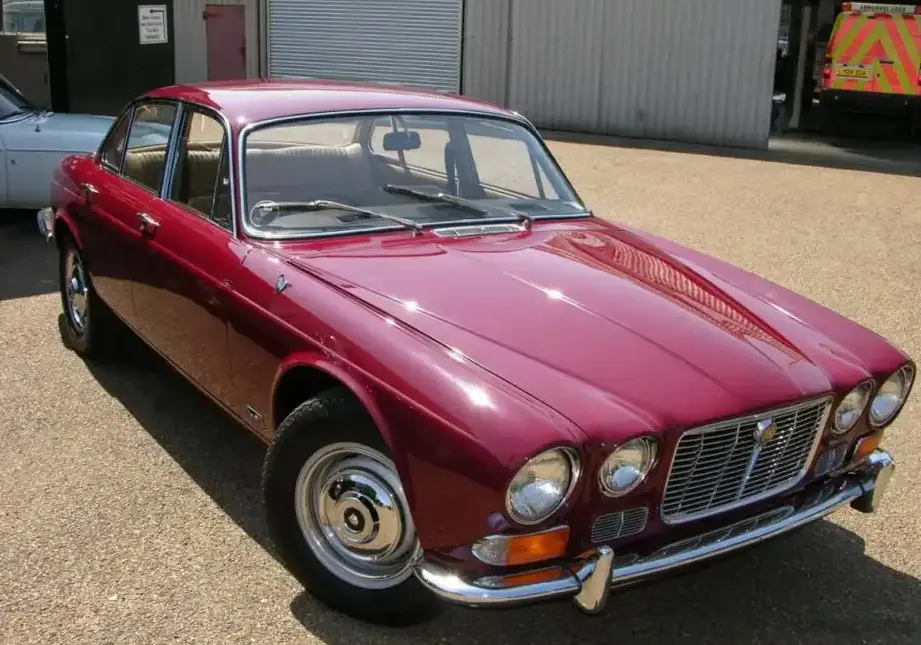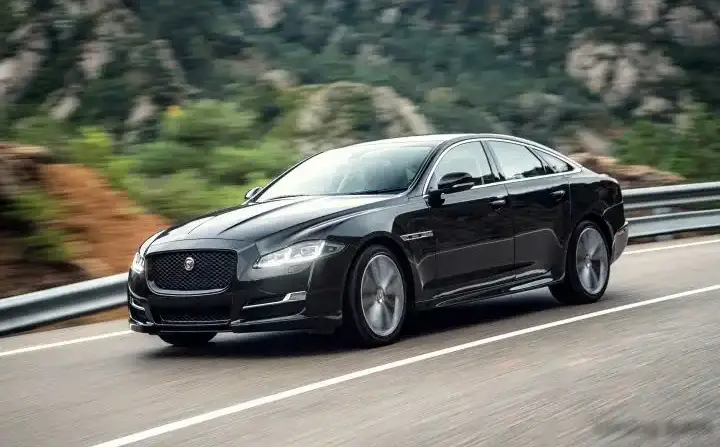
The Jaguar XJ 3.0d V6 Automatic, produced from 2015 to July 2019, represents a significant iteration of Jaguar’s flagship sedan, falling within the X351 facelift generation. This variant occupied a crucial middle ground in the XJ lineup, offering a blend of performance, luxury, and efficiency aimed at buyers seeking a sophisticated full-size sedan without the outright expense of the higher-powered supercharged models. It was primarily marketed in Europe, North America, and Asia, competing with vehicles like the BMW 7 Series, Mercedes-Benz S-Class, and Audi A8. The 3.0d model aimed to provide a more fuel-conscious alternative while still delivering the Jaguar driving experience.
Technical Specifications
| Brand | Jaguar |
| Model | XJ |
| Generation | XJ (X351 facelift 2015) |
| Type (Engine) | 3.0d V6 (300 Hp) Automatic |
| Start of production | 2015 |
| End of production | July, 2019 |
| Powertrain Architecture | Internal Combustion engine |
| Body type | Sedan |
| Seats | 5 |
| Doors | 4 |
| Fuel consumption (urban) | 7 l/100 km (33.6 US mpg, 40.4 UK mpg, 14.3 km/l) |
| Fuel consumption (extra urban) | 5.2 l/100 km (45.2 US mpg, 54.3 UK mpg, 19.2 km/l) |
| Fuel consumption (combined) | 5.7 l/100 km (41.3 US mpg, 49.6 UK mpg, 17.5 km/l) |
| CO2 emissions | 149 g/km |
| Fuel Type | Diesel |
| Acceleration 0 – 100 km/h | 6.2 sec |
| Acceleration 0 – 62 mph | 6.2 sec |
| Acceleration 0 – 60 mph | 5.9 sec |
| Maximum speed | 250 km/h (155.34 mph) |
| Emission standard | Euro 6 |
| Weight-to-power ratio | 6.1 kg/Hp, 163.5 Hp/tonne |
| Weight-to-torque ratio | 2.6 kg/Nm, 381.5 Nm/tonne |
| Power | 300 Hp @ 4000 rpm |
| Power per litre | 100.2 Hp/l |
| Torque | 700 Nm @ 2000 rpm (516.29 lb.-ft. @ 2000 rpm) |
| Engine layout | Front, Longitudinal |
| Engine Model/Code | 306DT |
| Engine displacement | 2993 cm3 (182.64 cu. in.) |
| Number of cylinders | 6 |
| Engine configuration | V-engine |
| Cylinder Bore | 84 mm (3.31 in.) |
| Piston Stroke | 90 mm (3.54 in.) |
| Compression ratio | 16.1:1 |
| Number of valves per cylinder | 4 |
| Fuel injection system | Diesel Commonrail |
| Engine aspiration | Turbocharger, Intercooler |
| Engine oil capacity | 6.6 l (6.97 US qt | 5.81 UK qt) |
| Coolant | 9.7 l (10.25 US qt | 8.53 UK qt) |
| Kerb Weight | 1835 kg (4045.48 lbs.) |
| Max. weight | 2400 kg (5291.09 lbs.) |
| Max load | 565 kg (1245.61 lbs.) |
| Fuel tank capacity | 77 l (20.34 US gal | 16.94 UK gal) |
| Length | 5130 mm (201.97 in.) |
| Width | 1899 mm (74.76 in.) |
| Width including mirrors | 2105 mm (82.87 in.) |
| Height | 1460 mm (57.48 in.) |
| Wheelbase | 3032 mm (119.37 in.) |
| Front track | 1626 mm (64.02 in.) |
| Rear track | 1604 mm (63.15 in.) |
| Minimum turning circle | 11.9 m (39.04 ft.) |
| Drivetrain Architecture | Rear wheel drive |
| Number of gears | 8 |
| Gearbox type | Automatic transmission |
| Front brakes | Ventilated discs |
| Rear brakes | Ventilated discs |
Powertrain & Engine Architecture
The heart of the XJ 3.0d is Jaguar’s 306DT engine, a 3.0-liter V6 turbodiesel. This engine is part of the AJD family, developed in collaboration with PSA Peugeot Citroën and later refined by Jaguar Land Rover. It utilizes a common-rail direct injection system, delivering fuel at extremely high pressure for optimized combustion. The engine features a single variable geometry turbocharger (VGT) and an intercooler to enhance power and efficiency. The V6 configuration provides inherent smoothness, while the turbocharger contributes to a broad torque curve. The 306DT engine produces 300 horsepower at 4000 rpm and a substantial 700 Nm (516 lb-ft) of torque at just 2000 rpm. This torque output is a key characteristic, providing strong acceleration and effortless cruising. The engine is longitudinally mounted in the front of the vehicle, driving the rear wheels. The transmission is an eight-speed automatic gearbox, known for its smooth shifts and responsiveness. This transmission was sourced from ZF and is widely regarded as one of the best in the industry.
Driving Characteristics
The 3.0d Automatic XJ offers a refined and comfortable driving experience. The high torque output allows for brisk acceleration, with 0-60 mph times around 5.9 seconds. While not as overtly sporty as the supercharged variants, the 3.0d provides ample power for overtaking and highway cruising. The eight-speed automatic transmission is well-tuned, offering seamless gear changes and contributing to the car’s overall smoothness. The gear ratios are optimized for both fuel efficiency and performance. In real-world driving, the 3.0d feels relaxed and composed, making it an excellent long-distance cruiser. Compared to the higher-powered XJ models, the 3.0d prioritizes fuel economy and refinement over outright performance. The manual transmission was not offered with this engine in the XJ.
Equipment & Trim Levels
The XJ 3.0d Automatic typically came well-equipped, reflecting its position as a luxury sedan. Standard features included leather upholstery, wood veneer trim, a premium sound system, navigation, and a comprehensive suite of safety features. The XJ offered various trim levels, with the 3.0d often available in base, Portfolio, and Autobiography specifications. Higher trims added features like upgraded leather, more extensive wood trim options, rear-seat entertainment, and advanced driver-assistance systems. Optional extras included a panoramic sunroof, adaptive cruise control, and a massaging function for the front seats.
Chassis & Braking
The XJ 3.0d utilizes a lightweight aluminum chassis, a key feature of the X351 generation. This aluminum construction significantly reduces weight, contributing to improved handling and fuel efficiency. The suspension system consists of double wishbones at the front and a multi-link setup at the rear, providing a comfortable and controlled ride. The braking system features ventilated discs on all four wheels, providing ample stopping power. Anti-lock braking system (ABS) and electronic stability control (ESC) are standard safety features.
Market Reception & Comparison
The Jaguar XJ 3.0d was generally well-received by critics, who praised its blend of luxury, performance, and fuel efficiency. It was seen as a compelling alternative to its German rivals, offering a unique British character and a comfortable driving experience. Fuel economy was a strong point, with combined figures around 41.3 US mpg. Compared to the supercharged XJ models, the 3.0d offered a more affordable entry point into the XJ range. Reliability was generally good, although some owners reported issues with the diesel particulate filter (DPF) and the air suspension system.
Legacy
The Jaguar XJ 3.0d V6 Automatic remains a desirable used car, offering a luxurious and refined driving experience at a relatively affordable price. The 306DT engine has proven to be reasonably durable, although regular maintenance is essential. The eight-speed automatic transmission is known for its reliability. While the diesel engine may be less popular in some markets due to environmental concerns, the XJ 3.0d continues to appeal to buyers seeking a comfortable and well-equipped full-size sedan. Its aluminum construction and sophisticated technology ensure that it remains a competitive vehicle in the used car market.