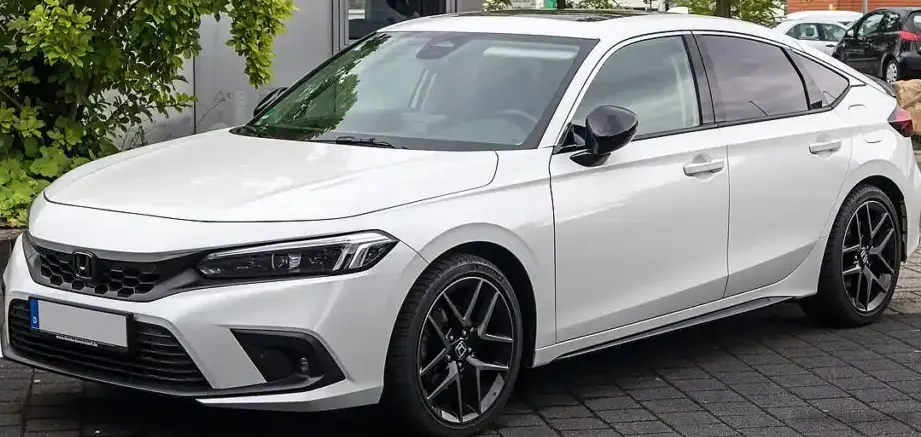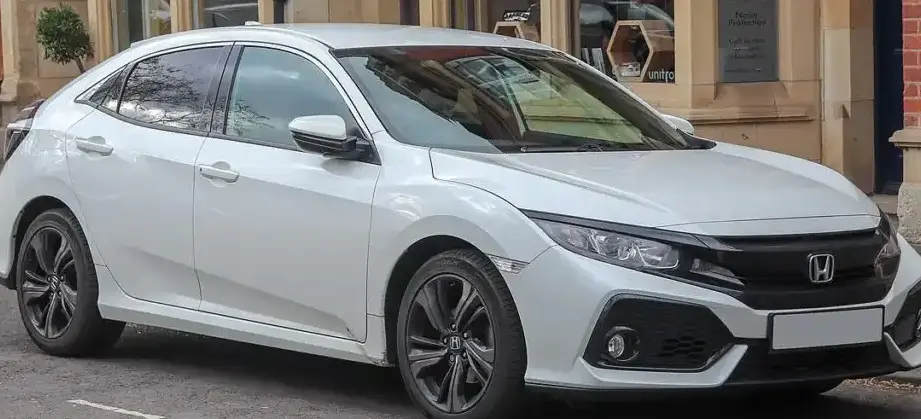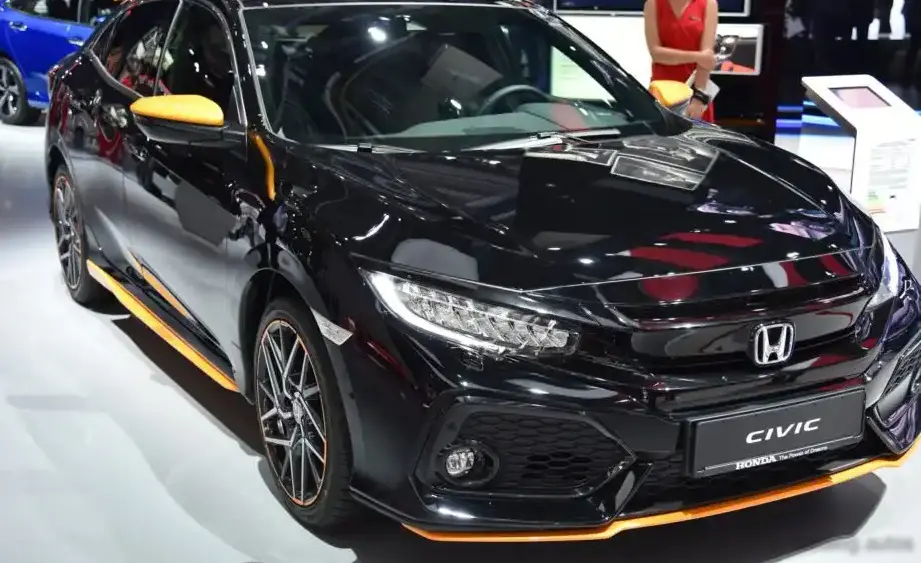
The Honda Civic X Hatchback 1.6 i-DTEC (120 hp) was a European market specification of the tenth-generation Civic Hatchback, produced from 2018 to 2019. Positioned as a fuel-efficient option within the Civic X range, it aimed to appeal to drivers prioritizing economy and lower running costs. This variant utilized a diesel engine paired with a six-speed manual transmission, offering a balance between performance and efficiency. It sat below the 1.5L petrol and higher-powered diesel variants in the lineup, targeting a more budget-conscious buyer.
Technical Specifications
| Brand | Honda |
| Model | Civic |
| Generation | Civic X Hatchback |
| Type (Engine) | 1.6 i-DTEC (120 Hp) |
| Start of production | 2018 |
| End of production | 2019 |
| Powertrain Architecture | Internal Combustion engine |
| Body type | Hatchback |
| Seats | 5 |
| Doors | 5 |
| Fuel consumption at Low speed (WLTP) | 4.7-4.9 l/100 km (50 – 48 US mpg) |
| Fuel consumption at Medium speed (WLTP) | 4.2-4.5 l/100 km (56 – 52.3 US mpg) |
| Fuel consumption at high speed (WLTP) | 4.1-4.2 l/100 km (57.4 – 56 US mpg) |
| Fuel consumption at very high speed (WLTP) | 4.9-5.0 l/100 km (48 – 47 US mpg) |
| Combined fuel consumption (WLTP) | 4.5-4.7 l/100 km (52.3 – 50 US mpg) |
| CO2 emissions (WLTP) | 93 g/km |
| Fuel consumption (economy) – urban | 3.6 l/100 km (65.3 US mpg) |
| Fuel consumption (economy) – extra urban | 3.4 l/100 km (69.2 US mpg) |
| Fuel consumption (economy) – combined | 3.5 l/100 km (67.2 US mpg) |
| Fuel Type | Diesel |
| Acceleration 0 – 100 km/h | 9.8 sec |
| Acceleration 0 – 62 mph | 9.8 sec |
| Acceleration 0 – 60 mph | 9.3 sec |
| Maximum speed | 201 km/h (124.9 mph) |
| Emission standard | Euro 6 |
| Weight-to-power ratio | 10.7 kg/Hp |
| Weight-to-torque ratio | 4.3 kg/Nm |
| Power | 120 Hp @ 4000 rpm |
| Torque | 300 Nm @ 2000 rpm (221.27 lb.-ft. @ 2000 rpm) |
| Engine layout | Front, Transverse |
| Engine Model/Code | N16A1 |
| Engine displacement | 1597 cm3 (97.45 cu. in.) |
| Number of cylinders | 4 |
| Engine configuration | Inline |
| Cylinder Bore | 76 mm (2.99 in.) |
| Piston Stroke | 88 mm (3.46 in.) |
| Compression ratio | 16:1 |
| Number of valves per cylinder | 4 |
| Fuel injection system | Diesel Commonrail |
| Engine aspiration | Turbocharger, Intercooler |
| Engine oil capacity | 4.5 l (4.76 US qt | 3.96 UK qt) |
| Coolant | 5.18 l (5.47 US qt | 4.56 UK qt) |
| Kerb Weight | 1287-1301 kg (2837.35 – 2868.21 lbs.) |
| Max. weight | 1710 kg (3769.9 lbs.) |
| Max load | 409-423 kg (901.69 – 932.56 lbs.) |
| Trunk (boot) space – minimum | 414 l (14.62 cu. ft.) |
| Trunk (boot) space – maximum | 1245 l (43.97 cu. ft.) |
| Fuel tank capacity | 46 l (12.15 US gal | 10.12 UK gal) |
| Length | 4518 mm (177.87 in.) |
| Width | 1799 mm (70.83 in.) |
| Width including mirrors | 2076 mm (81.73 in.) |
| Height | 1434 mm (56.46 in.) |
| Wheelbase | 2697 mm (106.18 in.) |
| Front track | 1547 mm (60.91 in.) |
| Rear (Back) track | 1575 mm (62.01 in.) |
| Minimum turning circle | 11.3 m (37.07 ft.) |
| Drivetrain Architecture | Front wheel drive |
| Number of gears and type of gearbox | 6 gears, manual transmission |
| Front suspension | Independent type McPherson |
| Rear suspension | Independent multi-link suspension |
| Front brakes | Ventilated discs |
| Rear brakes | Disc |
| Assisting systems | ABS (Anti-lock braking system) |
| Steering type | Steering rack and pinion |
| Power steering | Electric Steering |
| Tires size | 215/55 R16; 235/45 R17 |
| Wheel rims size | 16; 17 |
INTRODUCTION
The Honda Civic X Hatchback 1.6 i-DTEC (120 hp) was introduced as part of the European-focused tenth-generation Civic Hatchback lineup, beginning in 2018. Built on the 1HX0 platform, this variant aimed to provide a highly economical and practical option for European buyers. The Civic X represented a significant departure in styling from previous generations, adopting a more aggressive and sporty aesthetic. The 1.6 i-DTEC model was specifically engineered to meet stringent European emissions standards while delivering acceptable performance for everyday driving. Production of this specific configuration was relatively short-lived, ending in 2019, as Honda refined its European engine offerings.
Powertrain & Engine Architecture
At the heart of the 1.6 i-DTEC is the N16A1 engine, a 1.6-liter inline-four cylinder diesel. This engine utilizes a common-rail direct injection system, delivering fuel directly into the combustion chamber at extremely high pressure for improved efficiency and reduced emissions. The engine is turbocharged with an intercooler, which helps to cool the intake air, increasing its density and improving power output. The valvetrain features four valves per cylinder (DOHC), optimizing gas flow for enhanced performance. The engine produces 120 horsepower at 4000 rpm and 300 Nm (221 lb-ft) of torque at 2000 rpm. This torque peak, relatively low in the rev range, contributes to good drivability in everyday situations. The engine is paired with a six-speed manual transmission, chosen for its efficiency and driver engagement. The transmission’s gear ratios are tuned to maximize fuel economy while providing adequate acceleration.
Driving Characteristics
The 1.6 i-DTEC, when coupled with the six-speed manual, offered a driving experience focused on efficiency rather than outright performance. Acceleration from 0-60 mph took approximately 9.3 seconds, and top speed was limited to 124.9 mph. While not particularly quick, the engine provided sufficient power for comfortable highway cruising and city driving. The low-end torque made it easy to navigate urban environments without constant gear changes. Compared to the 1.5L petrol engine, the 1.6 i-DTEC offered significantly better fuel economy, but lacked the petrol engine’s responsiveness. Against higher-powered diesel variants, such as the 1.6 i-DTEC 160 hp, the 120 hp version felt noticeably less potent, particularly when fully loaded or tackling steep inclines. The manual transmission provided a more engaging driving experience than an automatic would have, allowing drivers to maintain control over gear selection and maximize fuel efficiency.
Equipment & Trim Levels
The 1.6 i-DTEC typically came equipped as a mid-range trim level, offering a good balance of features and affordability. Standard equipment generally included air conditioning, a basic infotainment system with Bluetooth connectivity, power windows and mirrors, and alloy wheels. Safety features such as ABS, electronic stability control, and multiple airbags were also standard. Optional extras included a more advanced infotainment system with navigation, a rearview camera, parking sensors, and upgraded interior trim materials. Interior upholstery was typically cloth, with a functional and durable design. Dashboard configuration was consistent across the Civic X range, featuring a clean and modern layout.
Chassis & Braking
The Civic X Hatchback utilized an independent McPherson strut suspension at the front and an independent multi-link suspension at the rear. This setup provided a comfortable ride quality and good handling characteristics. The suspension was tuned to prioritize comfort over sporty handling, making it well-suited for everyday driving. Braking duties were handled by ventilated discs at the front and solid discs at the rear. ABS (Anti-lock Braking System) was standard, providing enhanced braking performance and stability in emergency situations. The weight distribution was relatively balanced, contributing to predictable handling. Stabilizer bars were fitted to both the front and rear axles to reduce body roll during cornering.
Market Reception & Comparison
The 1.6 i-DTEC variant was generally well-received by European automotive critics for its impressive fuel economy and low emissions. It was praised as a practical and economical choice for drivers covering long distances or frequently commuting in urban areas. However, some reviewers noted that the engine lacked the refinement and performance of its competitors. Compared to other trims in the Civic X lineup, the 1.6 i-DTEC offered the best fuel economy but the lowest performance. The 1.5L petrol engine provided a more responsive driving experience, while the higher-powered diesel variants offered greater performance. In terms of reliability, the 1.6 i-DTEC proved to be a generally dependable engine, although diesel particulate filter (DPF) issues could occur with infrequent long-distance driving.
Legacy
The Honda Civic X Hatchback 1.6 i-DTEC (120 hp) remains a popular choice in the used car market, particularly for buyers seeking a fuel-efficient and reliable hatchback. The engine’s robust construction and relatively simple design contribute to its long-term durability. However, potential buyers should be aware of the potential for DPF issues and ensure that the vehicle has been properly maintained. The Civic X Hatchback, in general, has established a reputation for reliability and practicality, making it a desirable used car option. The 1.6 i-DTEC variant, while not the most powerful in the range, offers a compelling combination of economy, reliability, and practicality for budget-conscious buyers.