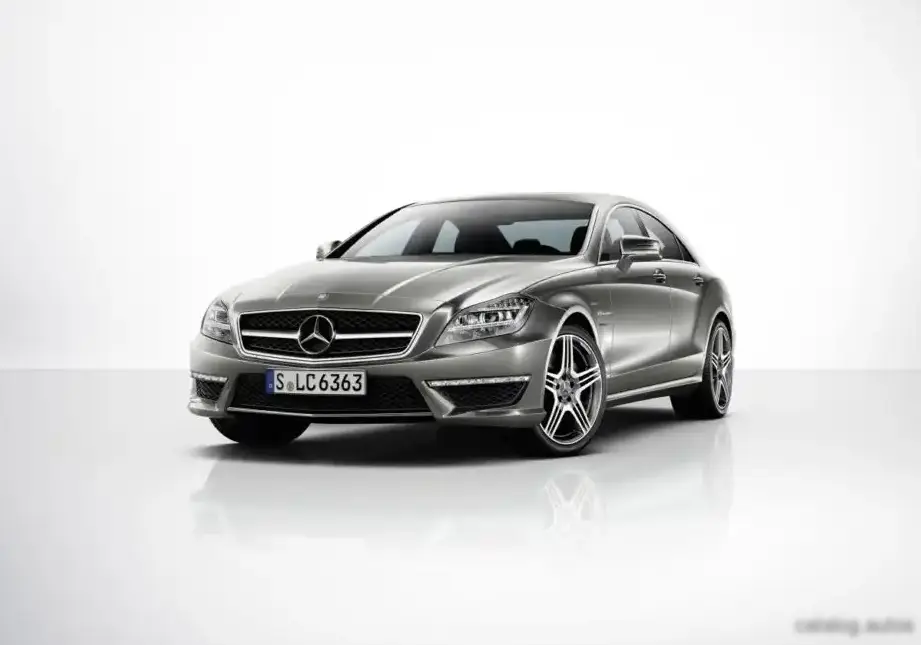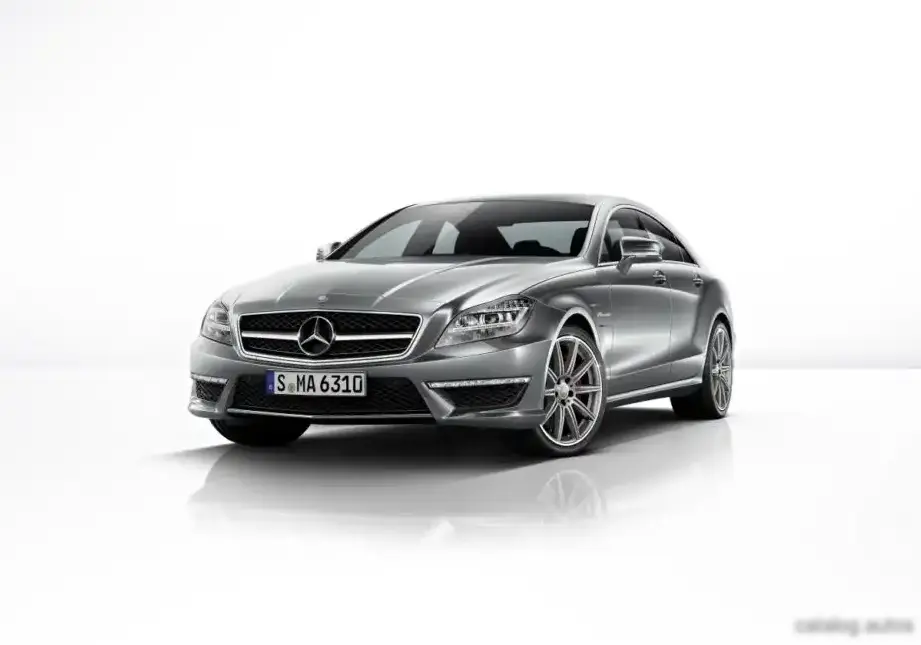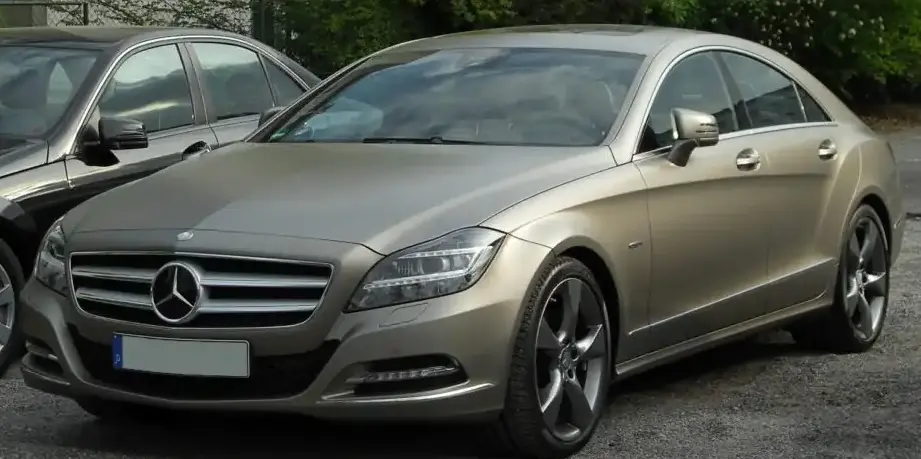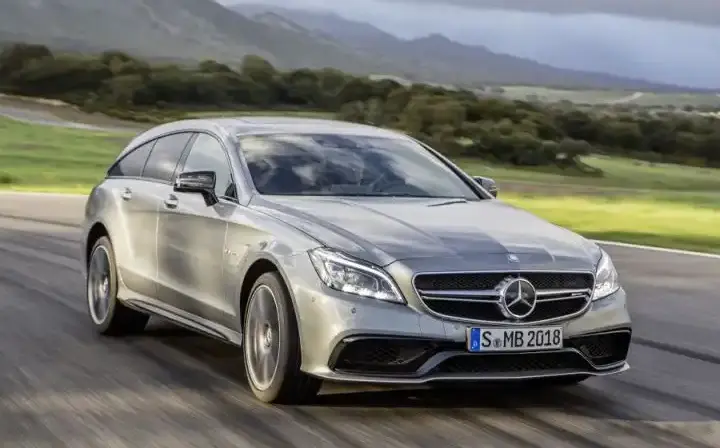
The Mercedes-Benz CLS 400 4MATIC, part of the X218 Shooting Brake facelift introduced in 2014, represented a unique blend of luxury, performance, and practicality within the Mercedes-Benz lineup. Produced through 2018, this variant occupied a mid-to-upper tier position, offering a compelling alternative to traditional sedans and SUVs. It combined a potent V6 engine with all-wheel drive and a sophisticated automatic transmission, targeting buyers seeking a refined driving experience with enhanced capability. The CLS Shooting Brake, in general, aimed to carve out a niche as a stylish and versatile “five-door coupe,” appealing to those who desired the aesthetics of a coupe with the functionality of a station wagon.
Technical Specifications
| Brand | Mercedes-Benz |
| Model | CLS |
| Generation | CLS Shooting Brake (X218, facelift 2014) |
| Type | CLS 400 V6 (333 Hp) 4MATIC 7G-TRONIC PLUS |
| Start of production | 2014 |
| End of production | 2018 |
| Powertrain Architecture | Internal Combustion engine |
| Body type | Station wagon (estate) |
| Seats | 5 |
| Doors | 5 |
| Fuel consumption (urban) | 11.0-10.9 l/100 km (21.4 – 21.6 US mpg) |
| Fuel consumption (extra urban) | 6.8-6.6 l/100 km (34.6 – 35.6 US mpg) |
| Fuel consumption (combined) | 8.4-8.3 l/100 km (28 – 28.3 US mpg) |
| CO2 emissions | 195-192 g/km |
| Fuel Type | Petrol (Gasoline) |
| Acceleration 0 – 100 km/h | 5.4 sec |
| Acceleration 0 – 62 mph | 5.4 sec |
| Acceleration 0 – 60 mph | 5.1 sec |
| Maximum speed | 250 km/h (155.34 mph) |
| Emission standard | Euro 6 |
| Weight-to-power ratio | 5.8 kg/Hp |
| Weight-to-torque ratio | 4 kg/Nm |
| Power | 333 Hp @ 5250-6000 rpm |
| Torque | 480 Nm @ 1200-4000 rpm (354.03 lb.-ft.) |
| Engine layout | Front, Longitudinal |
| Engine Model/Code | M 276.850 |
| Engine displacement | 3498 cm3 (213.46 cu. in.) |
| Number of cylinders | 6 |
| Engine configuration | V-engine |
| Compression ratio | 10.5:1 |
| Fuel injection system | Direct injection |
| Engine aspiration | BiTurbo, Intercooler |
| Engine oil capacity | 6.5 l (6.87 US qt | 5.72 UK qt) |
| Coolant capacity | 9.6 l (10.14 US qt | 8.45 UK qt) |
| Kerb Weight | 1915 kg (4221.85 lbs.) |
| Max. weight | 2440 kg (5379.28 lbs.) |
| Max load | 525 kg (1157.43 lbs.) |
| Trunk (boot) space – minimum | 590 l (20.84 cu. ft.) |
| Trunk (boot) space – maximum | 1550 l (54.74 cu. ft.) |
| Fuel tank capacity | 59 l (15.59 US gal | 12.98 UK gal) |
| Length | 4953 mm (195 in.) |
| Width | 1881 mm (74.06 in.) |
| Height | 1419 mm (55.87 in.) |
| Wheelbase | 2874 mm (113.15 in.) |
| Front track | 1596 mm (62.83 in.) |
| Rear track | 1629 mm (64.13 in.) |
| Minimum turning circle | 11.51 m (37.76 ft.) |
| Drivetrain Architecture | All wheel drive (4×4) |
| Number of gears | 7 |
| Gearbox type | Automatic transmission G-TRONIC |
| Front suspension | Independent, type McPherson with coil spring and anti-roll bar |
| Rear suspension | Independent multi-link suspension |
| Front brakes | Ventilated discs |
| Rear brakes | Disc |
| Assisting systems | ABS (Anti-lock braking system) |
| Steering type | Steering rack and pinion |
| Tires size | 245/45 R17 |
| Wheel rims size | 17 |
INTRODUCTION
The CLS 400 4MATIC Shooting Brake, launched as part of the X218 facelift in 2014, built upon the original CLS’s success by adding a practical wagon body style. Mercedes-Benz aimed to appeal to buyers who wanted the sleek, coupe-like aesthetics of the CLS but needed the cargo capacity of a traditional station wagon. The facelift brought updated styling, improved technology, and more efficient engine options. This particular variant, the CLS 400, was positioned as a strong all-around performer, offering a balance of power, luxury, and everyday usability. Production continued until 2018, when it was superseded by the next generation CLS.
Powertrain & Engine Architecture
At the heart of the CLS 400 4MATIC lay the M276.850 3.5-liter V6 engine. This engine was a key component of Mercedes-Benz’s modular engine family, known for its efficiency and performance. It featured direct fuel injection and twin turbochargers, delivering 333 horsepower and 354 lb-ft of torque. The twin-turbo setup provided a broad torque curve, ensuring strong acceleration across a wide range of engine speeds. The engine’s architecture included a 60-degree V-angle, contributing to its smooth operation. Paired with the engine was the 7G-TRONIC PLUS seven-speed automatic transmission. This transmission was renowned for its smooth and quick shifts, and it was specifically tuned to complement the V6 engine’s characteristics. The 4MATIC all-wheel-drive system distributed power between the front and rear axles, enhancing traction and stability, particularly in adverse weather conditions.
Driving Characteristics
The CLS 400 4MATIC offered a refined and comfortable driving experience. The 333 hp V6 provided ample power for both highway cruising and spirited driving, with a 0-60 mph time of around 5.1 seconds. The 7G-TRONIC transmission contributed to seamless acceleration, and the all-wheel-drive system instilled confidence in various driving conditions. While not as overtly sporty as some of its competitors, the CLS 400 prioritized comfort and refinement. The suspension was tuned to absorb bumps and imperfections in the road, providing a smooth ride. Compared to the CLS 550 with its larger V8 engine, the 400 offered a more fuel-efficient and accessible entry point into the CLS lineup. It also differed from the diesel-powered CLS models (like the CLS 350 CDI) in terms of engine character and sound, offering a more traditional gasoline engine experience.
Equipment & Trim Levels
The CLS 400 4MATIC came standard with a generous array of features, reflecting its positioning as a premium vehicle. Standard equipment typically included leather upholstery, power-adjustable front seats with memory function, dual-zone automatic climate control, a premium sound system, and a navigation system. The infotainment system featured a central display screen controlled by a rotary dial and buttons. Optional extras included features such as a panoramic sunroof, advanced driver-assistance systems (like adaptive cruise control and lane-keeping assist), and upgraded interior trim options. Interior color schemes were varied, allowing buyers to personalize the cabin to their preferences. The dashboard layout was elegant and modern, with a focus on user-friendliness.
Chassis & Braking
The CLS 400 4MATIC featured a sophisticated chassis designed to balance comfort and handling. The front suspension utilized a McPherson strut design with coil springs and an anti-roll bar, while the rear suspension employed a multi-link setup. This configuration provided a good balance of ride quality and stability. The braking system consisted of ventilated discs at all four corners, providing ample stopping power. Anti-lock brakes (ABS) and electronic stability control (ESC) were standard features, enhancing safety. The steering system was a rack-and-pinion setup, offering precise and responsive steering feel. The 4MATIC all-wheel-drive system contributed to improved braking performance, particularly on slippery surfaces.
Market Reception & Comparison
The CLS 400 4MATIC was generally well-received by automotive critics. It was praised for its stylish design, comfortable ride, and strong performance. Reviewers noted the engine’s smooth power delivery and the transmission’s seamless shifts. The all-wheel-drive system was also highlighted as a valuable asset, particularly in regions with inclement weather. Compared to its rivals, such as the Audi A7 and BMW 5 Series Gran Turismo, the CLS 400 offered a unique combination of coupe-like styling and wagon practicality. Fuel economy was considered reasonable for its class, although not class-leading. Reliability reports generally indicated good overall reliability, although some owners reported minor issues with electronic components.
Legacy
The CLS 400 4MATIC has established itself as a desirable used car, appreciated for its blend of luxury, performance, and practicality. The M276 V6 engine has proven to be relatively reliable, although regular maintenance is essential. The 7G-TRONIC transmission is also known for its durability. As with any luxury vehicle, maintenance costs can be higher than those of more mainstream brands. Today, the CLS 400 4MATIC represents a compelling value proposition for buyers seeking a stylish and well-equipped wagon with a refined driving experience. Its unique design and versatile nature continue to appeal to a niche market of discerning drivers.