
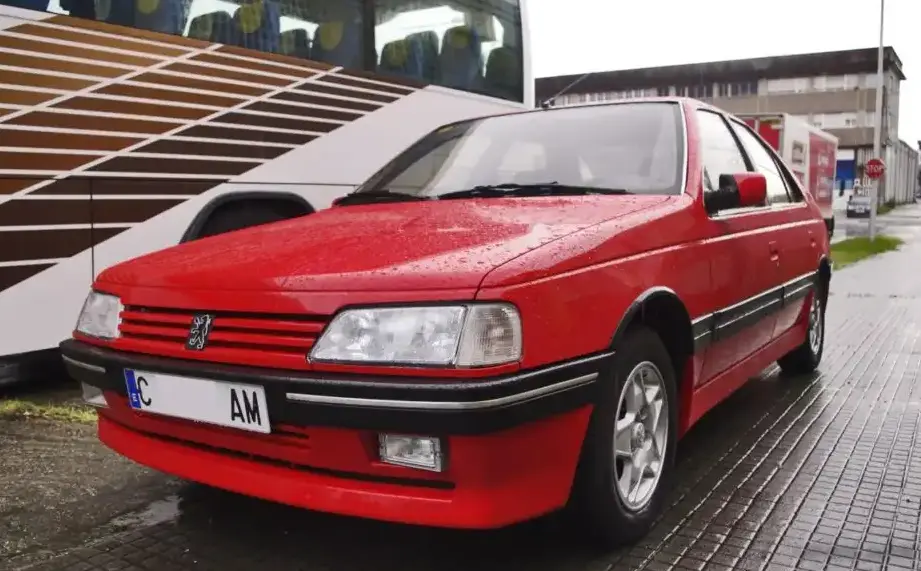
The Peugeot 405 1.8 Turbo Diesel, produced between 1988 and 1992, represented a significant offering in the mid-size sedan segment, particularly within the European market. Falling under the 15B designation for the first generation 405, this variant was positioned as an economical and efficient option, appealing to buyers prioritizing fuel economy and practicality over outright performance. It was a key component of Peugeot’s strategy to offer a diverse range of powertrains within the 405 lineup, catering to varied customer needs. The 405 itself was a replacement for the aging 505, aiming for a more modern and aerodynamic design while maintaining Peugeot’s reputation for build quality and comfortable ride.
Technical Specifications
| Brand | Peugeot |
| Model | 405 |
| Generation | 405 I (15B) |
| Type (Engine) | 1.8 Turbo Diesel (90 Hp) |
| Start of production | 1988 year |
| End of production | 1992 year |
| Powertrain Architecture | Internal Combustion engine |
| Body type | Sedan |
| Seats | 5 |
| Doors | 4 |
| Fuel consumption (economy) – urban | 7.5 l/100 km (31.4 US mpg, 37.7 UK mpg, 13.3 km/l) |
| Fuel consumption (economy) – extra urban | 4.6 l/100 km (51.1 US mpg, 61.4 UK mpg, 21.7 km/l) |
| Fuel Type | Diesel |
| Acceleration 0 – 100 km/h | 12.2 sec |
| Acceleration 0 – 62 mph | 12.2 sec |
| Acceleration 0 – 60 mph | 11.6 sec |
| Maximum speed | 180 km/h (111.85 mph) |
| Weight-to-power ratio | 12 kg/Hp, 83.1 Hp/tonne |
| Weight-to-torque ratio | 6 kg/Nm, 167.1 Nm/tonne |
| Power | 90 Hp @ 4300 rpm |
| Power per litre | 50.9 Hp/l |
| Torque | 181 Nm @ 2100 rpm (133.5 lb.-ft. @ 2100 rpm) |
| Engine layout | Front, Transverse |
| Engine Model/Code | AJZ XUD7TEY |
| Engine displacement | 1768 cm3 (107.89 cu. in.) |
| Number of cylinders | 4 |
| Engine configuration | Inline |
| Cylinder Bore | 80 mm (3.15 in.) |
| Piston Stroke | 88 mm (3.46 in.) |
| Compression ratio | 22.5:1 |
| Number of valves per cylinder | 2 |
| Fuel injection system | Precombustion chamber injection |
| Engine aspiration | Turbocharger, Intercooler |
| Valvetrain | OHC |
| Engine oil capacity | 4.8 l (5.07 US qt | 4.22 UK qt) |
| Coolant | 7.8 l (8.24 US qt | 6.86 UK qt) |
| Kerb Weight | 1083 kg (2387.61 lbs.) |
| Max. weight | 1560 kg (3439.21 lbs.) |
| Max load | 477 kg (1051.6 lbs.) |
| Trunk (boot) space – minimum | 470 l (16.6 cu. ft.) |
| Fuel tank capacity | 70 l (18.49 US gal | 15.4 UK gal) |
| Permitted trailer load with brakes (12%) | 1200 kg (2645.55 lbs.) |
| Length | 4408 mm (173.54 in.) |
| Width | 1714 mm (67.48 in.) |
| Height | 1406 mm (55.35 in.) |
| Wheelbase | 2669 mm (105.08 in.) |
| Front track | 1450 mm (57.09 in.) |
| Rear (Back) track | 1443 mm (56.81 in.) |
| Front overhang | 817 mm (32.17 in.) |
| Rear overhang | 922 mm (36.3 in.) |
| Drag coefficient (Cd) | 0.31 |
| Minimum turning circle (turning diameter) | 10.55 m (34.61 ft.) |
| Drivetrain Architecture | The Internal combustion engine (ICE) drives the front wheels of the vehicle. |
| Drive wheel | Front wheel drive |
| Number of gears and type of gearbox | 5 gears, manual transmission |
| Front suspension | Independent, type McPherson with coil spring and anti-roll bar |
| Rear suspension | Torsion |
| Front brakes | Disc |
| Rear brakes | Drum |
| Steering type | Steering rack and pinion |
| Tires size | 185/65 R14 |
| Wheel rims size | 14 |
Powertrain & Engine Architecture
The heart of this 405 variant is the XUD7TEY engine, a 1.8-liter inline-four cylinder diesel engine. This engine, often referred to as the AJZ code, was a mainstay of Peugeot and Citroën vehicles during the late 1980s and early 1990s. It utilizes a precombustion chamber injection system, a common diesel technology of the era, which improves combustion efficiency and reduces engine noise compared to direct injection systems. The addition of a turbocharger and intercooler significantly boosted power output to 90 horsepower, a respectable figure for a diesel engine of that time. The engine’s overhead camshaft (OHC) valvetrain design contributed to its relatively smooth operation. The five-speed manual transmission was the standard offering, chosen for its efficiency and cost-effectiveness. The transmission’s gear ratios were tuned to maximize fuel economy and provide adequate acceleration, though it wasn’t designed for sporty driving.
Driving Characteristics
The 405 1.8 Turbo Diesel with a manual transmission offered a practical and economical driving experience. Acceleration was adequate for everyday driving, with the 0-60 mph time around 11.6 seconds. However, it wasn’t a particularly quick car, and overtaking required careful planning. The turbocharger provided a noticeable boost in power at higher RPMs, but the engine lacked the responsiveness of more modern turbocharged engines. The gear ratios were relatively long, prioritizing fuel efficiency over rapid acceleration. The ride quality was generally comfortable, typical of Peugeot’s suspension tuning, but the rear drum brakes offered less stopping power than disc brakes.
Equipment & Trim Levels
The 1.8 Turbo Diesel trim typically represented an entry-level to mid-range offering within the 405 lineup. Standard equipment generally included basic cloth upholstery, a simple dashboard layout, and manual windows and door locks. Power steering was often included, but air conditioning and central locking were usually optional extras. Higher trim levels, such as the GR or SR, offered more luxurious features like upgraded upholstery, alloy wheels, and additional convenience items. The interior was functional and well-built, reflecting Peugeot’s commitment to quality.
Chassis & Braking
The 405 featured an independent McPherson strut front suspension, providing a comfortable ride and decent handling. The rear suspension utilized a torsion beam setup, which was cost-effective and space-efficient. The front brakes were discs, offering adequate stopping power, while the rear brakes were drums, which were less effective, particularly under heavy braking. The steering was a rack and pinion system, providing precise and responsive steering feel. The 185/65 R14 tires offered a good balance of comfort and grip.
Market Reception & Comparison
The 405 1.8 Turbo Diesel was well-received in Europe as a practical and economical family car. Critics praised its fuel efficiency, comfortable ride, and build quality. However, some criticized its lack of outright performance and the somewhat dated interior design. Compared to the higher-output 2.0-liter gasoline versions, the 1.8 Turbo Diesel offered significantly lower performance but superior fuel economy. Compared to other diesel options in the segment, such as the Volkswagen Golf or Ford Escort, the 405 offered a more refined driving experience and a more spacious interior.
Legacy
The XUD7TEY engine, found in the 405 1.8 Turbo Diesel, gained a reputation for its durability and reliability. With proper maintenance, these engines could easily exceed 200,000 miles. Today, the 405 1.8 Turbo Diesel is a relatively rare sight on the roads, but it remains a popular choice among classic car enthusiasts who appreciate its simplicity, fuel efficiency, and robust construction. Parts availability can be a challenge, but the engine’s straightforward design makes it relatively easy to repair. The 405, in general, is remembered as a well-engineered and stylish car that helped solidify Peugeot’s reputation for building quality vehicles.
