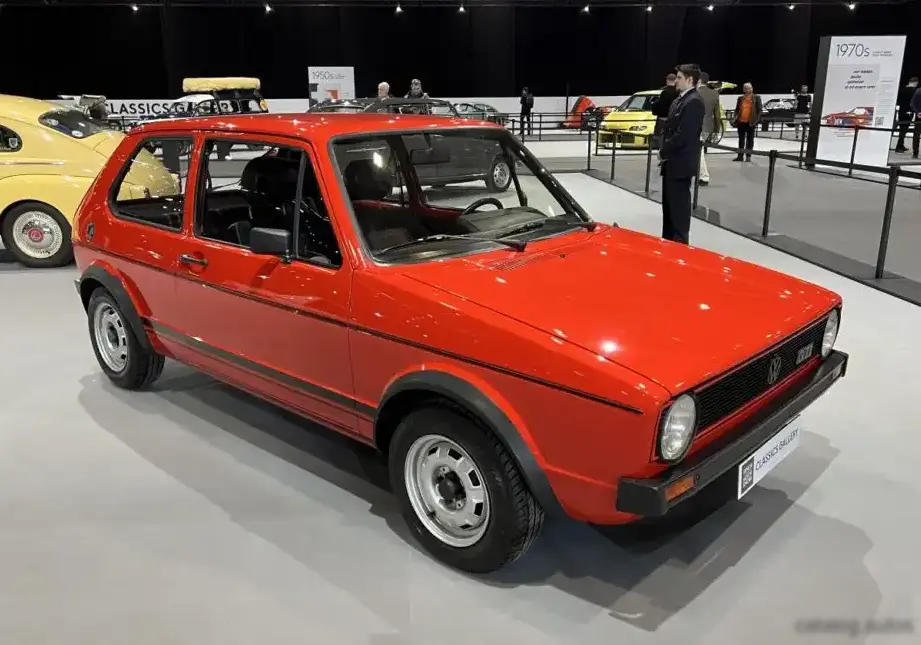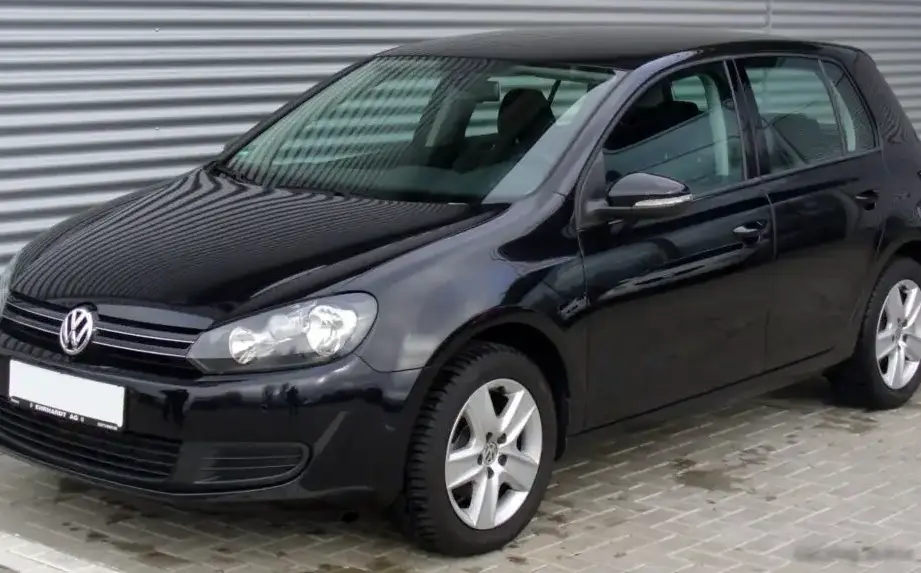
The Volkswagen Golf VI 1.4 TSI (122 hp) DSG, produced from 2008 to 2012, represented a key offering within the sixth generation of Volkswagen’s iconic Golf model. Positioned as a mid-range trim, it aimed to balance performance, fuel efficiency, and affordability for the European market, and later saw limited introduction to North America. This variant utilized a turbocharged direct-injection engine paired with Volkswagen’s dual-clutch gearbox (DSG), offering a more sophisticated driving experience than the base models while remaining more accessible than the higher-performance GTI or diesel variants.
Technical Specifications
| Brand | Volkswagen |
| Model | Golf |
| Generation | Golf VI (5-door) |
| Type (Engine) | 1.4 TSI (122 Hp) DSG |
| Start of production | 2008 |
| End of production | 2012 |
| Powertrain Architecture | Internal Combustion engine |
| Body type | Hatchback |
| Seats | 5 |
| Doors | 5 |
| Fuel consumption (urban) | 7.7 l/100 km (30.5 US mpg) |
| Fuel consumption (extra urban) | 5 l/100 km (47 US mpg) |
| Fuel consumption (combined) | 6 l/100 km (39.2 US mpg) |
| CO2 emissions | 138 g/km |
| Fuel Type | Petrol (Gasoline) |
| Acceleration 0 – 100 km/h | 9.5 sec |
| Acceleration 0 – 62 mph | 9.5 sec |
| Acceleration 0 – 60 mph | 9 sec |
| Maximum speed | 200 km/h (124.27 mph) |
| Emission standard | Euro 5 |
| Weight-to-power ratio | 10.2 kg/Hp |
| Weight-to-torque ratio | 6.2 kg/Nm |
| Power | 122 Hp @ 5000 rpm |
| Torque | 200 Nm @ 1500-4000 rpm (147.51 lb.-ft.) |
| Engine layout | Front, Transverse |
| Engine Model/Code | CAXA |
| Engine displacement | 1390 cm3 (84.82 cu. in.) |
| Number of cylinders | 4 |
| Engine configuration | Inline |
| Cylinder Bore | 76.5 mm (3.01 in.) |
| Piston Stroke | 75.6 mm (2.98 in.) |
| Compression ratio | 10:1 |
| Number of valves per cylinder | 4 |
| Fuel injection system | Direct injection |
| Engine aspiration | Turbocharger, Intercooler |
| Valvetrain | DOHC |
| Engine oil capacity | 3.6 l (3.8 US qt | 3.17 UK qt) |
| Coolant capacity | 5.6 l (5.92 US qt | 4.93 UK qt) |
| Kerb Weight | 1241 kg (2735.94 lbs.) |
| Max. weight | 1850 kg (4078.55 lbs.) |
| Max load | 609 kg (1342.62 lbs.) |
| Trunk (boot) space – minimum | 350 l (12.36 cu. ft.) |
| Trunk (boot) space – maximum | 1305 l (46.09 cu. ft.) |
| Fuel tank capacity | 55 l (14.53 US gal | 12.1 UK gal) |
| Max. roof load | 75 kg (165.35 lbs.) |
| Permitted trailer load (braked) | 1300 kg (2866.01 lbs.) |
| Permitted trailer load (unbraked) | 650 kg (1433 lbs.) |
| Permitted towbar download | 75 kg (165.35 lbs.) |
| Length | 4199 mm (165.31 in.) |
| Width | 1786 mm (70.31 in.) |
| Width including mirrors | 2048 mm (80.63 in.) |
| Height | 1480 mm (58.27 in.) |
| Wheelbase | 2578 mm (101.5 in.) |
| Front track | 1541 mm (60.67 in.) |
| Rear track | 1514 mm (59.61 in.) |
| Ride height | 150 mm (5.91 in.) |
| Minimum turning circle | 10.9 m (35.76 ft.) |
| Drivetrain Architecture | Front wheel drive |
| Number of gears | 7 |
| Gearbox type | Automatic transmission DSG |
| Front suspension | Independent McPherson, Transverse stabilizer |
| Rear suspension | Independent multi-link, Transverse stabilizer |
| Front brakes | Ventilated discs |
| Rear brakes | Disc |
| Assisting systems | ABS |
| Steering type | Steering rack and pinion |
| Power steering | Electric |
| Tires size | 205/55 R 16 |
| Wheel rims size | 6.5 J x 16 |
INTRODUCTION
The Golf VI, launched in 2008, continued Volkswagen’s tradition of a practical, well-engineered, and versatile hatchback. The 1.4 TSI (122 hp) DSG variant was a significant offering, particularly in Europe, where smaller displacement, turbocharged engines were gaining popularity due to fuel efficiency and emissions regulations. Built on the A5 platform (internally designated as the 1HX0), the Golf VI represented an evolution rather than a revolution compared to its predecessor, focusing on improved quality, refinement, and technology. This specific engine and transmission combination aimed to provide a balance between acceptable performance and reasonable running costs, making it a popular choice for everyday drivers.
Powertrain & Engine Architecture
The heart of this Golf variant is the 1.4 TSI engine, specifically the CAXA engine code. This engine is a 1390cc inline-four cylinder powerplant featuring direct fuel injection and a turbocharger with an intercooler. Direct injection allows for precise fuel delivery, improving efficiency and reducing emissions. The engine utilizes a dual overhead camshaft (DOHC) valvetrain with four valves per cylinder, optimizing airflow for increased power output. The turbocharger provides a significant boost in power, overcoming the limitations of the small displacement. The DSG (Direct-Shift Gearbox) is a seven-speed dual-clutch transmission. It operates similarly to a manual transmission but shifts automatically, offering quicker and smoother gear changes than a traditional automatic. The DSG’s efficiency also contributes to the vehicle’s overall fuel economy.
Driving Characteristics
The 1.4 TSI (122 hp) DSG Golf VI offered a competent, if not exhilarating, driving experience. Acceleration from 0-60 mph took around 9 seconds, which was adequate for everyday driving but noticeably slower than the more powerful GTI or even some of the diesel Golf models. The DSG transmission provided responsive shifts, and the turbocharger delivered a noticeable surge of power in the mid-range. However, the engine could feel somewhat strained when pushed hard, particularly when fully loaded. The gear ratios were tuned for fuel efficiency, meaning the engine didn’t always feel as lively as it could. Compared to the manual transmission versions of the 1.4 TSI, the DSG offered greater convenience but slightly reduced fuel economy. The higher-output 1.4 TSI (160 hp) and the 2.0 TDI models provided significantly more performance, but at a higher price point.
Equipment & Trim Levels
The 1.4 TSI DSG typically came with a reasonable level of standard equipment. This included air conditioning, electric front windows, central locking, a CD stereo system, and alloy wheels. Safety features such as ABS, traction control, and multiple airbags were also standard. Higher trim levels offered options such as climate control, a multi-function steering wheel, parking sensors, and upgraded upholstery. Interior upholstery was typically cloth, with the option of leather upgrades. Dashboard configuration was generally straightforward and functional, reflecting the Golf’s focus on practicality.
Chassis & Braking
The Golf VI 1.4 TSI utilized an independent McPherson strut suspension at the front and an independent multi-link suspension at the rear. This setup provided a comfortable ride and good handling characteristics. A transverse stabilizer bar was fitted to both axles to reduce body roll during cornering. The braking system consisted of ventilated discs at the front and solid discs at the rear. ABS (Anti-lock Braking System) was standard, enhancing braking performance and stability. The suspension and braking components were generally well-engineered and reliable, providing adequate stopping power and a composed driving experience for the vehicle’s weight class.
Market Reception & Comparison
The Golf VI 1.4 TSI DSG was generally well-received by automotive critics. It was praised for its fuel efficiency, comfortable ride, and refined driving experience. However, some critics noted that the engine lacked outright power and could feel strained under heavy load. Compared to the 1.9 TDI diesel variant, the 1.4 TSI offered slightly less fuel economy but a more responsive engine. The 1.4 TSI was also more affordable than the GTI, making it a more accessible option for a wider range of buyers. Reliability was generally good, although some owners reported issues with the DSG transmission, particularly early units.
Legacy
The 1.4 TSI engine and DSG transmission combination proved to be a popular and relatively reliable powertrain in the Golf VI. While the DSG transmission did experience some early issues, these were largely addressed with software updates and revised components. Today, the Golf VI 1.4 TSI DSG remains a relatively common sight on used car markets. Its fuel efficiency, practicality, and relatively low running costs make it an attractive option for buyers seeking a reliable and affordable hatchback. However, potential buyers should be aware of the potential for DSG transmission issues and ensure that the vehicle has been properly maintained.