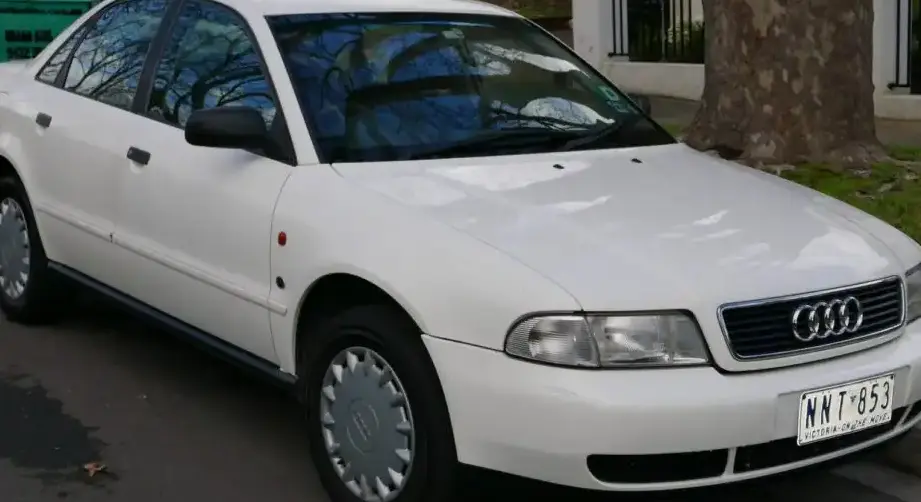
The Audi A4 (B5), produced from November 1994 to July 1996, represented a significant step forward for Audi, establishing a new benchmark in the compact executive car segment. The 2.8 V6 quattro variant, equipped with the AAH engine, was a key model within the B5 range, offering a blend of performance and all-weather capability. Positioned as a mid-to-upper trim level, it catered to buyers seeking a more refined and powerful A4 experience than the base 1.8L models, but at a more accessible price point than the later, more potent 2.8 30V versions. This model played a crucial role in solidifying Audi’s reputation for sophisticated engineering and build quality in the North American market, where the quattro all-wheel-drive system was particularly valued.
Technical Specifications
| Brand | Audi |
| Model | A4 |
| Generation | A4 (B5, Typ 8D) |
| Type (Engine) | 2.8 V6 (174 Hp) quattro |
| Start of production | November, 1994 |
| End of production | July, 1996 |
| Powertrain Architecture | Internal Combustion engine |
| Body type | Sedan |
| Seats | 5 |
| Doors | 4 |
| Fuel consumption (urban) | 12.8 l/100 km (18.4 US mpg, 22.1 UK mpg, 7.8 km/l) |
| Fuel consumption (extra urban) | 6.9 l/100 km (34.1 US mpg, 40.9 UK mpg, 14.5 km/l) |
| Fuel consumption (combined) | 9.5 l/100 km (24.8 US mpg, 29.7 UK mpg, 10.5 km/l) |
| Fuel Type | Petrol (Gasoline) |
| Acceleration 0 – 100 km/h | 8.1 sec |
| Acceleration 0 – 62 mph | 8.1 sec |
| Acceleration 0 – 60 mph | 7.7 sec |
| Maximum speed | 229 km/h (142.29 mph) |
| Weight-to-power ratio | 8 kg/Hp, 125.6 Hp/tonne |
| Weight-to-torque ratio | 5.5 kg/Nm, 180.5 Nm/tonne |
| Power | 174 Hp @ 5500 rpm |
| Power per litre | 62.8 Hp/l |
| Torque | 250 Nm @ 3000 rpm (184.39 lb.-ft. @ 3000 rpm) |
| Engine layout | Front, Longitudinal |
| Engine Model/Code | AAH |
| Engine displacement | 2771 cm3 (169.1 cu. in.) |
| Number of cylinders | 6 |
| Engine configuration | V-engine |
| Cylinder Bore | 82.5 mm (3.25 in.) |
| Piston Stroke | 86.4 mm (3.4 in.) |
| Compression ratio | 10.3:1 |
| Number of valves per cylinder | 2 |
| Fuel injection system | Multi-port manifold injection |
| Engine aspiration | Naturally aspirated engine |
| Valvetrain | OHC |
| Engine oil capacity | 5 l (5.28 US qt | 4.4 UK qt) |
| Coolant | 6.5 l (6.87 US qt | 5.72 UK qt) |
| Kerb Weight | 1385 kg (3053.4 lbs.) |
| Max. weight | 1935 kg (4265.94 lbs.) |
| Max load | 550 kg (1212.54 lbs.) |
| Trunk (boot) space – minimum | 440 l (15.54 cu. ft.) |
| Fuel tank capacity | 60 l (15.85 US gal | 13.2 UK gal) |
| Length | 4479 mm (176.34 in.) |
| Width | 1733 mm (68.23 in.) |
| Height | 1415 mm (55.71 in.) |
| Wheelbase | 2607 mm (102.64 in.) |
| Front track | 1498 mm (58.98 in.) |
| Rear (Back) track | 1477 mm (58.15 in.) |
| Drag coefficient (Cd) | 0.31 |
| Minimum turning circle | 11.1 m (36.42 ft.) |
| Drive wheel | All wheel drive (4×4) |
| Number of gears and type of gearbox | 5 gears, manual transmission |
| Front suspension | Wishbone |
| Rear suspension | Double wishbone |
| Front brakes | Ventilated discs |
| Rear brakes | Disc |
| Assisting systems | ABS (Anti-lock braking system) |
| Steering type | Steering rack and pinion |
| Power steering | Hydraulic Steering |
| Tires size | 195/65 R15 |
| Wheel rims size | 15 |
Powertrain & Engine Architecture
The heart of the 2.8 V6 quattro was the AAH engine, a 2.8-liter (2771 cc) naturally aspirated V6. This engine featured a 90-degree V-angle, contributing to its smooth operation. It utilized a cast iron block with an aluminum cylinder head, a common configuration for durability and weight reduction. The AAH engine employed multi-port fuel injection, delivering fuel directly to each intake port for precise control. The valvetrain consisted of a single overhead camshaft (SOHC) per cylinder bank, operating two valves per cylinder. This configuration, while not as sophisticated as the later dual overhead camshaft (DOHC) 30V engines, provided a good balance of performance and reliability. The engine produced 174 horsepower at 5500 rpm and 250 Nm (184 lb-ft) of torque at 3000 rpm. The five-speed manual transmission was standard, providing drivers with full control over the engine’s power.
Driving Characteristics
The 2.8 V6 quattro offered a noticeably more engaging driving experience than the base 1.8L A4 models. The V6 engine provided ample power for confident acceleration and highway cruising. While not a sports car, the 0-60 mph time of around 7.7 seconds was respectable for its era. The quattro all-wheel-drive system provided excellent traction in all weather conditions, making it a particularly appealing choice in regions with inclement weather. The five-speed manual transmission allowed for precise gear selection, maximizing the engine’s performance. Compared to the later 30V V6, the AAH engine delivered its power in a more linear fashion, lacking the high-end rush of the DOHC version. However, this also made it more forgiving and easier to drive in everyday situations.
Equipment & Trim Levels
The 2.8 V6 quattro typically came well-equipped, reflecting its position as a mid-range offering. Standard features included power windows, power locks, and air conditioning. The interior typically featured cloth upholstery, although leather was available as an option. Alloy wheels were also standard, distinguishing it from the base models. Optional extras included a sunroof, upgraded audio system, and heated front seats. The dashboard layout was typical of Audi’s design language at the time, with a clean and functional design.
Chassis & Braking
The A4 B5 featured a fully independent suspension system, with wishbone suspension at the front and a double wishbone setup at the rear. This provided a comfortable ride while maintaining good handling characteristics. The 2.8 V6 quattro models were equipped with ventilated disc brakes at the front and solid disc brakes at the rear. Anti-lock braking system (ABS) was standard, enhancing safety. The quattro all-wheel-drive system distributed power between the front and rear axles as needed, optimizing traction and stability.
Market Reception & Comparison
The Audi A4 B5 2.8 V6 quattro was generally well-received by automotive critics. It was praised for its refined engine, comfortable ride, and all-weather capability. Compared to its competitors, such as the BMW 3 Series and Mercedes-Benz C-Class, the A4 offered a compelling combination of performance, luxury, and value. The 1.8L models offered better fuel economy, but lacked the performance of the V6. The later 30V V6 models provided even more power, but came at a higher price point.
Legacy
The AAH engine, while not as technologically advanced as later Audi engines, proved to be a reliable and durable powerplant. Properly maintained examples can still be found on the road today. The B5 A4, in general, has gained a following among enthusiasts for its classic Audi styling and solid build quality. The 2.8 V6 quattro variant remains a desirable choice for those seeking a comfortable and capable classic Audi sedan. Parts availability is generally good, although some components may be becoming increasingly difficult to find. The B5 A4 2.8 V6 quattro represents a significant chapter in Audi’s history, establishing the brand as a major player in the premium compact executive car segment.