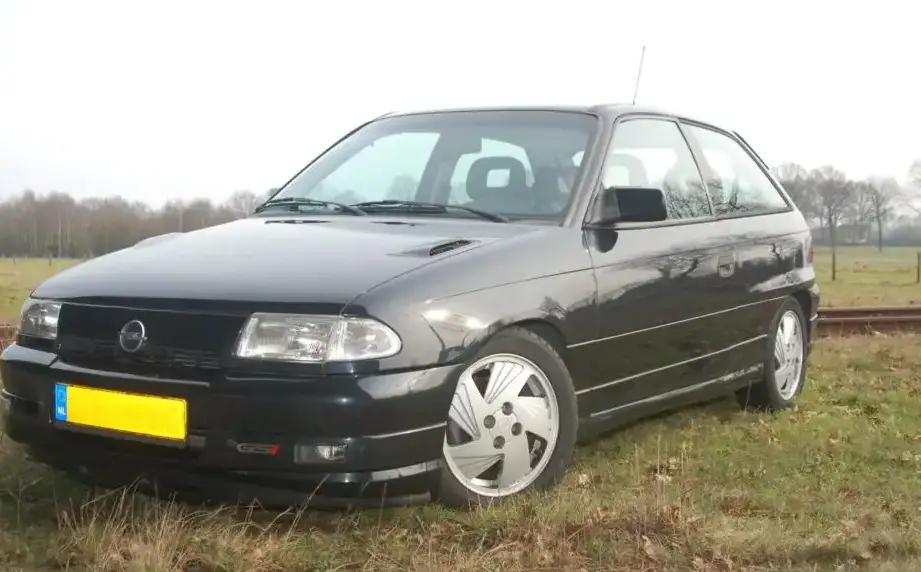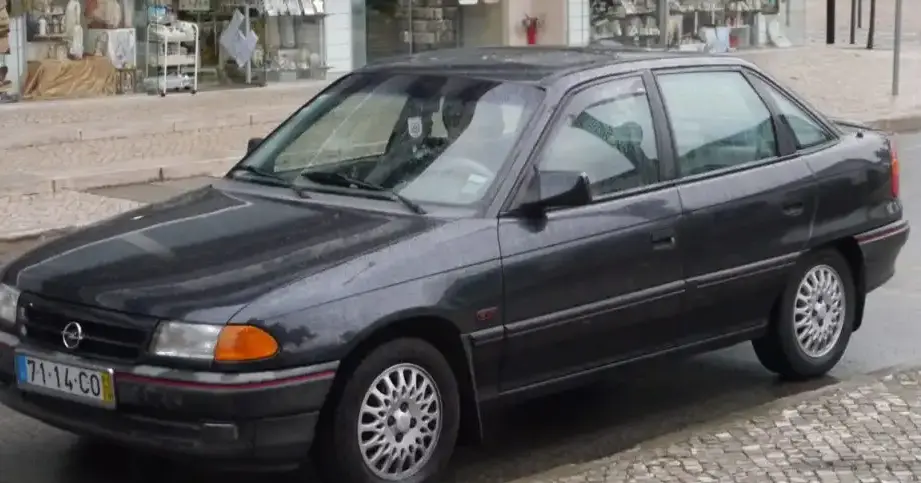
The Opel Astra F Classic 1.7 Turbo, produced between 1993 and 1994, represented a compelling, if somewhat niche, offering within the broader Astra F range. Positioned as a diesel-powered variant aimed at economy-minded drivers, it distinguished itself with a turbocharged engine providing a modest power output. This model primarily served the European market, offering a blend of fuel efficiency and practicality in a compact sedan package. It was a transitional model, bridging the gap between earlier naturally aspirated diesel Astras and the later, more powerful iterations.
Technical Specifications
| Brand | Opel |
| Model | Astra |
| Generation | Astra F Classic |
| Type (Engine) | 1.7 Turbo (82 Hp) |
| Start of production | 1993 |
| End of production | 1994 |
| Powertrain Architecture | Internal Combustion engine |
| Body type | Sedan |
| Seats | 5 |
| Doors | 4 |
| Fuel consumption (urban) | 7.9 l/100 km (29.8 US mpg) |
| Fuel consumption (extra urban) | 5.8 l/100 km (40.6 US mpg) |
| Fuel consumption (combined) | 7.2 l/100 km (32.7 US mpg) |
| Fuel Type | Diesel |
| Acceleration 0 – 100 km/h | 13.5 sec |
| Acceleration 0 – 62 mph | 13.5 sec |
| Acceleration 0 – 60 mph | 12.8 sec |
| Maximum speed | 173 km/h (107.5 mph) |
| Weight-to-power ratio | 13.5 kg/Hp |
| Weight-to-torque ratio | 6.6 kg/Nm |
| Power | 82 Hp @ 4400 rpm |
| Torque | 168 Nm @ 2400 rpm (123.91 lb.-ft. @ 2400 rpm) |
| Engine layout | Front, Transverse |
| Engine Model/Code | X17DT |
| Engine displacement | 1686 cm3 (102.89 cu. in.) |
| Number of cylinders | 4 |
| Engine configuration | Inline |
| Cylinder Bore | 79 mm (3.11 in.) |
| Piston Stroke | 86 mm (3.39 in.) |
| Compression ratio | 22:1 |
| Number of valves per cylinder | 2 |
| Fuel injection system | Precombustion chamber injection |
| Engine aspiration | Turbocharger, Intercooler |
| Valvetrain | SOHC |
| Engine oil capacity | 4.5 l (4.76 US qt | 3.96 UK qt) |
| Coolant capacity | 6.8 l (7.19 US qt | 5.98 UK qt) |
| Kerb Weight | 1105 kg (2436.11 lbs.) |
| Max. weight | 1580 kg (3483.3 lbs.) |
| Max load | 475 kg (1047.2 lbs.) |
| Trunk (boot) space – minimum | 500 l (17.66 cu. ft.) |
| Trunk (boot) space – maximum | 1200 l (42.38 cu. ft.) |
| Fuel tank capacity | 52 l (13.74 US gal | 11.44 UK gal) |
| Length | 4239 mm (166.89 in.) |
| Width | 1688 mm (66.46 in.) |
| Width including mirrors | 1795 mm (70.67 in.) |
| Height | 1410 mm (55.51 in.) |
| Wheelbase | 2517 mm (99.09 in.) |
| Front track | 1430 mm (56.3 in.) |
| Rear track | 1429 mm (56.26 in.) |
| Ride height (ground clearance) | 135 mm (5.31 in.) |
| Drag coefficient (Cd) | 0.31 |
| Minimum turning circle | 10.5 m (34.45 ft.) |
| Drivetrain Architecture | Front wheel drive |
| Number of gears | 5 |
| Gearbox type | Manual transmission |
| Front suspension | Wishbone |
| Rear suspension | Suspension with traction connecting levers |
| Front brakes | Ventilated discs |
| Rear brakes | Drum |
| Steering type | Steering rack and pinion |
| Tires size | 175/70 R13 82T |
| Wheel rims size | 5.5J x 13 ET49 |
Powertrain & Engine Architecture
The heart of the Astra F Classic 1.7 Turbo was the X17DT engine, a 1.7-liter inline-four diesel. This engine utilized a precombustion chamber injection system, a common technology for diesel engines of the era, designed to improve combustion efficiency. A turbocharger with an intercooler was employed to boost power output beyond that of naturally aspirated diesel engines. The engine featured a single overhead camshaft (SOHC) valvetrain, operating two valves per cylinder. The 1686cc displacement produced 82 horsepower at 4400 rpm and 168 Nm (124 lb-ft) of torque at 2400 rpm. This engine was paired with a five-speed manual transmission, the only gearbox option available for this variant. The transmission’s gear ratios were geared towards maximizing fuel economy, with a relatively tall final drive.
Driving Characteristics
The 1.7 Turbo offered a noticeable step up in performance compared to the naturally aspirated diesel Astras, but it wasn’t a particularly sporty vehicle. Acceleration to 60 mph took around 12.8 seconds, and top speed was approximately 107.5 mph. The turbocharger provided a boost in mid-range power, making it reasonably capable for overtaking maneuvers. However, the engine lacked the responsiveness of gasoline engines, and turbo lag was noticeable. The five-speed manual transmission allowed drivers to keep the engine in its optimal power band, but the gear ratios were spaced to prioritize fuel efficiency over outright performance. The ride quality was typical for a European compact car of the time – firm but generally comfortable.
Equipment & Trim Levels
The Astra F Classic 1.7 Turbo was generally positioned as a mid-range trim level. Standard equipment typically included power steering, central locking, and basic instrumentation. Interior upholstery was usually cloth, and the dashboard featured a functional, if somewhat utilitarian, design. Optional extras included power windows, a sunroof, and upgraded audio systems. The trim level aimed to provide a balance between affordability and comfort, appealing to buyers who wanted a fuel-efficient car with a reasonable level of equipment.
Chassis & Braking
The Astra F Classic featured a front-wheel-drive layout with independent wishbone suspension at the front and a semi-independent suspension with traction connecting levers at the rear. The front brakes were ventilated discs, providing adequate stopping power, while the rear brakes were drums. This configuration was typical for cars in this weight class and price range during the early 1990s. The steering was a rack-and-pinion system, offering precise control. The car’s relatively light weight (around 2436 lbs) contributed to its handling characteristics.
Market Reception & Comparison
The Astra F Classic 1.7 Turbo received mixed reviews. Critics praised its fuel economy and practicality, but some found the engine to be noisy and lacking in refinement compared to gasoline alternatives. Compared to the 1.4 or 1.6-liter gasoline versions, the 1.7 Turbo offered significantly better fuel economy but less overall performance. Against other diesel-powered competitors, such as the Volkswagen Golf TDI, the Astra offered a competitive package in terms of price and features. The 1.7 Turbo was often seen as a sensible choice for drivers who prioritized economy and reliability over driving excitement.
Legacy
The X17DT engine, while not known for being particularly groundbreaking, proved to be reasonably durable and reliable. Properly maintained examples can still be found on the road today. In the used car market, the Astra F Classic 1.7 Turbo is often sought after by enthusiasts looking for a classic European diesel. Its simplicity and relatively low running costs make it an appealing option for those who appreciate older vehicles. While not a performance icon, the 1.7 Turbo represents a significant chapter in the Astra’s history, showcasing Opel’s commitment to fuel efficiency and practicality.