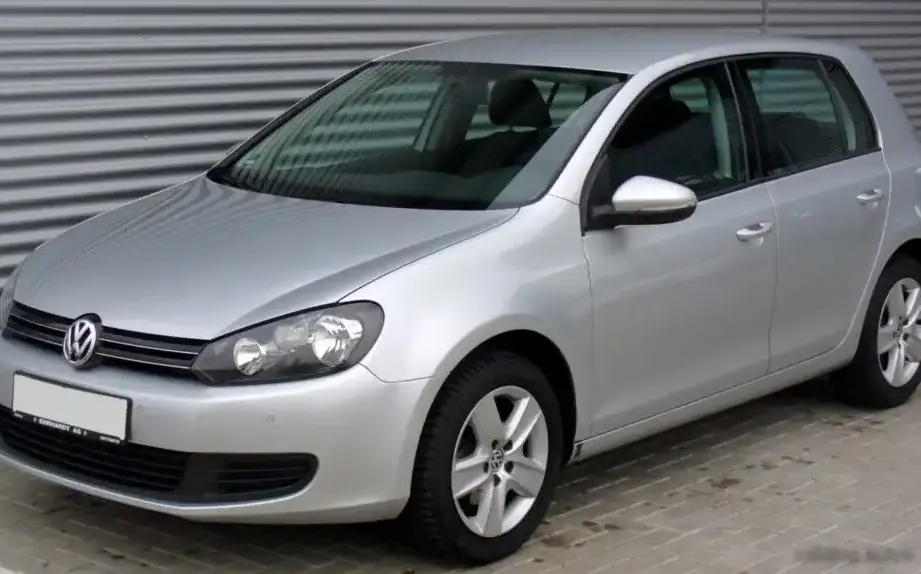
The Volkswagen Golf VI 2.0 TDI (140 hp) BMT DSG, produced from 2010 to 2012, represents a significant iteration within the sixth generation of Volkswagen’s iconic Golf model. Positioned as a mid-range offering within the Golf VI lineup, this variant aimed to balance fuel efficiency with respectable performance, appealing to buyers seeking a practical and economical diesel hatchback. It was a key component of Volkswagen’s strategy to offer a diverse range of powertrains within the Golf VI, catering to varying customer needs and preferences, particularly in European markets where diesel engines held a dominant share. The “BMT” designation signifies Volkswagen’s “BlueMotion Technology,” emphasizing fuel-saving measures. This model utilized the well-regarded 2.0-liter TDI engine paired with the dual-clutch DSG (Direct-Shift Gearbox) transmission.
Technical Specifications
| Brand | Volkswagen |
| Model | Golf |
| Generation | Golf VI (5-door) |
| Type (Engine) | 2.0 TDI (140 Hp) BMT DSG |
| Start of production | 2010 |
| End of production | 2012 |
| Powertrain Architecture | Internal Combustion engine |
| Body type | Hatchback |
| Seats | 5 |
| Doors | 5 |
| Fuel consumption (urban) | 5.9 l/100 km (39.9 US mpg, 47.9 UK mpg, 16.9 km/l) |
| Fuel consumption (extra urban) | 4.2 l/100 km (56 US mpg, 67.3 UK mpg, 23.8 km/l) |
| Fuel consumption (combined) | 4.9 l/100 km (48 US mpg, 57.6 UK mpg, 20.4 km/l) |
| CO2 emissions | 127 g/km |
| Fuel Type | Diesel |
| Acceleration 0 – 100 km/h | 9.3 sec |
| Acceleration 0 – 62 mph | 9.3 sec |
| Acceleration 0 – 60 mph | 8.8 sec |
| Maximum speed | 210 km/h (130.49 mph) |
| Emission standard | Euro 5 |
| Weight-to-power ratio | 9.4 kg/Hp, 106.5 Hp/tonne |
| Weight-to-torque ratio | 4.1 kg/Nm, 243.5 Nm/tonne |
| Power | 140 Hp @ 4200 rpm |
| Power per litre | 71.1 Hp/l |
| Torque | 320 Nm @ 1750-2500 rpm (236.02 lb.-ft. @ 1750-2500 rpm) |
| Engine layout | Front, Transverse |
| Engine Model/Code | CBAB |
| Engine displacement | 1968 cm3 (120.09 cu. in.) |
| Number of cylinders | 4 |
| Engine configuration | Inline |
| Cylinder Bore | 81 mm (3.19 in.) |
| Piston Stroke | 95.5 mm (3.76 in.) |
| Compression ratio | 16.5:1 |
| Number of valves per cylinder | 4 |
| Fuel injection system | Diesel Commonrail |
| Engine aspiration | Turbocharger, Intercooler |
| Valvetrain | DOHC |
| Engine oil capacity | 4.3 l (4.54 US qt | 3.78 UK qt) |
| Kerb Weight | 1314 kg (2896.87 lbs.) |
| Max. weight | 1900 kg (4188.78 lbs.) |
| Max load | 586 kg (1291.91 lbs.) |
| Trunk (boot) space – minimum | 350 l (12.36 cu. ft.) |
| Trunk (boot) space – maximum | 1305 l (46.09 cu. ft.) |
| Fuel tank capacity | 55 l (14.53 US gal | 12.1 UK gal) |
| Max. roof load | 75 kg (165.35 lbs.) |
| Permitted trailer load with brakes (12%) | 1500 kg (3306.93 lbs.) |
| Permitted trailer load without brakes | 690 kg (1521.19 lbs.) |
| Permitted towbar download | 75 kg (165.35 lbs.) |
| Length | 4199 mm (165.31 in.) |
| Width | 1786 mm (70.31 in.) |
| Width including mirrors | 2048 mm (80.63 in.) |
| Height | 1480 mm (58.27 in.) |
| Wheelbase | 2578 mm (101.5 in.) |
| Front track | 1541 mm (60.67 in.) |
| Rear track | 1514 mm (59.61 in.) |
| Ride height (ground clearance) | 150 mm (5.91 in.) |
| Minimum turning circle | 10.9 m (35.76 ft.) |
| Front suspension | Independent type McPherson, Transverse stabilizer |
| Rear suspension | Independent multi-link suspension, Transverse stabilizer |
| Front brakes | Ventilated discs |
| Rear brakes | Disc |
| Number of gears | 6 |
| Type of gearbox | automatic transmission DSG |
Powertrain & Engine Architecture
The heart of the Golf VI 2.0 TDI BMT DSG is the CBAB engine code, a 1968cc inline-four cylinder diesel engine. This engine utilizes a common rail direct injection system, delivering fuel at extremely high pressure for optimized combustion. A turbocharger with an intercooler is employed to boost power and torque, providing 140 horsepower at 4200 rpm and a substantial 320 Nm (236 lb-ft) of torque between 1750 and 2500 rpm. The engine features a double overhead camshaft (DOHC) valvetrain with four valves per cylinder, enhancing breathing and contributing to its efficiency. The “BMT” designation indicates the inclusion of features like start-stop technology and optimized aerodynamics to reduce fuel consumption and emissions. The DSG (Direct-Shift Gearbox) is a six-speed dual-clutch transmission, offering quick and smooth gear changes, contributing to both performance and fuel economy. It operates similarly to two manual gearboxes in one, pre-selecting the next gear for seamless shifts.
Driving Characteristics
The 2.0 TDI BMT DSG offered a comfortable and refined driving experience. While not a performance-oriented variant, the 140 hp engine and DSG transmission provided adequate acceleration, with a 0-60 mph time of around 8.8 seconds. The DSG transmission’s quick shifts helped maximize the available power, making overtaking maneuvers relatively effortless. The torque curve was broad and flat, providing strong pulling power from low engine speeds, which was particularly useful for everyday driving and highway cruising. Compared to the more powerful Golf GTI or the diesel-fueled Golf GTD, this variant prioritized fuel economy over outright speed. The automatic transmission made it easier to drive in congested urban environments, while the BMT features further enhanced fuel efficiency. Compared to a manual transmission version of the same engine, the DSG offered convenience and potentially slightly improved fuel economy, though some drivers might prefer the greater control of a manual gearbox.
Equipment & Trim Levels
The Golf VI 2.0 TDI (140 hp) BMT DSG typically came equipped with a reasonable level of standard features. Interior upholstery was usually cloth, with options for upgraded leather or Alcantara. Standard equipment often included air conditioning, a CD/MP3 stereo system, power windows and mirrors, and central locking. Safety features such as ABS, ESP (Electronic Stability Program), and multiple airbags were standard. Optional extras included a sunroof, upgraded audio systems, navigation, parking sensors, and alloy wheels. Trim levels varied depending on the market, but generally, this variant sat in the mid-range of the Golf VI lineup, offering a good balance of features and affordability.
Chassis & Braking
The Golf VI 2.0 TDI BMT DSG utilized an independent suspension setup, with McPherson struts at the front and a multi-link suspension at the rear. This configuration provided a comfortable ride and good handling characteristics. A transverse stabilizer bar was fitted to both the front and rear axles to reduce body roll during cornering. Braking duties were handled by ventilated discs at the front and solid discs at the rear, providing adequate stopping power. ABS (Anti-lock Braking System) was standard, enhancing braking performance and stability. The suspension was tuned to prioritize comfort and ride quality, making it well-suited for everyday driving.
Market Reception & Comparison
The Golf VI 2.0 TDI (140 hp) BMT DSG was generally well-received by automotive critics. It was praised for its fuel efficiency, comfortable ride, and refined driving experience. Critics noted that while it wasn’t the most exciting Golf variant, it offered a practical and economical option for buyers seeking a versatile hatchback. Compared to the higher-output TDI models, this variant offered lower running costs but sacrificed some performance. Compared to petrol-powered Golfs, the TDI offered significantly better fuel economy, making it a popular choice in Europe where diesel fuel was often cheaper than gasoline. Reliability was generally good, with the TDI engine and DSG transmission proving to be durable and dependable.
Legacy
The Volkswagen Golf VI 2.0 TDI (140 hp) BMT DSG remains a popular choice in the used car market today. The TDI engine is known for its longevity and fuel efficiency, making it an attractive option for buyers seeking a reliable and economical vehicle. The DSG transmission, while requiring occasional maintenance, is generally durable and provides a smooth driving experience. However, potential buyers should be aware of the potential for DPF (Diesel Particulate Filter) issues, particularly if the vehicle has primarily been used for short trips. Overall, this variant represents a well-rounded and practical option within the Golf VI lineup, offering a good balance of performance, fuel economy, and reliability.