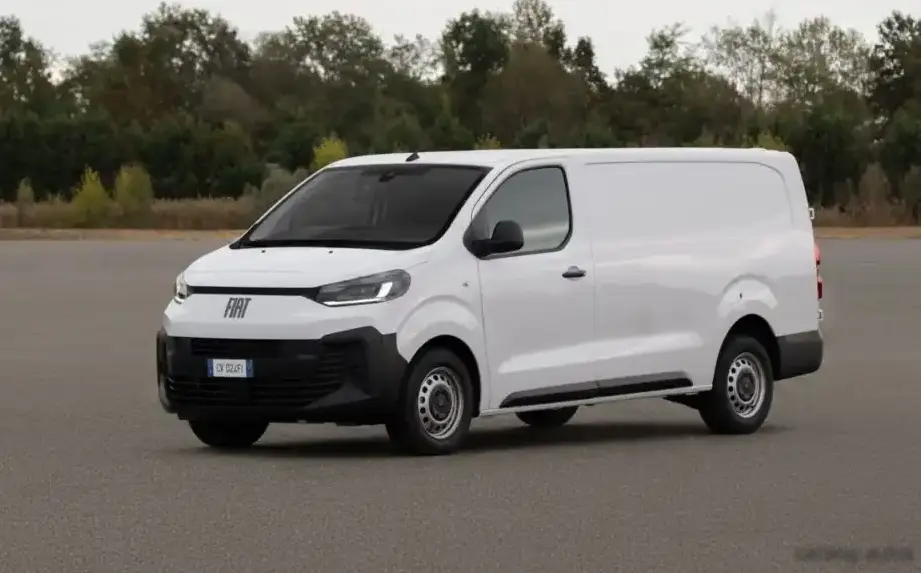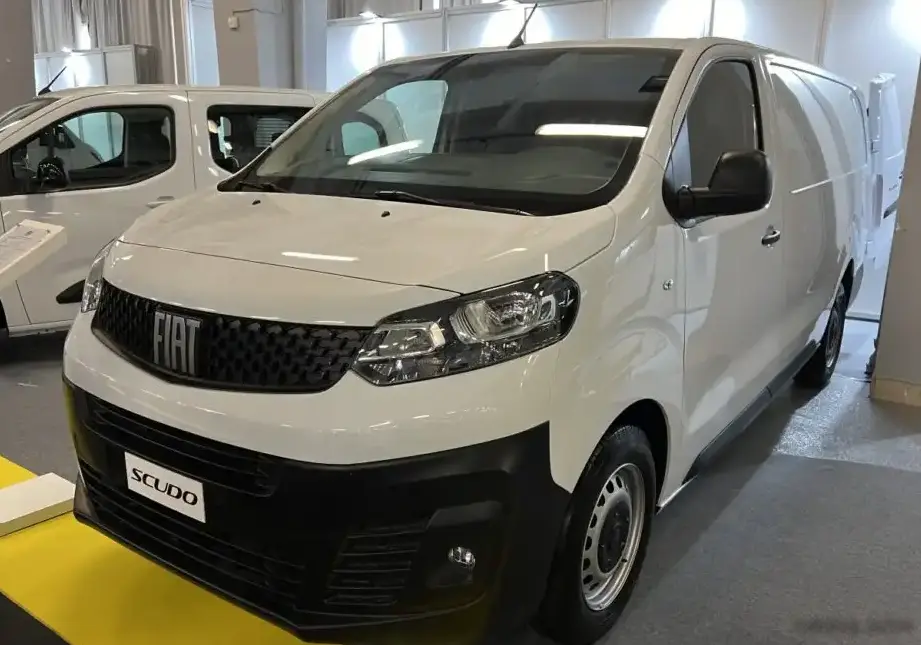
The Fiat Scudo III Panel Van e-Scudo 50 kWh (136 Hp) L2 represents Fiat’s entry into the all-electric commercial vehicle market, launched in December 2021 and produced through October 2023. This variant is part of the Scudo III generation, a collaborative effort between the PSA Group (now Stellantis) and Toyota, sharing its platform with the Peugeot Expert, Citroën Jumpy, and Toyota Proace. The “L2” designation indicates a medium-length wheelbase, offering a balance between cargo capacity and maneuverability. Positioned as a practical and environmentally conscious solution for businesses, the e-Scudo aimed to provide a zero-emission alternative to traditional diesel-powered vans.
Technical Specifications
| Brand | Fiat |
| Model | Scudo |
| Generation | Scudo III Panel Van |
| Type (Engine) | e-Scudo 50 kWh (136 Hp) L2 |
| Start of production | December, 2021 |
| End of production | October, 2023 |
| Powertrain Architecture | BEV (Electric Vehicle) |
| Body type | Van |
| Seats | 2-3 |
| Doors | 4-5 |
| Fuel Type | Electricity |
| Acceleration 0 – 100 km/h | 12.1 sec |
| Acceleration 0 – 62 mph | 12.1 sec |
| Acceleration 0 – 60 mph | 11.5 sec |
| Maximum speed | 130 km/h (80.78 mph) |
| Weight-to-power ratio | 13.8 kg/Hp, 72.6 Hp/tonne |
| Weight-to-torque ratio | 7.2 kg/Nm, 138.7 Nm/tonne |
| Gross battery capacity | 50 kWh |
| Battery technology | Lithium-ion (Li-Ion) |
| Battery location | Below the floor |
| All-electric range (WLTP) | 231 km (143.54 mi) |
| Average Energy consumption (WLTP) | 23.2-26.1 kWh/100 km (37.34 – 42 kWh/100 mi) |
| MPGe | 90 – 80 |
| km/kWh | 4.3 – 3.8 |
| mi/kWh | 2.7 – 2.4 |
| Electric motor power | 136 Hp |
| Electric motor Torque | 260 Nm (191.77 lb.-ft.) |
| Electric motor model/code | ZK01 |
| Electric motor location | Front axle, Transverse |
| Electric motor type | Synchronous |
| System power | 136 Hp |
| System torque | 260 Nm (191.77 lb.-ft.) |
| Kerb Weight | 1874 kg (4131.46 lbs.) |
| Max. weight | 2875 kg (6338.29 lbs.) |
| Max load | 1001 kg (2206.83 lbs.) |
| Trunk (boot) space – minimum | 5300 l (187.17 cu. ft.) |
| Trunk (boot) space – maximum | 5800 l (204.83 cu. ft.) |
| Max. roof load | 170 kg (374.79 lbs.) |
| Permitted trailer load with brakes (12%) | 1000 kg (2204.62 lbs.) |
| Length | 4959 mm (195.24 in.) |
| Width | 1920 mm (75.59 in.) |
| Width with mirrors folded | 2010 mm (79.13 in.) |
| Width including mirrors | 2204 mm (86.77 in.) |
| Height | 1881 mm (74.06 in.) |
| Wheelbase | 3275 mm (128.94 in.) |
| Front track | 1630 mm (64.17 in.) |
| Rear (Back) track | 1618 mm (63.7 in.) |
| Front overhang | 881 mm (34.69 in.) |
| Rear overhang | 803 mm (31.61 in.) |
| Ride height (ground clearance) | 170 mm (6.69 in.) |
| Minimum turning circle (turning diameter) | 12.4 m (40.68 ft.) |
| Drivetrain Architecture | One electric motor drives the front wheels. |
| Drive wheel | Front wheel drive |
| Number of gears and type of gearbox | 1 gears, automatic transmission |
| Front suspension | Independent, type McPherson with coil spring and anti-roll bar |
| Rear suspension | Trailing arm |
| Front brakes | Ventilated discs |
| Rear brakes | Disc |
| Assisting systems | ABS (Anti-lock braking system) |
| Steering type | Steering rack and pinion |
| Power steering | Electric Steering |
| Tires size | 215/65 R16 |
| Wheel rims size | 16 |
Powertrain & Engine Architecture
The e-Scudo utilizes a fully electric powertrain, centered around a 50 kWh lithium-ion battery pack positioned under the vehicle floor. This placement contributes to a lower center of gravity, enhancing stability. The electric motor, designated ZK01, is a synchronous motor delivering 136 horsepower and 260 Nm (191.77 lb.-ft.) of torque. The single-speed automatic transmission provides seamless power delivery. The vehicle features regenerative braking, which helps to recapture energy during deceleration, extending the overall range. Charging is accomplished via a standard CCS connector, allowing for both AC and DC fast charging capabilities. The battery management system (BMS) is crucial for optimizing battery life and performance, monitoring cell voltages, temperatures, and overall health.
Driving Characteristics
The e-Scudo 50 kWh offers a driving experience markedly different from its diesel counterparts. Acceleration, while not sporty, is adequate for urban and suburban delivery routes, achieving 0-60 mph in approximately 11.5 seconds. The instant torque characteristic of electric motors provides brisk acceleration from a standstill. The single-speed transmission simplifies operation, and the lack of engine noise contributes to a quieter cabin. The range of 231 km (143.54 miles) on the WLTP cycle is sufficient for many daily delivery tasks, but requires careful route planning for longer journeys. Compared to higher-powered versions of the Scudo, the e-Scudo prioritizes efficiency and lower running costs over outright performance.
Equipment & Trim Levels
The e-Scudo L2 typically came equipped with a functional, work-oriented interior. Standard features included a driver’s seat with adjustable lumbar support, a multi-function steering wheel, and a basic infotainment system with Bluetooth connectivity. Safety features such as ABS, electronic stability control, and multiple airbags were standard. Optional extras included a touchscreen infotainment system with navigation, rear parking sensors, a reversing camera, and various driver-assistance systems. Interior trim was generally durable and practical, focusing on ease of cleaning and longevity. The L2 variant offered a generous cargo volume of 5300-5800 liters (187.17-204.83 cu. ft.).
Chassis & Braking
The e-Scudo utilizes a McPherson strut front suspension with a coil spring and anti-roll bar, providing a comfortable ride and predictable handling. The rear suspension employs a trailing arm setup, optimized for load-carrying capacity. The vehicle is equipped with ventilated disc brakes at the front and solid discs at the rear, providing adequate stopping power. Electric power steering offers light and precise control. The tires are typically 215/65 R16, chosen for a balance of rolling resistance and durability. The chassis is reinforced to accommodate the weight of the battery pack, ensuring structural integrity and safety.
Market Reception & Comparison
The Fiat e-Scudo was generally well-received by critics as a viable electric van option, particularly for businesses operating in urban areas with emission restrictions. Its range, while not class-leading, was sufficient for many applications. Compared to diesel-powered Scudo variants, the e-Scudo offered significantly lower running costs due to reduced fuel and maintenance expenses. However, the higher initial purchase price was a drawback. Competitors included the Peugeot e-Expert, Citroën ë-Jumpy, and Renault Kangoo E-Tech, all offering similar capabilities and price points. The e-Scudo’s practicality and relatively affordable price within the electric van segment contributed to its moderate success.
Legacy
The Fiat e-Scudo 50 kWh (136 Hp) L2 represents an important step in Fiat’s transition towards electric mobility. While production ended in 2023, the model laid the groundwork for future electric commercial vehicles from the brand. The powertrain, while not without its limitations, proved to be relatively reliable in early real-world applications. On the used market, these vans are becoming increasingly attractive to businesses seeking a cost-effective and environmentally friendly transportation solution. The e-Scudo’s legacy lies in demonstrating the feasibility and benefits of electric vans for commercial use, paving the way for wider adoption of electric vehicles in the logistics and delivery sectors.