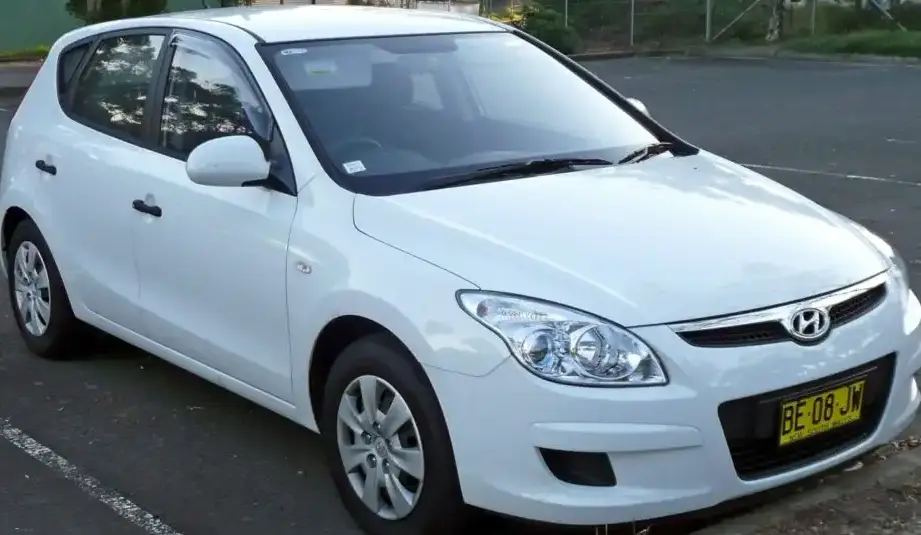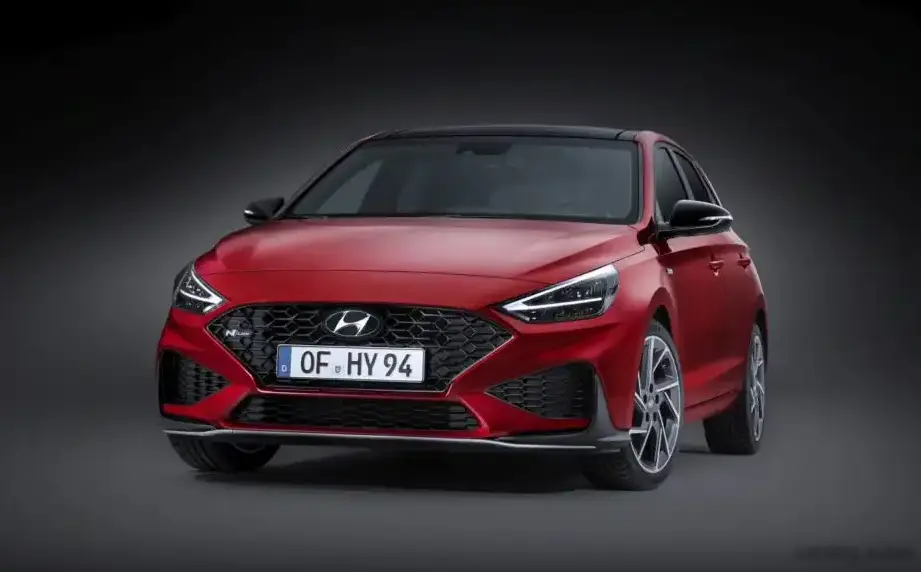
The Hyundai i30 III (facelift, introduced in September 2020 and produced through January 2022) represents a mid-cycle refresh of the third-generation i30, Hyundai’s globally-focused compact hatchback. The 1.6 CRDi (136 Hp) Mild Hybrid DCT variant occupied a significant position within the i30 lineup, aiming to balance fuel efficiency with reasonable performance. This version was particularly aimed at European markets where diesel engines and fuel economy were highly valued, and represented Hyundai’s push towards incorporating mild hybrid technology into mainstream models. It sat in the mid-range of the i30 offerings, positioned above the base gasoline engines but below the more powerful diesel and potential performance-oriented trims.
Technical Specifications
| Brand | Hyundai |
| Model | i30 |
| Generation | i30 III (facelift 2020) |
| Type (Engine) | 1.6 CRDi (136 Hp) Mild Hybrid DCT |
| Start of production | September, 2020 |
| End of production | January, 2022 |
| Powertrain Architecture | MHEV (Mild Hybrid Electric Vehicle) |
| Body type | Hatchback |
| Seats | 5 |
| Doors | 5 |
| Fuel Type | Diesel |
| Acceleration 0 – 100 km/h | 9.9 sec |
| Acceleration 0 – 62 mph | 9.9 sec |
| Acceleration 0 – 60 mph | 9.4 sec |
| Maximum speed | 200 km/h (124.27 mph) |
| Emission standard | EURO 6d TEMP |
| Weight-to-power ratio | 9.9 kg/Hp |
| Weight-to-torque ratio | 4.2 kg/Nm |
| Power | 136 Hp @ 4000 rpm |
| Power per litre | 85.1 Hp/l |
| Torque | 320 Nm @ 2000-2250 rpm (236.02 lb.-ft.) |
| Engine layout | Front, Transverse |
| Engine Model/Code | D4FE |
| Engine displacement | 1598 cm3 (97.52 cu. in.) |
| Number of cylinders | 4 |
| Engine configuration | Inline |
| Number of valves per cylinder | 4 |
| Fuel injection system | Diesel Commonrail |
| Engine aspiration | Turbocharger, Intercooler |
| Engine oil capacity | 4.4 l (4.65 US qt | 3.87 UK qt) |
| Coolant capacity | 6.2 l (6.55 US qt | 5.46 UK qt) |
| Kerb Weight | 1343 kg (2960.81 lbs.) |
| Max. weight | 1920 kg (4232.88 lbs.) |
| Max load | 577 kg (1272.07 lbs.) |
| Trunk (boot) space – minimum | 395 l (13.95 cu. ft.) |
| Trunk (boot) space – maximum | 1301 l (45.94 cu. ft.) |
| Max. roof load | 80 kg (176.37 lbs.) |
| Permitted trailer load with brakes (12%) | 1500 kg (3306.93 lbs.) |
| Permitted trailer load without brakes | 650 kg (1433 lbs.) |
| Length | 4340 mm (170.87 in.) |
| Width | 1795 mm (70.67 in.) |
| Height | 1455 mm (57.28 in.) |
| Wheelbase | 2650 mm (104.33 in.) |
| Number of gears | 7 |
| Gearbox type | Automatic transmission DCT |
Powertrain & Engine Architecture
The heart of this i30 variant is the D4FE 1.6-liter four-cylinder diesel engine. This engine utilizes a common-rail direct injection system, delivering fuel at extremely high pressure for optimized combustion. A turbocharger with an intercooler is employed to boost power output and improve torque across a wider rev range. The engine’s 136 horsepower peak is achieved at 4000 rpm, while its substantial 320 Nm (236 lb-ft) of torque is available from 2000-2250 rpm, providing strong pulling power for everyday driving. The “Mild Hybrid” designation indicates the inclusion of a 48V electrical system and a small electric motor/generator. This system assists the engine during acceleration, allowing for engine-off coasting and regenerative braking, contributing to improved fuel economy. The engine is paired with a 7-speed dual-clutch transmission (DCT), offering quick and smooth gear changes. This DCT is a key component in maximizing both performance and efficiency.
Driving Characteristics
The 1.6 CRDi with the DCT delivers a comfortable and refined driving experience. The readily available torque makes it feel responsive in typical driving situations, such as merging onto highways or overtaking. While not a performance-focused variant, the 9.9-second 0-62 mph acceleration is respectable for a diesel-powered hatchback. The DCT transmission contributes to a seamless power delivery, and the mild hybrid system helps to smooth out gear changes and reduce turbo lag. Compared to the higher-output diesel versions, this 136 hp model prioritizes fuel economy over outright speed. It also feels more refined than the base gasoline engines, offering a quieter and more relaxed driving experience. The DCT’s gear ratios are tuned for efficiency, meaning it may hold onto gears slightly longer than a sportier transmission, but this contributes to better fuel consumption.
Equipment & Trim Levels
The 1.6 CRDi Mild Hybrid DCT typically came equipped with a solid array of standard features. These generally included air conditioning, a touchscreen infotainment system with Apple CarPlay and Android Auto compatibility, Bluetooth connectivity, and a suite of safety features such as lane departure warning, forward collision avoidance assist, and automatic emergency braking. Interior upholstery was typically cloth, with options for leather upgrades. Higher trim levels added features like heated seats, a larger touchscreen display, a premium sound system, and parking sensors. Exterior features often included alloy wheels, fog lights, and chrome accents. The specific trim level (e.g., SE, Premium, or Prestige) dictated the level of standard equipment.
Chassis & Braking
The i30 III utilizes a McPherson strut front suspension and an independent multi-link rear suspension. This setup provides a good balance between ride comfort and handling. The suspension is tuned to be compliant enough for everyday driving, while still offering decent body control in corners. Braking systems varied slightly depending on trim level, but generally consisted of disc brakes on the front wheels and either disc or drum brakes on the rear. Anti-lock Braking System (ABS) was standard, along with Electronic Stability Control (ESC). Stabilizer bars were fitted front and rear to reduce body roll during cornering.
Market Reception & Comparison
The Hyundai i30 1.6 CRDi Mild Hybrid DCT was generally well-received by automotive critics. It was praised for its fuel efficiency, comfortable ride, and well-equipped interior. Critics noted that while it wasn’t the most exciting car to drive, it offered a practical and economical option for buyers seeking a compact hatchback. Compared to the more powerful diesel variants, the 1.6 CRDi offered a lower price point and better fuel economy, making it an attractive option for those prioritizing cost-effectiveness. Against gasoline-powered i30s, the diesel offered superior torque and fuel efficiency, albeit with a slightly higher purchase price. Reliability reports generally indicated good dependability for the powertrain, although, as with any diesel, proper maintenance (including regular DPF regeneration) was crucial.
Legacy
The 1.6 CRDi Mild Hybrid DCT powertrain has proven to be relatively reliable in the used car market. The engine, while complex, is generally robust when properly maintained. The DCT transmission, while offering smooth shifts, can be more expensive to repair than a traditional automatic transmission. The mild hybrid system has also proven to be durable, with few reported issues. Today, these i30s represent a good value proposition for buyers seeking an economical and well-equipped compact hatchback. The combination of diesel efficiency and mild hybrid technology continues to appeal to those looking to minimize their fuel costs and environmental impact. However, potential buyers should be aware of the potential costs associated with diesel particulate filter (DPF) maintenance and ensure the vehicle has a documented service history.