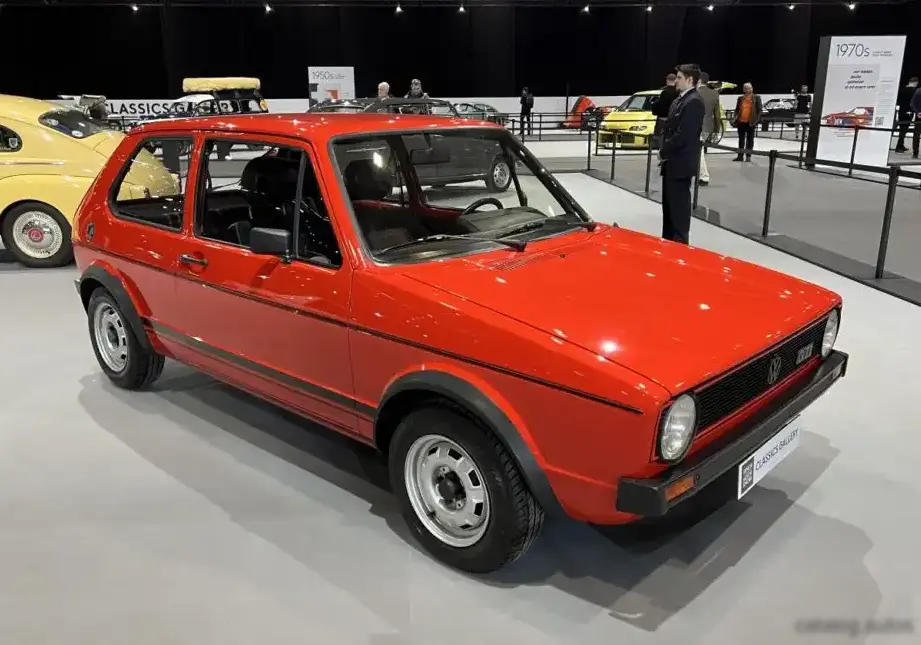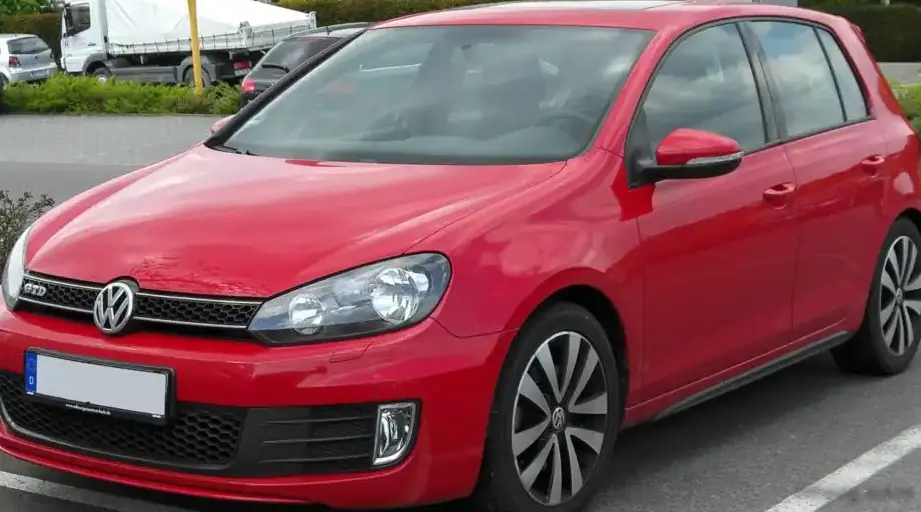
The Volkswagen Golf VI GTD 2.0 TDI (170 hp) DSG, produced from 2009 to 2012, represents a compelling blend of performance and efficiency within the sixth generation Golf lineup. Positioned as a sporty diesel variant, it occupied a space between the more economical base models and the full-fledged GTI. This five-door hatchback was primarily aimed at European markets, where diesel engines held significant popularity, offering a refined driving experience with respectable power and fuel economy. It was built on the A5 platform, also known as the 1HX0/A3 platform, shared with other Volkswagen Group vehicles like the Audi A3 and SEAT Leon.
Technical Specifications
| Brand | Volkswagen |
| Model | Golf |
| Generation | Golf VI (5-door) |
| Type (Engine) | GTD 2.0 TDI (170 Hp) DSG |
| Start of production | 2009 |
| End of production | 2012 |
| Powertrain Architecture | Internal Combustion engine |
| Body type | Hatchback |
| Seats | 5 |
| Doors | 5 |
| Fuel consumption (urban) | 6.9 l/100 km (34.1 US mpg, 40.9 UK mpg, 14.5 km/l) |
| Fuel consumption (extra urban) | 4.6 l/100 km (51.1 US mpg, 61.4 UK mpg, 21.7 km/l) |
| Fuel consumption (combined) | 5.4 l/100 km (43.6 US mpg, 52.3 UK mpg, 18.5 km/l) |
| CO2 emissions | 142 g/km |
| Fuel Type | Diesel |
| Acceleration 0 – 100 km/h | 8.1 sec |
| Acceleration 0 – 62 mph | 8.1 sec |
| Acceleration 0 – 60 mph | 7.7 sec |
| Maximum speed | 220 km/h (136.7 mph) |
| Emission standard | Euro 5 |
| Weight-to-power ratio | 8 kg/Hp, 125.4 Hp/tonne |
| Weight-to-torque ratio | 3.9 kg/Nm, 258.1 Nm/tonne |
| Power | 170 Hp @ 4200 rpm |
| Power per litre | 86.4 Hp/l |
| Torque | 350 Nm @ 1750-2500 rpm (258.15 lb.-ft. @ 1750-2500 rpm) |
| Engine layout | Front, Transverse |
| Engine Model/Code | CBBB, CFGB |
| Engine displacement | 1968 cm3 (120.09 cu. in.) |
| Number of cylinders | 4 |
| Engine configuration | Inline |
| Cylinder Bore | 81 mm (3.19 in.) |
| Piston Stroke | 95.5 mm (3.76 in.) |
| Compression ratio | 16.5:1 |
| Number of valves per cylinder | 4 |
| Fuel injection system | Diesel Commonrail |
| Engine aspiration | Turbocharger, Intercooler |
| Valvetrain | DOHC |
| Engine oil capacity | 4 l (4.23 US qt | 3.52 UK qt) |
| Kerb Weight | 1356 kg (2989.47 lbs.) |
| Max. weight | 1910 kg (4210.83 lbs.) |
| Max load | 554 kg (1221.36 lbs.) |
| Trunk (boot) space – minimum | 350 l (12.36 cu. ft.) |
| Trunk (boot) space – maximum | 1305 l (46.09 cu. ft.) |
| Fuel tank capacity | 55 l (14.53 US gal | 12.1 UK gal) |
| Max. roof load | 100 kg (220.46 lbs.) |
| Permitted trailer load with brakes (8%) | 1700 kg (3747.86 lbs.) |
| Permitted trailer load with brakes (12%) | 1500 kg (3306.93 lbs.) |
| Permitted trailer load without brakes | 710 kg (1565.28 lbs.) |
| Permitted towbar download | 75 kg (165.35 lbs.) |
| Length | 4213 mm (165.87 in.) |
| Width | 1786 mm (70.31 in.) |
| Width including mirrors | 2048 mm (80.63 in.) |
| Height | 1469 mm (57.83 in.) |
| Wheelbase | 2578 mm (101.5 in.) |
| Front track | 1533 mm (60.35 in.) |
| Rear track | 1514 mm (59.61 in.) |
| Ride height (ground clearance) | 140 mm (5.51 in.) |
| Minimum turning circle | 10.9 m (35.76 ft.) |
| Drivetrain Architecture | Front wheel drive |
| Number of gears and type of gearbox | 6 gears, automatic transmission DSG |
| Front suspension | Independent type McPherson, Transverse stabilizer |
| Rear suspension | Independent multi-link suspension, Transverse stabilizer |
| Front brakes | Ventilated discs |
| Rear brakes | Disc |
| Assisting systems | ABS (Anti-lock braking system) |
| Steering type | Steering rack and pinion |
| Power steering | Electric Steering |
| Tires size | 225/45 R 17 |
| Wheel rims size | 7 J x 17 |
INTRODUCTION
The Golf VI GTD 2.0 TDI DSG, launched in 2009, was a key component of Volkswagen’s strategy to offer a compelling diesel alternative to the petrol-powered GTI. It aimed to deliver a similar level of driving enjoyment, but with significantly improved fuel economy and lower emissions. The “GTD” badge, revived for the Golf VI, signified a return to a performance-oriented diesel model, harking back to the original Golf GTI Diesel from the 1980s. This variant utilized the common rail diesel injection technology and a dual-clutch gearbox (DSG) to provide a smooth and efficient driving experience.
Powertrain & Engine Architecture
At the heart of the GTD was the 2.0-liter four-cylinder diesel engine, specifically the CBBB or CFGB engine code depending on the production year and market. This engine featured common rail direct injection, delivering fuel at extremely high pressure for optimized combustion. The engine produced 170 horsepower at 4200 rpm and a substantial 350 Nm (258 lb-ft) of torque between 1750 and 2500 rpm. A turbocharger with an intercooler further enhanced performance. The engine employed a double overhead camshaft (DOHC) valvetrain with four valves per cylinder. The DSG (Direct-Shift Gearbox) was a six-speed automatic transmission that offered both fully automatic operation and manual gear selection via steering wheel-mounted paddles or the gear lever. The DSG’s quick and precise shifts contributed significantly to the car’s sporty feel.
Driving Characteristics
The Golf VI GTD 2.0 TDI DSG offered a noticeably different driving experience compared to the standard Golf models. The 170 hp output and ample torque provided brisk acceleration, with 0-62 mph (0-100 km/h) taking around 8.1 seconds. While not as outright quick as the GTI, the GTD’s strength lay in its mid-range punch and effortless cruising ability. The DSG transmission ensured smooth and rapid gear changes, enhancing responsiveness. Compared to the manual transmission versions of the GTD, the DSG offered greater convenience, particularly in urban traffic. However, some enthusiasts preferred the more engaging feel of a manual gearbox. The engine was relatively quiet and refined for a diesel, minimizing the typical diesel clatter.
Equipment & Trim Levels
The GTD trim level was well-equipped, offering a sporty and comfortable interior. Standard features typically included sports seats upholstered in a unique cloth/Alcantara combination, a leather-wrapped multi-function steering wheel, and distinctive GTD badging throughout the cabin. The dashboard featured a black interior theme with chrome accents. Optional extras included full leather upholstery, a sunroof, a navigation system, and parking sensors. The GTD also benefited from upgraded suspension components compared to the standard Golf, providing a firmer and more controlled ride.
Chassis & Braking
The Golf VI GTD featured independent suspension on all four wheels. The front suspension utilized a McPherson strut setup, while the rear employed a multi-link system. Both ends were equipped with a transverse stabilizer bar to reduce body roll. Braking duties were handled by ventilated discs on the front wheels and solid discs on the rear. Anti-lock Braking System (ABS) was standard. The GTD’s suspension was tuned to provide a balance between comfort and handling, offering a more engaging driving experience than the standard Golf models.
Market Reception & Comparison
The Golf VI GTD was generally well-received by automotive critics. It was praised for its strong performance, excellent fuel economy, and refined driving experience. Compared to the Golf GTI, the GTD offered a more economical alternative without sacrificing too much in terms of driving enjoyment. The 1.8L TSI petrol engine and 2.0 TDI 110hp versions were significantly less powerful, targeting a more budget-conscious buyer. The GTD’s fuel economy was a major selling point, particularly in Europe, where diesel fuel was often cheaper than petrol. However, some critics noted that the DSG transmission could occasionally feel hesitant at low speeds.
Legacy
The Golf VI GTD 2.0 TDI DSG has proven to be a reliable and durable vehicle. The 2.0-liter TDI engine is known for its longevity, provided it is properly maintained. Common issues include potential problems with the diesel particulate filter (DPF) and the DSG transmission, particularly if the transmission fluid is not changed at the recommended intervals. On the used car market, the GTD remains a popular choice for those seeking a sporty and economical hatchback. Its combination of performance, efficiency, and practicality continues to appeal to a wide range of buyers. The GTD badge continues to be used on subsequent generations of the Golf, solidifying its position as a performance diesel icon.