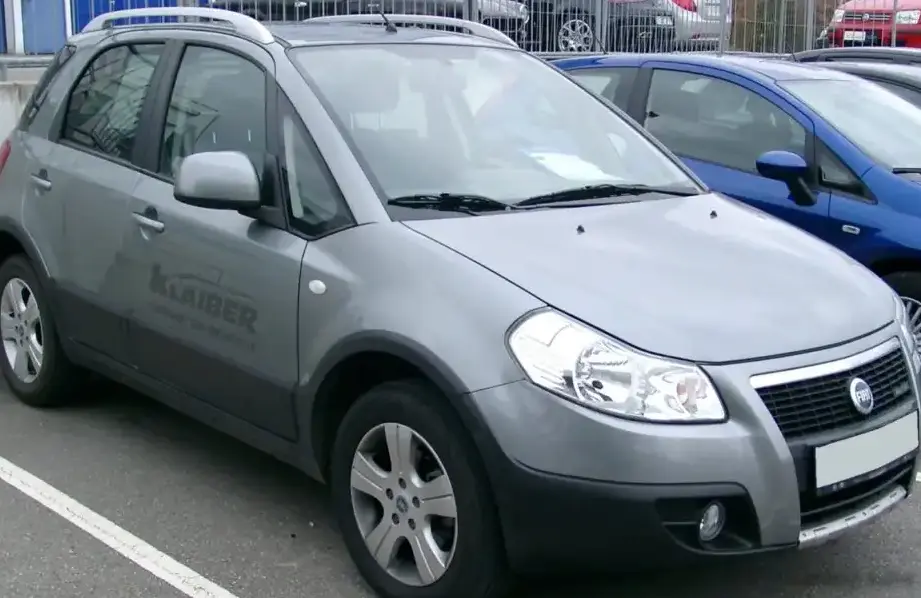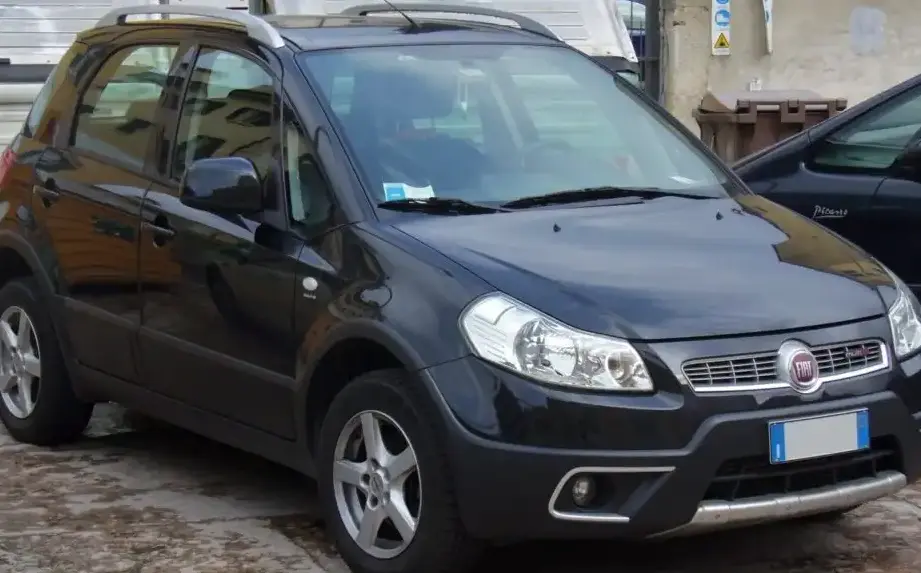
The Fiat Sedici, particularly the facelifted version introduced in 2009, represented Fiat’s entry into the burgeoning compact SUV segment. Produced from 2009 to 2014, the Sedici (Italian for “sixteen,” referencing the 16-valve engine) was a collaborative effort with Suzuki, sharing its platform and many components with the Suzuki SX4. The 1.6 16V (120 horsepower) automatic variant occupied a middle ground in the Sedici lineup, offering a balance between affordability, fuel efficiency, and ease of use. It was aimed at buyers seeking a practical, versatile vehicle for urban and light off-road duties, prioritizing comfort over outright performance.
Technical Specifications
| Brand | Fiat |
| Model | Sedici |
| Generation | Sedici (facelift 2009) |
| Type (Engine) | 1.6 16V (120 Hp) Automatic |
| Start of production | 2009 |
| End of production | 2014 |
| Powertrain Architecture | Internal Combustion engine |
| Body type | SUV |
| Seats | 5 |
| Doors | 5 |
| Fuel consumption (urban) | 9.2 l/100 km (25.6 US mpg) |
| Fuel consumption (extra urban) | 5.9 l/100 km (39.9 US mpg) |
| Fuel consumption (combined) | 7.2 l/100 km (32.7 US mpg) |
| Fuel Type | Petrol (Gasoline) |
| Acceleration 0 – 100 km/h | 10.7 sec |
| Acceleration 0 – 62 mph | 10.7 sec |
| Acceleration 0 – 60 mph | 10.2 sec |
| Maximum speed | 185 km/h (114.95 mph) |
| Emission standard | Euro 5 |
| Weight-to-power ratio | 9.9 kg/Hp |
| Weight-to-torque ratio | 7.6 kg/Nm |
| Power | 120 Hp @ 6000 rpm |
| Torque | 156 Nm @ 4400 rpm (115.06 lb.-ft. @ 4400 rpm) |
| Engine layout | Front, Transverse |
| Engine Model/Code | M16A |
| Engine displacement | 1598 cm3 (97.52 cu. in.) |
| Number of cylinders | 4 |
| Engine configuration | Inline |
| Number of valves per cylinder | 4 |
| Fuel injection system | Multi-port manifold injection |
| Engine aspiration | Naturally aspirated engine |
| Valvetrain | DOHC |
| Engine oil capacity | 3.9 l (4.12 US qt | 3.43 UK qt) |
| Coolant capacity | 7.7 l (8.14 US qt | 6.78 UK qt) |
| Kerb Weight | 1190 kg (2623.5 lbs.) |
| Max. weight | 1685 kg (3714.79 lbs.) |
| Max load | 495 kg (1091.29 lbs.) |
| Trunk (boot) space – minimum | 270 l (9.53 cu. ft.) |
| Trunk (boot) space – maximum | 670 l (23.66 cu. ft.) |
| Fuel tank capacity | 50 l (13.21 US gal | 11 UK gal) |
| Length | 4115 mm (162.01 in.) |
| Width | 1755 mm (69.09 in.) |
| Height | 1620 mm (63.78 in.) |
| Wheelbase | 2500 mm (98.43 in.) |
| Front track | 1495 mm (58.86 in.) |
| Rear track | 1495 mm (58.86 in.) |
| Minimum turning circle | 11 m (36.09 ft.) |
| Drivetrain | Front wheel drive |
| Number of gears | 5 |
| Gearbox type | Automatic transmission |
| Front suspension | Independent type McPherson |
| Rear suspension | Torsion |
| Front brakes | Disc |
| Rear brakes | Disc |
| Assisting systems | ABS (Anti-lock braking system) |
| Steering type | Steering rack and pinion |
| Power steering | Electric Steering |
| Tires size | 205/60 R16 |
| Wheel rims size | 16 |
Powertrain & Engine Architecture
The 1.6 16V engine, designated as the M16A, is a naturally aspirated, inline-four cylinder gasoline engine. It features a double overhead camshaft (DOHC) valvetrain operating four valves per cylinder, contributing to its relatively high output for its displacement. Fuel delivery is managed by a multi-point fuel injection system. This engine was a common sight in various Fiat and Suzuki models of the era. The automatic transmission paired with this engine is a conventional five-speed unit. While not known for its sportiness, it provided smooth and predictable shifts, prioritizing comfort and ease of driving. The engine’s design emphasized reliability and fuel efficiency over outright performance, making it well-suited for everyday driving.
Driving Characteristics
The 120 hp output, coupled with the five-speed automatic transmission, resulted in a driving experience geared towards practicality rather than excitement. Acceleration from 0-60 mph took around 10.2 seconds, which was adequate for merging onto highways and navigating city traffic, but noticeably slower than the manual transmission or higher-powered variants. The automatic transmission’s gear ratios were tuned for fuel economy, meaning the engine often operated at lower RPMs during cruising. This contributed to a quieter cabin experience but could sometimes feel sluggish when needing to accelerate quickly. Compared to the 1.9-liter diesel (TDI) versions, the 1.6L automatic offered less torque and slower acceleration, but a smoother and quieter ride. The manual transmission versions of the 1.6L provided a more engaging driving experience and slightly better fuel economy.
Equipment & Trim Levels
The 1.6 16V Automatic Sedici typically came equipped with air conditioning, power windows, central locking, and an audio system with CD player. Safety features included ABS brakes, front airbags, and seatbelt pretensioners. Higher trim levels offered options such as alloy wheels, a sunroof, parking sensors, and upgraded interior upholstery. The interior generally featured durable, if somewhat basic, plastics. The dashboard layout was functional and straightforward, prioritizing usability over aesthetic flair. The Sedici’s interior space was competitive for its class, offering comfortable seating for five adults, although rear legroom could be limited for taller passengers.
Chassis & Braking
The Sedici utilized a McPherson strut front suspension and a torsion beam rear suspension. This setup provided a comfortable ride quality, absorbing bumps and imperfections in the road reasonably well. The front brakes were ventilated discs, while the rear brakes were solid discs – a configuration common for vehicles in this weight class. Electric power steering provided light and easy steering input, making it maneuverable in urban environments. The suspension tuning was biased towards comfort, resulting in some body roll during cornering. The 205/60 R16 tires offered adequate grip in most conditions.
Market Reception & Comparison
The Fiat Sedici 1.6 16V Automatic received mixed reviews. Critics praised its practicality, fuel efficiency, and comfortable ride, but noted its lack of dynamic flair and relatively modest performance. Compared to rivals like the Nissan Qashqai and Renault Kadjar, the Sedici offered a more affordable price point but lacked the refinement and sophistication of those models. Fuel economy was a strong point, with combined figures around 32.7 US mpg, making it an attractive option for budget-conscious buyers. Reliability was generally considered good, although some owners reported minor issues with the automatic transmission over time.
Legacy
The Fiat Sedici, while not a groundbreaking vehicle, served as a solid and dependable compact SUV. The 1.6 16V automatic powertrain proved to be relatively durable, and well-maintained examples continue to be found on the used car market today. While not highly sought after by enthusiasts, it remains a practical and affordable option for those seeking a no-frills, versatile vehicle. Its collaborative development with Suzuki highlighted the benefits of shared platforms and componentry in the automotive industry. The Sedici paved the way for Fiat’s later, more successful forays into the SUV market, such as the 500X.