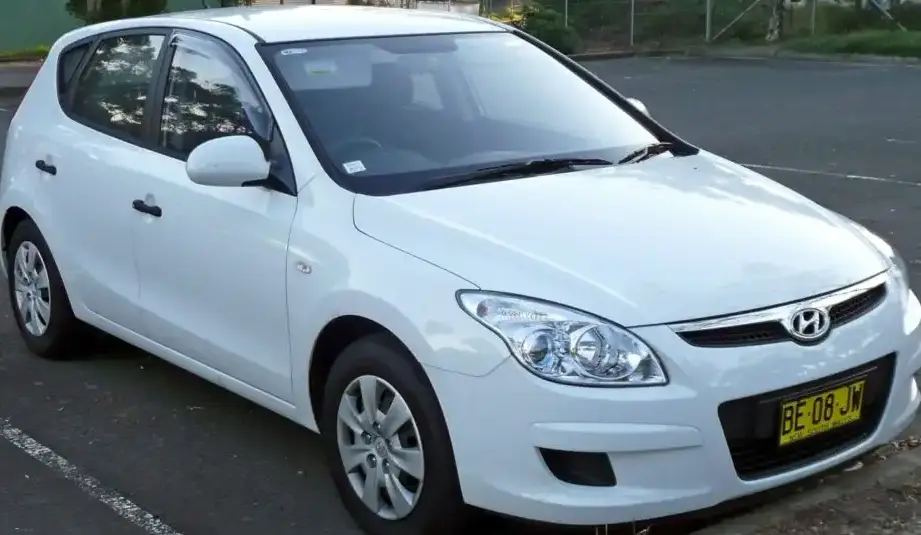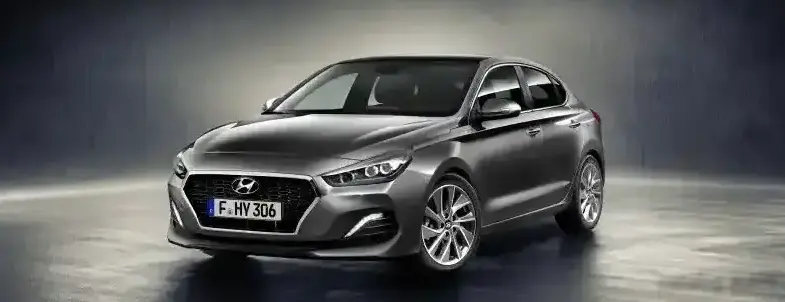
The Hyundai i30 III Fastback 1.4 T-GDI, producing 140 horsepower, was a variant of Hyundai’s popular compact offering, sold primarily in the European market from 2017 to 2018. Positioned as a stylish alternative to traditional hatchback designs, the Fastback featured a sloping roofline extending to the rear, differentiating it from the standard i30 hatchback. This model year represented the third generation (PD) of the i30, built on the PQ35 platform, also known as the 1HX0/A3 platform shared with other Hyundai and Kia models. The 1.4 T-GDI engine and manual transmission combination aimed to provide a balance between fuel efficiency and acceptable performance for everyday driving.
Technical Specifications
| Brand | Hyundai |
| Model | i30 |
| Generation | i30 III Fastback |
| Type (Engine) | 1.4 T-GDI (140 Hp) |
| Start of production | 2017 |
| End of production | 2018 |
| Powertrain Architecture | Internal Combustion engine |
| Body type | Fastback |
| Seats | 5 |
| Doors | 5 |
| Fuel consumption (urban) | 6.7 l/100 km (35.1 US mpg, 42.2 UK mpg, 14.9 km/l) |
| Fuel consumption (extra urban) | 4.9 l/100 km (48 US mpg, 57.6 UK mpg, 20.4 km/l) |
| Fuel consumption (combined) | 5.5 l/100 km (42.8 US mpg, 51.4 UK mpg, 18.2 km/l) |
| CO2 emissions | 129 g/km |
| Fuel Type | Petrol (Gasoline) |
| Acceleration 0 – 100 km/h | 9.2 sec |
| Acceleration 0 – 62 mph | 9.2 sec |
| Acceleration 0 – 60 mph | 8.7 sec |
| Maximum speed | 208 km/h (129.25 mph) |
| Emission standard | Euro 6 |
| Weight-to-power ratio | 9 kg/Hp, 111.6 Hp/tonne |
| Weight-to-torque ratio | 5.2 kg/Nm, 192.8 Nm/tonne |
| Power | 140 Hp @ 6000 rpm |
| Power per litre | 103.5 Hp/l |
| Torque | 242 Nm @ 1500 rpm (178.49 lb.-ft. @ 1500 rpm) |
| Engine layout | Front, Transverse |
| Engine Model/Code | Kappa II / G4LD |
| Engine displacement | 1353 cm3 (82.57 cu. in.) |
| Number of cylinders | 4 |
| Engine configuration | Inline |
| Cylinder Bore | 71.6 mm (2.82 in.) |
| Piston Stroke | 84 mm (3.31 in.) |
| Compression ratio | 10:1 |
| Number of valves per cylinder | 4 |
| Fuel injection system | Direct injection |
| Engine aspiration | Turbocharger, Intercooler |
| Valvetrain | DOHC |
| Engine oil capacity | 4.2 l (4.44 US qt | 3.7 UK qt) |
| Coolant | 6.1 l (6.45 US qt | 5.37 UK qt) |
| Kerb Weight | 1255-1409 kg (2766.8 – 3106.31 lbs.) |
| Max. weight | 1840 kg (4056.51 lbs.) |
| Max load | 431-585 kg (950.19 – 1289.7 lbs.) |
| Trunk (boot) space – minimum | 450 l (15.89 cu. ft.) |
| Trunk (boot) space – maximum | 1351 l (47.71 cu. ft.) |
| Fuel tank capacity | 50 l (13.21 US gal | 11 UK gal) |
| Length | 4455 mm (175.39 in.) |
| Width | 1795 mm (70.67 in.) |
| Height | 1425 mm (56.1 in.) |
| Wheelbase | 2650 mm (104.33 in.) |
| Front overhang | 905 mm (35.63 in.) |
| Rear overhang | 900 mm (35.43 in.) |
| Ride height (ground clearance) | 135 mm (5.31 in.) |
| Minimum turning circle | 10.6 m (34.78 ft.) |
| Drivetrain Architecture | ICE, Front wheel drive |
| Drive wheel | Front wheel drive |
| Number of gears | 6 gears, manual transmission |
| Front suspension | Independent type McPherson |
| Rear suspension | Independent multi-link suspension |
| Front brakes | Ventilated discs |
| Rear brakes | Disc |
| Assisting systems | ABS (Anti-lock braking system) |
| Steering type | Steering rack and pinion |
| Power steering | Electric Steering |
| Tires size | 225/45 R17; 225/40 ZR18 |
| Wheel rims size | 7.0J x 17; 7.5J x 18 |
INTRODUCTION
The Hyundai i30 III Fastback 1.4 T-GDI, launched in 2017, represented Hyundai’s attempt to capture a larger share of the European compact car market. The Fastback body style, with its coupe-like roofline, was intended to appeal to buyers seeking a more dynamic and sophisticated aesthetic than the traditional hatchback. This variant was powered by Hyundai’s Kappa II 1.4-liter turbocharged gasoline direct injection (T-GDI) engine, paired with a six-speed manual transmission. It occupied a mid-range position within the i30 lineup, offering a compromise between the more affordable base models and the higher-performance options.
Powertrain & Engine Architecture
At the heart of the i30 III Fastback 1.4 T-GDI lies the Kappa II engine, specifically the G4LD code. This 1.4-liter inline-four cylinder engine utilizes direct injection technology, enhancing fuel efficiency and power output. The engine features a single-scroll turbocharger with an intercooler, boosting power and torque. The DOHC (Dual Overhead Camshaft) valvetrain, with four valves per cylinder, optimizes airflow for improved performance. The engine’s 10:1 compression ratio strikes a balance between efficiency and power. The six-speed manual transmission provides drivers with direct control over gear selection, contributing to a more engaging driving experience. The transmission’s gear ratios are tuned for a blend of acceleration and fuel economy, with a relatively tall sixth gear for highway cruising.
Driving Characteristics
The 140 horsepower and 242 Nm (178 lb-ft) of torque delivered by the 1.4 T-GDI engine provided adequate performance for everyday driving. Acceleration from 0 to 60 mph took approximately 8.7 seconds, and 0-100 km/h in 9.2 seconds. While not a particularly sporty setup, the turbocharger provided a noticeable boost in power during acceleration, making overtaking maneuvers relatively effortless. Compared to the more powerful 1.6 T-GDI variants, the 1.4 T-GDI offered a more relaxed driving experience, prioritizing fuel economy over outright performance. The manual transmission allowed for precise gear changes, but the clutch pedal could feel slightly heavier than some competitors. The Fastback’s slightly increased weight compared to the hatchback version did marginally impact acceleration and handling.
Equipment & Trim Levels
The i30 III Fastback 1.4 T-GDI typically came equipped with a reasonable level of standard features. These included air conditioning, a touchscreen infotainment system with Bluetooth connectivity, power windows and mirrors, and remote central locking. Higher trim levels offered additional features such as alloy wheels, a rear-view camera, parking sensors, and a more advanced infotainment system with navigation. Interior upholstery was typically cloth, with options for leather upgrades on higher trims. Safety features included ABS, ESC (Electronic Stability Control), and multiple airbags. Optional extras included a panoramic sunroof, heated seats, and a premium sound system.
Chassis & Braking
The i30 III Fastback utilized a McPherson strut front suspension and a multi-link rear suspension, providing a comfortable and controlled ride. The suspension was tuned to prioritize comfort over outright sportiness, but still offered decent handling characteristics. The front brakes were ventilated discs, while the rear brakes were solid discs, providing adequate stopping power for the vehicle’s weight and performance. Electric power steering offered light and precise steering feel. The Fastback’s slightly longer wheelbase compared to the hatchback contributed to improved ride stability.
Market Reception & Comparison
The Hyundai i30 III Fastback 1.4 T-GDI was generally well-received by automotive critics, who praised its stylish design, comfortable ride, and competitive fuel economy. However, some reviewers noted that the 1.4 T-GDI engine could feel slightly underpowered, particularly when fully loaded or driving uphill. Compared to other compact cars in its class, such as the Volkswagen Golf, Ford Focus, and Opel Astra, the i30 Fastback offered a compelling value proposition, with a generous level of standard equipment and a competitive price point. The 1.4 T-GDI engine offered better fuel economy than the more powerful 1.6 T-GDI, but at the expense of performance. Reliability reports generally indicated good dependability for the Kappa II engine and the PQ35 platform.
Legacy
The Hyundai i30 III Fastback 1.4 T-GDI has proven to be a relatively reliable vehicle in the used car market. The Kappa II engine, while not without its minor issues, has generally demonstrated good long-term durability. Common maintenance items include regular oil changes, timing belt replacement (depending on mileage), and inspection of the turbocharger components. The i30 Fastback’s stylish design and practical features continue to appeal to used car buyers seeking a comfortable and fuel-efficient compact car. Its relatively affordable price point and readily available parts make it a sensible choice for budget-conscious consumers.