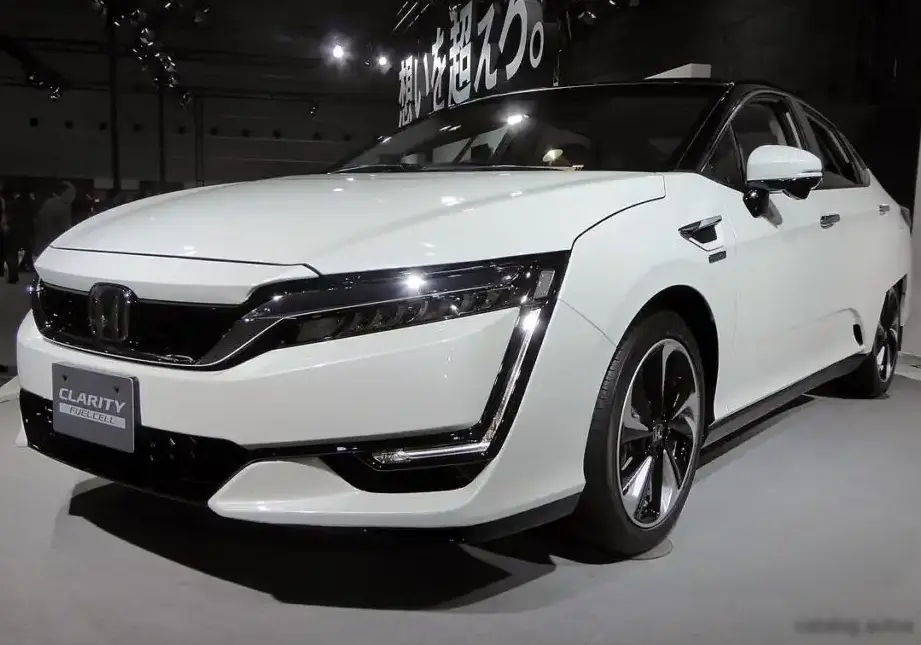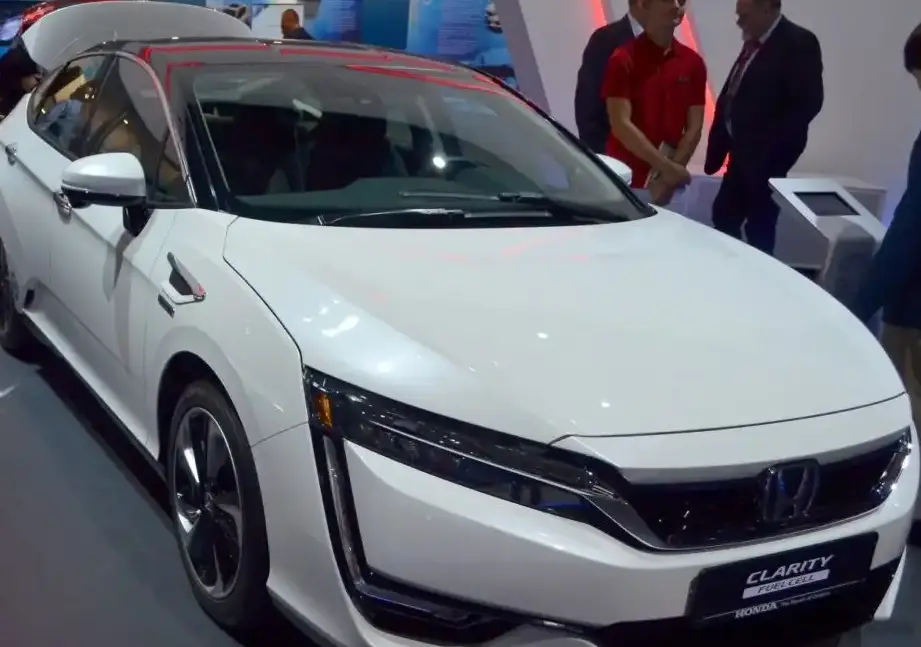
The Honda Clarity Fuel Cell, produced from 2017 to 2021, represented Honda’s second foray into hydrogen fuel cell vehicle technology, following the earlier FCX Clarity. This iteration of the Clarity was a significant step towards mainstream adoption of fuel cell vehicles, offering a longer range and improved packaging compared to its predecessor. Positioned as a technologically advanced and environmentally conscious alternative to traditional gasoline vehicles, the Clarity Fuel Cell aimed to demonstrate the viability of hydrogen as a future transportation fuel. It was primarily marketed in California, where hydrogen refueling infrastructure was most developed, and represented a commitment by Honda to zero-emission vehicles.
Technical Specifications
| Brand | Honda |
| Model | Clarity |
| Generation | Clarity |
| Type (Engine) | 174 Hp Fuel Cell Automatic |
| Start of production | 2017 |
| End of production | 2021 |
| Powertrain Architecture | FCEV (Fuel Cell Electric Vehicle) |
| Body type | Sedan |
| Seats | 5 |
| Doors | 4 |
| Fuel Type | Hydrogen |
| Weight-to-power ratio | 10.8 kg/Hp, 92.8 Hp/tonne |
| All-electric range | 360 km (223.69 mi) |
| Average Energy consumption | 30.8 kWh/100 km (49.57 kWh/100 mi, 68 MPGe, 3.2 km/kWh, 2 mi/kWh) |
| Electric motor power | 174 Hp @ 4501-9028 rpm |
| Electric motor Torque | 300 Nm @ 0-3500 rpm (221.27 lb.-ft. @ 0-3500 rpm) |
| System power | 174 Hp @ 4501-9028 rpm |
| Kerb Weight | 1875 kg (4133.67 lbs) |
| Trunk (boot) space – minimum | 334 l (11.8 cu. ft) |
| Length | 4895 mm (192.72 in) |
| Width | 1877 mm (73.9 in) |
| Height | 1478 mm (58.19 in) |
| Wheelbase | 2751 mm (108.31 in) |
| Front track | 1580 mm (62.2 in) |
| Rear (Back) track | 1587 mm (62.48 in) |
| Minimum turning circle | 11.7 m (38.39 ft) |
| Drivetrain Architecture | One electric motor drives the front wheels |
| Drive wheel | Front wheel drive |
| Number of gears and type of gearbox | 1 gear, automatic transmission SBW |
| Front suspension | Independent, type McPherson with coil spring and anti-roll bar |
| Rear suspension | Independent multi-link suspension |
| Front brakes | Ventilated discs, 312.42 mm |
| Rear brakes | Disc, 309.88 mm |
| Assisting systems | ABS (Anti-lock braking system) |
| Steering type | Steering rack and pinion |
| Power steering | Electric Steering |
| Tires size | 235/45 R18 |
| Wheel rims size | 8J x 18 |
Powertrain & Engine Architecture
The Honda Clarity Fuel Cell doesn’t utilize a conventional internal combustion engine. Instead, it employs a Fuel Cell Electric Vehicle (FCEV) powertrain. This system combines hydrogen gas with oxygen from the air to generate electricity, with water as the only emission. The core of the system is the fuel cell stack, which uses a proton exchange membrane (PEM) to facilitate the electrochemical reaction. The electricity produced powers a 174 horsepower electric motor, providing drive to the front wheels. A lithium-ion battery pack, though relatively small, acts as a buffer to provide supplemental power during acceleration and regenerative braking. The single-speed automatic transmission (SBW – Shift By Wire) delivers power smoothly and efficiently. The hydrogen is stored in a high-pressure tank, typically at 700 bar (10,000 psi).
Driving Characteristics
The Clarity Fuel Cell offers a driving experience similar to that of a conventional electric vehicle. Acceleration is linear and responsive, with the electric motor delivering instant torque. The single-speed transmission provides seamless power delivery. While not designed for outright performance, the 174 hp output is sufficient for comfortable highway cruising and city driving. The weight of the vehicle (1875 kg / 4133.67 lbs) is noticeable, but the instant torque of the electric motor mitigates this somewhat. Compared to a gasoline-powered vehicle, the Clarity Fuel Cell is remarkably quiet, with minimal engine noise. The regenerative braking system helps to recapture energy and extend the range.
Equipment & Trim Levels
The Clarity Fuel Cell was generally well-equipped, reflecting its position as a premium, technologically advanced vehicle. Standard features included LED headlights, a touchscreen infotainment system with navigation, Honda Sensing suite of safety features (including adaptive cruise control and lane keeping assist), and automatic climate control. Interior upholstery was typically a combination of cloth and synthetic leather. Optional extras included a premium audio system, heated front seats, and a power moonroof. The interior design prioritized a modern and minimalist aesthetic.
Chassis & Braking
The Clarity Fuel Cell utilizes a front-wheel-drive layout with an independent McPherson strut suspension in the front and an independent multi-link suspension in the rear. This setup provides a comfortable ride and predictable handling. Ventilated disc brakes are used in the front, while solid disc brakes are used in the rear. The ABS (Anti-lock Braking System) ensures safe and controlled braking in various conditions. The electric power steering provides light and precise steering feel. Tire size is 235/45 R18, mounted on 8J x 18 inch alloy wheels.
Market Reception & Comparison
The Honda Clarity Fuel Cell received generally positive reviews from automotive critics. It was praised for its innovative technology, long range (360 km / 223.69 mi), and comfortable driving experience. However, its limited availability (primarily in California) and the lack of hydrogen refueling infrastructure were significant drawbacks. Compared to other fuel cell vehicles, such as the Toyota Mirai, the Clarity Fuel Cell offered a more conventional exterior design and a more spacious interior. Fuel economy, measured in MPGe (miles per gallon equivalent), was rated at 68 MPGe, making it highly efficient. Reliability was generally good, although the long-term durability of the fuel cell stack remained a concern for some.
Legacy
The Honda Clarity Fuel Cell represents an important step in the development of hydrogen fuel cell technology. While the vehicle itself was discontinued in 2021, the knowledge and experience gained from its development will inform Honda’s future efforts in zero-emission vehicles. The Clarity Fuel Cell demonstrated the potential of hydrogen as a clean and sustainable transportation fuel, and helped to raise awareness of this technology among consumers. In the used car market, Clarity Fuel Cell models are relatively rare and command a premium price, particularly those in good condition with low mileage. The long-term reliability of the fuel cell stack is a key factor for potential buyers, and regular maintenance is essential to ensure optimal performance.