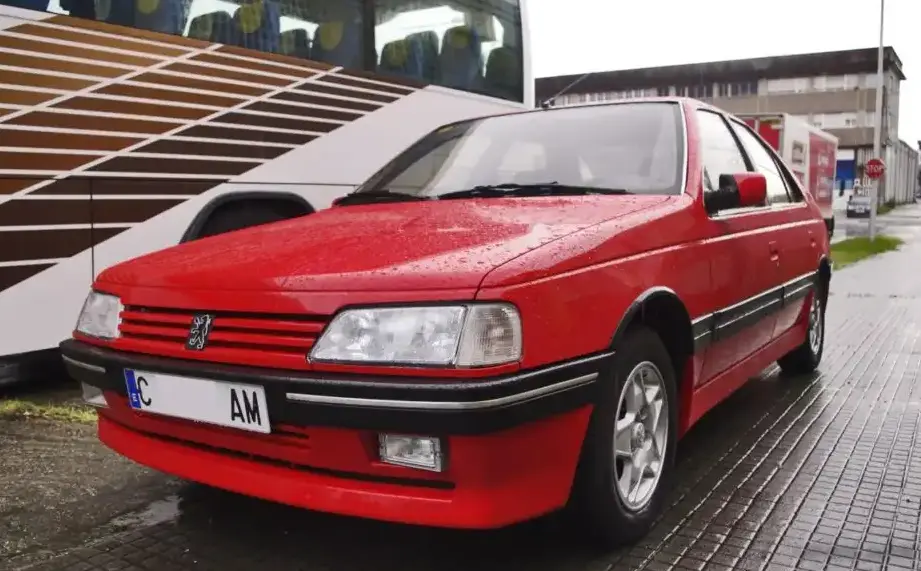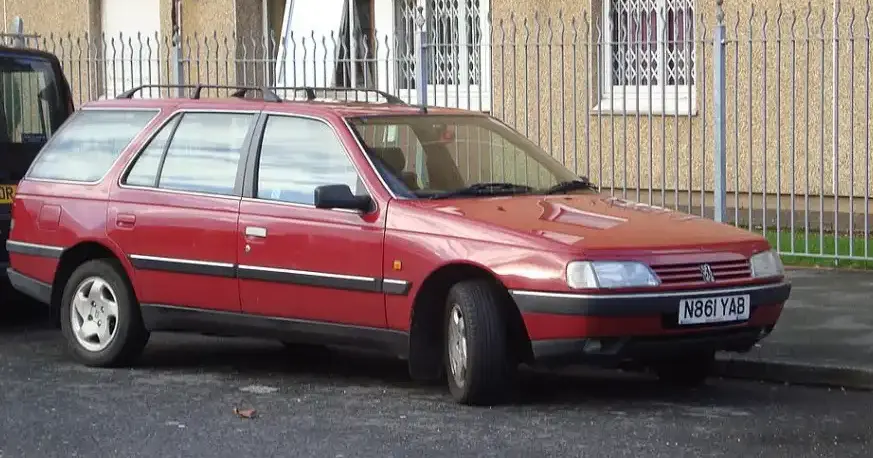
The Peugeot 405 Break 1.9 TD, produced from 1992 to 1996, represents a practical and economical offering within the broader 405 range. This variant, identified by the internal code DHY XUD9TE, was a key component of Peugeot’s strategy to provide a versatile, diesel-powered station wagon for European families and businesses. The 405 itself was a significant model for Peugeot, replacing the aging 505 and embodying a more modern, aerodynamic design. The Break (estate) body style added considerable practicality, and the 1.9 TD engine provided a balance between fuel efficiency and usable performance. This particular configuration occupied a mid-range position in the 405 Break lineup, slotting below the more powerful petrol engines and above the base-level diesel models.
Technical Specifications
| Brand | Peugeot |
| Model | 405 |
| Generation | 405 I Break (15E, facelift 1992) |
| Type (Engine) | 1.9 TD (90 Hp) |
| Start of production | 1992 |
| End of production | 1996 |
| Powertrain Architecture | Internal Combustion engine |
| Body type | Station wagon (estate) |
| Seats | 5 |
| Doors | 5 |
| Fuel consumption (extra urban) | 5.8 l/100 km (40.6 US mpg, 48.7 UK mpg, 17.2 km/l) |
| Fuel Type | Diesel |
| Acceleration 0 – 100 km/h | 13.2 sec |
| Acceleration 0 – 62 mph | 13.2 sec |
| Acceleration 0 – 60 mph | 12.5 sec |
| Maximum speed | 177 km/h (109.98 mph) |
| Weight-to-power ratio | 13.1 kg/Hp, 76.1 Hp/tonne |
| Weight-to-torque ratio | 5.9 kg/Nm, 169.9 Nm/tonne |
| Power | 90 Hp @ 4000 rpm |
| Power per litre | 47.2 Hp/l |
| Torque | 201 Nm @ 2750 rpm (148.25 lb.-ft. @ 2750 rpm) |
| Engine layout | Front, Transverse |
| Engine Model/Code | DHY XUD9TE |
| Engine displacement | 1905 cm3 (116.25 cu. in.) |
| Number of cylinders | 4 |
| Engine configuration | Inline |
| Cylinder Bore | 83 mm (3.27 in.) |
| Piston Stroke | 88 mm (3.46 in.) |
| Compression ratio | 10.4:1 |
| Number of valves per cylinder | 2 |
| Fuel injection system | Precombustion chamber injection |
| Engine aspiration | Turbocharger, Intercooler |
| Valvetrain | OHC |
| Engine oil capacity | 4.5 l (4.76 US qt | 3.96 UK qt) |
| Coolant | 7 l (7.4 US qt | 6.16 UK qt) |
| Kerb Weight | 1183 kg (2608.07 lbs.) |
| Max. weight | 1690 kg (3725.81 lbs.) |
| Max load | 507 kg (1117.74 lbs.) |
| Trunk (boot) space – minimum | 814 l (28.75 cu. ft.) |
| Trunk (boot) space – maximum | 1640 l (57.92 cu. ft.) |
| Fuel tank capacity | 70 l (18.49 US gal | 15.4 UK gal) |
| Permitted trailer load with brakes (12%) | 1200 kg (2645.55 lbs.) |
| Length | 4398 mm (173.15 in.) |
| Width | 1714 mm (67.48 in.) |
| Height | 1445 mm (56.89 in.) |
| Wheelbase | 2669 mm (105.08 in.) |
| Front track | 1450 mm (57.09 in.) |
| Rear (Back) track | 1443 mm (56.81 in.) |
| Front overhang | 817 mm (32.17 in.) |
| Rear overhang | 912 mm (35.91 in.) |
| Minimum turning circle | 10.55 m (34.61 ft.) |
| Drivetrain Architecture | The Internal combustion engine (ICE) drives the front wheels of the vehicle. |
| Drive wheel | Front wheel drive |
| Number of gears and type of gearbox | 5 gears, manual transmission |
| Front suspension | Independent, type McPherson with coil spring and anti-roll bar |
| Rear suspension | Torsion |
| Front brakes | Disc |
| Rear brakes | Drum |
| Steering type | Steering rack and pinion |
| Power steering | Hydraulic Steering |
| Tires size | 185/65 R14 |
| Wheel rims size | 14 |
Powertrain & Engine Architecture
The heart of the 405 Break 1.9 TD is the DHY XUD9TE engine, a 1.9-liter inline-four cylinder diesel. This engine is part of the XUD family, renowned for its durability and efficiency. The ‘TE’ designation indicates a turbocharged and intercooled version, boosting power output to 90 horsepower. The engine utilizes a precombustion chamber injection system, a common feature in diesel engines of this era. This system involves injecting fuel into a precombustion chamber, which then ignites the main combustion chamber, promoting more complete combustion. The engine features an overhead camshaft (OHC) valvetrain operating two valves per cylinder. The turbocharger and intercooler work in tandem to increase air density entering the engine, resulting in improved power and torque. The 405 Break 1.9 TD was equipped with a five-speed manual transmission, chosen for its efficiency and suitability for long-distance driving.
Driving Characteristics
The 405 Break 1.9 TD offered a practical and economical driving experience. While not a performance-oriented vehicle, the 90 horsepower and 201 Nm (148 lb-ft) of torque provided adequate power for everyday driving and hauling loads. Acceleration from 0 to 60 mph took around 12.5 seconds, and the top speed was approximately 109.98 mph. The five-speed manual transmission allowed drivers to optimize engine speed for fuel efficiency or power. Compared to the petrol-powered 405s, the 1.9 TD offered significantly better fuel economy, making it a popular choice for high-mileage drivers. However, it lacked the responsiveness and refinement of the gasoline engines. The turbocharger did introduce a degree of turbo lag, meaning there was a slight delay between pressing the accelerator and feeling the power delivery.
Equipment & Trim Levels
The 405 Break 1.9 TD typically came with a reasonable level of standard equipment. This included central locking, power steering, and a basic stereo system. Interior upholstery was typically cloth, and the dashboard featured a functional, if somewhat dated, design. Optional extras included air conditioning, electric windows, and a sunroof. The trim level varied depending on the market, but generally, the 1.9 TD Break was positioned as a mid-range offering, providing a good balance of features and affordability.
Chassis & Braking
The 405 Break featured an independent McPherson strut front suspension with a coil spring and anti-roll bar, providing a comfortable ride and decent handling. The rear suspension utilized a torsion beam setup, which was simpler and more cost-effective. The braking system consisted of disc brakes on the front wheels and drum brakes on the rear. While adequate for normal driving conditions, the rear drum brakes were less effective than disc brakes, particularly under heavy braking. The hydraulic power steering made maneuvering easy, especially at low speeds.
Market Reception & Comparison
The Peugeot 405 Break 1.9 TD was well-received in Europe as a practical and economical station wagon. Critics praised its fuel efficiency, spacious interior, and comfortable ride. However, some noted the engine’s lack of refinement and the presence of turbo lag. Compared to other 405 variants, the 1.9 TD offered a more affordable alternative to the petrol engines, while providing better fuel economy than the base-level diesel models. It competed with other European station wagons, such as the Ford Mondeo Estate and the Volkswagen Passat Variant.
Legacy
The Peugeot 405 Break 1.9 TD has proven to be a durable and reliable vehicle. The XUD9TE engine is known for its longevity, and many examples are still on the road today. While maintenance costs can increase with age, the engine’s simplicity makes it relatively easy to repair. In the used car market, the 405 Break 1.9 TD is valued for its practicality, fuel efficiency, and affordability. It remains a popular choice for those seeking a classic European station wagon that is both economical to run and capable of carrying a significant load.