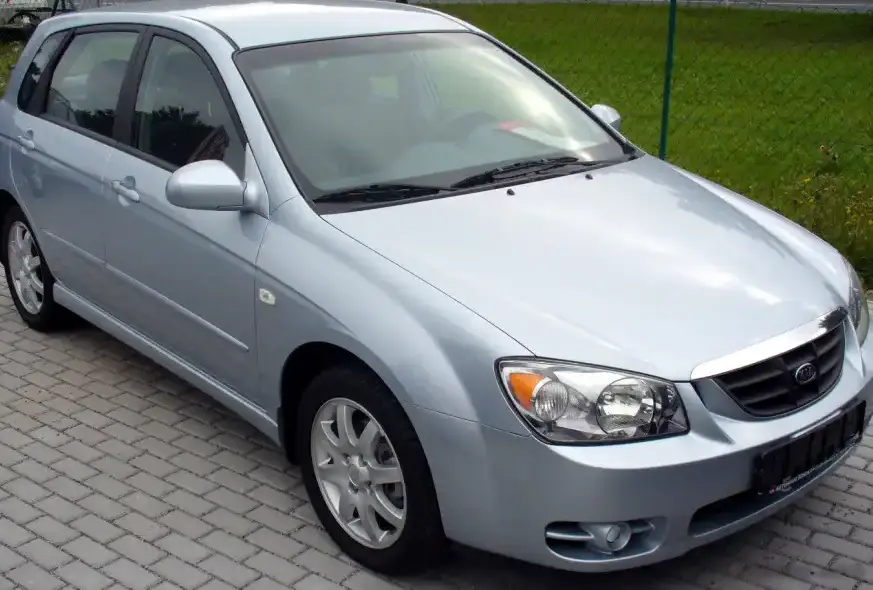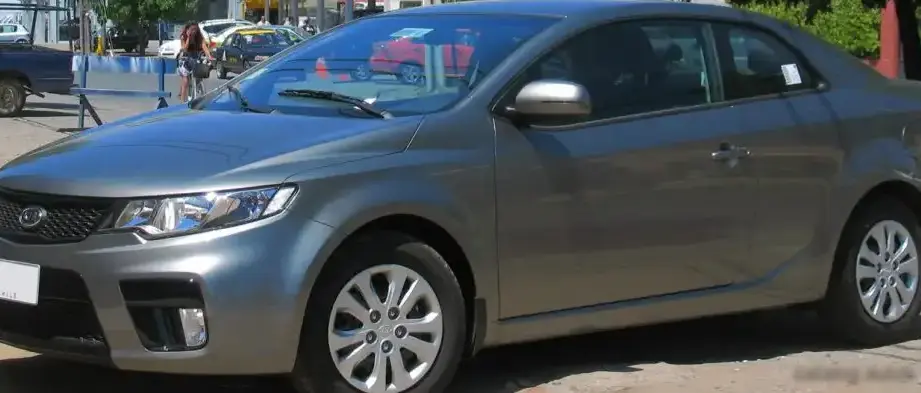
The Kia Cerato II Koup 2.0, produced between 2009 and 2012, represented Kia’s entry into the sporty coupe market. Positioned as a more stylish alternative to the Cerato sedan, the Koup offered a two-door body style aimed at a younger demographic. This particular 2.0-liter variant, generating 156 horsepower, served as the higher-performance option within the Koup lineup, sitting above the base 1.6L engine. It was primarily sold in markets where Kia was expanding its presence, including North America, Europe, and parts of Asia, offering a value-oriented alternative to established competitors.
Technical Specifications
| Brand | Kia |
| Model | Cerato |
| Generation | Cerato II Koup |
| Type (Engine) | 2.0 (156 Hp) |
| Start of production | 2009 |
| End of production | 2012 |
| Powertrain Architecture | Internal Combustion engine |
| Body type | Coupe |
| Seats | 5 |
| Doors | 2 |
| Fuel consumption (combined) | 7.7 l/100 km (30.5 US mpg, 36.7 UK mpg, 13 km/l) |
| Fuel Type | Petrol (Gasoline) |
| Weight-to-power ratio | 8.3 kg/Hp, 121.1 Hp/tonne |
| Weight-to-torque ratio | 6.6 kg/Nm, 150.6 Nm/tonne |
| Power | 156 Hp @ 6200 rpm |
| Power per litre | 78.1 Hp/l |
| Torque | 194 Nm @ 4300 rpm (143.09 lb.-ft. @ 4300 rpm) |
| Engine layout | Front, Transverse |
| Engine Model/Code | Theta II/G4KA |
| Engine displacement | 1998 cm3 (121.93 cu. in.) |
| Number of cylinders | 4 |
| Engine configuration | Inline |
| Cylinder Bore | 86 mm (3.39 in.) |
| Piston Stroke | 86 mm (3.39 in.) |
| Compression ratio | 10.5:1 |
| Number of valves per cylinder | 4 |
| Fuel injection system | Multi-port manifold injection |
| Engine aspiration | Naturally aspirated engine |
| Valvetrain | DOHC, CVVT |
| Engine oil capacity | 4.7 l (4.97 US qt | 4.14 UK qt) |
| Coolant | 5.8 l (6.13 US qt | 5.1 UK qt) |
| Kerb Weight | 1288 kg (2839.55 lbs.) |
| Fuel tank capacity | 52 l (13.74 US gal | 11.44 UK gal) |
| Permitted trailer load with brakes (12%) | 1200 kg (2645.55 lbs.) |
| Length | 4480 mm (176.38 in.) |
| Width | 1765 mm (69.49 in.) |
| Height | 1400 mm (55.12 in.) |
| Wheelbase | 2650 mm (104.33 in.) |
| Front track | 1560 mm (61.42 in.) |
| Rear track | 1564 mm (61.57 in.) |
| Front overhang | 895 mm (35.24 in.) |
| Rear overhang | 935 mm (36.81 in.) |
| Ride height (ground clearance) | 140 mm (5.51 in.) |
| Minimum turning circle | 10.8 m (35.43 ft.) |
| Drivetrain Architecture | Front wheel drive |
| Number of gears and type of gearbox | 5 gears, manual transmission |
| Front suspension | Independent, type McPherson with coil spring and anti-roll bar |
| Rear suspension | Transverse stabilizer, Coil spring, Torsion |
| Front brakes | Ventilated discs |
| Rear brakes | Disc |
| Assisting systems | ABS (Anti-lock braking system) |
| Steering type | Steering rack and pinion |
| Tires size | 205/55 R16 91H; 215/45 R17 87V |
| Wheel rims size | 6J x 16 ET48; 7J x 17 ET50 |
Powertrain & Engine Architecture
The heart of the Cerato II Koup 2.0 was the Theta II engine, specifically the G4KA variant. This 1.998-liter inline-four cylinder engine utilized a cast iron block with an aluminum cylinder head. It featured multi-port fuel injection and a double overhead camshaft (DOHC) valvetrain with continuously variable valve timing (CVVT) on both intake and exhaust camshafts. The CVVT system allowed for optimized engine performance and fuel efficiency across a wider range of engine speeds. The engine produced 156 horsepower at 6200 rpm and 194 Nm (143.09 lb-ft) of torque at 4300 rpm. The standard transmission for this variant was a five-speed manual gearbox, delivering power to the front wheels. While an automatic transmission was offered in some markets, the 2.0L engine was often paired with the manual to maximize performance.
Driving Characteristics
The 2.0-liter Koup offered a noticeable performance upgrade over the base 1.6-liter model. While not a sports car, the 156 hp engine provided adequate acceleration for everyday driving and even some spirited maneuvers. The five-speed manual transmission allowed drivers to fully utilize the engine’s powerband, although the gear ratios were somewhat widely spaced. Compared to the automatic transmission option (available in some regions), the manual offered a more engaging driving experience and slightly improved fuel economy. The Koup’s suspension, tuned for comfort rather than outright handling, provided a reasonably smooth ride, but body roll was noticeable during cornering. The steering was light and precise, making it easy to maneuver in urban environments.
Equipment & Trim Levels
The Cerato II Koup 2.0 typically came with a decent level of standard equipment. This included air conditioning, power windows and locks, a basic audio system with CD player and MP3 compatibility, and standard safety features like ABS brakes and dual front airbags. Higher trim levels, often designated as “SX” or similar, added features such as alloy wheels, a sunroof, upgraded audio systems with more speakers, and keyless entry. Interior upholstery was typically cloth, with leather options available on higher trims. Dashboard materials were generally of average quality, reflecting the Koup’s value-oriented positioning.
Chassis & Braking
The Koup utilized a front-wheel-drive platform with an independent McPherson strut suspension in the front and a torsion beam rear suspension. The front suspension incorporated a coil spring and anti-roll bar to reduce body roll. Braking duties were handled by ventilated discs in the front and solid discs in the rear. ABS (Anti-lock Braking System) was standard, providing enhanced braking performance and stability. The Koup’s chassis was designed to provide a balance between comfort and handling, prioritizing ride quality over sporty dynamics. The relatively lightweight construction of the Koup (1288 kg / 2839.55 lbs) helped to offset the modest power output of the 2.0-liter engine.
Market Reception & Comparison
The Kia Cerato II Koup 2.0 was generally well-received by automotive critics as a stylish and affordable coupe. It was praised for its value proposition, offering a good level of equipment and performance for its price. However, some reviewers noted that the interior materials and overall refinement were not on par with more established competitors like the Honda Civic Coupe or the Volkswagen Scirocco. Fuel economy was considered average for its class, with the manual transmission offering a slight advantage over the automatic. Compared to the base 1.6-liter Koup, the 2.0-liter variant provided a significant performance boost, making it a more appealing option for drivers who prioritized acceleration and responsiveness.
Legacy
The Kia Cerato II Koup 2.0, while not a groundbreaking vehicle, played a role in Kia’s efforts to establish itself as a more desirable brand. The Theta II engine proved to be relatively reliable, with few major issues reported. In the used car market, these Koups are generally considered to be affordable and dependable transportation. Maintenance costs are typically reasonable, and parts availability is good. However, potential buyers should be aware of the possibility of age-related wear and tear, such as suspension component fatigue and potential oil leaks. The Koup’s simple mechanical design and readily available parts make it a relatively easy vehicle to maintain and repair, contributing to its continued popularity among budget-conscious buyers.