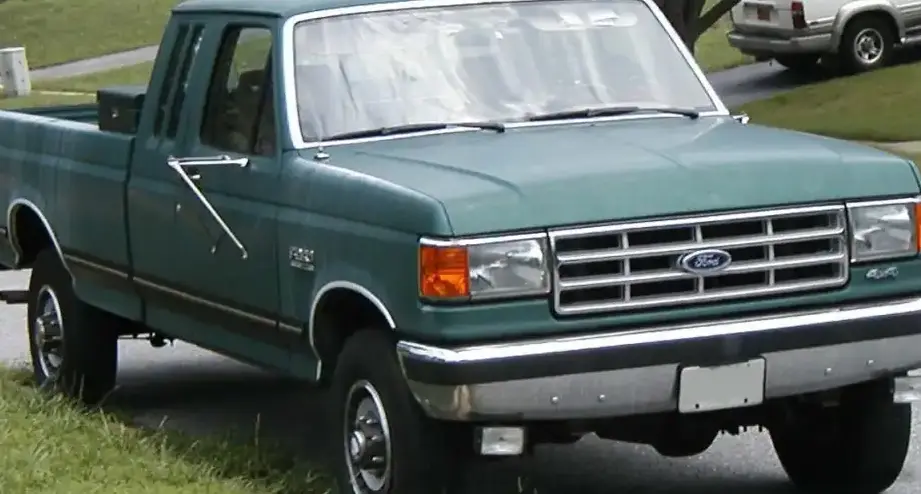
The Ford F-Series F-250 VIII SuperCab HD, equipped with the 7.3-liter V8 Indirect Diesel Injection (IDI) engine producing 180 horsepower, represents a significant iteration in Ford’s long-running line of heavy-duty pickup trucks. Produced from 1988 to 1991, this variant occupied a crucial position in the F-250 lineup, offering a balance between capability and affordability for buyers needing a robust work truck. It was part of the eighth generation of the F-Series (1987-1991), known for its modernized styling and improved features compared to its predecessor. This particular configuration – the SuperCab with the 7.3L IDI and four-wheel drive – was aimed at buyers who required the extra space of the SuperCab and the added traction of 4×4 for work or recreational purposes.
Technical Specifications
| Brand | Ford |
| Model | F-Series F-250 |
| Generation | F-Series F-250 VIII SuperCab HD |
| Type (Engine) | 7.3 V8 IDI (180 Hp) 4×4 |
| Start of production | 1988 |
| End of production | 1991 |
| Powertrain Architecture | Internal Combustion engine |
| Body type | Pick-up |
| Seats | 6 |
| Doors | 2 |
| Fuel Type | Diesel |
| Power | 180 Hp @ 3300 rpm |
| Power per litre | 24.7 Hp/l |
| Torque | 468 Nm @ 1400 rpm / 345.18 lb.-ft. @ 1400 rpm |
| Engine layout | Front, Longitudinal |
| Engine displacement | 7276 cm3 / 444.01 cu. in. |
| Number of cylinders | 8 |
| Engine configuration | V-engine |
| Cylinder Bore | 104.39 mm / 4.11 in. |
| Piston Stroke | 106.17 mm / 4.18 in. |
| Compression ratio | 21.5:1 |
| Fuel injection system | Precombustion chamber injection |
| Engine oil capacity | 9.3 l / 9.83 US qt | 8.18 UK qt |
| Coolant | 27.5 l / 29.06 US qt | 24.2 UK qt |
| Max. weight | 3992 kg / 8800.85 lbs. |
| Fuel tank capacity | 141 l / 37.25 US gal | 31.02 UK gal |
| Length | 5895 mm / 232.09 in. |
| Width | 1778 mm / 70 in. |
| Height | 1956 mm / 77.01 in. |
| Wheelbase | 3937 mm / 155 in. |
| Wading depth | 914 mm / 35.98 in. |
| Drivetrain Architecture | The Internal combustion engine (ICE) drives the rear wheels permanently, and the front wheels are driven through an electrically or mechanically operated clutch if necessary. |
| Drive wheel | All wheel drive (4×4) |
| Number of gears and type of gearbox | 5 gears, manual transmission |
| Front suspension | Leaf spring |
| Rear suspension | Leaf spring |
| Front brakes | Disc |
| Rear brakes | Drum |
| Power steering | Electric Steering |
| Tires size | 235/85 R16 |
| Wheel rims size | 16 |
Powertrain & Engine Architecture
The heart of this F-250 is the 7.3-liter IDI V8 engine. Unlike modern direct-injection diesel engines, the IDI system utilizes precombustion chambers – small auxiliary chambers within the cylinder head – where fuel is injected and ignited by a glow plug. This creates a flame front that then ignites the main charge in the cylinder. This design was favored for its quieter operation and reduced engine knock compared to earlier diesel designs. The engine’s robust cast-iron block and head contributed to its longevity, but also added significant weight. The 180 horsepower output was achieved at 3300 rpm, while the substantial 468 Nm (345.18 lb-ft) of torque peaked at a low 1400 rpm, making it well-suited for heavy hauling and towing. The five-speed manual transmission was the standard offering, providing a good balance of gear ratios for both on-road driving and off-road capability. The transmission was chosen for its durability and ability to handle the engine’s torque output.
Driving Characteristics
Behind the wheel, the F-250 7.3L IDI delivered a driving experience characterized by its substantial torque and relatively low-revving nature. Acceleration was not its strong suit; the engine’s 180 horsepower meant that quick bursts of speed were not readily available. However, the ample low-end torque made it a capable hauler, able to confidently tow heavy loads and navigate challenging terrain. The manual transmission required deliberate shifting, but allowed the driver to maintain control and optimize engine performance. Compared to later, more powerful versions of the 7.3L diesel (particularly those with Power Stroke technology), this IDI version felt significantly less refined and offered considerably less overall performance. However, it provided a dependable and robust powertrain for those prioritizing durability and work capability over outright speed.
Equipment & Trim Levels
The SuperCab configuration added extended cab space, providing additional seating and storage behind the front seats. The interior of the F-250 VIII was functional and utilitarian, reflecting its work-truck focus. Standard features typically included a vinyl bench seat, basic instrumentation, and a simple AM/FM radio. Optional extras could include air conditioning, power windows and locks, and upgraded interior trim. The exterior typically featured black steel wheels, a chrome front bumper, and basic exterior trim. The SuperCab’s extra space was often utilized for tool storage or additional passenger seating, making it a versatile option for both work and family use.
Chassis & Braking
The F-250’s chassis was built for durability and heavy-duty use. It featured a robust ladder frame construction and heavy-duty leaf spring suspension at both the front and rear. This suspension setup provided a comfortable ride, even when carrying heavy loads, but was not particularly sophisticated in terms of handling. The front brakes were discs, while the rear brakes were drums – a common configuration for trucks of this era. Power steering was standard, making it easier to maneuver the large vehicle. The 4×4 system provided enhanced traction in off-road conditions or slippery surfaces, making it a valuable asset for those who needed to work or recreate in challenging environments.
Market Reception & Comparison
The F-250 7.3L IDI 4×4 SuperCab was generally well-received by buyers who needed a capable and reliable work truck. Critics praised its robust powertrain and ample torque, but noted its relatively low horsepower and lack of refinement compared to some competitors. Compared to the gasoline-powered F-250 models, the diesel offered significantly better fuel economy and longer engine life. Compared to other diesel-powered trucks of the era, such as the Chevrolet K3500 or the Dodge D350, the F-250 offered a competitive combination of price, performance, and reliability. The IDI engine, while not as powerful as later designs, was known for its durability and relatively simple maintenance requirements.
Legacy
The Ford F-250 7.3L IDI engine, while superseded by more modern designs, has earned a reputation for exceptional longevity and reliability. Many examples are still on the road today, a testament to the engine’s robust construction and simple design. In the used car market, these trucks are often sought after by those who appreciate their durability and affordability. Maintenance is relatively straightforward, and parts are generally readily available. While not a performance machine, the F-250 7.3L IDI remains a capable and dependable work truck, and a valuable piece of Ford’s rich history in the heavy-duty pickup truck segment. Its simplicity and durability continue to appeal to owners who prioritize functionality and longevity over modern conveniences.