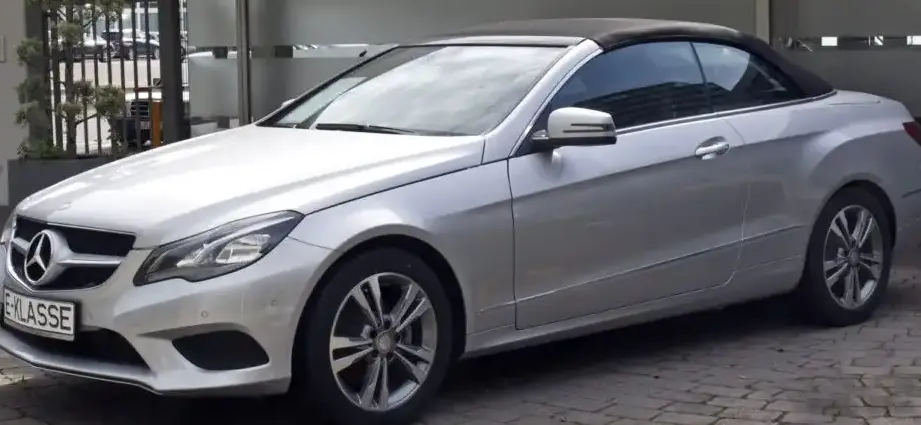
The Mercedes-Benz E-Class Cabriolet (A207) facelift, specifically the E 250d variant produced from September 2015 to March 2017, represented a compelling blend of luxury, performance, and fuel efficiency within the mid-size premium convertible segment. Positioned as a mid-range offering in the A207 lineup, it slotted between the entry-level E 200d and the more powerful E 350d, appealing to buyers seeking a refined open-air driving experience without sacrificing practicality or running costs. This generation of E-Class Cabriolet, built on the W207 platform, benefited from a significant refresh in 2013, incorporating updated styling, improved technology, and more efficient engine options.
Technical Specifications
| Brand | Mercedes-Benz |
| Model | E-Class |
| Generation | E-Class Cabrio (A207, facelift 2013) |
| Type (Engine) | E 250d (204 Hp) |
| Start of production | September, 2015 |
| End of production | March, 2017 |
| Powertrain Architecture | Internal Combustion engine |
| Body type | Cabriolet |
| Seats | 4 |
| Doors | 2 |
| Fuel consumption (urban) | 5.8-6.1 l/100 km (40.6 – 38.6 US mpg, 48.7 – 46.3 UK mpg, 17.2 – 16.4 km/l) |
| Fuel consumption (extra urban) | 4.3-4.6 l/100 km (54.7 – 51.1 US mpg, 65.7 – 61.4 UK mpg, 23.3 – 21.7 km/l) |
| Fuel consumption (combined) | 4.8-5.2 l/100 km (49 – 45.2 US mpg, 58.9 – 54.3 UK mpg, 20.8 – 19.2 km/l) |
| CO2 emissions | 126-135 g/km |
| Fuel Type | Diesel |
| Acceleration 0 – 100 km/h | 7.7 sec |
| Acceleration 0 – 62 mph | 7.7 sec |
| Acceleration 0 – 60 mph | 7.3 sec |
| Maximum speed | 243 km/h (150.99 mph) |
| Emission standard | Euro 6 |
| Weight-to-power ratio | 8.8 kg/Hp, 114.3 Hp/tonne |
| Weight-to-torque ratio | 3.6 kg/Nm, 280.1 Nm/tonne |
| Power | 204 Hp @ 3800 rpm |
| Power per litre | 95.2 Hp/l |
| Torque | 500 Nm @ 1600-1800 rpm (368.78 lb.-ft. @ 1600-1800 rpm) |
| Engine layout | Front, Longitudinal |
| Engine Model/Code | OM 651.911 |
| Engine displacement | 2143 cm3 (130.77 cu. in.) |
| Number of cylinders | 4 |
| Engine configuration | Inline |
| Cylinder Bore | 83 mm (3.27 in.) |
| Piston Stroke | 99 mm (3.9 in.) |
| Compression ratio | 16.2:1 |
| Number of valves per cylinder | 4 |
| Fuel injection system | Diesel Commonrail |
| Engine aspiration | BiTurbo, Intercooler |
| Valvetrain | DOHC |
| Engine oil capacity | 6.5 l (6.87 US qt | 5.72 UK qt) |
| Kerb Weight | 1785 kg (3935.25 lbs.) |
| Max. weight | 2330 kg (5136.77 lbs.) |
| Max load | 545 kg (1201.52 lbs.) |
| Trunk (boot) space – minimum | 300 l (10.59 cu. ft.) |
| Trunk (boot) space – maximum | 390 l (13.77 cu. ft.) |
| Fuel tank capacity | 66 l (17.44 US gal | 14.52 UK gal) |
| AdBlue tank | 25 l (6.6 US gal | 5.5 UK gal) |
| Permitted trailer load with brakes (12%) | 1800 kg (3968.32 lbs.) |
| Permitted trailer load without brakes | 750 kg (1653.47 lbs.) |
| Permitted towbar download | 75 kg (165.35 lbs.) |
| Length | 4703 mm (185.16 in.) |
| Width | 1786 mm (70.31 in.) |
| Width including mirrors | 2016 mm (79.37 in.) |
| Height | 1398 mm (55.04 in.) |
| Wheelbase | 2760 mm (108.66 in.) |
| Front track | 1538 mm (60.55 in.) |
| Rear track | 1541 mm (60.67 in.) |
| Front overhang | 862 mm (33.94 in.) |
| Rear overhang | 1081 mm (42.56 in.) |
| Minimum turning circle | 11.15 m (36.58 ft.) |
| Drivetrain | Rear wheel drive |
| Number of gears | 6 |
| Gearbox type | Manual transmission |
Powertrain & Engine Architecture
The E 250d Cabriolet was powered by the OM 651.911, a 2.1-liter inline-four diesel engine. This engine was a mainstay of the Mercedes-Benz lineup, known for its robust construction and fuel efficiency. The OM 651 featured a cast iron block, aluminum cylinder head, and a sophisticated common-rail direct injection system capable of delivering extremely precise fuel metering. Crucially, this version employed a twin-turbocharger setup – a smaller turbo for quick response at low engine speeds and a larger turbo for sustained power at higher RPMs. This configuration helped to mitigate turbo lag and deliver a broad, usable torque curve. The engine also incorporated an intercooler to further enhance performance by cooling the intake air. The 6-speed manual transmission was standard, offering precise shifts and a direct connection to the engine.
Driving Characteristics
The E 250d Cabriolet, with its 204 horsepower and 369 lb-ft of torque, provided a comfortable and capable driving experience. While not overtly sporty, the engine delivered ample power for relaxed cruising and confident overtaking. The manual transmission allowed for greater driver engagement compared to the optional automatic, and the gear ratios were well-matched to the engine’s torque curve. Acceleration from 0-60 mph took around 7.3 seconds, respectable for a relatively heavy convertible. The rear-wheel-drive configuration contributed to balanced handling, although it wasn’t as agile as some of its competitors. Compared to the more powerful E 350d, the E 250d offered a more economical driving experience, but at the expense of outright performance. The manual transmission, while engaging, required more driver effort than the available automatic options.
Equipment & Trim Levels
The E 250d Cabriolet came standard with a generous array of features, including leather upholstery, automatic climate control, a multi-function steering wheel, and a high-quality audio system. Optional extras included features like the Airscarf system (neck-level heating), memory seats, a premium sound system by Harman Kardon, and various driver assistance technologies such as lane keeping assist and blind spot monitoring. Interior trim options included a range of wood veneers and aluminum accents. The Cabriolet’s soft top was a multi-layered fabric design, offering good insulation and noise reduction when raised.
Chassis & Braking
The A207 E-Class Cabriolet utilized a robust chassis with a multi-link independent suspension at all four corners. This suspension setup provided a comfortable ride quality while maintaining good handling characteristics. The front suspension featured coil springs and a transverse stabilizer bar, while the rear suspension also employed coil springs and a stabilizer bar. Braking duties were handled by ventilated discs at the front and solid discs at the rear, equipped with ABS (Anti-lock Braking System) and electronic brake-force distribution. The steering was a rack-and-pinion system with power assistance.
Market Reception & Comparison
The E 250d Cabriolet was generally well-received by automotive critics, who praised its fuel efficiency, comfortable ride, and refined interior. However, some reviewers noted that the engine, while capable, lacked the outright punch of its larger counterparts. Compared to competitors like the BMW 4 Series Convertible and the Audi A5 Cabriolet, the E 250d offered a more luxurious and comfortable experience, but potentially at the expense of dynamic handling. Fuel economy was a strong point, consistently achieving around 45-50 mpg in real-world driving. Reliability was generally good, although diesel particulate filter (DPF) issues could occasionally arise, particularly with vehicles primarily used for short trips.
Legacy
The OM 651 engine family, including the version found in the E 250d, has proven to be remarkably durable and reliable. Well-maintained examples continue to offer years of dependable service. On the used car market, the E 250d Cabriolet represents a good value proposition for buyers seeking a luxurious and fuel-efficient convertible. However, potential buyers should be aware of the potential for DPF issues and ensure that the vehicle has been properly serviced. The A207 E-Class Cabriolet, and the E 250d variant in particular, remains a desirable and well-regarded vehicle within the Mercedes-Benz lineage.