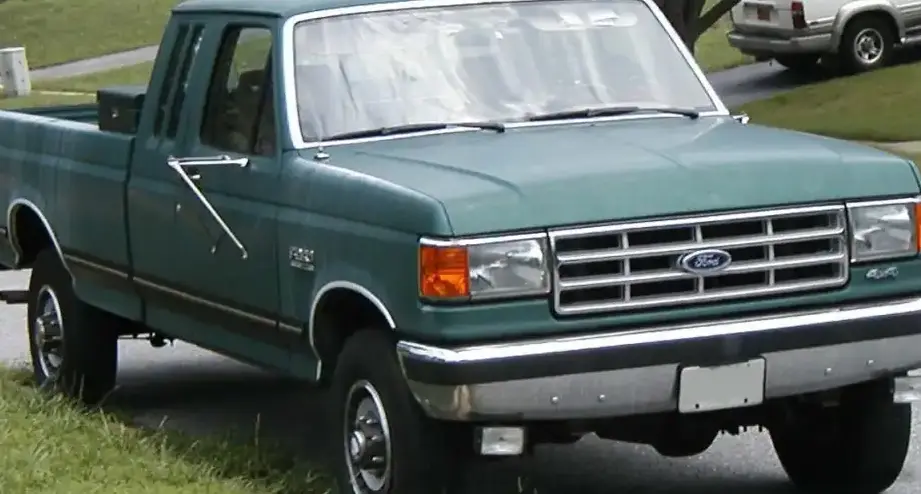
The Ford F-Series F-250 VIII SuperCab HD, equipped with the 7.5-liter 460 cubic inch V8 engine producing 225 horsepower and a four-wheel-drive system, was a significant offering in Ford’s heavy-duty truck lineup from 1986 to 1988. This variant represented a balance between capability and affordability within the eighth generation (1987-1991) of the F-Series, a generation known for its robust construction and improvements in ride quality. The SuperCab configuration, offering extended passenger space, further broadened the truck’s appeal to both commercial and personal users. This particular configuration was positioned as a workhorse, capable of handling substantial loads while providing a degree of comfort for passengers.
Technical Specifications
| Brand | Ford |
| Model | F-Series F-250 |
| Generation | F-Series F-250 VIII SuperCab HD |
| Type (Engine) | 7.5 460 V8 (225 Hp) 4×4 |
| Start of production | 1986 |
| End of production | 1988 |
| Powertrain Architecture | Internal Combustion engine |
| Body type | Pick-up |
| Seats | 6 |
| Doors | 2 |
| Fuel Type | Petrol (Gasoline) |
| Power | 225 Hp |
| Power per litre | 29.8 Hp/l |
| Torque | 491 Nm / 362.14 lb.-ft. |
| Engine layout | Front, Longitudinal |
| Engine displacement | 7538 cm3 / 460 cu. in. |
| Number of cylinders | 8 |
| Engine configuration | V-engine |
| Fuel injection system | Carburettor |
| Engine aspiration | Naturally aspirated engine |
| Max. weight | 3992 kg / 8800.85 lbs. |
| Fuel tank capacity | 144 l / 38.04 US gal | 31.68 UK gal |
| Length | 5898 mm / 232.2 in. |
| Width | 1778 mm / 70 in. |
| Height | 1956 mm / 77.01 in. |
| Wheelbase | 3937 mm / 155 in. |
| Wading depth | 914 mm / 35.98 in. |
| Drivetrain Architecture | The Internal combustion engine (ICE) drives the rear wheels permanently, and the front wheels are driven through an electrically or mechanically operated clutch if necessary. |
| Drive wheel | All wheel drive (4×4) |
| Number of gears and type of gearbox | 4 gears, manual transmission |
| Front suspension | Leaf spring |
| Rear suspension | Leaf spring |
| Front brakes | Disc |
| Rear brakes | Drum |
| Power steering | Electric Steering |
| Tires size | 235/85 R16 |
| Wheel rims size | 16 |
Powertrain & Engine Architecture
The heart of this F-250 variant was the 460 cubic inch (7.5-liter) Ford Windsor V8 engine. This engine, a mainstay of Ford’s truck lineup for decades, was known for its substantial low-end torque. The 1986-1988 version, in this application, produced 225 horsepower and 362 lb-ft of torque. It utilized a carburetor fuel injection system, a common feature for the time, which, while less efficient than modern fuel injection, was relatively simple to maintain. The engine featured a cast iron block and heads, contributing to its durability. The four-speed manual transmission was a heavy-duty unit designed to handle the engine’s output and the truck’s substantial towing capacity. The transmission’s gear ratios were optimized for work, prioritizing low-end grunt over high-speed performance.
Driving Characteristics
Behind the wheel, the F-250 460 V8 delivered a driving experience focused on capability rather than refinement. The engine’s torque peak was relatively low in the RPM range, providing strong acceleration from a standstill and making it well-suited for towing and hauling. The four-speed manual transmission required deliberate shifting, and the gear ratios were spaced to maximize pulling power. Compared to the smaller engine options available in the F-250 lineup (like the 300 cubic inch inline-six or the 351 Windsor V8), the 460 offered significantly more power, but at the expense of fuel economy. Compared to later fuel-injected versions of the 460, this carbureted version felt less responsive and required more frequent maintenance to keep the carburetor properly tuned. The ride quality, typical of heavy-duty trucks of the era, was firm, especially when unladen, due to the leaf spring suspension.
Equipment & Trim Levels
The F-250 SuperCab HD with the 460 V8 typically came with a fairly basic level of equipment, reflecting its work-oriented nature. Standard features included a vinyl bench seat, basic instrumentation (speedometer, fuel gauge, temperature gauge), and a heavy-duty radiator. The SuperCab configuration added extra rear seating, increasing passenger capacity. Optional extras included air conditioning, an upgraded sound system, power windows and locks, and a tilt steering wheel. The interior trim was generally utilitarian, with durable materials designed to withstand heavy use. The exterior typically featured minimal chrome trim, emphasizing functionality over aesthetics.
Chassis & Braking
The F-250’s chassis was built for durability and strength. It utilized a heavy-duty frame and a solid rear axle. The front suspension consisted of leaf springs, while the rear also employed leaf springs, providing a robust but somewhat stiff ride. The braking system featured disc brakes on the front axle and drum brakes on the rear. Power steering was standard, making maneuvering the large truck easier. The 4×4 system was typically a part-time system, requiring the driver to manually engage four-wheel drive when needed. Tire size was typically 235/85R16, providing a good balance of traction and durability.
Market Reception & Comparison
The F-250 with the 460 V8 and manual transmission was generally well-received by buyers who needed a powerful and capable truck for demanding tasks. Critics praised its towing capacity and durability, but noted its relatively poor fuel economy and somewhat rough ride. Compared to the smaller engine options, the 460 offered a significant performance advantage, but it also came with a higher price tag. Compared to competing trucks from Chevrolet and Dodge, the F-250 was considered to be a strong contender in terms of overall capability and reliability. The carbureted engine, however, was seen as a drawback compared to the fuel-injected engines offered by some competitors.
Legacy
The 1986-1988 Ford F-250 with the 460 V8 has become a popular choice among classic truck enthusiasts. The 460 engine, while not the most fuel-efficient, is known for its longevity and relatively simple mechanical design, making it easier to maintain and repair. Parts availability remains good, and the truck’s robust construction ensures that many examples are still on the road today. These trucks are often sought after for restoration projects or as reliable work trucks. While not as technologically advanced as modern trucks, the F-250 460 represents a bygone era of American truck design, characterized by its ruggedness, simplicity, and unwavering capability. The carbureted version, while requiring more attention than later fuel-injected models, is often preferred by enthusiasts who appreciate its classic mechanical feel.