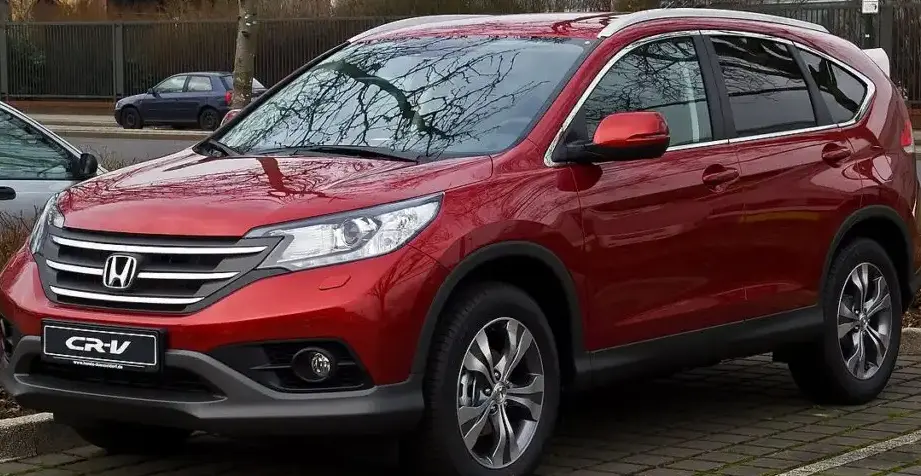
The Honda CR-V IV 2.0 i-VTEC (155 hp) AWD, produced from 2012 to 2015, represents a significant iteration in Honda’s popular compact SUV lineup. Part of the fourth-generation CR-V (RE series), this variant was positioned as a mainstream offering, balancing fuel efficiency, practicality, and all-weather capability. It served as a key model in the North American and European markets, where the CR-V had established a strong reputation for reliability and versatility. This particular configuration, combining the 2.0-liter i-VTEC engine with all-wheel drive, aimed to provide a comfortable and capable vehicle for families and individuals alike. It sat in the middle of the CR-V IV range, offering a step up in performance from the base models while remaining more accessible than the higher-trim levels.
Technical Specifications
| Brand | Honda |
| Model | CR-V |
| Generation | CR-V IV |
| Type (Engine) | 2.0 i-VTEC (155 Hp) AWD |
| Start of production | 2012 |
| End of production | 2015 |
| Powertrain Architecture | Internal Combustion engine |
| Body type | SUV |
| Seats | 5 |
| Doors | 5 |
| Fuel consumption (urban) | 9.3 l/100 km (25.3 US mpg) |
| Fuel consumption (extra urban) | 6.3 l/100 km (37.3 US mpg) |
| Fuel consumption (combined) | 7.4 l/100 km (31.8 US mpg) |
| Fuel Type | Petrol (Gasoline) |
| Acceleration 0 – 100 km/h | 10.2 sec |
| Acceleration 0 – 62 mph | 10.2 sec |
| Acceleration 0 – 60 mph | 9.7 sec |
| Maximum speed | 190 km/h (118.06 mph) |
| Emission standard | Euro 5 |
| Weight-to-power ratio | 9.8 kg/Hp |
| Weight-to-torque ratio | 7.9 kg/Nm |
| Power | 155 Hp @ 6500 rpm |
| Torque | 192 Nm @ 4300 rpm (141.61 lb.-ft. @ 4300 rpm) |
| Engine layout | Front, Transverse |
| Engine Model/Code | R20A5, R20A6, R20A8 |
| Engine displacement | 1997 cm3 (121.86 cu. in.) |
| Number of cylinders | 4 |
| Engine configuration | Inline |
| Compression ratio | 10.6:1 |
| Number of valves per cylinder | 4 |
| Fuel injection system | Multi-port manifold injection |
| Engine aspiration | Naturally aspirated engine |
| Engine oil capacity | 3.7 l (3.91 US qt | 3.26 UK qt) |
| Coolant capacity | 5.94 l (6.28 US qt | 5.23 UK qt) |
| Kerb Weight | 1517 kg (3344.41 lbs) |
| Trunk (boot) space – minimum | 589 l (20.8 cu. ft.) |
| Trunk (boot) space – maximum | 1669 l (58.94 cu. ft.) |
| Fuel tank capacity | 58 l (15.32 US gal | 12.76 UK gal) |
| Length | 4570 mm (179.92 in) |
| Width | 1820 mm (71.65 in) |
| Height | 1685 mm (66.34 in) |
| Wheelbase | 2630 mm (103.54 in) |
| Minimum turning circle | 11.8 m (38.71 ft) |
| Drive wheel | All wheel drive (4×4) |
| Number of gears | 6 gears, manual transmission |
| Front suspension | Independent, type McPherson with coil spring and anti-roll bar |
| Rear suspension | Independent multi-link suspension |
| Front brakes | Ventilated discs |
| Rear brakes | Disc |
| Assisting systems | ABS (Anti-lock braking system) |
| Steering type | Steering rack and pinion |
| Tires size | 225/65 R17; 225/60 R18 |
| Wheel rims size | 17; 18 |
INTRODUCTION
The CR-V IV, launched in 2012, represented a significant redesign for Honda’s best-selling SUV. Built on the RE platform, it offered increased interior space, improved fuel economy, and a more refined driving experience compared to its predecessor. The 2.0 i-VTEC AWD variant, powered by the R20A series engine, was a popular choice for buyers seeking a balance between performance and efficiency. It was offered alongside other engine options, including a diesel variant in Europe, and served as a core model in Honda’s lineup during its production run of 2012-2015.
Powertrain & Engine Architecture
At the heart of the CR-V IV 2.0 i-VTEC AWD lies the R20A5 (or regional variants like R20A6 and R20A8) 2.0-liter inline-four cylinder engine. This engine is a naturally aspirated powerplant utilizing Honda’s i-VTEC (Intelligent Variable Valve Timing and Lift Electronic Control) technology. The i-VTEC system allows for variable valve timing and lift, optimizing engine performance across a wider RPM range. Fuel delivery is managed by a multi-point fuel injection system. The engine’s design prioritizes fuel efficiency and smooth power delivery over outright performance. The 6-speed manual transmission was standard on this trim, providing drivers with direct control over gear selection. The transmission’s gear ratios are tuned for a balance of acceleration and fuel economy, with a relatively tall final drive to aid in highway cruising.
Driving Characteristics
The 155 hp and 192 Nm (141.61 lb-ft) of torque produced by the 2.0-liter i-VTEC engine, coupled with the all-wheel-drive system, delivers adequate performance for everyday driving. Acceleration from 0-60 mph takes around 9.7 seconds, which is competitive within its class but noticeably slower than the more powerful engine options available in the CR-V IV range. The all-wheel-drive system provides enhanced traction in inclement weather conditions, making it a practical choice for regions with snow or rain. The manual transmission offers a more engaging driving experience compared to the optional automatic, allowing drivers to better control the engine’s powerband. However, the engine can feel somewhat strained when fully loaded or climbing steep hills. The suspension is tuned for comfort, providing a relatively smooth ride over most road surfaces.
Equipment & Trim Levels
The 2.0 i-VTEC AWD trim typically included standard features such as air conditioning, power windows and locks, a basic audio system with USB connectivity, and alloy wheels. Safety features included ABS, stability control, and multiple airbags. Higher trim levels offered upgrades such as a sunroof, leather upholstery, a more advanced infotainment system with navigation, and heated front seats. The interior generally featured durable materials and a functional layout, prioritizing practicality over luxury. Optional extras included a rear-view camera and a premium audio system.
Chassis & Braking
The CR-V IV utilizes a MacPherson strut front suspension and an independent multi-link rear suspension. This setup provides a good balance of ride comfort and handling. The all-wheel-drive system employs a real-time system that automatically distributes torque between the front and rear wheels as needed, enhancing traction. Braking duties are handled by ventilated discs at the front and solid discs at the rear. ABS (Anti-lock Braking System) is standard, providing enhanced braking performance in emergency situations. The steering is a rack-and-pinion system, offering precise and responsive handling.
Market Reception & Comparison
The CR-V IV 2.0 i-VTEC AWD was generally well-received by automotive critics. It was praised for its practicality, fuel efficiency, and reliability. However, some reviewers noted that the engine lacked the power of some of its competitors. Compared to the diesel variants available in Europe, the 2.0-liter gasoline engine offered less torque but was generally quieter and smoother. Against other gasoline-powered CR-V trims, this variant offered a more affordable entry point into the CR-V range, making it an attractive option for budget-conscious buyers. Fuel economy figures of around 31.8 US mpg combined were competitive for its class.
Legacy
The R20A series engine, found in the CR-V IV 2.0 i-VTEC AWD, has proven to be a relatively reliable powertrain. Common issues are generally minor and often related to routine maintenance items. On the used car market, these CR-Vs are often sought after for their reputation for dependability and practicality. While not the most exciting vehicle to drive, the CR-V IV 2.0 i-VTEC AWD remains a solid choice for buyers looking for a dependable and fuel-efficient compact SUV. Its enduring popularity is a testament to Honda’s commitment to building high-quality, long-lasting vehicles.