
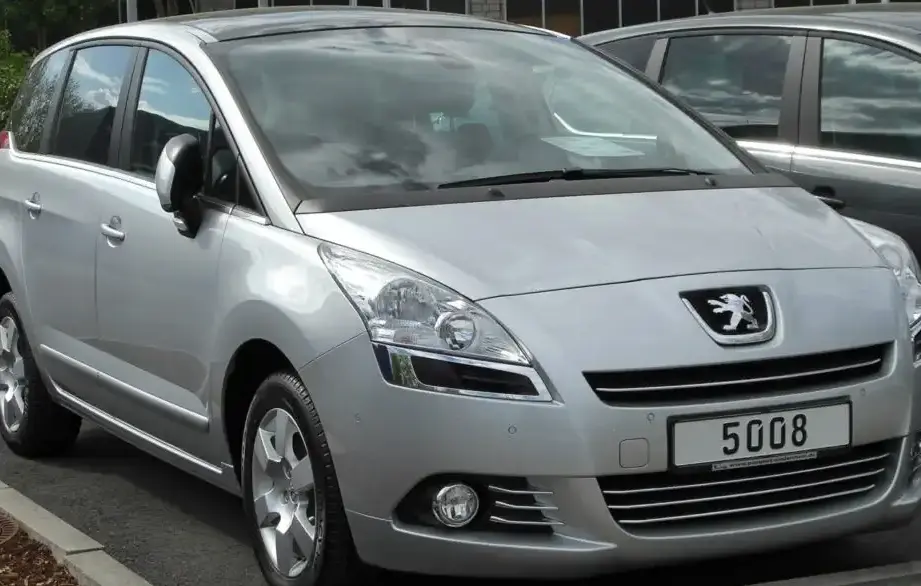
The Peugeot 5008, launched in 2009, represented Peugeot’s entry into the increasingly popular compact Multi-Purpose Vehicle (MPV) segment. The first generation, designated the 5008 I (Phase I), was produced from 2009 to 2013 and offered a practical and stylish alternative to traditional minivan designs. Among the engine options available, the 1.6 THP (Turbo High Pressure) producing 156 horsepower became a significant offering, particularly in European markets. This variant aimed to balance fuel efficiency with respectable performance, appealing to families seeking a versatile vehicle for both daily commutes and longer journeys. It was positioned as a mid-range option within the 5008 lineup, offering more power than the base gasoline engines but remaining more affordable than the diesel variants.
Technical Specifications
| Brand | Peugeot |
| Model | 5008 |
| Generation | 5008 I (Phase I, 2009) |
| Type (Engine) | 1.6 THP (156 Hp) |
| Start of production | 2009 |
| End of production | 2013 |
| Powertrain Architecture | Internal Combustion engine |
| Body type | MPV |
| Seats | 5 |
| Doors | 5 |
| Fuel consumption (urban) | 9.9 l/100 km (23.8 US mpg) |
| Fuel consumption (extra urban) | 5.8 l/100 km (40.6 US mpg) |
| Fuel consumption (combined) | 7.3 l/100 km (32.2 US mpg) |
| Fuel Type | Petrol (Gasoline) |
| Acceleration 0 – 100 km/h | 9.6 sec |
| Acceleration 0 – 62 mph | 9.6 sec |
| Acceleration 0 – 60 mph | 9.1 sec |
| Maximum speed | 195 km/h (121.17 mph) |
| Emission standard | Euro 5 |
| Weight-to-power ratio | 9.4 kg/Hp |
| Weight-to-torque ratio | 6.1 kg/Nm |
| Power | 156 Hp @ 5800 rpm |
| Torque | 240 Nm @ 1400 rpm (177.01 lb.-ft. @ 1400 rpm) |
| Engine layout | Front, Transverse |
| Engine Model/Code | 5FV EP6CDT |
| Engine displacement | 1598 cm3 (97.52 cu. in.) |
| Number of cylinders | 4 |
| Engine configuration | Inline |
| Number of valves per cylinder | 4 |
| Fuel injection system | Direct injection |
| Engine aspiration | Turbocharger, Intercooler |
| Engine oil capacity | 4.25 l (4.49 US qt | 3.74 UK qt) |
| Coolant capacity | 6.4 l (6.76 US qt | 5.63 UK qt) |
| Kerb Weight | 1460 kg (3218.75 lbs.) |
| Max. weight | 2050 kg (4519.48 lbs.) |
| Max load | 590 kg (1300.73 lbs.) |
| Trunk (boot) space – minimum | 679 l (23.98 cu. ft.) |
| Trunk (boot) space – maximum | 1754 l (61.94 cu. ft.) |
| Fuel tank capacity | 60 l (15.85 US gal | 13.2 UK gal) |
| Length | 4529 mm (178.31 in.) |
| Width | 1888 mm (74.33 in.) |
| Height | 1647 mm (64.84 in.) |
| Wheelbase | 2727 mm (107.36 in.) |
| Minimum turning circle | 11.1 m (36.42 ft.) |
| Drivetrain Architecture | Front wheel drive |
| Number of gears | 6 |
| Gearbox type | Manual transmission |
| Front suspension | Independent type McPherson |
| Rear suspension | Semi-independent, coil spring |
| Front brakes | Ventilated discs |
| Rear brakes | Disc |
| Assisting systems | ABS (Anti-lock braking system) |
| Steering type | Steering rack and pinion |
| Tires size | 215/55 R16; 215/50 R17; 215/45 R18 |
| Wheel rims size | 16; 17; 18 |
Powertrain & Engine Architecture
The heart of this 5008 variant is the 1.6 THP engine, specifically the 5FV EP6CDT code. This engine is a member of the Prince engine family, a collaborative development between PSA Peugeot Citroën and BMW. It’s a turbocharged, direct-injection four-cylinder engine. The direct injection system, coupled with the turbocharger and intercooler, allows for a high compression ratio and efficient combustion, resulting in a good balance of power and fuel economy. The engine utilizes a timing chain, intended to offer greater durability compared to timing belts. The 156 hp output is achieved at 5800 rpm, while the peak torque of 240 Nm (177 lb-ft) is available from a low 1400 rpm, providing good responsiveness in everyday driving situations. The engine is paired with a six-speed manual transmission, which was the most common configuration for this variant.
Driving Characteristics
The 1.6 THP engine in the 5008 provides a noticeable step up in performance compared to the naturally aspirated 1.6-liter gasoline engine offered in lower trims. Acceleration from 0 to 60 mph takes approximately 9.1 seconds, making it adequate for most driving scenarios. The turbocharger provides a surge of power in the mid-range, aiding in overtaking maneuvers. However, it’s not a particularly sporty engine; the focus is more on usability and efficiency. The six-speed manual transmission is well-matched to the engine’s characteristics, offering precise shifts and allowing the driver to keep the engine in its optimal power band. Compared to the diesel variants, the 1.6 THP feels less effortless at highway speeds, requiring more downshifting for quick acceleration. The ride quality is generally comfortable, typical of an MPV, but the 5008 isn’t particularly engaging to drive.
Equipment & Trim Levels
The 1.6 THP variant of the 5008 typically came equipped with a reasonable level of standard features. These included air conditioning, electric front and rear windows, a CD stereo with auxiliary input, and ABS brakes. Higher trim levels, such as the Sportium or Allure, added features like alloy wheels, rear parking sensors, automatic headlights and rain-sensing wipers, and a more sophisticated infotainment system. Interior upholstery was typically cloth, with options for leather upgrades on higher trims. The dashboard layout was functional and well-designed, with a focus on ergonomics. Optional extras included a panoramic sunroof, navigation system, and a rear entertainment system.
Chassis & Braking
The 5008 utilizes a McPherson strut front suspension and a semi-independent coil spring rear suspension. This setup provides a comfortable ride, but it’s not particularly sporty. The front brakes are ventilated discs, while the rear brakes are solid discs. ABS (Anti-lock Braking System) is standard. The steering is a rack and pinion system, providing adequate feedback. The 5008’s weight of around 1460 kg (3218.75 lbs) contributes to its stable handling, but it also limits its agility. Stabilizer bars are fitted to both the front and rear axles to reduce body roll during cornering.
Market Reception & Comparison
The Peugeot 5008 1.6 THP was generally well-received by automotive critics. It was praised for its spacious interior, comfortable ride, and fuel-efficient engine. However, some critics noted that the engine could feel strained when fully loaded or driving uphill. Compared to the diesel variants, the 1.6 THP offered lower running costs in terms of fuel price but potentially higher maintenance costs due to the complexity of the turbocharger and direct injection system. The manual transmission was preferred by many drivers over the optional automatic, which was considered less responsive. Fuel economy figures of around 32.2 US mpg combined were competitive for its class.
Legacy
The 1.6 THP engine, while offering good performance and efficiency, has been known to exhibit some reliability issues, particularly related to carbon buildup on the intake valves and potential oil leaks. Regular maintenance, including the use of high-quality oil and fuel additives, is crucial to prevent these problems. Today, the first-generation Peugeot 5008 1.6 THP can be found on the used car market at relatively affordable prices. It remains a practical and versatile option for families seeking a spacious and comfortable MPV, but potential buyers should be aware of the engine’s potential reliability concerns and factor in the cost of preventative maintenance.
