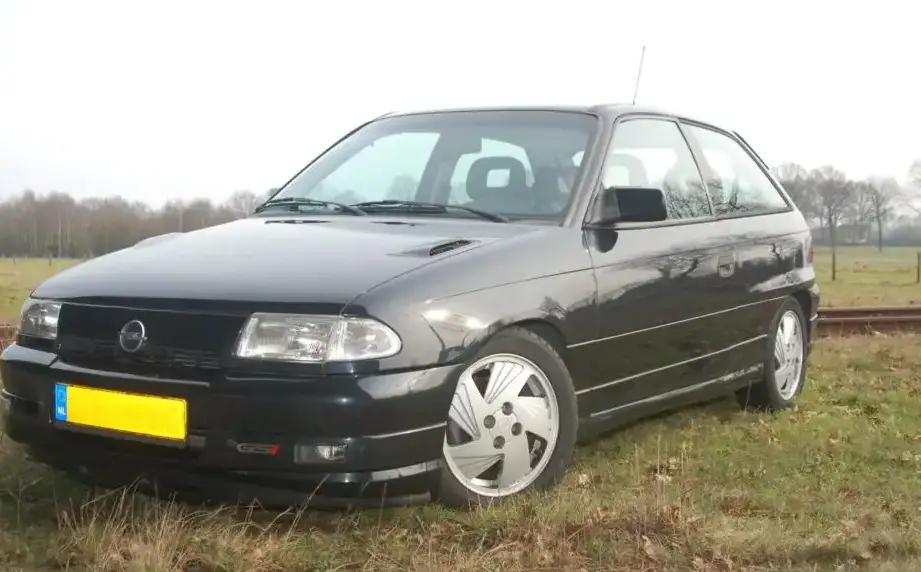
The Opel Astra G Cabrio 1.6 Twinport 16V, produced from February 2003 to October 2005, represented an accessible entry point into the Astra G Cabriolet range. Positioned as a stylish and relatively affordable open-top option, it catered to buyers seeking a blend of practicality and leisure. This variant utilized Opel’s Z16XEP engine, a 1.6-liter four-cylinder powerplant, paired with a five-speed manual transmission. It was part of the broader Astra G generation (1998-2005), which was a significant model for Opel, offering a modern and competitive package in the compact segment. The Cabriolet version, introduced later in the G’s lifecycle, aimed to capitalize on the growing popularity of convertible vehicles.
Technical Specifications
| Brand | Opel |
| Model | Astra |
| Generation | Astra G Cabrio |
| Type (Engine) | 1.6 Twinport 16V (103 Hp) |
| Start of production | February, 2003 |
| End of production | October, 2005 |
| Powertrain Architecture | Internal Combustion engine |
| Body type | Cabriolet |
| Seats | 4 |
| Doors | 2 |
| Fuel consumption (urban) | 8.8 l/100 km (26.7 US mpg) |
| Fuel consumption (extra urban) | 5.5 l/100 km (42.8 US mpg) |
| Fuel consumption (combined) | 6.7 l/100 km (35.1 US mpg) |
| CO2 emissions | 161 g/km |
| Fuel Type | Petrol (Gasoline) |
| Acceleration 0 – 100 km/h | 13 sec |
| Acceleration 0 – 62 mph | 13 sec |
| Acceleration 0 – 60 mph | 12.4 sec |
| Maximum speed | 190 km/h (118.06 mph) |
| Emission standard | Euro 4 |
| Weight-to-power ratio | 12.4 kg/Hp |
| Weight-to-torque ratio | 8.7 kg/Nm |
| Power | 103 Hp @ 6000 rpm |
| Torque | 147 Nm @ 3600 rpm (108.42 lb.-ft. @ 3600 rpm) |
| Engine layout | Front, Transverse |
| Engine Model/Code | Z16XEP |
| Engine displacement | 1598 cm3 (97.52 cu. in.) |
| Number of cylinders | 4 |
| Engine configuration | Inline |
| Cylinder Bore | 79 mm (3.11 in.) |
| Piston Stroke | 81.5 mm (3.21 in.) |
| Compression ratio | 10.5:1 |
| Number of valves per cylinder | 4 |
| Fuel injection system | Multi-port manifold injection |
| Engine aspiration | Naturally aspirated |
| Valvetrain | DOHC |
| Engine oil capacity | 3.25 l (3.43 US qt | 2.86 UK qt) |
| Coolant capacity | 6.1 l (6.45 US qt | 5.37 UK qt) |
| Kerb Weight | 1275 kg (2810.89 lbs.) |
| Max. weight | 1695 kg (3736.84 lbs.) |
| Max load | 420 kg (925.94 lbs.) |
| Trunk (boot) space – minimum | 330 l (11.65 cu. ft.) |
| Fuel tank capacity | 52 l (13.74 US gal | 11.44 UK gal) |
| Length | 4267 mm (167.99 in.) |
| Width | 1709 mm (67.28 in.) |
| Width including mirrors | 1989 mm (78.31 in.) |
| Height | 1390 mm (54.72 in.) |
| Wheelbase | 2606 mm (102.6 in.) |
| Front track | 1474 mm (58.03 in.) |
| Rear track | 1462 mm (57.56 in.) |
| Front overhang | 812 mm (31.97 in.) |
| Rear overhang | 849 mm (33.43 in.) |
| Drag coefficient (Cd) | 0.30 |
| Minimum turning circle | 11 m (36.09 ft.) |
| Drivetrain Architecture | Front wheel drive |
| Number of gears | 5 gears, manual transmission |
| Front suspension | Independent, McPherson with coil spring and anti-roll bar |
| Rear suspension | Semi-independent, coil spring |
| Front brakes | Ventilated discs |
| Rear brakes | Disc |
| Assisting systems | ABS (Anti-lock braking system) |
| Steering type | Steering rack and pinion |
| Power steering | Hydraulic |
| Tires size | 205/50 R16 H |
| Wheel rims size | 6.5J x 16 ET49 |
Powertrain & Engine Architecture
The heart of the Astra G Cabrio 1.6 Twinport was the Z16XEP engine, a member of Opel’s Ecotec family. This 1.6-liter inline-four cylinder engine featured multi-port fuel injection and a double overhead camshaft (DOHC) valvetrain with four valves per cylinder. The “Twinport” designation referred to the dual intake ports per cylinder, designed to improve swirl and enhance combustion efficiency. The engine produced 103 horsepower at 6000 rpm and 147 Nm (108 lb-ft) of torque at 3600 rpm. The five-speed manual transmission was the standard offering, providing a relatively direct connection between the engine and the front wheels. The transmission’s gear ratios were tuned for a balance of fuel economy and acceptable acceleration, though it wasn’t geared for particularly sporty performance.
Driving Characteristics
The 1.6-liter engine, while adequate for everyday driving, didn’t deliver exhilarating performance in the Astra G Cabrio. Acceleration from 0 to 60 mph took around 12.4 seconds, and top speed was limited to 190 km/h (118 mph). The car felt best suited for relaxed cruising, with sufficient power for highway merging and overtaking, but lacked the punch of the more powerful 1.8 or 2.0-liter variants. The manual transmission offered a reasonable level of control, but the gear ratios weren’t particularly close, resulting in some noticeable gaps in power delivery. Compared to the higher-spec models, the 1.6 felt less refined and required more driver input to maintain momentum, especially when fully loaded or tackling inclines.
Equipment & Trim Levels
The 1.6 Twinport Cabriolet typically came with a base level of equipment, focusing on essential comfort and safety features. Standard items included power steering, ABS brakes, front airbags, and a basic audio system. Interior upholstery was typically cloth, and the dashboard featured a functional but relatively simple design. Optional extras included air conditioning, alloy wheels, a more advanced audio system, and electric windows. The trim level was generally considered the entry-level offering, making it an attractive option for budget-conscious buyers. It was positioned below the 1.8 and 2.2-liter models, which offered more luxurious appointments and higher performance.
Chassis & Braking
The Astra G Cabrio utilized a McPherson strut front suspension and a semi-independent coil spring rear suspension. This setup provided a reasonable balance of ride comfort and handling, though it wasn’t as sophisticated as the fully independent suspension found on some competitors. The front brakes were ventilated discs, while the rear brakes were solid discs. ABS (Anti-lock Braking System) was standard, enhancing safety during emergency braking. The chassis was reinforced to compensate for the lack of a fixed roof, providing adequate torsional rigidity for a convertible. However, it didn’t quite match the stiffness of the coupe or hatchback versions of the Astra G.
Market Reception & Comparison
The Astra G Cabrio 1.6 Twinport was generally well-received as an affordable and stylish convertible. Critics praised its attractive design and reasonable fuel economy (around 35.1 US mpg combined). However, the engine’s performance was often cited as a weakness, with reviewers noting its lack of power compared to rival convertibles. Compared to the 1.8-liter version, the 1.6 offered lower running costs but sacrificed performance. The 1.8 provided a noticeable boost in power and a more engaging driving experience, but at a higher price point. The 1.6 Twinport appealed to buyers prioritizing affordability and fuel efficiency over outright performance.
Legacy
The Z16XEP engine, while not known for being exceptionally durable, proved to be reasonably reliable with proper maintenance. Common issues included occasional oil leaks and sensor failures. The Astra G Cabrio 1.6 Twinport remains a relatively affordable used car today, appealing to buyers seeking a classic open-top experience. Its simplicity and relatively low running costs make it an attractive option for those looking for a weekend cruiser or a first convertible. However, potential buyers should be aware of the engine’s limitations and ensure that the car has been well-maintained to avoid potential issues.