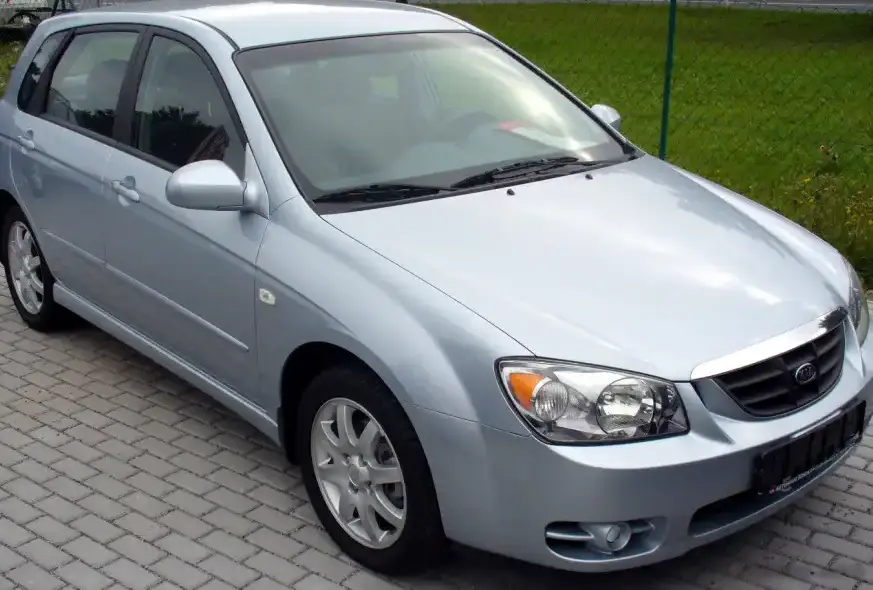
The Kia Cerato IV Sedan GT 1.6 T-GDI, produced from January 2018 to May 2021, represents a significant step forward in Kia’s compact sedan offerings. Positioned as the performance-oriented trim within the fourth generation (BD) Cerato lineup, this variant aimed to attract buyers seeking a blend of sporty driving dynamics and modern features. It was primarily marketed in markets outside of North America, where the Cerato was often sold under the Forte nameplate. The GT 1.6 T-GDI occupied the top tier of the Cerato range, offering a more powerful engine and upgraded components compared to the base and mid-range models.
Technical Specifications
| Brand | Kia |
| Model | Cerato |
| Generation | Cerato IV Sedan |
| Type (Engine) | GT 1.6 T-GDI (204 Hp) DCT |
| Start of production | January, 2018 |
| End of production | May, 2021 |
| Powertrain Architecture | Internal Combustion engine |
| Body type | Sedan |
| Seats | 5 |
| Doors | 4 |
| Fuel consumption (urban) | 8.9 l/100 km (26.4 US mpg) |
| Fuel consumption (extra urban) | 5.5 l/100 km (42.8 US mpg) |
| Fuel consumption (combined) | 6.8 l/100 km (34.6 US mpg) |
| CO2 emissions | 158 g/km |
| Fuel Type | Petrol (Gasoline) |
| Emission standard | Euro 5 |
| Weight-to-power ratio | 6.3 kg/Hp |
| Weight-to-torque ratio | 4.9 kg/Nm |
| Power | 204 Hp @ 6000 rpm |
| Power per litre | 128.2 Hp/l |
| Torque | 265 Nm @ 1500-4500 rpm (195.45 lb.-ft.) |
| Engine layout | Front, Transverse |
| Engine Model/Code | Gamma II / G4FJ |
| Engine displacement | 1591 cm3 (97.09 cu. in.) |
| Number of cylinders | 4 |
| Engine configuration | Inline |
| Cylinder Bore | 77 mm (3.03 in.) |
| Piston Stroke | 85.4 mm (3.36 in.) |
| Compression ratio | 10:1 |
| Number of valves per cylinder | 4 |
| Fuel injection system | Direct injection |
| Engine aspiration | Turbocharger, Intercooler |
| Valvetrain | D-CVVT |
| Engine oil capacity | 4.5 l (4.76 US qt | 3.96 UK qt) |
| Coolant | 6.9 l (7.29 US qt | 6.07 UK qt) |
| Kerb Weight | 1295 kg (2854.99 lbs.) |
| Trunk (boot) space (minimum) | 502 l (17.73 cu. ft.) |
| Fuel tank capacity | 50 l (13.21 US gal | 11 UK gal) |
| Permitted trailer load with brakes (12%) | 1100 kg (2425.08 lbs.) |
| Permitted trailer load without brakes | 610 kg (1344.82 lbs.) |
| Length | 4640 mm (182.68 in.) |
| Width | 1800 mm (70.87 in.) |
| Height | 1435 mm (56.5 in.) |
| Wheelbase | 2700 mm (106.3 in.) |
| Ride height (ground clearance) | 135 mm (5.31 in.) |
| Minimum turning circle | 10.6 m (34.78 ft.) |
| Drivetrain Architecture | Front wheel drive |
| Number of gears and type of gearbox | 7 gears, automatic transmission DCT |
| Front suspension | Independent type McPherson |
| Rear suspension | Independent multi-link suspension |
| Front brakes | Ventilated discs |
| Rear brakes | Disc |
| Assisting systems | ABS (Anti-lock braking system) |
| Steering type | Steering rack and pinion |
| Power steering | Electric Steering |
| Tires size | 225/40 ZR18 |
| Wheel rims size | 7.5J x 18 ET55 |
Powertrain & Engine Architecture
At the heart of the Cerato GT 1.6 T-GDI lies the Gamma II engine, specifically the G4FJ code. This 1.6-liter, inline-four cylinder engine utilizes direct fuel injection and a single-scroll turbocharger with an intercooler to deliver a respectable 204 horsepower at 6000 rpm and 265 Nm (195 lb-ft) of torque between 1500 and 4500 rpm. The engine features Kia’s Dual Continuous Variable Valve Timing (D-CVVT) technology, optimizing valve timing for improved efficiency and performance across the rev range. The engine is transversely mounted, driving the front wheels. Paired with the engine is a seven-speed dual-clutch transmission (DCT), offering quick and smooth gear changes. This DCT was a key component in enhancing the sporty driving experience, providing faster acceleration compared to traditional automatic transmissions.
Driving Characteristics
The combination of the turbocharged engine and the DCT results in a noticeably more engaging driving experience compared to lower-trim Ceratos. Acceleration is brisk, with the car feeling responsive in everyday driving situations. The DCT provides quick shifts, minimizing power interruption during gear changes. While not a dedicated sports sedan, the GT 1.6 T-GDI offers a good balance between performance and comfort. The gear ratios are tuned to prioritize acceleration in the lower gears, while still providing adequate cruising ability on the highway. Compared to the naturally aspirated 2.0-liter engine found in other Cerato trims, the turbo engine delivers more torque at lower engine speeds, making it feel more effortless in passing maneuvers. The manual transmission option, available in some markets, offered a more direct connection to the engine, but the DCT provided convenience and efficiency for daily commuting.
Equipment & Trim Levels
The GT trim level came standard with a number of features designed to enhance both comfort and style. Interior appointments typically included sport seats with unique upholstery, a leather-wrapped steering wheel, and metallic accents. Standard technology features included a touchscreen infotainment system with Apple CarPlay and Android Auto compatibility, a rearview camera, and automatic climate control. Optional extras often included a sunroof, premium audio system, and advanced driver-assistance systems such as blind-spot monitoring and lane-keeping assist. The exterior styling of the GT model was also differentiated by unique front and rear bumpers, a rear spoiler, and alloy wheels.
Chassis & Braking
The Cerato GT 1.6 T-GDI featured an independent suspension setup at all four corners, with McPherson struts at the front and a multi-link system at the rear. This suspension configuration provided a good balance between ride comfort and handling precision. The GT trim often included a slightly stiffer suspension tuning compared to lower trims, further enhancing its sporty character. Braking duties were handled by ventilated disc brakes at the front and solid disc brakes at the rear. Anti-lock braking system (ABS) was standard, providing enhanced stopping power and control during emergency braking situations. The steering system utilized an electric power steering (EPS) system, offering light and precise steering feel.
Market Reception & Comparison
The Cerato GT 1.6 T-GDI was generally well-received by automotive critics, who praised its responsive engine, smooth-shifting DCT, and well-equipped interior. Fuel economy was considered competitive for its class, with combined fuel consumption figures around 6.8 l/100 km (34.6 US mpg). Compared to other compact sedans with similar performance levels, the Cerato GT offered a compelling value proposition, often undercutting its rivals in terms of price. However, some critics noted that the ride quality could be a bit firm on rough roads, and the interior materials, while well-assembled, weren’t quite as premium as some competitors. Compared to the base engine Cerato, the GT offered a significant performance upgrade, but at a higher price point.
Legacy
The Kia Cerato IV Sedan GT 1.6 T-GDI represents a pivotal moment in Kia’s evolution as a manufacturer of stylish and capable vehicles. The Gamma II engine and DCT transmission proved to be a reliable combination, and many examples remain on the road today. While not a collector’s item, the GT 1.6 T-GDI holds its value reasonably well in the used car market, particularly those examples that have been well-maintained. The success of this variant helped to establish Kia as a serious contender in the compact sedan segment, paving the way for future performance-oriented models.