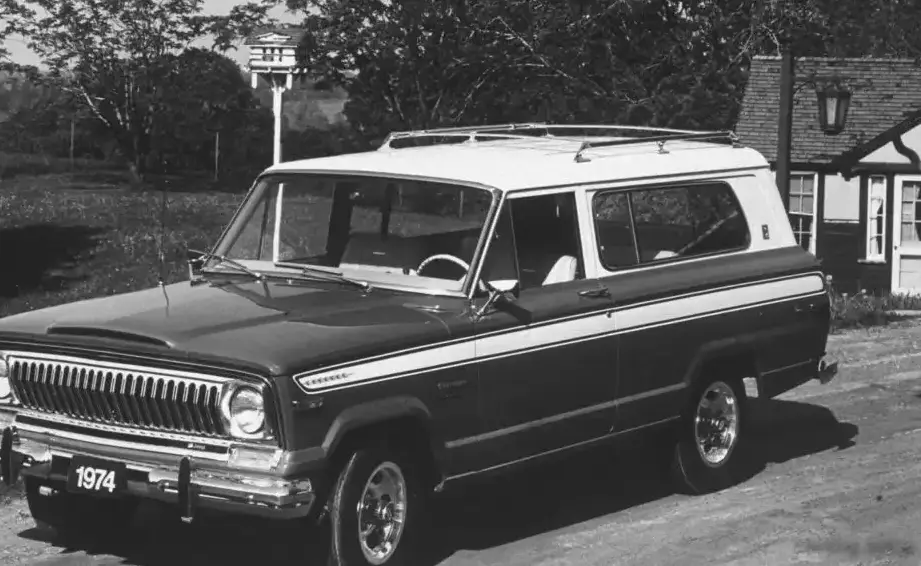
The Jeep Cherokee II (XJ) 3-door 2.5 i SE, produced between 1996 and 2001, represented a continuation of the highly successful XJ Cherokee line. This variant, powered by a 2.5-liter inline-four engine producing 127 horsepower, occupied a key position in the Cherokee lineup as an entry-level option, offering affordability and practicality within the compact SUV segment. The XJ platform, known for its robust unibody construction and capable four-wheel-drive systems (though this specific variant was rear-wheel drive), had established the Cherokee as a benchmark for off-road performance and everyday usability. The 3-door configuration further emphasized its compact nature, appealing to buyers seeking a more maneuverable and fuel-efficient SUV.
Technical Specifications
| Brand | Jeep |
| Model | Cherokee |
| Generation | Cherokee II (XJ) 3-door |
| Type (Engine) | 2.5 i SE (127 Hp) |
| Start of production | 1996 |
| End of production | 2001 |
| Powertrain Architecture | Internal Combustion engine |
| Body type | SUV |
| Seats | 5 |
| Doors | 3/5 |
| Fuel consumption (urban) | 11.2 l/100 km (21 US mpg) |
| Fuel consumption (extra urban) | 9.4 l/100 km (25 US mpg) |
| Fuel Type | Petrol (Gasoline) |
| Weight-to-power ratio | 11.2 kg/Hp |
| Power | 127 Hp @ 5400 rpm |
| Torque | 234 Nm @ 3250 rpm (172.59 lb.-ft. @ 3250 rpm) |
| Engine layout | Front, Longitudinal |
| Engine displacement | 2464 cm3 (150.36 cu. in.) |
| Number of cylinders | 4 |
| Engine configuration | Inline |
| Cylinder Bore | 98.4 mm (3.87 in.) |
| Piston Stroke | 81 mm (3.19 in.) |
| Compression ratio | 9.2:1 |
| Number of valves per cylinder | 2 |
| Fuel injection system | Multi-port manifold injection |
| Engine aspiration | Naturally aspirated |
| Engine oil capacity | 3.8 l (4.02 US qt | 3.34 UK qt) |
| Coolant capacity | 9.5 l (10.04 US qt | 8.36 UK qt) |
| Kerb Weight | 1420 kg (3130.56 lbs.) |
| Max. weight | 2087 kg (4601.05 lbs.) |
| Max load | 667 kg (1470.48 lbs.) |
| Trunk (boot) space – minimum | 932 l (32.91 cu. ft.) |
| Trunk (boot) space – maximum | 1954 l (69 cu. ft.) |
| Fuel tank capacity | 76 l (20.08 US gal | 16.72 UK gal) |
| Length | 4254 mm (167.48 in.) |
| Width | 1763 mm (69.41 in.) |
| Height | 1624 mm (63.94 in.) |
| Wheelbase | 2576 mm (101.42 in.) |
| Front track | 1473 mm (57.99 in.) |
| Rear track | 1473 mm (57.99 in.) |
| Drivetrain Architecture | Rear wheel drive |
| Number of gears | 5 |
| Gearbox type | Manual transmission |
| Front suspension | Coil spring |
| Rear suspension | Leaf spring |
| Front brakes | Ventilated discs |
| Rear brakes | Drum |
| Assisting systems | ABS (Anti-lock braking system) |
| Power steering | Hydraulic |
| Tires size | 215/75 R15 |
Powertrain & Engine Architecture
The heart of the 2.5 i SE was the 2.5-liter (2464 cc) inline-four cylinder engine. This engine, often referred to by its internal code, was a relatively simple and robust design. It featured a cast iron block and aluminum cylinder head, employing a multi-port fuel injection system for precise fuel delivery. The engine utilized a two-valve per cylinder configuration, operated by a single overhead camshaft. The 127 horsepower output was achieved at 5400 rpm, while peak torque of 234 Nm (172.59 lb-ft) arrived at 3250 rpm. This engine was paired with a 5-speed manual transmission, providing a balance between fuel efficiency and driver control. While an automatic transmission was available on other Cherokee trims, the 2.5 i SE was primarily offered with the manual gearbox in many markets.
Driving Characteristics
The 2.5-liter engine, coupled with the manual transmission, provided adequate, though not exhilarating, performance. Acceleration was modest, and the Cherokee 2.5 i SE was not designed for rapid speeds. However, the engine’s torque characteristics made it well-suited for everyday driving and moderate towing. The manual transmission allowed drivers to maintain control over the engine’s powerband, making it easier to navigate hilly terrain or carry a load. Compared to the more powerful 4.0-liter inline-six engine offered in higher trims, the 2.5-liter engine prioritized fuel economy and affordability. The rear-wheel drive configuration, while reducing off-road capability compared to four-wheel-drive models, contributed to slightly improved fuel efficiency and a simpler mechanical layout.
Equipment & Trim Levels
The 2.5 i SE trim level typically included standard features such as air conditioning, a basic audio system, cloth upholstery, and power steering. Optional extras could include upgraded audio systems, power windows and locks, and a sunroof. The interior was functional and durable, prioritizing practicality over luxury. The 3-door configuration meant rear seat access was somewhat limited, and rear passenger space was less generous than in the 5-door models. The dashboard layout was typical of the XJ Cherokee, with clearly marked gauges and easy-to-use controls.
Chassis & Braking
The Cherokee II (XJ) utilized a robust unibody construction, providing a solid and durable platform. The front suspension employed coil springs, while the rear suspension utilized leaf springs – a traditional setup for body-on-frame SUVs, but adapted for the XJ’s unibody design. The braking system consisted of ventilated discs at the front and drum brakes at the rear. Anti-lock braking system (ABS) was included as a standard safety feature. The rear-wheel drive configuration and relatively lightweight construction contributed to predictable handling characteristics on paved roads.
Market Reception & Comparison
The Cherokee 2.5 i SE was generally well-received as an affordable and practical entry point into the Cherokee lineup. Critics praised its durability and off-road capability (even in rear-wheel drive form), but noted its modest performance. Compared to the 4.0-liter inline-six engine, the 2.5-liter engine offered significantly better fuel economy, making it an attractive option for budget-conscious buyers. The manual transmission, while appreciated by driving enthusiasts, was not as popular as the automatic transmission in some markets. The 3-door configuration appealed to buyers who prioritized maneuverability and a more compact footprint.
Legacy
The 2.5-liter engine in the Cherokee II (XJ) proved to be a reliable and long-lasting powertrain. Many examples remain on the road today, a testament to its durability. The XJ Cherokee, as a whole, has gained a devoted following among off-road enthusiasts and classic car collectors. While the 2.5 i SE variant is not as highly sought after as the more powerful 4.0-liter models, it remains a viable and affordable option for those seeking a classic Jeep SUV. Parts availability is generally good, and the relatively simple mechanical design makes it a relatively easy vehicle to maintain and repair. In the used car market, the 2.5 i SE typically commands a lower price than its higher-trim counterparts, making it an attractive option for first-time Jeep owners or those seeking a budget-friendly SUV.