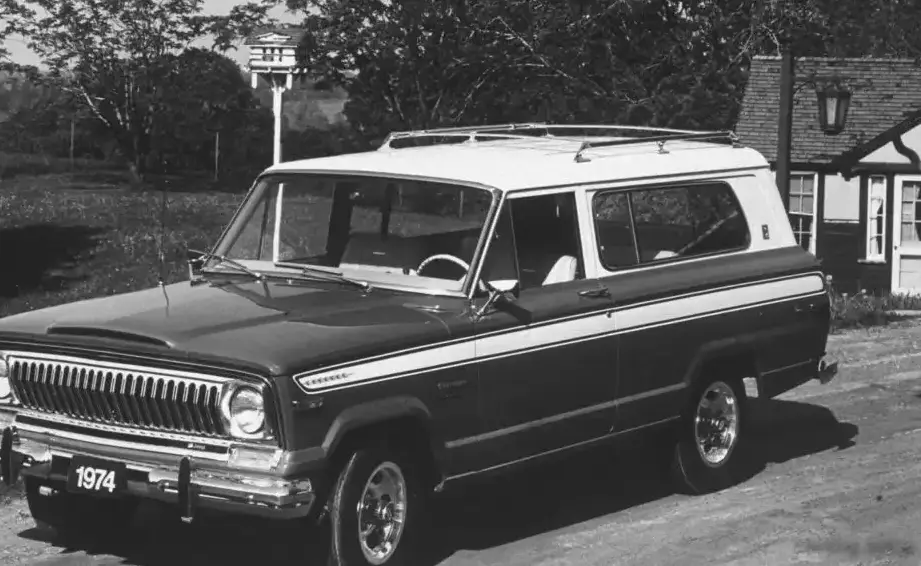
The Jeep Cherokee II (XJ), specifically the 3-door model powered by the 2.5 TD (115 hp) engine, was produced from 1995 to 2001. This variant occupied a unique position within the XJ Cherokee lineup, offering a diesel option in a more compact, and often more affordable, package. The XJ Cherokee, renowned for its robust unibody construction and off-road capability, was a mainstay of Jeep’s offerings and a popular choice for those seeking a versatile SUV. The 3-door model, coupled with the 2.5-liter turbodiesel, catered to buyers prioritizing fuel efficiency and utility over outright performance, particularly in European and other international markets where diesel engines were more prevalent.
Technical Specifications
| Brand | Jeep |
| Model | Cherokee |
| Generation | Cherokee II (XJ) 3-door |
| Type (Engine) | 2.5 TD (115 Hp) |
| Start of production | 1995 |
| End of production | 2001 |
| Powertrain Architecture | Internal Combustion engine |
| Body type | SUV |
| Seats | 5 |
| Doors | 3/5 |
| Fuel consumption (combined) | 9.1 l/100 km (25.8 US mpg, 31 UK mpg, 11 km/l) |
| Fuel Type | Diesel |
| Weight-to-power ratio | 14.2 kg/Hp (70.6 Hp/tonne) |
| Weight-to-torque ratio | 5.8 kg/Nm (171.8 Nm/tonne) |
| Power | 115 Hp @ 4000 rpm |
| Power per litre | 46 Hp/l |
| Torque | 280 Nm @ 2000 rpm (206.52 lb.-ft. @ 2000 rpm) |
| Engine layout | Front, Longitudinal |
| Engine Model/Code | ENC |
| Engine displacement | 2499 cm3 (152.5 cu. in.) |
| Number of cylinders | 4 |
| Engine configuration | Inline |
| Cylinder Bore | 92 mm (3.62 in.) |
| Piston Stroke | 94 mm (3.7 in.) |
| Compression ratio | 21:1 |
| Number of valves per cylinder | 2 |
| Fuel injection system | Precombustion chamber injection |
| Engine aspiration | Turbocharger |
| Engine oil capacity | 6.8 l (7.19 US qt | 5.98 UK qt) |
| Coolant capacity | 8 l (8.45 US qt | 7.04 UK qt) |
| Kerb Weight | 1630 kg (3593.53 lbs.) |
| Max. weight | 2230 kg (4916.31 lbs.) |
| Max load | 600 kg (1322.77 lbs.) |
| Trunk (boot) space – minimum | 652 l (23.03 cu. ft.) |
| Trunk (boot) space – maximum | 1315 l (46.44 cu. ft.) |
| Fuel tank capacity | 76 l (20.08 US gal | 16.72 UK gal) |
| Length | 4288 mm (168.82 in.) |
| Width | 1720 mm (67.72 in.) |
| Height | 1621 mm (63.82 in.) |
| Wheelbase | 2575 mm (101.38 in.) |
| Front track | 1473 mm (57.99 in.) |
| Rear (Back) track | 1473 mm (57.99 in.) |
| Drive wheel | All wheel drive (4×4) |
| Number of gears and type of gearbox | 5 gears, manual transmission |
| Front suspension | Coil spring |
| Rear suspension | Leaf spring |
| Front brakes | Ventilated discs |
| Rear brakes | Drum |
| Assisting systems | ABS (Anti-lock braking system) |
| Power steering | Hydraulic Steering |
| Tires size | 215/70 R15 S |
Powertrain & Engine Architecture
The heart of this Cherokee variant is the 2.5-liter inline-four cylinder diesel engine, designated as the ENC. This engine utilized a precombustion chamber injection system, a common technology for diesel engines of the era, designed to improve combustion efficiency and reduce noise. The addition of a turbocharger significantly boosted power output to 115 horsepower and 280 Nm (206.52 lb.-ft.) of torque. The engine’s longitudinal mounting within the chassis contributed to a balanced weight distribution. The five-speed manual transmission was the standard offering, providing a reasonable spread of gears for both on-road cruising and off-road crawling. While an automatic transmission was available on some XJ Cherokees, it was less common with the 2.5 TD engine.
Driving Characteristics
The 2.5 TD engine, while not a powerhouse, provided adequate performance for everyday driving. The turbocharger helped to mitigate some of the inherent torque deficit of smaller displacement diesel engines, delivering a usable surge of power at lower RPMs. However, compared to the more powerful gasoline engines available in the Cherokee lineup (like the 4.0L inline-six), the 2.5 TD felt noticeably slower, especially when fully loaded or tackling steep inclines. The manual transmission allowed for greater control over the engine’s power band, but the gear ratios were optimized for fuel economy rather than outright acceleration. The 3-door configuration, being lighter than the 5-door model, did offer a slight advantage in responsiveness.
Equipment & Trim Levels
The 3-door 2.5 TD Cherokee typically came with a relatively basic level of equipment, reflecting its position as a more affordable option. Standard features generally included power steering, air conditioning (often optional), and a basic audio system. Interior upholstery was typically cloth, and the dashboard featured a functional, if somewhat spartan, design. Optional extras could include upgraded audio systems, power windows and locks, and a sunroof. The trim level varied depending on the market, but generally focused on providing essential features without the luxury appointments found in higher-end Cherokee models.
Chassis & Braking
The XJ Cherokee’s chassis was a key element of its success, featuring a robust unibody construction that provided a good balance of strength and rigidity. The front suspension utilized coil springs, while the rear suspension employed leaf springs – a configuration common for trucks and SUVs of the time. This setup provided a comfortable ride on paved roads while maintaining good off-road capability. Braking duties were handled by ventilated discs at the front and drum brakes at the rear. Anti-lock braking system (ABS) was often included as standard equipment, enhancing safety. The 3-door model’s shorter wheelbase contributed to a slightly tighter turning radius compared to the 5-door version.
Market Reception & Comparison
The 2.5 TD 3-door Cherokee was generally well-received in markets where diesel engines were popular, particularly in Europe and South America. Critics praised its fuel efficiency and ruggedness, but noted its relatively modest performance compared to gasoline-powered rivals. Compared to the 4.0L inline-six Cherokee, the 2.5 TD offered significantly better fuel economy but lacked the six-cylinder’s power and refinement. Against other diesel SUVs of the time, the Cherokee offered a compelling combination of off-road capability and practicality. Its relatively low price point made it an attractive option for budget-conscious buyers.
Legacy
The 2.5 TD engine, while not known for being particularly sophisticated, proved to be reasonably durable and reliable. With proper maintenance, these engines can last for many years and accumulate high mileage. In the used car market today, the 3-door 2.5 TD Cherokee is often sought after by enthusiasts looking for a simple, rugged, and affordable SUV. Parts availability is generally good, and the relatively straightforward mechanical design makes it a popular choice for DIY mechanics. While not a collector’s item, the 2.5 TD Cherokee represents a significant chapter in Jeep’s history, offering a practical and capable vehicle that appealed to a wide range of buyers.