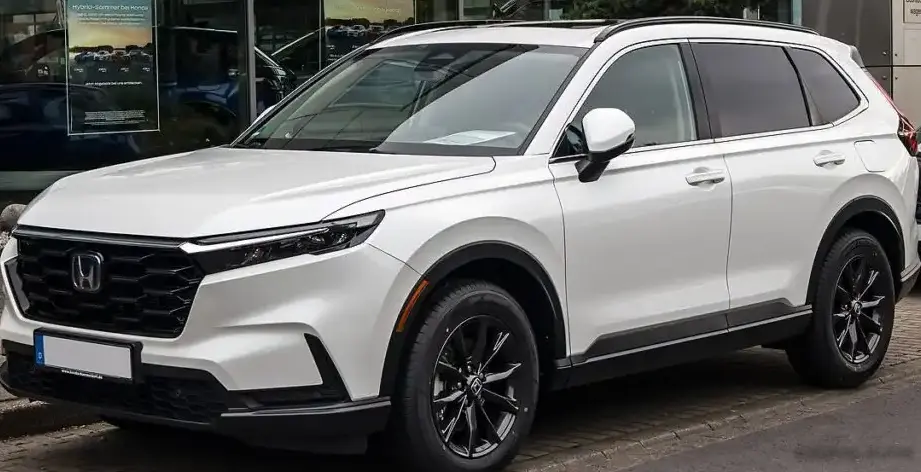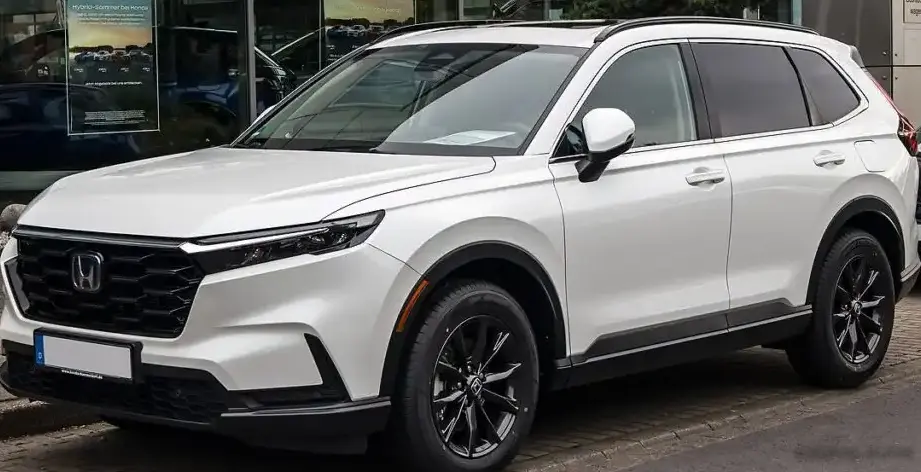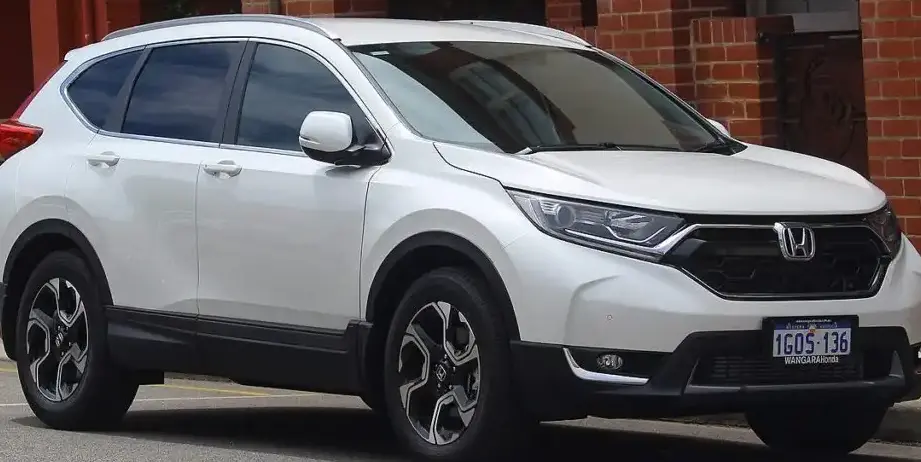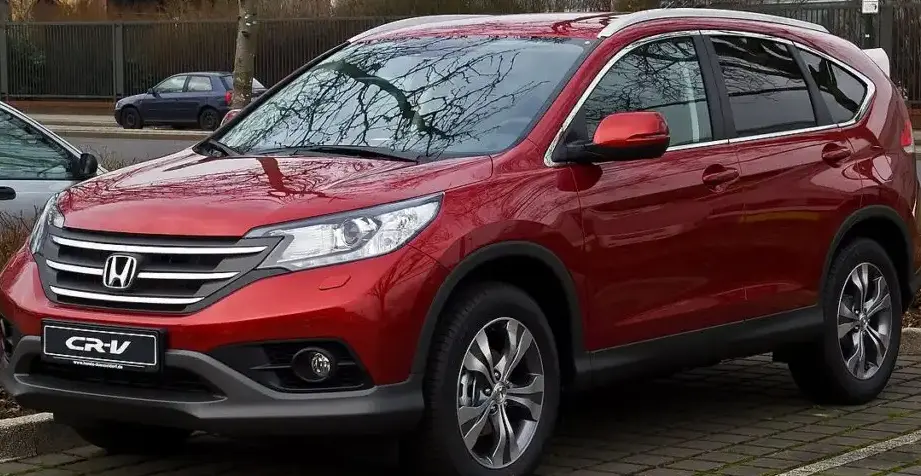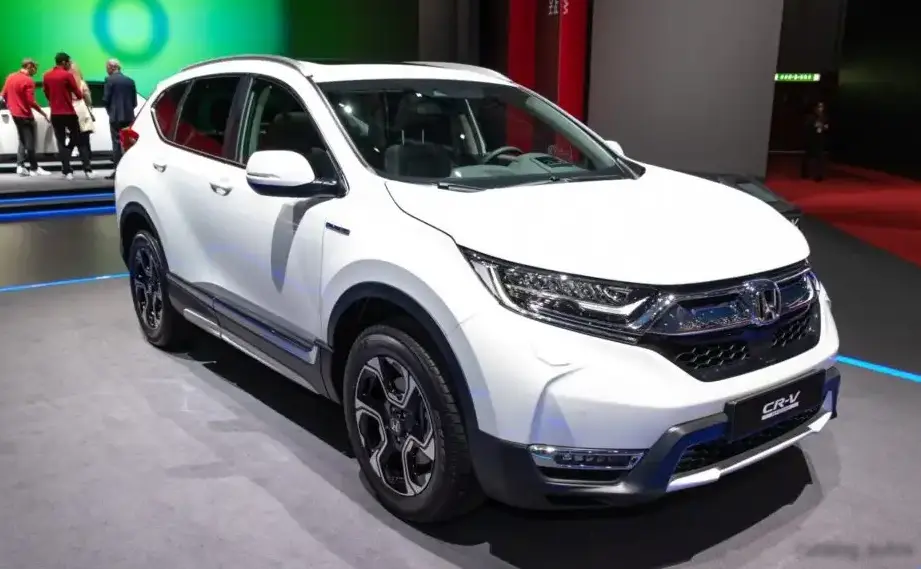
The Honda CR-V V 1.5 VTEC TURBO, produced from 2018 to 2019, represents a significant iteration of Honda’s popular compact SUV. Part of the fifth-generation CR-V (internally designated as the RW/RT platform in some markets, though the ‘V’ designation is commonly used), this variant was positioned as a mid-range offering, balancing performance, fuel efficiency, and available technology. It aimed to appeal to buyers seeking a practical and refined SUV with all-wheel drive capability. This model was primarily sold in European and Asian markets, with the US market receiving slightly different engine options during the same generation.
Technical Specifications
| Brand | Honda |
| Model | CR-V |
| Generation | CR-V V |
| Type (Engine) | 1.5 VTEC TURBO (193 Hp) AWD CVT |
| Start of production | 2018 |
| End of production | 2019 |
| Powertrain Architecture | Internal Combustion engine |
| Body type | SUV |
| Seats | 5-7 |
| Doors | 5 |
| Fuel consumption at Low speed (WLTP) | 11.4-11.7 l/100 km (20.6 – 20.1 US mpg) |
| Fuel consumption at Medium speed (WLTP) | 8.1-8.3 l/100 km (29 – 28.3 US mpg) |
| Fuel consumption at high speed (WLTP) | 7.3-7.5 l/100 km (32.2 – 31.4 US mpg) |
| Fuel consumption at very high speed (WLTP) | 9.1-9.3 l/100 km (25.8 – 25.3 US mpg) |
| Combined fuel consumption (WLTP) | 8.7-8.9 l/100 km (27 – 26.4 US mpg) |
| CO2 emissions (WLTP) | 162 g/km |
| Fuel consumption (economy) – urban | 8.6 l/100 km (27.4 US mpg) |
| Fuel consumption (economy) – extra urban | 6.2 l/100 km (37.9 US mpg) |
| Fuel consumption (economy) – combined | 7.1 l/100 km (33.1 US mpg) |
| Fuel Type | Petrol (Gasoline) |
| Acceleration 0 – 100 km/h | 10 sec |
| Acceleration 0 – 62 mph | 10 sec |
| Acceleration 0 – 60 mph | 9.5 sec |
| Maximum speed | 200 km/h (124.27 mph) |
| Emission standard | Euro 6d-TEMP |
| Weight-to-power ratio | 8.3 kg/Hp |
| Weight-to-torque ratio | 6.6 kg/Nm |
| Power | 193 Hp @ 5600 rpm |
| Torque | 243 Nm @ 2000-5000 rpm (179.23 lb.-ft. @ 2000-5000 rpm) |
| Engine layout | Front, Transverse |
| Engine Model/Code | L15 |
| Engine displacement | 1498 cm3 (91.41 cu. in.) |
| Number of cylinders | 4 |
| Engine configuration | Inline |
| Compression ratio | 10.3:1 |
| Number of valves per cylinder | 4 |
| Fuel injection system | Direct injection |
| Engine aspiration | Turbocharger, Intercooler |
| Valvetrain | VTEC |
| Engine oil capacity | 3.5 l (3.7 US qt | 3.08 UK qt) |
| Coolant | 6.2 l (6.55 US qt | 5.46 UK qt) |
| Kerb Weight | 1598-1705 kg (3522.99 – 3758.88 lbs.) |
| Max. weight | 2350 kg (5180.86 lbs.) |
| Max load | 645-752 kg (1421.98 – 1657.88 lbs.) |
| Trunk (boot) space – minimum | 150 l (5.3 cu. ft.) |
| Trunk (boot) space – maximum | 1756 l (62.01 cu. ft.) |
| Fuel tank capacity | 57 l (15.06 US gal | 12.54 UK gal) |
| Max. roof load | 75 kg (165.35 lbs.) |
| Permitted trailer load with brakes (12%) | 1500 kg (3306.93 lbs.) |
| Permitted trailer load without brakes | 600 kg (1322.77 lbs.) |
| Permitted towbar download | 100 kg (220.46 lbs.) |
| Length | 4600 mm (181.1 in.) |
| Width | 1855 mm (73.03 in.) |
| Width including mirrors | 2117 mm (83.35 in.) |
| Height | 1689 mm (66.5 in.) |
| Wheelbase | 2662 mm (104.8 in.) |
| Front track | 1601 mm (63.03 in.) |
| Rear (Back) track | 1629 mm (64.13 in.) |
| Ride height (ground clearance) | 208 mm (8.19 in.) |
| Minimum turning circle (turning diameter) | 11.4 m (37.4 ft.) |
| Drive wheel | All wheel drive (4×4) |
| Number of gears and type of gearbox | 7 gears, automatic transmission CVT |
| Front suspension | Independent, type McPherson with coil spring and anti-roll bar |
| Rear suspension | Independent multi-link suspension |
| Front brakes | Ventilated discs |
| Rear brakes | Disc |
| Assisting systems | ABS (Anti-lock braking system) |
| Steering type | Steering rack and pinion |
| Power steering | Electric Steering |
| Wheel rims size | 18; 19 |
Powertrain & Engine Architecture
The heart of this CR-V variant is the L15B engine, a 1.5-liter inline-four cylinder gasoline engine featuring direct injection and a single turbocharger. This engine is part of Honda’s Earth Dreams Technology series, designed for both performance and efficiency. The L15B utilizes Honda’s Variable Timing and Lift Electronic Control (VTEC) system for optimized valve timing, enhancing both low-end torque and high-rpm power. The turbocharger provides a significant boost in power compared to naturally aspirated engines of similar displacement. The engine’s control unit (ECU) carefully manages fuel injection and ignition timing to maximize efficiency and minimize emissions, meeting Euro 6d-TEMP standards. Paired with the engine is a Continuously Variable Transmission (CVT), offering smooth and stepless gear changes. This CVT is tuned for fuel economy and comfortable driving, prioritizing efficiency over aggressive acceleration.
Driving Characteristics
The 193 horsepower and 243 Nm (179.23 lb-ft) of torque delivered by the 1.5L turbo engine and CVT combination provide adequate performance for everyday driving. Acceleration from 0-60 mph takes approximately 9.5 seconds, and 0-100 km/h in 10 seconds. While not a sports car, the CR-V V 1.5 VTEC TURBO offers sufficient power for highway merging and overtaking. The CVT, while smooth, can sometimes exhibit a “rubber band” feel, where engine RPMs rise quickly under hard acceleration without a corresponding immediate increase in speed. Compared to the available manual transmission options or higher-output engine variants (not widely available in all markets), this setup prioritizes fuel economy and ease of use over outright performance. The all-wheel-drive system provides enhanced traction in inclement weather conditions, making it a capable all-season vehicle.
Equipment & Trim Levels
The CR-V V 1.5 VTEC TURBO typically came equipped with a respectable level of standard features. These included automatic climate control, a touchscreen infotainment system with Apple CarPlay and Android Auto compatibility, Honda Sensing suite of safety features (including adaptive cruise control, lane keeping assist, and collision mitigation braking system), and alloy wheels. Higher trim levels offered upgrades such as leather upholstery, a panoramic sunroof, and a premium audio system. Interior materials were generally of good quality, providing a comfortable and refined cabin environment. Optional extras often included navigation, heated front seats, and a power tailgate.
Chassis & Braking
The CR-V V utilizes a MacPherson strut front suspension and a multi-link rear suspension, providing a comfortable and controlled ride. Stabilizer bars are fitted to both axles to reduce body roll during cornering. Braking duties are handled by ventilated discs at the front and solid discs at the rear, providing adequate stopping power. The all-wheel-drive system employs a real-time system that automatically distributes torque between the front and rear axles based on driving conditions, enhancing stability and traction.
Market Reception & Comparison
The CR-V V 1.5 VTEC TURBO was generally well-received by automotive critics. It was praised for its spacious interior, comfortable ride, and fuel efficiency. The CVT transmission received mixed reviews, with some critics finding it smooth and responsive, while others noted its tendency to exhibit the typical “rubber band” effect. Compared to other trims in the CR-V lineup, this variant offered a good balance of performance and economy. It was positioned as a more affordable alternative to the higher-output engine options, making it an attractive choice for budget-conscious buyers. Fuel economy figures of 8.7-8.9 l/100 km (27-26.4 US mpg) were competitive within its class.
Legacy
The L15B engine, paired with the CVT transmission, has proven to be a relatively reliable powertrain. While some early models experienced minor issues with the turbocharger and fuel injectors, these were generally addressed through software updates and warranty repairs. Today, used examples of the CR-V V 1.5 VTEC TURBO are readily available and represent a good value proposition for buyers seeking a practical and reliable compact SUV. Regular maintenance, including oil changes and CVT fluid replacements, is crucial for ensuring long-term reliability. The CR-V’s reputation for durability and practicality continues to make it a popular choice in the used car market.