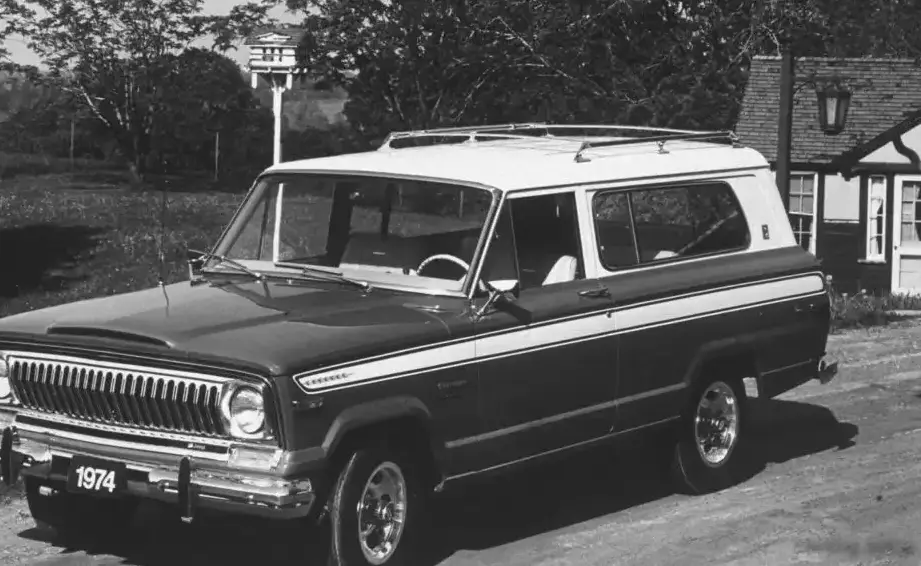
The Jeep Cherokee II (XJ), specifically the 5-door variant powered by the 2.1 TD engine producing 86 horsepower, was a significant offering in the European and select international markets from 1988 to 1995. Positioned as an entry-level option within the XJ Cherokee lineup, it provided a more fuel-efficient alternative to the gasoline-powered models, appealing to buyers prioritizing practicality and affordability. This model occupied a unique space, bridging the gap between the rugged off-road capability Jeep was known for and the growing demand for diesel-powered SUVs in Europe. It was built on the XJ platform (1984-2001), a unibody design that revolutionized the mid-size SUV segment.
Technical Specifications
| Brand | Jeep |
| Model | Cherokee |
| Generation | Cherokee II (XJ) 5-door |
| Type (Engine) | 2.1 TD (86 Hp) |
| Start of production | 1988 |
| End of production | 1995 |
| Powertrain Architecture | Internal Combustion engine |
| Body type | SUV |
| Seats | 5 |
| Doors | 5 |
| Fuel consumption (combined) | 9.4 l/100 km (25 US mpg, 30.1 UK mpg, 10.6 km/l) |
| Fuel Type | Diesel |
| Acceleration 0 – 100 km/h | 19.2 sec |
| Acceleration 0 – 62 mph | 19.2 sec |
| Acceleration 0 – 60 mph | 18.2 sec |
| Maximum speed | 140 km/h (86.99 mph) |
| Weight-to-power ratio | 17.3 kg/Hp, 57.7 Hp/tonne |
| Weight-to-torque ratio | 8.1 kg/Nm, 123.5 Nm/tonne |
| Power | 86 Hp @ 4000 rpm |
| Power per litre | 41.6 Hp/l |
| Torque | 184 Nm @ 2250 rpm (135.71 lb.-ft. @ 2250 rpm) |
| Engine layout | Front, Longitudinal |
| Engine Model/Code | J8S |
| Engine displacement | 2068 cm3 (126.2 cu. in.) |
| Number of cylinders | 4 |
| Engine configuration | Inline |
| Cylinder Bore | 86 mm (3.39 in.) |
| Piston Stroke | 89 mm (3.5 in.) |
| Compression ratio | 21:1 |
| Number of valves per cylinder | 2 |
| Fuel injection system | Precombustion chamber injection |
| Engine aspiration | Turbocharger |
| Kerb Weight | 1490 kg (3284.89 lbs.) |
| Max. weight | 2210 kg (4872.22 lbs.) |
| Max load | 720 kg (1587.33 lbs.) |
| Trunk (boot) space – minimum | 1011 l (35.7 cu. ft.) |
| Trunk (boot) space – maximum | 2033 l (71.79 cu. ft.) |
| Fuel tank capacity | 76 l (20.08 US gal | 16.72 UK gal) |
| Length | 4240 mm (166.93 in.) |
| Width | 1790 mm (70.47 in.) |
| Height | 1630 mm (64.17 in.) |
| Wheelbase | 2576 mm (101.42 in.) |
| Front track | 1473 mm (57.99 in.) |
| Rear (Back) track | 1473 mm (57.99 in.) |
| Drive wheel | All wheel drive (4×4) |
| Number of gears and type of gearbox | 5 gears, manual transmission |
| Front suspension | Coil spring |
| Rear suspension | Leaf spring |
| Front brakes | Ventilated discs |
| Rear brakes | Drum |
| Assisting systems | ABS (Anti-lock braking system) |
| Power steering | Hydraulic Steering |
| Tires size | 215/70 R15 T |
Powertrain & Engine Architecture
The heart of this Cherokee variant was the 2.1-liter inline-four cylinder diesel engine, designated the J8S. This engine utilized a precombustion chamber injection system, a common technology for diesel engines of the era, designed to improve combustion efficiency and reduce noise. The turbocharger, a key component, boosted power output to 86 horsepower at 4000 rpm and 184 Nm (135.71 lb.-ft.) of torque at 2250 rpm. The engine’s longitudinal mounting within the chassis contributed to a more balanced weight distribution. The 5-speed manual transmission was the only gearbox option available with this engine, chosen for its efficiency and suitability for the engine’s torque characteristics. The transmission’s gear ratios were optimized for both on-road cruising and off-road crawling, providing a balance between fuel economy and capability.
Driving Characteristics
The 2.1 TD Cherokee was not known for its blistering acceleration. The 0-60 mph time of around 18.2 seconds reflects its focus on fuel efficiency and durability rather than outright performance. However, the engine’s torque output provided adequate power for everyday driving and moderate off-road excursions. The manual transmission allowed drivers to maintain control over the engine’s powerband, and the all-wheel-drive system ensured good traction in various conditions. Compared to the gasoline-powered Cherokee models, the 2.1 TD offered significantly better fuel economy, making it a popular choice for drivers covering long distances. It was noticeably slower than the 4.0L inline-six engine option, but offered a more economical alternative.
Equipment & Trim Levels
The 2.1 TD Cherokee typically came with a relatively basic level of equipment, reflecting its position as an entry-level model. Standard features generally included power steering, ABS brakes, and a basic audio system. Interior upholstery was typically cloth, and the dashboard featured a functional, no-frills design. Optional extras, such as air conditioning, power windows, and upgraded audio systems, were available, but often added significantly to the vehicle’s price. Trim levels varied slightly depending on the specific market, but generally focused on adding cosmetic enhancements and convenience features.
Chassis & Braking
The Cherokee II utilized a robust unibody construction, providing a good balance of strength and weight. The front suspension featured coil springs, while the rear suspension employed leaf springs – a traditional setup for body-on-frame SUVs, adapted for the unibody design. The front brakes were ventilated discs, providing good stopping power, while the rear brakes were drums, a cost-saving measure common in this class of vehicle. The all-wheel-drive system was typically a part-time system, allowing drivers to switch between two-wheel drive and four-wheel drive as needed. Stabilizer bars were included to reduce body roll during cornering.
Market Reception & Comparison
The 2.1 TD Cherokee was generally well-received in European markets, where diesel engines were – and still are – highly popular. Critics praised its fuel efficiency and ruggedness, but noted its relatively slow acceleration. Compared to other diesel SUVs of the time, such as the Nissan Patrol or Mitsubishi Pajero, the Cherokee offered a more refined driving experience and a more modern interior. Against its gasoline-powered siblings, it represented a trade-off between performance and economy. The 4.0L inline-six offered significantly more power, but at the cost of increased fuel consumption.
Legacy
The 2.1 TD Cherokee II has developed a reputation for reliability and durability, particularly its engine and drivetrain. While finding parts can sometimes be challenging due to its age and relatively limited production numbers, the engine itself is known to be long-lasting with proper maintenance. In the used car market, these Cherokees are sought after by enthusiasts who appreciate their rugged character and fuel efficiency. They represent a unique chapter in Jeep’s history, demonstrating the brand’s ability to adapt to different market demands and offer a compelling alternative to traditional gasoline-powered SUVs. The XJ platform itself is highly regarded for its robust design and continues to be popular among off-road enthusiasts and restoration projects.