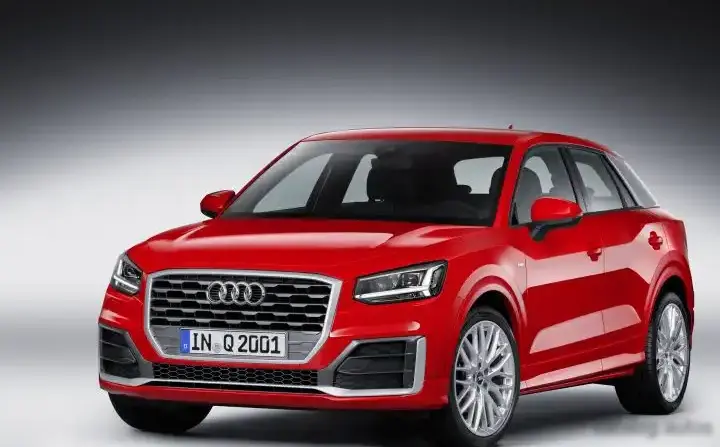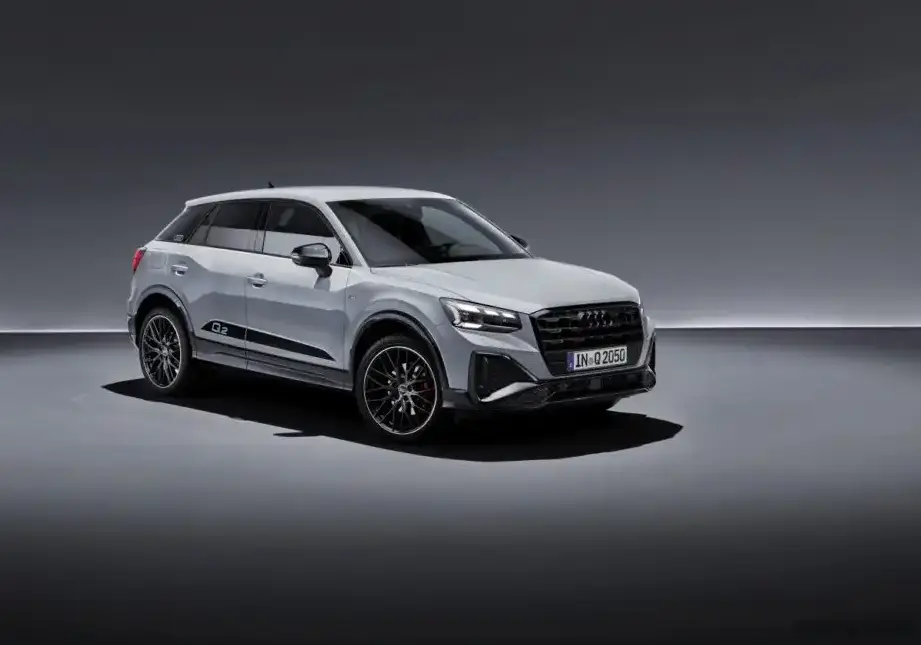
The Audi Q2 35 TFSI S tronic, introduced with the 2020 facelift, represents a key entry point into the Audi Q2 range. Positioned as a compact premium crossover SUV, it aimed to attract buyers seeking a stylish, technologically advanced vehicle in a smaller package. Production began in 2020 and continued alongside other Q2 variants, offering a balance between performance, fuel efficiency, and affordability within the broader Q2 lineup, primarily targeted towards the European market, though available in select other regions. This variant utilizes a 1.5-liter turbocharged four-cylinder engine paired with Audi’s seven-speed S tronic dual-clutch transmission and front-wheel drive.
Technical Specifications
| Brand | Audi |
| Model | Q2 |
| Generation | Q2 (facelift 2020) |
| Type (Engine) | 35 TFSI (150 Hp) S tronic |
| Start of production | 2020 |
| Powertrain Architecture | Internal Combustion engine |
| Body type | SUV |
| Seats | 5 |
| Doors | 5 |
| Combined fuel consumption (WLTP) | 6.0-6.5 l/100 km (39.2 – 36.2 US mpg, 47.1 – 43.5 UK mpg, 16.7 – 15.4 km/l) |
| CO2 emissions (WLTP) | 136-148 g/km |
| Fuel consumption (economy) – urban (NEDC) | 5.9-6.1 l/100 km (39.9 – 38.6 US mpg, 47.9 – 46.3 UK mpg, 16.9 – 16.4 km/l) |
| Fuel consumption (economy) – extra urban (NEDC) | 4.6-4.8 l/100 km (51.1 – 49 US mpg, 61.4 – 58.9 UK mpg, 21.7 – 20.8 km/l) |
| Fuel consumption (economy) – combined (NEDC) | 5.1-5.3 l/100 km (46.1 – 44.4 US mpg, 55.4 – 53.3 UK mpg, 19.6 – 18.9 km/l) |
| CO2 emissions (NEDC) | 116-121 g/km |
| Fuel Type | Petrol (Gasoline) |
| Acceleration 0 – 100 km/h | 8.6 sec |
| Acceleration 0 – 62 mph | 8.6 sec |
| Acceleration 0 – 60 mph | 8.2 sec |
| Maximum speed | 218 km/h (135.46 mph) |
| Emission standard | Euro 6d-ISC-FCM |
| Weight-to-power ratio | 8.7 kg/Hp, 114.9 Hp/tonne |
| Weight-to-torque ratio | 5.2 kg/Nm, 191.6 Nm/tonne |
| Power | 150 Hp @ 5000-6000 rpm |
| Power per litre | 100.1 Hp/l |
| Torque | 250 Nm @ 1500-3500 rpm (184.39 lb.-ft. @ 1500-3500 rpm) |
| Engine layout | Front, Transverse |
| Engine Model/Code | DPCA |
| Engine displacement | 1498 cm3 (91.41 cu. in.) |
| Number of cylinders | 4 |
| Engine configuration | Inline |
| Number of valves per cylinder | 4 |
| Fuel injection system | Direct injection |
| Engine aspiration | Turbocharger, Intercooler |
| Engine oil capacity | 4.3 l (4.54 US qt | 3.78 UK qt) |
| Kerb Weight | 1305 kg (2877.03 lbs.) |
| Max. weight | 1870 kg (4122.64 lbs.) |
| Max load | 565 kg (1245.61 lbs.) |
| Trunk (boot) space – minimum | 405 l (14.3 cu. ft.) |
| Trunk (boot) space – maximum | 1050 l (37.08 cu. ft.) |
| Fuel tank capacity | 50 l (13.21 US gal | 11 UK gal) |
| Max. roof load | 60 kg (132.28 lbs.) |
| Permitted trailer load with brakes (8%) | 1700 kg (3747.86 lbs.) |
| Permitted trailer load with brakes (12%) | 1500 kg (3306.93 lbs.) |
| Permitted trailer load without brakes | 690 kg (1521.19 lbs.) |
| Permitted towbar download | 75 kg (165.35 lbs.) |
| Length | 4208 mm (165.67 in.) |
| Width | 1794 mm (70.63 in.) |
| Width including mirrors | 2009 mm (79.09 in.) |
| Height | 1508 mm (59.37 in.) |
| Wheelbase | 2601 mm (102.4 in.) |
| Front track | 1546 mm (60.87 in.) |
| Rear (Back) track | 1542 mm (60.71 in.) |
| Front overhang | 830 mm (32.68 in.) |
| Rear overhang | 777 mm (30.59 in.) |
| Minimum turning circle (turning diameter) | 11.1 m (36.42 ft.) |
| Drivetrain Architecture | The Internal combustion engine (ICE) drives the front wheels of the vehicle. |
| Drive wheel | Front wheel drive |
| Number of gears and type of gearbox | 7 gears, automatic transmission S tronic |
| Front suspension | Independent type McPherson |
| Rear suspension | Semi-independent, coil spring |
| Front brakes | Ventilated discs |
| Rear brakes | Disc |
| Assisting systems | ABS (Anti-lock braking system) |
| Steering type | Steering rack and pinion |
| Power steering | Electric Steering |
Powertrain & Engine Architecture
The heart of the Q2 35 TFSI is the DPCA engine, a 1.5-liter inline-four cylinder gasoline engine. This engine is part of Volkswagen Group’s EA211 family, known for its compact design and efficiency. It features direct fuel injection and a single turbocharger with an intercooler, delivering 150 horsepower and 250 Nm (184 lb-ft) of torque. A key technology employed is cylinder deactivation, which shuts down two cylinders under light load conditions to improve fuel economy. The engine is transversely mounted in the front of the vehicle. The seven-speed S tronic dual-clutch transmission provides quick and smooth gear changes. This transmission is known for its efficiency and responsiveness, contributing to the overall driving experience.
Driving Characteristics
The Q2 35 TFSI S tronic offers a comfortable and refined driving experience. While not overtly sporty, the 150 hp engine provides adequate power for everyday driving and highway cruising. Acceleration from 0 to 100 km/h (0-62 mph) takes 8.6 seconds. The S tronic transmission contributes to a seamless power delivery, and the turbocharger provides a noticeable boost in torque at lower engine speeds. Compared to the more powerful Q2 variants, such as those with the 2.0-liter TFSI engine, the 35 TFSI feels less eager to accelerate, but it compensates with better fuel economy. The front-wheel-drive configuration provides predictable handling, and the suspension is tuned for comfort rather than outright sportiness.
Equipment & Trim Levels
The Q2 35 TFSI S tronic typically came equipped with a generous amount of standard features. These included Audi’s MMI infotainment system with a 7-inch touchscreen display, Bluetooth connectivity, automatic climate control, and a leather-wrapped steering wheel. Safety features such as ABS, electronic stability control, and multiple airbags were also standard. Optional extras included larger alloy wheels, a panoramic sunroof, upgraded upholstery, and advanced driver-assistance systems like adaptive cruise control and lane departure warning. Trim levels varied by market, but generally offered packages that added convenience and aesthetic enhancements.
Chassis & Braking
The Q2 35 TFSI utilizes a McPherson strut front suspension and a semi-independent coil spring rear suspension. This setup provides a good balance between ride comfort and handling. The front brakes are ventilated discs, while the rear brakes are solid discs. The steering is electric power-assisted, offering a light and precise feel. The chassis is designed to be relatively lightweight, contributing to the vehicle’s agility. Stabilizer bars are fitted to both the front and rear axles to reduce body roll during cornering.
Market Reception & Comparison
The Audi Q2 35 TFSI S tronic was generally well-received by automotive critics. It was praised for its stylish design, comfortable interior, and efficient powertrain. However, some reviewers noted that the engine could feel a bit underpowered, especially when fully loaded. Compared to other compact crossovers in its class, the Q2 offered a more premium feel and a more sophisticated driving experience. In terms of fuel economy, the 35 TFSI performed competitively, achieving between 6.0 and 6.5 liters per 100 kilometers (39.2-36.2 US mpg) in combined driving. Reliability reports have been generally positive, with few major issues reported.
Legacy
The Audi Q2 35 TFSI S tronic has established itself as a popular choice in the used car market. Its combination of style, efficiency, and technology continues to appeal to buyers. The 1.5-liter TFSI engine and S tronic transmission have proven to be relatively reliable, although regular maintenance is essential. As a more accessible entry point into the Audi brand, the Q2 35 TFSI has helped to broaden Audi’s customer base and solidify its position in the competitive compact crossover segment. Its enduring appeal lies in its ability to offer a premium experience without the higher price tag of its more powerful siblings.