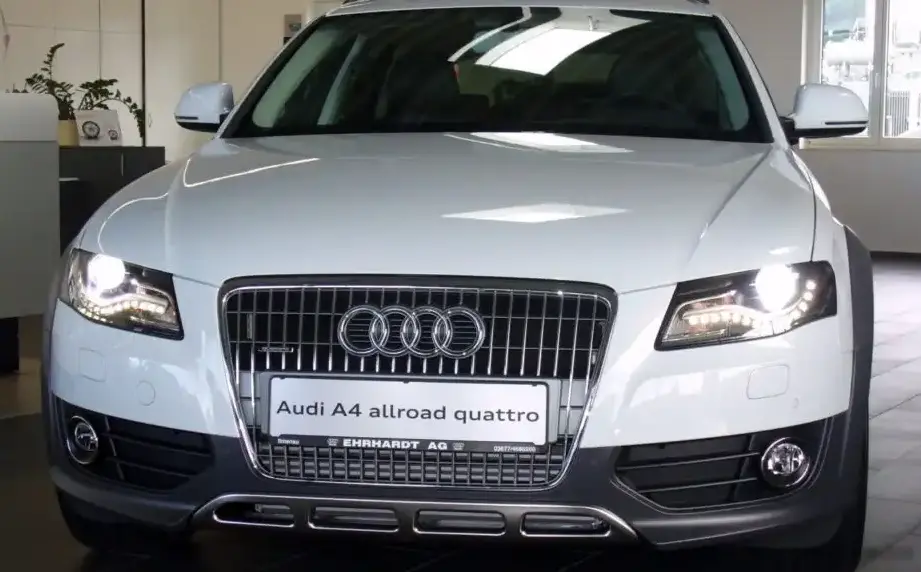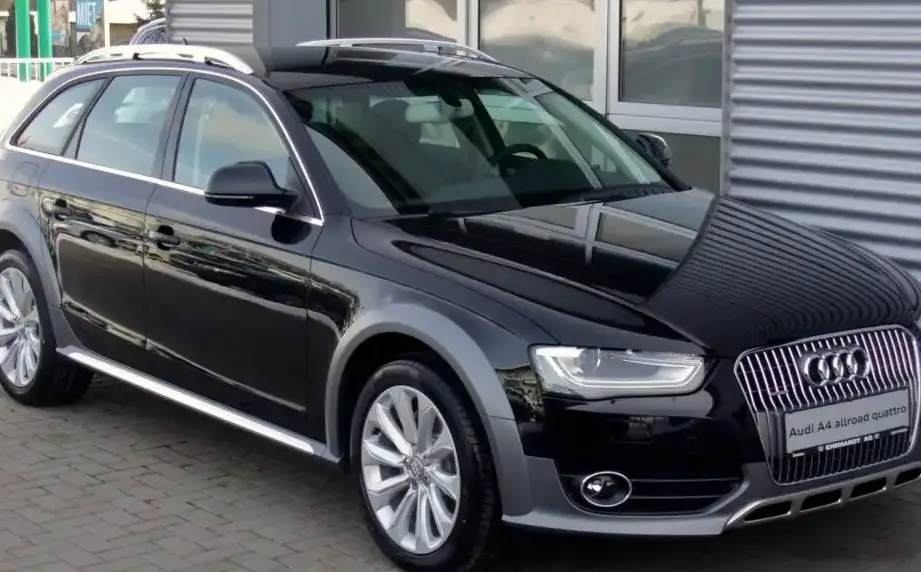
The Audi A4 (B7) 2.0 TFSI quattro Tiptronic, produced from August 2004 to June 2008, represents a significant evolution of Audi’s popular compact executive car. Positioned as a mid-range offering within the B7 A4 lineup – which spanned engine options from 1.6-liter naturally aspirated engines to the high-performance 4.2-liter V8 – this variant combined a turbocharged four-cylinder engine with Audi’s renowned quattro all-wheel-drive system and a six-speed Tiptronic automatic transmission. It aimed to deliver a balance of performance, refinement, and all-weather capability appealing to buyers seeking a premium driving experience without the expense of the top-tier models.
Technical Specifications
| Brand | Audi |
| Model | A4 |
| Generation | A4 (B7 8E) |
| Type (Engine) | 2.0 TFSI (200 Hp) quattro Tiptronic |
| Start of production | August, 2004 |
| End of production | June, 2008 |
| Powertrain Architecture | Internal Combustion engine |
| Body type | Sedan |
| Seats | 5 |
| Doors | 4 |
| Fuel consumption (urban) | 13.1 l/100 km (18 US mpg, 21.6 UK mpg, 7.6 km/l) |
| Fuel consumption (extra urban) | 7.2 l/100 km (32.7 US mpg, 39.2 UK mpg, 13.9 km/l) |
| Fuel consumption (combined) | 9.4 l/100 km (25 US mpg, 30.1 UK mpg, 10.6 km/l) |
| CO2 emissions | 226 g/km |
| Fuel Type | Petrol (Gasoline) |
| Acceleration 0 – 100 km/h | 7.7 sec |
| Acceleration 0 – 62 mph | 7.7 sec |
| Acceleration 0 – 60 mph | 7.3 sec |
| Maximum speed | 235 km/h (146.02 mph) |
| Emission standard | Euro 4 |
| Weight-to-power ratio | 7.7 kg/Hp, 130.3 Hp/tonne |
| Weight-to-torque ratio | 5.5 kg/Nm, 182.4 Nm/tonne |
| Power | 200 Hp @ 5100-6000 rpm |
| Power per litre | 100.8 Hp/l |
| Torque | 280 Nm @ 1800-5000 rpm (206.52 lb.-ft. @ 1800-5000 rpm) |
| Engine layout | Front, Longitudinal |
| Engine Model/Code | BGB, BPG, BWE, BWT |
| Engine displacement | 1984 cm3 (121.07 cu. in.) |
| Number of cylinders | 4 |
| Engine configuration | Inline |
| Cylinder Bore | 82.5 mm (3.25 in.) |
| Piston Stroke | 92.8 mm (3.65 in.) |
| Compression ratio | 10.5:1 |
| Number of valves per cylinder | 4 |
| Fuel injection system | Direct injection |
| Engine aspiration | Turbocharger, Intercooler |
| Valvetrain | DOHC |
| Engine oil capacity | 4.5 l (4.76 US qt | 3.96 UK qt) |
| Coolant | 8 l (8.45 US qt | 7.04 UK qt) |
| Kerb Weight | 1535 kg (3384.1 lbs.) |
| Max. weight | 2085 kg (4596.64 lbs.) |
| Max load | 550 kg (1212.54 lbs.) |
| Trunk (boot) space – minimum | 460 l (16.24 cu. ft.) |
| Trunk (boot) space – maximum | 720 l (25.43 cu. ft.) |
| Fuel tank capacity | 63 l (16.64 US gal | 13.86 UK gal) |
| Max. roof load | 75 kg (165.35 lbs.) |
| Permitted trailer load with brakes (8%) | 1800 kg (3968.32 lbs.) |
| Permitted trailer load with brakes (12%) | 1600 kg (3527.4 lbs.) |
| Permitted trailer load without brakes | 750 kg (1653.47 lbs.) |
| Permitted towbar download | 80 kg (176.37 lbs.) |
| Length | 4586 mm (180.55 in.) |
| Width | 1772 mm (69.76 in.) |
| Width including mirrors | 1937 mm (76.26 in.) |
| Height | 1427 mm (56.18 in.) |
| Wheelbase | 2648 mm (104.25 in.) |
| Front track | 1522 mm (59.92 in.) |
| Rear (Back) track | 1522 mm (59.92 in.) |
| Drag coefficient (Cd) | 0.33 |
| Minimum turning circle (turning diameter) | 11.1 m (36.42 ft.) |
| Drivetrain Architecture | The Internal combustion engine (ICE) drives permanently the four wheels of the vehicle. |
| Drive wheel | All wheel drive (4×4) |
| Number of gears and type of gearbox | 6 gears, automatic transmission Tiptronic |
| Front suspension | Independent multi-link suspension |
| Rear suspension | Independent multi-link suspension |
| Front brakes | Ventilated discs |
| Rear brakes | Disc |
| Assisting systems | ABS (Anti-lock braking system) |
| Steering type | Steering rack and pinion |
| Power steering | Hydraulic Steering |
| Tires size | 215/55 R16 |
| Wheel rims size | 7J x 16 |
INTRODUCTION
The Audi A4 (B7) 2.0 TFSI quattro Tiptronic, launched in 2004, represented a move towards forced induction for the A4 range. Building upon the B6 platform (2002-2005), the B7 brought styling revisions and, crucially, the introduction of Audi’s new 2.0 TFSI engine. This engine, part of the EA888 family, combined direct fuel injection (FSI) with turbocharging to deliver increased power and efficiency compared to the older naturally aspirated engines. The quattro all-wheel-drive system, a hallmark of Audi, provided enhanced traction and stability, while the Tiptronic automatic transmission offered convenience and a degree of driver control. This combination aimed to appeal to buyers wanting a sporty yet practical sedan.
Powertrain & Engine Architecture
At the heart of the A4 2.0 TFSI quattro Tiptronic lies the BGB engine code variant of the 2.0-liter inline-four cylinder engine. This engine utilizes direct fuel injection, a technology that precisely meters fuel directly into the combustion chamber, improving efficiency and power output. The engine also features a single turbocharger with an intercooler to reduce intake air temperature, further enhancing performance. The valvetrain employs dual overhead camshafts (DOHC) with four valves per cylinder, optimizing airflow for increased power. The six-speed Tiptronic transmission is a torque converter automatic with a manual shift mode, allowing drivers to select gears for more spirited driving. The Tiptronic transmission features adaptive shift programming, learning the driver’s style to optimize gear changes.
Driving Characteristics
The 200 hp and 280 lb-ft of torque delivered by the 2.0 TFSI engine provided brisk acceleration, with a 0-60 mph time of around 7.3 seconds. While not as overtly sporty as the higher-output models like the 3.2 FSI, the 2.0 TFSI offered a responsive and enjoyable driving experience. The Tiptronic transmission, while smooth, wasn’t as quick-shifting as a dual-clutch transmission (DCT) found in later models. The quattro all-wheel-drive system provided excellent grip in all weather conditions, inspiring confidence on both dry and wet roads. The gear ratios were tuned for a balance of acceleration and fuel economy, with a relatively tall final drive. Compared to the manual transmission versions, the Tiptronic offered greater convenience, but some performance was lost due to the inherent inefficiencies of a torque converter automatic.
Equipment & Trim Levels
The 2.0 TFSI quattro Tiptronic typically came well-equipped, reflecting Audi’s premium positioning. Standard features included leather upholstery, automatic climate control, a multi-function steering wheel, and an Audi Concert audio system. Optional extras included sunroof, navigation system, heated front seats, and upgraded alloy wheels. The interior design was typically understated and elegant, with high-quality materials and a focus on ergonomics. Trim levels varied slightly depending on the market, but generally, this variant sat in the mid-range of the A4 lineup, offering a step up in performance and features compared to the base models.
Chassis & Braking
The B7 A4 featured an independent multi-link suspension at both the front and rear, providing a comfortable ride and precise handling. The quattro all-wheel-drive system distributed power between the front and rear axles as needed, optimizing traction. Brakes consisted of ventilated discs at the front and solid discs at the rear. Anti-lock braking system (ABS) was standard. The suspension was tuned to provide a balance between comfort and handling, leaning towards the comfort side compared to the more performance-oriented S4 model. Stabilizer bars were fitted front and rear to reduce body roll during cornering.
Market Reception & Comparison
The Audi A4 2.0 TFSI quattro Tiptronic was generally well-received by automotive critics. It was praised for its refined engine, comfortable ride, and all-weather capability. However, some critics noted that the Tiptronic transmission wasn’t as engaging as a manual gearbox. Compared to the 1.8T models, the 2.0 TFSI offered a noticeable increase in power and torque. Compared to the 3.2 FSI, it provided a more affordable entry point into the A4 range, albeit with slightly less performance. Fuel economy was respectable for its class, but not class-leading. Reliability was generally good, although some owners reported issues with the turbocharger and fuel injectors.
Legacy
The Audi A4 (B7) 2.0 TFSI quattro Tiptronic remains a popular choice in the used car market. The 2.0 TFSI engine proved to be durable and relatively easy to maintain, although regular oil changes are crucial. The Tiptronic transmission, while not as sporty as some alternatives, is generally reliable if properly maintained. These cars offer a good balance of performance, comfort, and practicality, making them a compelling option for buyers seeking a premium compact executive car. The B7 A4, and particularly the 2.0 TFSI variant, helped solidify Audi’s reputation for building well-engineered and stylish automobiles.