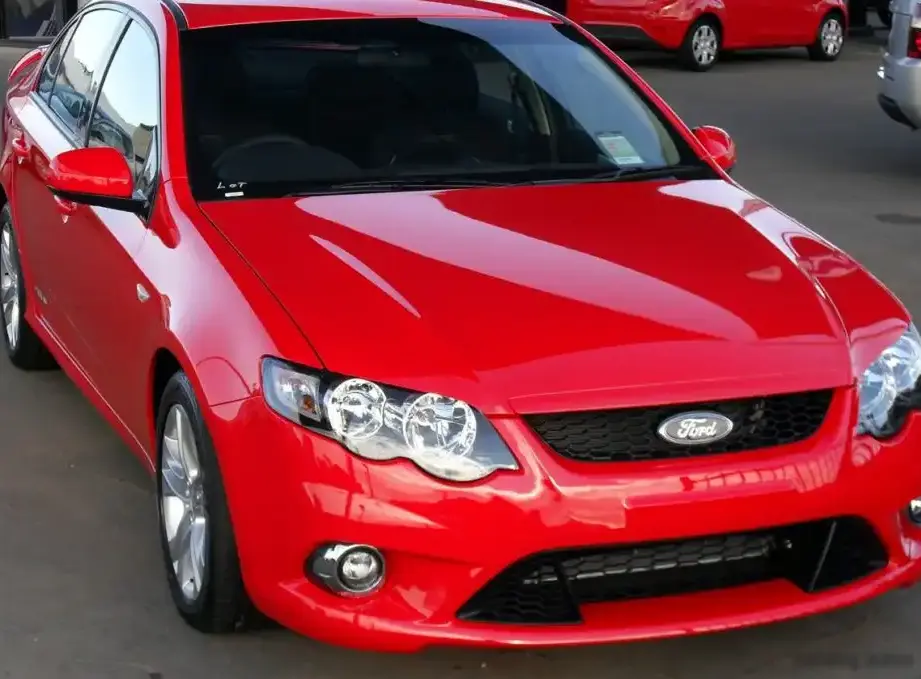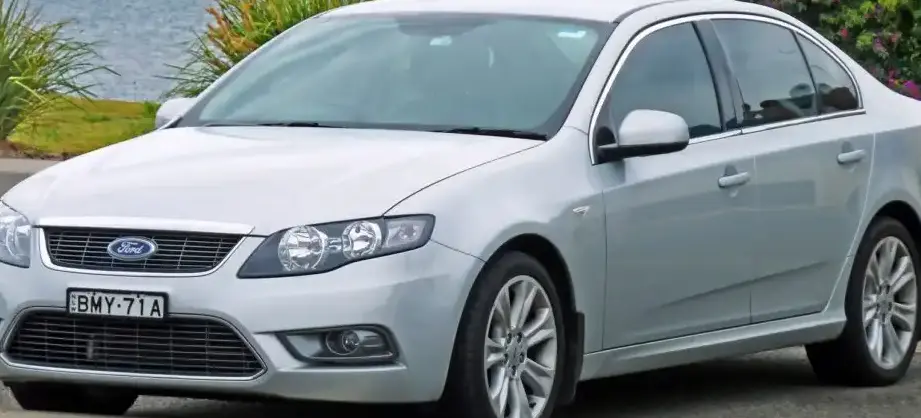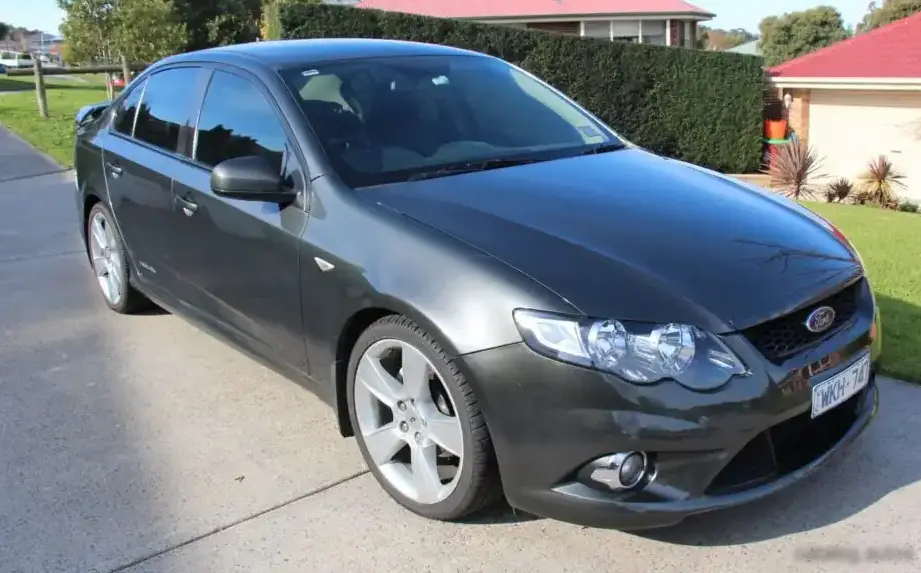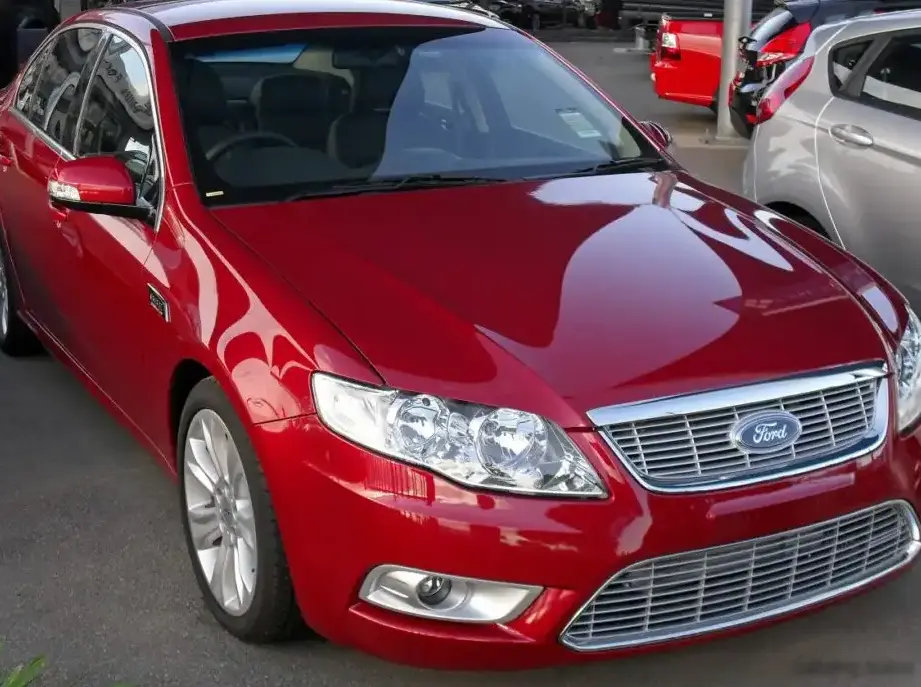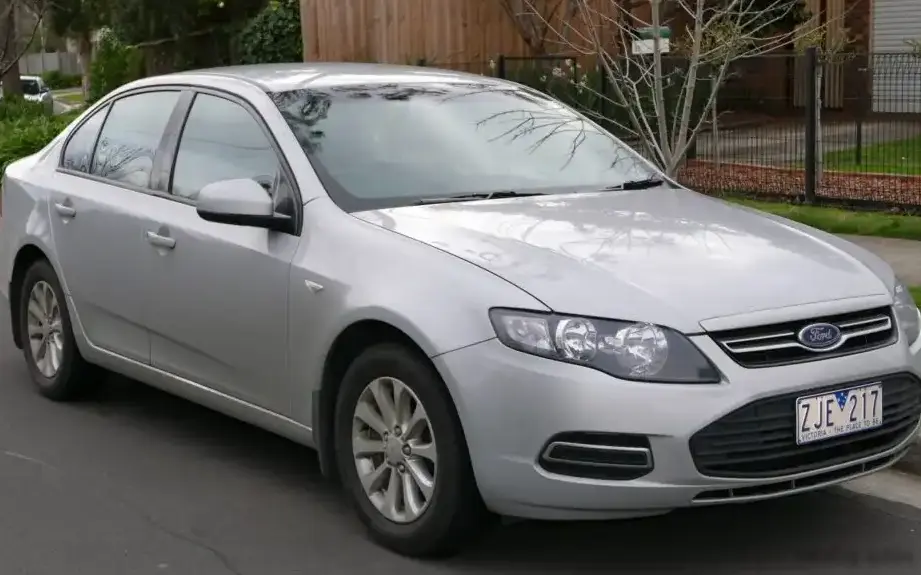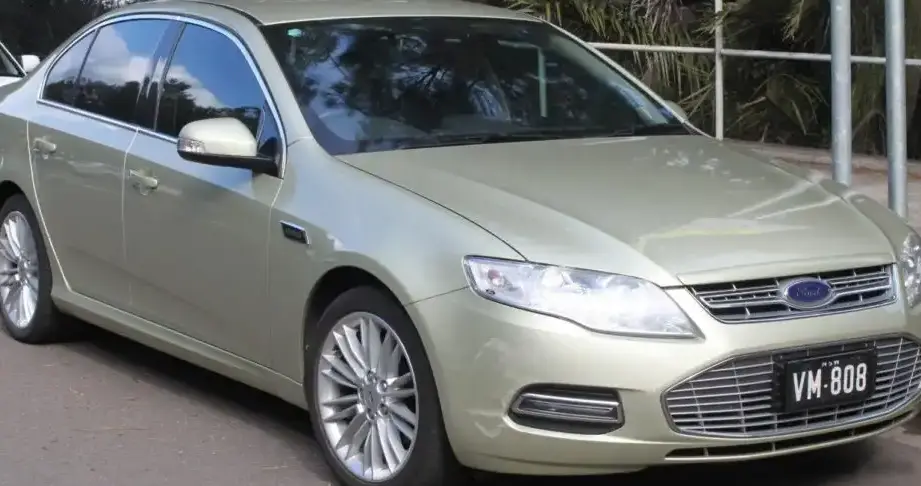
The Ford Falcon FG X, specifically the 4.0 DI-VCT Turbo variant produced from 2011 to 2014, represents the final iteration of Ford Australia’s iconic Falcon nameplate. This model was part of the FG series facelift, introducing significant updates to the styling, technology, and powertrain options. Positioned as the performance flagship of the Falcon lineup, the 4.0 DI-VCT Turbo offered a substantial increase in power and torque compared to the naturally aspirated engines available, targeting enthusiasts seeking a locally-produced, rear-wheel-drive performance sedan. It was a key model in a shrinking market for large Australian-made cars, facing increasing competition from imported vehicles.
Technical Specifications
| Brand | Ford |
| Model | Falcon |
| Generation | Falcon (FG, facelift 2011) |
| Type (Engine) | 4.0 DI-VCT Turbo (367 Hp) |
| Start of production | 2011 |
| End of production | 2014 |
| Powertrain Architecture | Internal Combustion engine |
| Body type | Sedan |
| Seats | 5 |
| Doors | 4 |
| Fuel consumption (urban) | 17.1 l/100 km (13.8 US mpg, 16.5 UK mpg, 5.8 km/l) |
| Fuel consumption (extra urban) | 8.1 l/100 km (29 US mpg, 34.9 UK mpg, 12.3 km/l) |
| Fuel consumption (combined) | 12 l/100 km (19.6 US mpg, 23.5 UK mpg, 8.3 km/l) |
| Fuel Type | Petrol (Gasoline) |
| Power | 367 Hp @ 5250 rpm |
| Power per litre | 92.1 Hp/l |
| Torque | 533 Nm @ 2000-4750 rpm (393.12 lb.-ft. @ 2000-4750 rpm) |
| Engine layout | Front, Longitudinal |
| Engine Model/Code | Barra 270T |
| Engine displacement | 3983 cm3 (243.06 cu. in.) |
| Number of cylinders | 6 |
| Engine configuration | Inline |
| Cylinder Bore | 92.26 mm (3.63 in.) |
| Piston Stroke | 99.31 mm (3.91 in.) |
| Compression ratio | 8.8:1 |
| Number of valves per cylinder | 4 |
| Fuel injection system | Multi-port manifold injection |
| Engine aspiration | Turbocharger, Intercooler |
| Valvetrain | DOHC |
| Trunk (boot) space (minimum) | 535 l (18.89 cu. ft.) |
| Fuel tank capacity | 68 l (17.96 US gal, 14.96 UK gal) |
| Permitted trailer load with brakes (12%) | 1200 kg (2645.55 lbs.) |
| Length | 4970 mm (195.67 in.) |
| Width | 1868 mm (73.54 in.) |
| Width including mirrors | 2100 mm (82.68 in.) |
| Height | 1433 mm (56.42 in.) |
| Wheelbase | 2838 mm (111.73 in.) |
| Front track | 1583 mm (62.32 in.) |
| Rear track | 1598 mm (62.91 in.) |
| Front overhang | 954 mm (37.56 in.) |
| Rear overhang | 1179 mm (46.42 in.) |
| Minimum turning circle | 11 m (36.09 ft.) |
| Drivetrain Architecture | Rear wheel drive |
| Drive wheel | Rear wheel drive |
| Number of gears and type of gearbox | 6 gears, manual transmission |
| Front suspension | Double wishbone |
| Rear suspension | Independent multi-link suspension |
| Front brakes | Ventilated discs |
| Rear brakes | Disc |
| Assisting systems | ABS (Anti-lock braking system) |
| Steering type | Steering rack and pinion |
| Power steering | Hydraulic Steering |
| Tires size | 245/40 R18; 245/35 R19 |
| Wheel rims size | 8J x 18; 8J x 19 |
INTRODUCTION
The Ford Falcon FG X 4.0 DI-VCT Turbo, launched in 2011, was the culmination of decades of Australian automotive engineering. Built at Ford’s Broadmeadows plant in Victoria, it represented the final, most potent version of the Falcon before the cessation of Australian manufacturing in 2016. The FG X series was a significant facelift of the FG model, incorporating revised styling, improved interior materials, and most importantly, the introduction of the ‘EcoBoost’ branded 4.0-liter turbocharged inline-six engine. This engine, designated Barra 270T, was designed to deliver both performance and improved fuel efficiency compared to the older, naturally aspirated engines.
Powertrain & Engine Architecture
The heart of the FG X 4.0 DI-VCT Turbo is the Barra 270T engine. This 3.983-liter inline-six engine utilizes a single twin-scroll turbocharger with an intercooler to boost power output to 367 horsepower and 533 Nm (393 lb-ft) of torque. The ‘DI-VCT’ designation stands for Direct Injection Variable Camshaft Timing, highlighting key features of the engine’s design. The engine employs multi-point fuel injection, delivering fuel directly into the intake ports. The Barra engine family is known for its robust construction and potential for modification. The 6-speed manual transmission was the only transmission option offered with this engine, providing drivers with full control over the substantial power output. The engine’s longitudinal layout and rear-wheel-drive configuration were hallmarks of the Falcon’s performance character.
Driving Characteristics
The 4.0 DI-VCT Turbo Falcon offered a markedly different driving experience compared to its naturally aspirated siblings. The turbocharger provides a significant surge of power in the mid-range, delivering strong acceleration from around 2000 rpm. The 6-speed manual transmission allows for precise gear selection, maximizing the engine’s performance potential. While the engine is responsive, some turbo lag is noticeable at lower engine speeds. The rear-wheel-drive layout contributes to a balanced chassis, offering good handling characteristics. Compared to the XR6 Turbo, the FG X 4.0 DI-VCT Turbo offered a more refined and mature driving experience, prioritizing usability and torque delivery over outright peak power.
Equipment & Trim Levels
The FG X 4.0 DI-VCT Turbo was typically offered as part of the XR6 Turbo or XR8 range, representing the higher performance trims. Standard equipment included sports seats, a leather-wrapped steering wheel, alloy wheels, and a comprehensive infotainment system with a touchscreen display. Optional extras included a sunroof, premium sound system, and satellite navigation. Interior upholstery was typically a combination of cloth and leather, with a focus on providing a sporty yet comfortable cabin environment. The dashboard layout was functional and driver-focused, with clear instrumentation and intuitive controls.
Chassis & Braking
The FG X Falcon utilized a double wishbone front suspension and an independent multi-link rear suspension, providing a comfortable ride and good handling characteristics. The suspension was tuned to balance performance and ride quality, making it suitable for both everyday driving and spirited driving on winding roads. Braking duties were handled by ventilated disc brakes on all four wheels, providing ample stopping power. An Anti-lock Braking System (ABS) was standard, enhancing safety and control during emergency braking situations. The FG X featured a hydraulic power steering system, offering precise and responsive steering feel.
Market Reception & Comparison
The FG X 4.0 DI-VCT Turbo was generally well-received by automotive critics, who praised its performance, handling, and overall refinement. It was often compared favorably to imported performance sedans in its price range. Fuel economy, while improved compared to older Falcon models, remained a concern for some, with combined fuel consumption averaging around 12 liters per 100 kilometers. Reliability was generally good, although some owners reported issues with the turbocharger and fuel system. Compared to the naturally aspirated Falcon XR6 and XR8 models, the 4.0 DI-VCT Turbo offered a significant performance advantage, but at a higher price point.
Legacy
The Ford Falcon FG X 4.0 DI-VCT Turbo holds a significant place in Australian automotive history as the final, most powerful iteration of a beloved local icon. The Barra 270T engine has gained a strong following among enthusiasts, known for its robust construction and potential for modification. Today, well-maintained examples of the FG X 4.0 DI-VCT Turbo are highly sought after by collectors and enthusiasts, representing a tangible piece of Australia’s automotive heritage. The engine’s durability and readily available aftermarket support ensure that these cars will continue to be enjoyed for years to come. The Falcon FG X 4.0 DI-VCT Turbo stands as a testament to Ford Australia’s engineering prowess and a reminder of a bygone era of local automotive manufacturing.