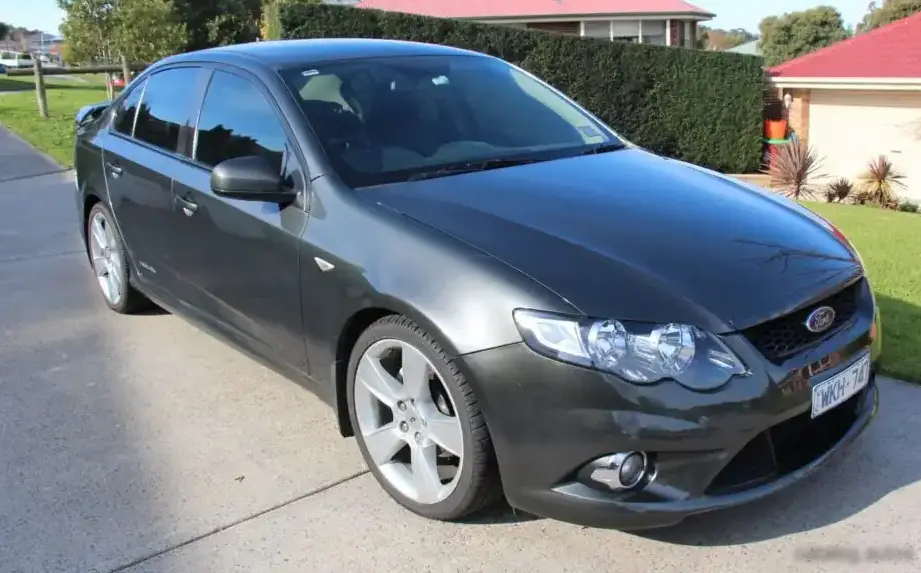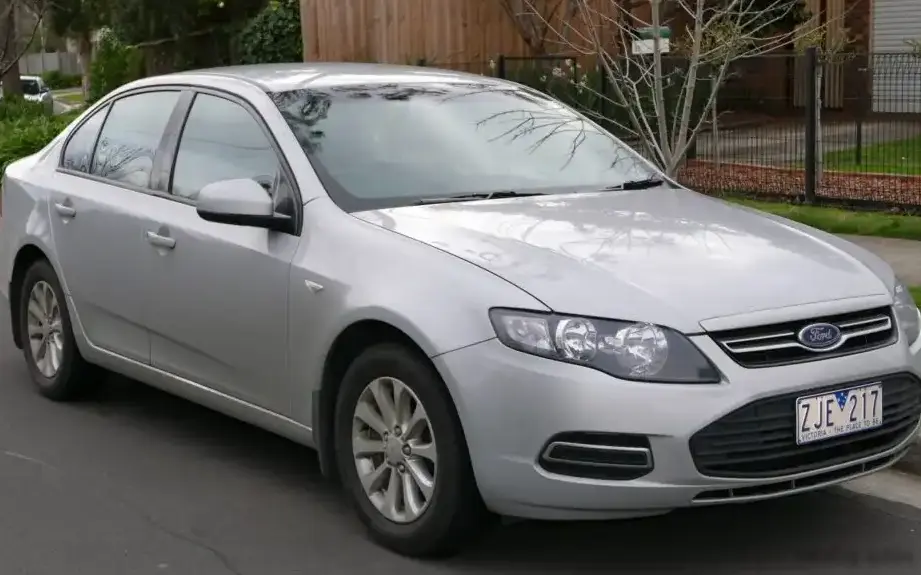
The Ford Falcon FG X, specifically the 4.0 DI-VCT Turbo variant produced from 2011 to 2014, represents the final iteration of Ford Australia’s iconic Falcon sedan. This model was part of the FG series facelift, introducing significant updates to the body, interior, and crucially, the powertrain. Positioned as the performance flagship of the Falcon lineup, the 4.0L Turbo offered a substantial power increase over naturally aspirated models, appealing to buyers seeking a blend of performance and Australian-made engineering. It was a direct response to market demands for more powerful, fuel-efficient vehicles, and served as a final statement for Ford’s manufacturing presence in Australia.
Technical Specifications
| Brand | Ford |
| Model | Falcon |
| Generation | Falcon (FG, facelift 2011) |
| Type (Engine) | 4.0 DI-VCT Turbo (367 Hp) Automatic |
| Start of production | 2011 |
| End of production | 2014 |
| Powertrain Architecture | Internal Combustion engine |
| Body type | Sedan |
| Seats | 5 |
| Doors | 4 |
| Fuel consumption (urban) | 16.9 l/100 km (13.9 US mpg, 16.7 UK mpg, 5.9 km/l) |
| Fuel consumption (extra urban) | 8.8 l/100 km (26.7 US mpg, 32.1 UK mpg, 11.4 km/l) |
| Fuel consumption (combined) | 11.7 l/100 km (20.1 US mpg, 24.1 UK mpg, 8.5 km/l) |
| CO2 emissions | 278 g/km |
| Fuel Type | Petrol (Gasoline) |
| Power | 367 Hp @ 5250 rpm |
| Power per litre | 92.1 Hp/l |
| Torque | 533 Nm @ 2000-4750 rpm (393.12 lb.-ft. @ 2000-4750 rpm) |
| Engine layout | Front, Longitudinal |
| Engine Model/Code | Barra 270T |
| Engine displacement | 3983 cm3 (243.06 cu. in.) |
| Number of cylinders | 6 |
| Engine configuration | Inline |
| Cylinder Bore | 92.26 mm (3.63 in.) |
| Piston Stroke | 99.31 mm (3.91 in.) |
| Compression ratio | 8.8:1 |
| Number of valves per cylinder | 4 |
| Fuel injection system | Multi-port manifold injection |
| Engine aspiration | Turbocharger, Intercooler |
| Valvetrain | DOHC |
| Trunk (boot) space (minimum) | 535 l (18.89 cu. ft.) |
| Fuel tank capacity | 68 l (17.96 US gal, 14.96 UK gal) |
| Permitted trailer load with brakes (12%) | 2300 kg (5070.63 lbs.) |
| Length | 4970 mm (195.67 in.) |
| Width | 1868 mm (73.54 in.) |
| Width including mirrors | 2100 mm (82.68 in.) |
| Height | 1433 mm (56.42 in.) |
| Wheelbase | 2838 mm (111.73 in.) |
| Front track | 1583 mm (62.32 in.) |
| Rear track | 1598 mm (62.91 in.) |
| Front overhang | 954 mm (37.56 in.) |
| Rear overhang | 1179 mm (46.42 in.) |
| Minimum turning circle | 11 m (36.09 ft.) |
| Drivetrain Architecture | Rear wheel drive |
| Number of gears and type of gearbox | 6 gears, automatic transmission |
| Front suspension | Double wishbone |
| Rear suspension | Independent multi-link suspension |
| Front brakes | Ventilated discs |
| Rear brakes | Disc |
| Assisting systems | ABS (Anti-lock braking system) |
| Steering type | Steering rack and pinion |
| Power steering | Hydraulic Steering |
| Tires size | 245/40 R18; 245/35 R19 |
| Wheel rims size | 8J x 18; 8J x 19 |
INTRODUCTION
The Ford Falcon FG X 4.0 DI-VCT Turbo Automatic, produced between 2011 and 2014, marked the pinnacle of performance for the final generation of the Australian-made Falcon. Built on the FG platform (a significant update to the earlier FG series), this variant aimed to deliver a compelling combination of power, refinement, and relative fuel efficiency. It occupied the top-tier performance position in the Falcon range, sitting above the naturally aspirated 4.0-liter inline-six and the fuel-efficient 2.0-liter EcoBoost four-cylinder models. The FG X represented Ford Australia’s last attempt to create a truly competitive large Australian sedan before ceasing local manufacturing.
Powertrain & Engine Architecture
At the heart of the FG X Turbo lies the Barra 270T engine, a 4.0-liter inline-six cylinder powerplant. This engine is a heavily modified version of the earlier Barra 182kW and 221kW engines, featuring a Garrett GT3071R turbocharger with an air-to-air intercooler. The engine utilizes multi-port fuel injection and a double overhead camshaft (DOHC) valvetrain with four valves per cylinder. The DI-VCT (Direct injection variable camshaft timing) system optimizes engine performance and efficiency across the rev range. The six-speed automatic transmission, sourced from ZF, was specifically calibrated to handle the increased torque output of the turbocharged engine. This transmission featured a torque converter lock-up clutch for improved fuel economy at cruising speeds. The engine code, Barra 270T, signifies its boosted output and distinguishes it from the naturally aspirated Barra variants.
Driving Characteristics
The 4.0 DI-VCT Turbo Automatic Falcon delivered a markedly different driving experience compared to its naturally aspirated siblings. The turbocharger provides a significant boost in mid-range torque, resulting in strong acceleration from around 2000 rpm. While peak horsepower of 367 hp arrives at 5250 rpm, the engine feels responsive and powerful throughout most of the rev range. The ZF six-speed automatic transmission shifts smoothly and efficiently, although some drivers noted a slight delay in downshifts. Compared to the six-speed manual transmission available on other Falcon models, the automatic prioritizes comfort and ease of use over outright performance. The rear-wheel-drive configuration provides a balanced feel, but the increased weight of the turbocharged engine and automatic transmission can be felt during spirited driving. The suspension, tuned for a balance of comfort and handling, provides a reasonably controlled ride, although it’s not as firm or sporty as some competitors.
Equipment & Trim Levels
The FG X Turbo Automatic typically came well-equipped, reflecting its position as the range-topping model. Standard features included leather upholstery, sports seats, a premium audio system, dual-zone climate control, and a multi-function steering wheel. Exterior features included unique alloy wheels, a rear spoiler, and subtle body styling enhancements. Optional extras included a sunroof, satellite navigation, and upgraded sound systems. The interior design was generally functional and well-built, although it lacked the premium feel of some European competitors. The FG X also incorporated Ford’s SYNC infotainment system, offering Bluetooth connectivity and voice control.
Chassis & Braking
The FG X Turbo utilized a robust chassis and suspension setup designed to handle the increased power output. The front suspension featured double wishbones, while the rear employed an independent multi-link suspension. This configuration provided a good balance of ride comfort and handling. The braking system consisted of ventilated discs at the front and solid discs at the rear, equipped with ABS (Anti-lock Braking System). While adequate for most driving situations, some reviewers felt the brakes could be overwhelmed during repeated hard stops. The steering was hydraulically assisted, providing a direct and responsive feel. Tire sizes varied depending on the wheel option, with 245/40 R18 and 245/35 R19 being common choices.
Market Reception & Comparison
The FG X Turbo received generally positive reviews from Australian motoring publications. Critics praised its powerful engine, comfortable ride, and well-equipped interior. However, some noted its relatively high fuel consumption and the lack of a truly premium interior feel. Compared to the naturally aspirated Falcon models, the Turbo offered a significant performance advantage, but at a higher price point. Against imported rivals like the Holden Commodore V8 and various European sedans, the Falcon Turbo offered a compelling value proposition, particularly for buyers seeking a large, powerful, and Australian-made vehicle. Fuel economy, while improved over earlier Barra engines, remained a concern for some buyers, averaging around 20.1 US mpg in combined driving.
Legacy
The Ford Falcon FG X 4.0 DI-VCT Turbo Automatic holds a significant place in Australian automotive history as one of the last high-performance, locally-produced sedans. While the Barra 270T engine proved to be generally reliable, regular maintenance is crucial to prevent issues such as turbocharger failure and oil leaks. Today, the FG X Turbo is gaining popularity among collectors and enthusiasts, with well-maintained examples commanding increasingly high prices. The engine’s robust construction and readily available parts supply contribute to its long-term viability. The FG X Turbo represents a final chapter in the Falcon story, a testament to Australian engineering and a reminder of a bygone era of local automotive manufacturing.