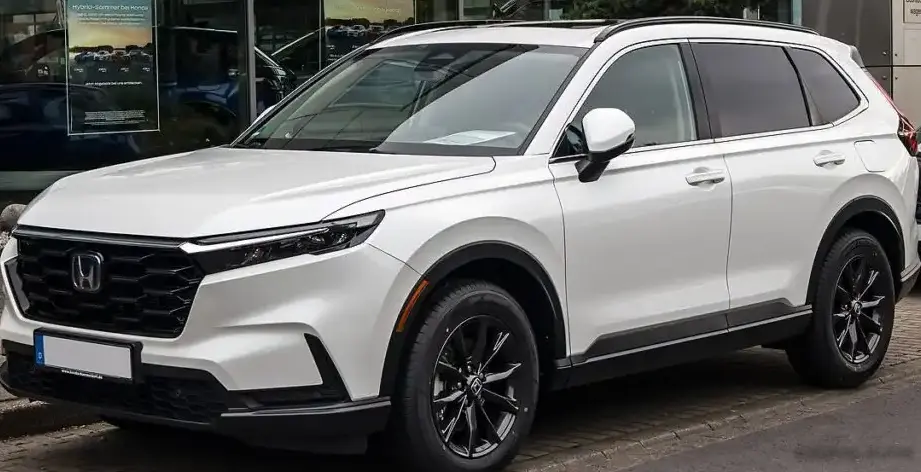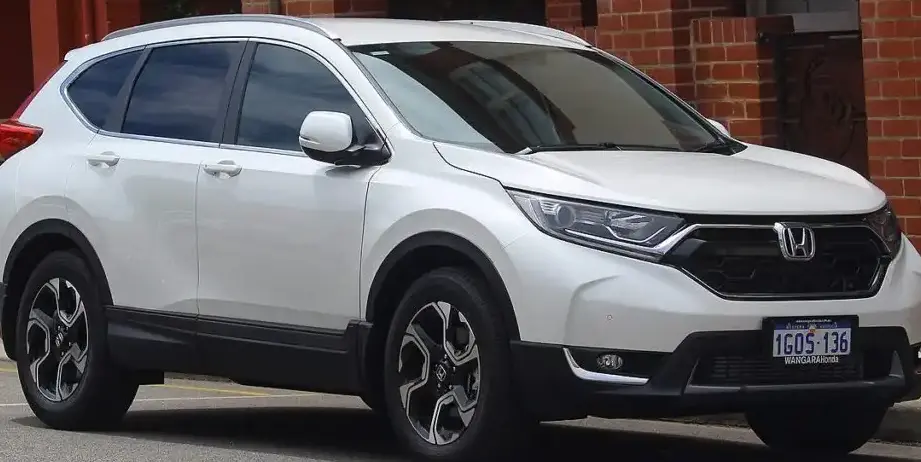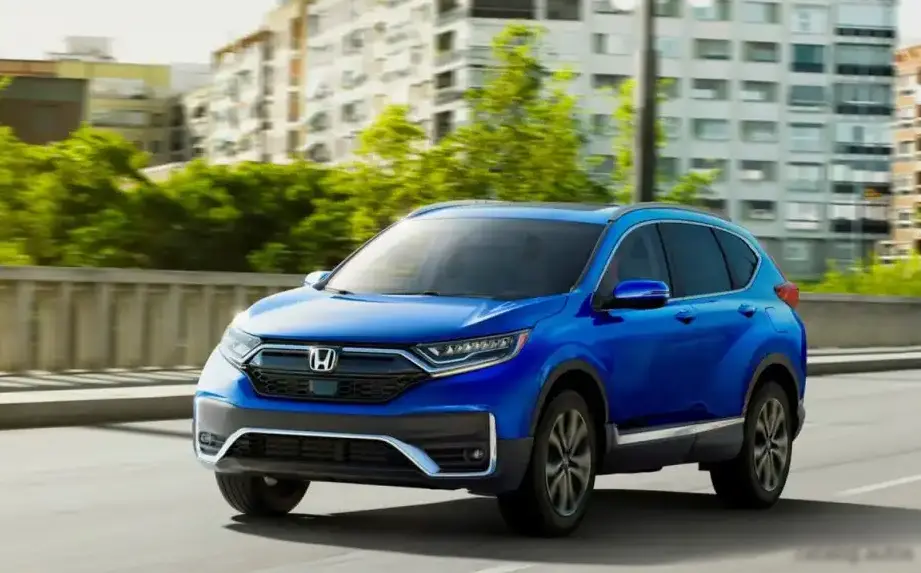
Technical Specifications
| Brand | Honda |
| Model | CR-V |
| Generation | CR-V V (facelift 2019) |
| Type (Engine) | 2.0 (212 Hp) Hybrid AWD-i e-CVT |
| Start of production | 2020 |
| End of production | July, 2022 |
| Powertrain Architecture | FHEV (Full Hybrid Electric Vehicle) |
| Body type | SUV |
| Seats | 5 |
| Doors | 5 |
| Fuel consumption (urban) | 5.9 l/100 km (39.9 US mpg, 47.9 UK mpg, 16.9 km/l) |
| Fuel consumption (extra urban) | 6.7 l/100 km (35.1 US mpg, 42.2 UK mpg, 14.9 km/l) |
| Fuel consumption (combined) | 6.2 l/100 km (37.9 US mpg, 45.6 UK mpg, 16.1 km/l) |
| Fuel Type | Petrol (Gasoline) |
| Emission standard | LEV3-SULEV30 |
| Weight-to-power ratio | 7.8 kg/Hp, 128.1 Hp/tonne |
| Weight-to-torque ratio | 9.5 kg/Nm, 105.7 Nm/tonne |
| Battery technology | Lithium-ion (Li-Ion) |
| Battery location | Under the trunk |
| Electric motor power | 181 Hp @ 5000-6000 rpm (315 Nm @ 0-2000 rpm / 232.33 lb.-ft. @ 0-2000 rpm) |
| Electric motor location | Integrated into the transmission |
| System power | 212 Hp @ 6200 rpm |
| Internal combustion engine power | 143 Hp @ 6200 rpm |
| Power per litre | 71.8 Hp/l |
| Engine torque | 175 Nm @ 3500 rpm (129.07 lb.-ft. @ 3500 rpm) |
| Engine layout | Front, Transverse |
| Engine Model/Code | LFA1 |
| Engine displacement | 1993 cm3 (121.62 cu. in.) |
| Number of cylinders | 4 |
| Engine configuration | Inline |
| Cylinder Bore | 81 mm (3.19 in.) |
| Piston Stroke | 96.7 mm (3.81 in.) |
| Compression ratio | 13.5:1 |
| Number of valves per cylinder | 4 |
| Fuel injection system | Multi-port manifold injection |
| Engine aspiration | Naturally aspirated engine |
| Valvetrain | DOHC, i-VTEC |
| Engine oil capacity | 3.8 l (4.02 US qt | 3.34 UK qt) |
| Coolant capacity | 5.52 l (5.83 US qt | 4.86 UK qt) |
| Kerb Weight | 1655 kg (3648.65 lbs.) |
| Trunk (boot) space – minimum | 940 l (33.2 cu. ft.) |
| Trunk (boot) space – maximum | 1945 l (68.69 cu. ft.) |
| Fuel tank capacity | 53 l (14 US gal | 11.66 UK gal) |
| Length | 4625 mm (182.09 in.) |
| Width | 1854 mm (72.99 in.) |
| Height | 1689 mm (66.5 in.) |
| Wheelbase | 2659 mm (104.69 in.) |
| Front track | 1598 mm (62.91 in.) |
| Rear track | 1613 mm (63.5 in.) |
| Ride height (ground clearance) | 208 mm (8.19 in.) |
| Minimum turning circle | 11.4 m (37.4 ft.) |
| Approach angle | 18.9° |
| Departure angle | 23.1-26.0° |
| Drivetrain Architecture | ICE and electric motor drive front wheels, rear wheels driven via clutch |
| Drive wheel | All wheel drive (4×4) |
| Number of gears | automatic transmission e-CVT |
| Front suspension | Independent type McPherson |
| Rear suspension | Double wishbone |
| Front brakes | Ventilated discs |
| Rear brakes | Disc |
| Steering type | Steering rack and pinion |
| Power steering | Electric Steering |
| Tires size | 235/65 R17 104H; 235/60 R18 103H; 235/55 R19 101H |
| Wheel rims size | 7.5J x 17; 7.5J x 18; 7.5J x 19 |
The Honda CR-V V facelift, launched in 2019 and continuing through 2022, built upon the success of the fifth-generation CR-V. The 2.0 Hybrid AWD-i e-CVT model, introduced in 2020, represented a significant step forward in terms of fuel efficiency and refinement. Based on Honda’s global compact SUV platform, it aimed to provide a compelling alternative to traditional gasoline-powered SUVs, particularly in markets increasingly focused on environmental regulations. This variant was not initially available in the US market, being primarily targeted towards European and Asian consumers.
Powertrain & Engine Architecture
At the heart of the CR-V Hybrid is Honda’s i-MMD (Intelligent Multi-Mode Drive) system. This isn’t a traditional parallel hybrid; instead, it utilizes a 2.0-liter naturally aspirated inline-four cylinder engine (code LFA1) paired with two electric motors. The engine produces 143 horsepower and 129 lb-ft of torque. The primary electric motor generates 181 horsepower and 232 lb-ft of torque. The system combines these power sources for a total system output of 212 horsepower. The engine doesn’t directly drive the wheels in most situations; instead, it acts primarily as a generator to power the electric motor, which then drives the front wheels. A secondary electric motor acts as a generator and starter for the gasoline engine. The e-CVT (electronic Continuously Variable Transmission) manages power flow seamlessly between the engine, electric motors, and wheels. The fuel injection system is multi-port, and the engine features Honda’s i-VTEC variable valve timing system for optimized performance and efficiency.
Driving Characteristics
The 2.0 Hybrid e-CVT delivers a remarkably smooth and refined driving experience. Unlike some hybrids with noticeable engine engagement, the CR-V seamlessly transitions between electric, hybrid, and engine power. Acceleration is brisk, though not particularly sporty, with the electric motor providing instant torque. The e-CVT lacks the stepped gear changes of a conventional automatic, resulting in a linear and almost silent power delivery. Compared to the 1.6L diesel or 1.5L turbo gasoline variants available in some markets, the hybrid offers superior low-speed responsiveness and quieter operation. While the non-hybrid CR-Vs might offer a slightly more engaging driving experience for enthusiasts, the hybrid prioritizes comfort and efficiency. The AWD system provides enhanced traction in inclement weather, making it a practical choice for all-season driving.
Equipment & Trim Levels
The 2.0 Hybrid AWD-i e-CVT typically came well-equipped, often representing the higher trim levels within the CR-V range. Standard features generally included automatic climate control, a touchscreen infotainment system with Apple CarPlay and Android Auto compatibility, Honda Sensing suite of safety features (including adaptive cruise control, lane keeping assist, and collision mitigation braking system), and alloy wheels. Higher trims added features like leather upholstery, a panoramic sunroof, heated front seats, and a premium audio system. Interior upholstery was typically a combination of fabric and leather, with a focus on comfort and durability. Dashboard configuration was modern and functional, with a clear instrument cluster and intuitive controls.
Chassis & Braking
The CR-V V utilizes a MacPherson strut front suspension and a multi-link rear suspension, tuned for a balance of ride comfort and handling. The hybrid variant, due to the added weight of the battery pack and electric motors, often featured slightly stiffer spring rates and dampers to maintain composure. Braking duties are handled by ventilated discs at the front and solid discs at the rear. ABS (Anti-lock Braking System) is standard, along with electronic brake-force distribution and brake assist. The steering is electric power-assisted, providing light and precise control.
Market Reception & Comparison
The CR-V Hybrid was generally well-received by automotive critics, praised for its fuel efficiency, smooth ride, and refined driving experience. Compared to the gasoline-powered CR-V models, the hybrid offered significantly improved fuel economy, particularly in urban driving conditions. While the hybrid commanded a price premium, the long-term fuel savings and reduced emissions were often seen as justifying the cost. Against competitors like the Toyota RAV4 Hybrid and Nissan Qashqai, the CR-V Hybrid held its own, offering a compelling combination of practicality, reliability, and technology. Some criticisms focused on the slightly higher weight of the hybrid model and the lack of a traditional gear selector.
Legacy
The Honda CR-V V Hybrid has proven to be a reliable and durable vehicle. The i-MMD hybrid system has demonstrated a strong track record for longevity, with many examples exceeding high mileage without major issues. On the used car market, the 2.0 Hybrid AWD-i e-CVT variant remains a popular choice, commanding a premium over non-hybrid models due to its fuel efficiency and desirable features. The CR-V Hybrid helped solidify Honda’s position as a leader in hybrid technology and paved the way for further electrification of its vehicle lineup. Its success demonstrated the growing demand for fuel-efficient and environmentally friendly SUVs.