
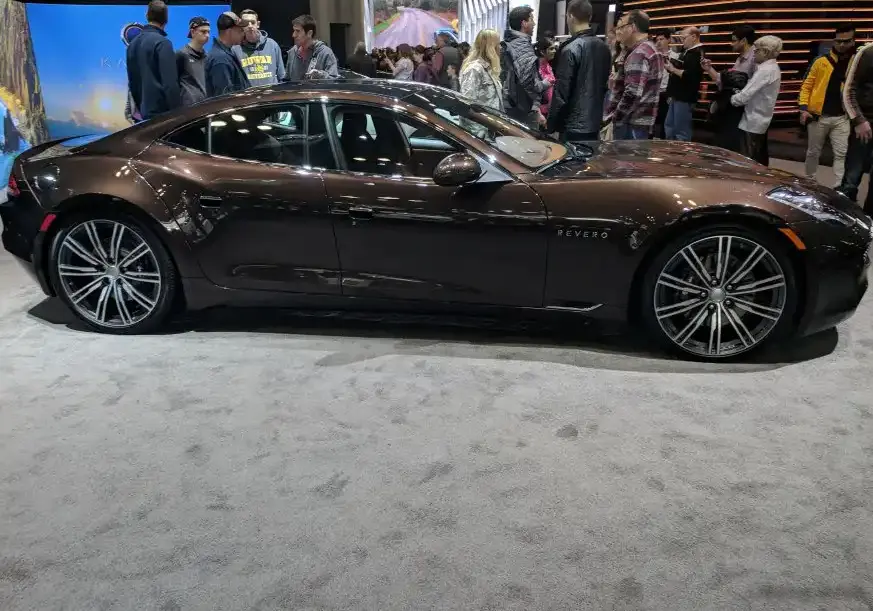
The Karma Revero 2.0, a plug-in hybrid luxury sedan, represented a significant evolution for the California-based automaker. Produced from September 2016 to 2019, it built upon the foundation laid by the original Revero, aiming to refine the ownership experience and broaden market appeal. The 2.0 variant, boasting a total system output of 403 horsepower, positioned itself within the burgeoning luxury PHEV segment, competing with vehicles like the BMW i8 and Porsche Panamera E-Hybrid. It was a key model for Karma, showcasing their commitment to electric vehicle technology and sustainable luxury.
Technical Specifications
| Brand | Karma |
| Model | Revero |
| Generation | Revero |
| Type (Engine) | 2.0 (403 Hp) Plug-in Hybrid |
| Start of production | September, 2016 |
| End of production | 2019 |
| Powertrain Architecture | PHEV (Plug-in Hybrid Electric Vehicle) |
| Body type | Sedan |
| Seats | 4 |
| Doors | 4 |
| Fuel Type | Petrol / electricity |
| Acceleration 0 – 60 mph | 5.4 sec |
| Maximum speed | 200 km/h, Electronically limited (124.27 mph) |
| Weight-to-power ratio | 6.1 kg/Hp, 164.6 Hp/tonne |
| Weight-to-torque ratio | 1.8 kg/Nm, 543.1 Nm/tonne |
| Gross battery capacity | 21.4 kWh |
| Net (usable) battery capacity | 18.2 kWh |
| Battery voltage | 347 V |
| Battery technology | Lithium-ion (Li-Ion) |
| Battery location | In the central tunnel |
| All-electric range | 80.5 km (50.02 mi) |
| System power | 403 Hp |
| System torque | 1330 Nm (980.96 lb.-ft.) |
| Power | 235 Hp |
| Power per litre | 117.6 Hp/l |
| Engine layout | Front, Longitudinal |
| Engine Model/Code | LNF |
| Engine displacement | 1998 cm3 (121.93 cu. in.) |
| Number of cylinders | 4 |
| Engine configuration | Inline |
| Cylinder Bore | 86 mm (3.39 in.) |
| Piston Stroke | 86 mm (3.39 in.) |
| Number of valves per cylinder | 4 |
| Fuel injection system | Direct injection |
| Engine aspiration | Turbocharger, Intercooler |
| Valvetrain | DOHC |
| Engine oil capacity | 4.7 l (4.97 US qt | 4.14 UK qt) |
| Coolant | 12 l (12.68 US qt | 10.56 UK qt) |
| Kerb Weight | 2449 kg (5399.12 lbs.) |
| Max. weight | 2767 kg (6100.19 lbs.) |
| Max load | 318 kg (701.07 lbs.) |
| Trunk (boot) space – minimum | 195 l (6.89 cu. ft.) |
| Fuel tank capacity | 36 l (9.51 US gal | 7.92 UK gal) |
| Length | 4998 mm (196.77 in.) |
| Width including mirrors | 2133 mm (83.98 in.) |
| Height | 1330 mm (52.36 in.) |
| Wheelbase | 3160 mm (124.41 in.) |
| Ride height (ground clearance) | 142 mm (5.59 in.) |
| Drag coefficient (Cd) | 0.313 |
| Minimum turning circle (turning diameter) | 12.3 m (40.35 ft.) |
| Drivetrain Architecture | Two electric motors drive the rear wheels. The Internal combustion engine (ICE) drives the generator only, with no mechanical connection to the drive. |
| Drive wheel | Rear wheel drive |
| Number of gears and type of gearbox | 1 gears, automatic transmission |
| Front suspension | Double wishbone, Transverse stabilizer |
| Rear suspension | Double wishbone, Transverse stabilizer |
| Front brakes | Ventilated discs |
| Rear brakes | Ventilated discs |
| Assisting systems | ABS (Anti-lock braking system) |
| Steering type | Steering rack and pinion |
| Power steering | Electric Steering |
| Tires size | Front wheel tires: 245/40 R21; 255/40 R21; 255/35 R22Rear wheel tires: 265/40 R21; 285/35 R22 |
| Wheel rims size | Front wheel rims: 21; 22Rear wheel rims: 21; 22 |
Powertrain & Engine Architecture
The Karma Revero 2.0 employed a unique series hybrid powertrain. At its heart was a 1.8-liter turbocharged inline-four cylinder engine, designated the LNF, producing 235 horsepower. However, this engine did *not* directly drive the wheels. Instead, it functioned solely as a generator, powering the electric motors that propelled the vehicle. Two electric motors, located on the rear axle, delivered a combined output of 403 horsepower and a substantial 1330 Nm (980.96 lb.-ft.) of torque. The engine featured direct fuel injection and a double overhead camshaft (DOHC) valvetrain. The single-speed automatic transmission was primarily used to manage the generator’s output, rather than traditional gear changes. The 21.4 kWh lithium-ion battery pack, positioned in the central tunnel, provided an all-electric range of approximately 80.5 km (50.02 miles).
Driving Characteristics
The Revero 2.0 offered a distinct driving experience. In all-electric mode, it provided near-silent acceleration and responsive performance. When the gasoline engine engaged, it did so seamlessly, acting as a range extender rather than contributing directly to wheelspin. The single-speed transmission meant there was no gear shifting, resulting in a smooth, linear power delivery. Compared to potential higher-output gasoline-only versions (had they been offered), the 2.0 prioritized efficiency and refinement. While the 5.4-second 0-60 mph acceleration was respectable, it wasn’t focused on outright speed like some sports sedans. The rear-wheel-drive configuration contributed to a balanced feel, though the added weight of the battery pack was noticeable in cornering.
Equipment & Trim Levels
The Revero 2.0 came standard with a high level of equipment befitting its luxury positioning. Interior features included premium leather upholstery, wood trim, and a large touchscreen infotainment system. Standard safety features encompassed ABS, traction control, and a suite of airbags. Optional extras included upgraded audio systems, a panoramic sunroof, and various driver-assistance technologies. The trim levels were relatively streamlined, with customization options available through bespoke packages. The focus was on providing a luxurious and technologically advanced cabin experience.
Chassis & Braking
The Revero 2.0 utilized a double wishbone suspension setup at both the front and rear, incorporating transverse stabilizer bars to minimize body roll. Ventilated disc brakes were employed on all four wheels, providing ample stopping power. The suspension was tuned to balance ride comfort with handling precision, considering the vehicle’s weight. The electric power steering offered a responsive and precise feel. The relatively low ride height (142 mm / 5.59 in.) contributed to improved aerodynamics and handling stability.
Market Reception & Comparison
Critics generally praised the Revero 2.0 for its innovative powertrain, luxurious interior, and smooth driving experience. However, the price point – significantly higher than many competitors – was a common point of contention. Fuel economy in hybrid mode was competitive, but the all-electric range, while adequate, lagged behind some fully electric vehicles. Compared to the original Revero, the 2.0 offered improved reliability and a more refined ownership experience. Against rivals like the BMW i8, the Revero 2.0 offered a more traditional sedan body style and a greater emphasis on luxury, while the i8 prioritized sporty handling and a more futuristic aesthetic.
Legacy
The Karma Revero 2.0, while not a high-volume seller, played a crucial role in establishing Karma Automotive as a player in the luxury electric vehicle market. The powertrain technology, particularly the series hybrid configuration, demonstrated a unique approach to electrification. In the used car market, the Revero 2.0 remains a relatively rare and sought-after vehicle, appealing to buyers interested in a distinctive and technologically advanced luxury sedan. Long-term reliability has been generally good, with the electric powertrain proving to be durable. However, as with any early-generation electric vehicle, potential buyers should be mindful of battery health and ensure proper maintenance has been performed.
