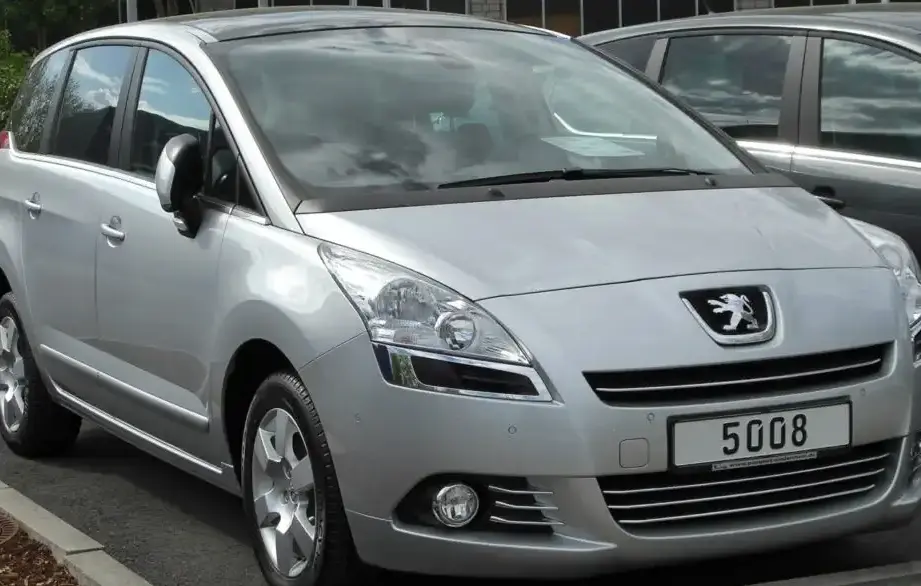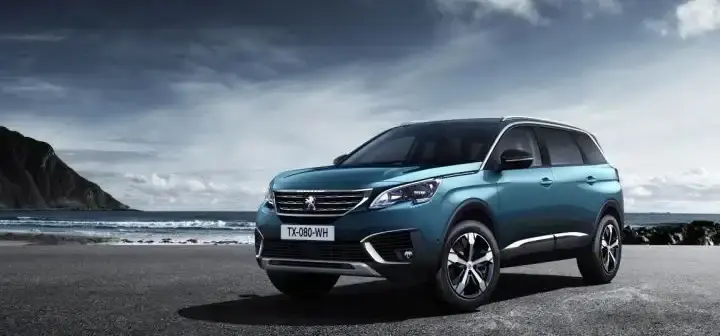
The Peugeot 5008 II, launched in 2016 as a Phase I model, represented a significant shift for the 5008 line. Moving away from the MPV (Multi-Purpose Vehicle) roots of the first generation, the second 5008 adopted a more conventional SUV (Sport Utility Vehicle) body style, aiming for broader market appeal. The 1.6 BlueHDi 100 horsepower variant, produced from 2016 to 2017, served as an entry-level option within the range, offering a balance of fuel efficiency and practicality for families. It was positioned within the broader Peugeot lineup as a competitor to vehicles like the Renault Kadjar and Nissan Qashqai, primarily targeting the European market.
Technical Specifications
| Brand | Peugeot |
| Model | 5008 |
| Generation | 5008 II (Phase I, 2017) |
| Type (Engine) | 1.6 BlueHDi (100 Hp) |
| Start of production | 2016 |
| End of production | 2017 |
| Powertrain Architecture | Internal Combustion engine |
| Body type | SUV |
| Seats | 7 |
| Doors | 5 |
| Fuel consumption (urban) | 4.6 – 4.7 l/100 km (51.1 – 50 US mpg, 61.4 – 60.1 UK mpg, 21.7 – 21.3 km/l) |
| Fuel consumption (extra urban) | 3.9 – 4.2 l/100 km (60.3 – 56 US mpg, 72.4 – 67.3 UK mpg, 25.6 – 23.8 km/l) |
| Fuel consumption (combined) | 4.1 – 4.3 l/100 km (57.4 US mpg, 68.9 UK mpg, 24.4 km/l) |
| CO2 emissions | 106 – 113 g/km |
| Fuel Type | Diesel |
| Acceleration 0 – 100 km/h | 13.6 – 15.6 sec |
| Acceleration 0 – 62 mph | 13.6 – 15.6 sec |
| Acceleration 0 – 60 mph | 12.9 sec |
| Maximum speed | 174 km/h (108.12 mph) |
| Emission standard | Euro 6 |
| Weight-to-power ratio | 13.5 kg/Hp, 74.1 Hp/tonne |
| Weight-to-torque ratio | 5.3 kg/Nm, 188.1 Nm/tonne |
| Power | 100 Hp @ 3750 rpm |
| Power per litre | 64.1 Hp/l |
| Torque | 254 Nm @ 1750 rpm (187.34 lb.-ft. @ 1750 rpm) |
| Engine layout | Front, Transverse |
| Engine Model/Code | BHY DV6FD |
| Engine displacement | 1560 cm3 (95.2 cu. in.) |
| Number of cylinders | 4 |
| Engine configuration | Inline |
| Cylinder Bore | 75 mm (2.95 in.) |
| Piston Stroke | 88.3 mm (3.48 in.) |
| Fuel injection system | Diesel Commonrail |
| Engine aspiration | Turbocharger, Intercooler |
| Engine oil capacity | 3.75 l (3.96 US qt, 3.3 UK qt) |
| Kerb Weight | 1350 kg (2976.24 lbs.) |
| Trunk (boot) space – minimum | 780 l (27.55 cu. ft.) |
| Trunk (boot) space – maximum | 1940 l (68.51 cu. ft.) |
| Fuel tank capacity | 53 l (14 US gal, 11.66 UK gal) |
| Length | 4641 mm (182.72 in.) |
| Width | 1844 mm (72.6 in.) |
| Width with mirrors folded | 1906 mm (75.04 in.) |
| Width including mirrors | 2098 mm (82.6 in.) |
| Height | 1646 mm (64.8 in.) |
| Wheelbase | 2840 mm (111.81 in.) |
| Front track | 1593-1601 mm (62.72 – 63.03 in.) |
| Rear (Back) track | 1587-1610 mm (62.48 – 63.39 in.) |
| Front overhang | 926 mm (36.46 in.) |
| Rear overhang | 875 mm (34.45 in.) |
| Ride height (ground clearance) | 236 mm (9.29 in.) |
| Minimum turning circle | 11.2 m (36.75 ft.) |
| Approach angle | 19° |
| Departure angle | 28° |
| Drivetrain Architecture | The Internal combustion engine (ICE) drives the front wheels of the vehicle. |
| Drive wheel | Front wheel drive |
| Number of gears and type of gearbox | 5 gears, manual transmission |
| Front suspension | Independent type McPherson |
| Rear suspension | Semi-independent, coil spring |
| Front brakes | Ventilated discs |
| Rear brakes | Disc |
| Assisting systems | ABS (Anti-lock braking system) |
| Steering type | Steering rack and pinion |
| Power steering | Electric Steering |
| Tires size | 215/65 R17; 225/ 55 R18; 205/55 R19 |
| Wheel rims size | 17; 18; 19 |
Powertrain & Engine Architecture
The 1.6 BlueHDi engine, specifically the BHY DV6FD variant, is a four-cylinder diesel engine utilizing common rail direct injection and a turbocharger with intercooling. This engine is part of the DV6 family, known for its relatively compact size and efficiency. The BlueHDi designation indicates the inclusion of Selective Catalytic Reduction (SCR) technology, utilizing AdBlue (Diesel Exhaust Fluid) to reduce nitrogen oxide (NOx) emissions, ensuring compliance with Euro 6 emission standards. The engine produces 100 horsepower at 3750 rpm and 254 Nm (187 lb-ft) of torque at 1750 rpm. The five-speed manual transmission was the standard offering for this variant, chosen for its cost-effectiveness and suitability for the engine’s torque curve. While an automatic transmission was available on higher-spec 5008 models, it wasn’t offered with the 100hp engine.
Driving Characteristics
The 1.6 BlueHDi 100 hp version of the 5008 offered a practical, if not particularly exhilarating, driving experience. Acceleration was modest, with 0-60 mph times around 12.9 seconds. The engine’s strength lay in its fuel efficiency and usable low-end torque. The five-speed gearbox was well-matched to the engine, providing adequate spacing for both urban and highway driving. Compared to the more powerful 1.6 BlueHDi 120 hp or the 2.0 BlueHDi variants, this version felt noticeably slower, especially when fully loaded with passengers and luggage. However, it provided a comfortable and economical option for drivers prioritizing fuel economy and everyday usability over outright performance.
Equipment & Trim Levels
The 1.6 BlueHDi 100 hp variant typically came in lower to mid-range trim levels, such as ‘Active’ or ‘Allure’ depending on the specific market. Standard equipment generally included air conditioning, a touchscreen infotainment system with Bluetooth connectivity, electric windows and mirrors, and basic safety features like ABS, ESP (Electronic Stability Program), and multiple airbags. Optional extras included features like satellite navigation, parking sensors, a panoramic sunroof, and leather upholstery. Interior upholstery was typically cloth, with a functional and durable design. The dashboard layout was typical of Peugeot at the time, featuring a driver-focused design with intuitive controls.
Chassis & Braking
The 5008 II utilized a McPherson strut front suspension and a semi-independent coil spring rear suspension. This setup provided a comfortable ride quality, well-suited for long journeys. The front brakes were ventilated discs, while the rear brakes were solid discs. The steering was electric power-assisted, offering a light and responsive feel. The 1.6 BlueHDi variant, being one of the lighter engine options, generally benefited from a slightly more agile feel compared to the heavier diesel models. Stabilizer bars were fitted front and rear to reduce body roll during cornering.
Market Reception & Comparison
The 1.6 BlueHDi 100 hp 5008 was generally well-received by critics as a practical and economical family SUV. It was praised for its fuel efficiency, spacious interior, and comfortable ride. However, some reviewers noted its lack of outright performance, particularly when compared to more powerful alternatives. In terms of fuel economy, it consistently outperformed the higher-output diesel variants, making it an attractive option for drivers covering long distances. Reliability was generally good, with the BlueHDi engine proving to be relatively robust. However, like all modern diesels, it was susceptible to issues with the diesel particulate filter (DPF) if not driven on longer journeys regularly.
Legacy
The 1.6 BlueHDi 100 hp 5008 remains a relatively common sight on the used car market. Its reputation for fuel efficiency and practicality has ensured continued demand. While the engine itself is generally reliable, potential buyers should be aware of the potential for DPF issues and ensure the vehicle has been properly maintained. The 5008 II, in general, helped solidify Peugeot’s position in the competitive SUV segment, and the 1.6 BlueHDi variant played a key role in attracting budget-conscious buyers seeking a spacious and economical family vehicle.