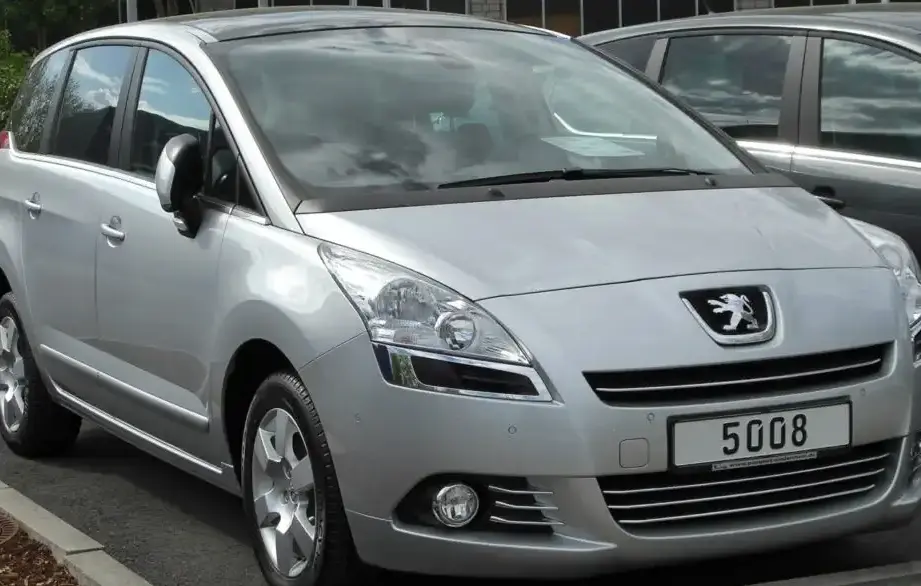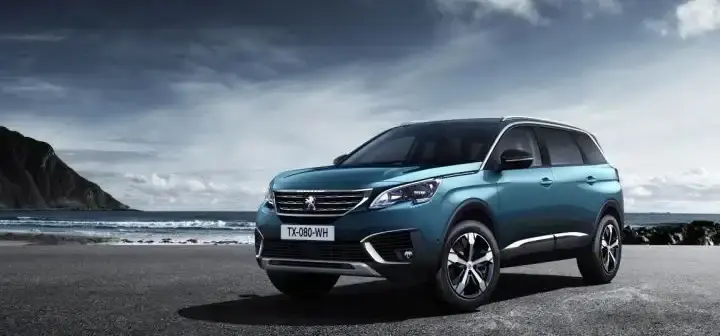
The Peugeot 5008 II, launched in 2016, represented a significant departure from its predecessor, moving from a minivan-like MPV to a more contemporary and stylish SUV. The 1.6 BlueHDi variant, producing 120 horsepower, was a key engine option within the Phase I (2017) lineup, positioned as a balance between fuel efficiency and practicality for family buyers. This model year marked the first generation of the 5008 to fully embrace the SUV segment, competing with vehicles like the Nissan Qashqai and Hyundai Tucson in the European market. It was never officially sold in the United States, but represents a popular family vehicle in Europe.
Technical Specifications
| Brand | Peugeot |
| Model | 5008 |
| Generation | 5008 II (Phase I, 2017) |
| Type (Engine) | 1.6 BlueHDi (120 Hp) |
| Start of production | 2016 |
| End of production | 2018 |
| Powertrain Architecture | Internal Combustion engine |
| Body type | SUV |
| Seats | 7 |
| Doors | 5 |
| Fuel consumption (urban) | 4.5 – 4.8 l/100 km (52.3 – 49 US mpg) |
| Fuel consumption (extra urban) | 3.9 – 4.2 l/100 km (60.3 – 56 US mpg) |
| Fuel consumption (combined) | 4.2 – 4.4 l/100 km (56 – 53.5 US mpg) |
| CO2 emissions | 108 – 115 g/km |
| Fuel Type | Diesel |
| Acceleration 0 – 100 km/h | 11.4 – 13.1 sec |
| Acceleration 0 – 62 mph | 11.4 – 13.1 sec |
| Acceleration 0 – 60 mph | 10.8 sec |
| Maximum speed | 188 km/h (116.82 mph) |
| Emission standard | Euro 6 |
| Weight-to-power ratio | 11.4 kg/Hp |
| Weight-to-torque ratio | 4.6 kg/Nm |
| Power | 120 Hp @ 3500 rpm |
| Torque | 300 Nm @ 1750 rpm (221.27 lb.-ft. @ 1750 rpm) |
| Maximum engine speed | 5100 rpm |
| Engine layout | Front, Transverse |
| Engine Model/Code | BHZ DV6FC |
| Engine displacement | 1560 cm3 (95.2 cu. in.) |
| Number of cylinders | 4 |
| Engine configuration | Inline |
| Cylinder Bore | 75 mm (2.95 in.) |
| Piston Stroke | 88.3 mm (3.48 in.) |
| Compression ratio | 17:1 |
| Number of valves per cylinder | 2 |
| Fuel injection system | Diesel Commonrail |
| Engine aspiration | Turbocharger, Intercooler |
| Engine oil capacity | 3.75 l (3.96 US qt | 3.3 UK qt) |
| Kerb Weight | 1365 kg (3009.31 lbs.) |
| Trunk (boot) space – minimum | 780 l (27.55 cu. ft.) |
| Trunk (boot) space – maximum | 1940 l (68.51 cu. ft.) |
| Fuel tank capacity | 53 l (14 US gal | 11.66 UK gal) |
| Length | 4641 mm (182.72 in.) |
| Width | 1844 mm (72.6 in.) |
| Width with mirrors folded | 1906 mm (75.04 in.) |
| Width including mirrors | 2098 mm (82.6 in.) |
| Height | 1646 mm (64.8 in.) |
| Wheelbase | 2840 mm (111.81 in.) |
| Front track | 1593-1601 mm (62.72 – 63.03 in.) |
| Rear track | 1587-1610 mm (62.48 – 63.39 in.) |
| Front overhang | 926 mm (36.46 in.) |
| Rear overhang | 875 mm (34.45 in.) |
| Ride height (ground clearance) | 236 mm (9.29 in.) |
| Minimum turning circle | 11.2 m (36.75 ft.) |
| Front suspension | Independent type McPherson |
| Rear suspension | Semi-independent, coil spring |
| Front brakes | Ventilated discs |
| Rear brakes | Disc |
| Steering type | Steering rack and pinion |
| Power steering | Electric |
| Tires size | 215/65 R17; 225/55 R18; 205/55 R19 |
| Wheel rims size | 17; 18; 19 |
INTRODUCTION
The Peugeot 5008 II 1.6 BlueHDi (120 Hp) was produced from 2016 to 2018 as part of the initial Phase I generation of the redesigned 5008. This variant occupied a crucial position in the model range, offering a more economical and accessible entry point into the 5008 lineup compared to the more powerful BlueHDi 150 and 180 variants, or the petrol-powered options. Built on the EMP2 platform (also used by the Peugeot 3008 and Citroën C5 Aircross), the 5008 II aimed to provide a practical and spacious family vehicle with a touch of French flair. The seven-seat configuration was a key selling point, making it suitable for larger families or those requiring occasional extra passenger capacity.
Powertrain & Engine Architecture
The heart of this 5008 variant is the 1.6-liter DV6FC BlueHDi engine, a four-cylinder diesel powerplant. This engine, identified by the code BHZ, is a member of Peugeot’s well-regarded BlueHDi family, known for its focus on reducing NOx emissions through Selective Catalytic Reduction (SCR) technology. The engine utilizes a common-rail direct injection system, delivering fuel at extremely high pressure for optimized combustion. A turbocharger with an intercooler is employed to boost power and torque. The engine features a 17:1 compression ratio, contributing to its efficiency. The 120 horsepower and 300 Nm (221 lb-ft) of torque are delivered at 3500 and 1750 rpm respectively. This engine was paired with a six-speed automatic transmission, offering smooth gear changes and enhancing driving comfort. The automatic transmission was a conventional torque converter type, prioritizing smoothness over outright performance.
Driving Characteristics
The 1.6 BlueHDi 120 hp automatic powertrain delivers adequate, but not exhilarating, performance. Acceleration from 0-62 mph takes between 11.4 and 13.1 seconds, making it suitable for everyday driving but less ideal for rapid overtaking. The automatic transmission is tuned for fuel efficiency, often upshifting quickly to maintain lower engine speeds. This can sometimes result in a slight hesitation when requesting sudden acceleration. The torque delivery is relatively flat, providing usable power across a wide rev range. Compared to the more powerful 150 and 180 hp BlueHDi variants, this version feels noticeably slower, particularly when fully loaded with passengers and luggage. However, the trade-off is significantly improved fuel economy, with combined figures ranging from 4.2 to 4.4 l/100km (56-53.5 US mpg).
Equipment & Trim Levels
The 5008 II 1.6 BlueHDi 120 hp typically came equipped with a respectable level of standard features. These included air conditioning, a touchscreen infotainment system with Bluetooth connectivity, cruise control, and rear parking sensors. Higher trim levels, such as Allure and GT Line, added features like automatic climate control, a panoramic sunroof, leather upholstery, and advanced driver-assistance systems (ADAS) such as lane departure warning and automatic emergency braking. Interior upholstery was typically cloth in the base trims, with leather options available on higher-spec models. The dashboard featured a minimalist design with a focus on ergonomics. Optional extras included a head-up display, a premium sound system, and a 360-degree parking camera.
Chassis & Braking
The 5008 II utilizes a McPherson strut front suspension and a semi-independent coil spring rear suspension. This setup provides a comfortable ride quality, absorbing bumps and imperfections in the road surface effectively. The front brakes are ventilated discs, while the rear brakes are solid discs. Anti-lock Braking System (ABS) is standard, enhancing braking performance and stability. The suspension tuning is geared towards comfort rather than sporty handling. Stabilizer bars are fitted to both the front and rear axles to reduce body roll during cornering. The weight distribution is reasonably balanced, contributing to predictable handling characteristics.
Market Reception & Comparison
The Peugeot 5008 II 1.6 BlueHDi 120 hp was generally well-received by automotive critics. It was praised for its spacious interior, comfortable ride, and fuel efficiency. However, some reviewers noted that the engine could feel underpowered, particularly when the vehicle was fully loaded. Compared to the 150 hp BlueHDi variant, the 120 hp version offered a more affordable entry point but at the expense of performance. The 1.6 BlueHDi engine proved to be reliable, although regular servicing and adherence to Peugeot’s recommended maintenance schedule were crucial. Fuel economy was a key strength, consistently exceeding expectations in real-world driving conditions.
Legacy
The 1.6 BlueHDi engine has proven to be a durable and relatively reliable unit, although, like all diesel engines, it is susceptible to issues related to the diesel particulate filter (DPF) if not driven on longer journeys regularly. In the used car market, the 5008 II 1.6 BlueHDi 120 hp represents a good value proposition for buyers seeking a spacious and economical family SUV. Its practicality, combined with Peugeot’s distinctive styling, continues to make it a popular choice. The EMP2 platform upon which it is built has also proven to be robust and adaptable, contributing to the vehicle’s long-term durability.