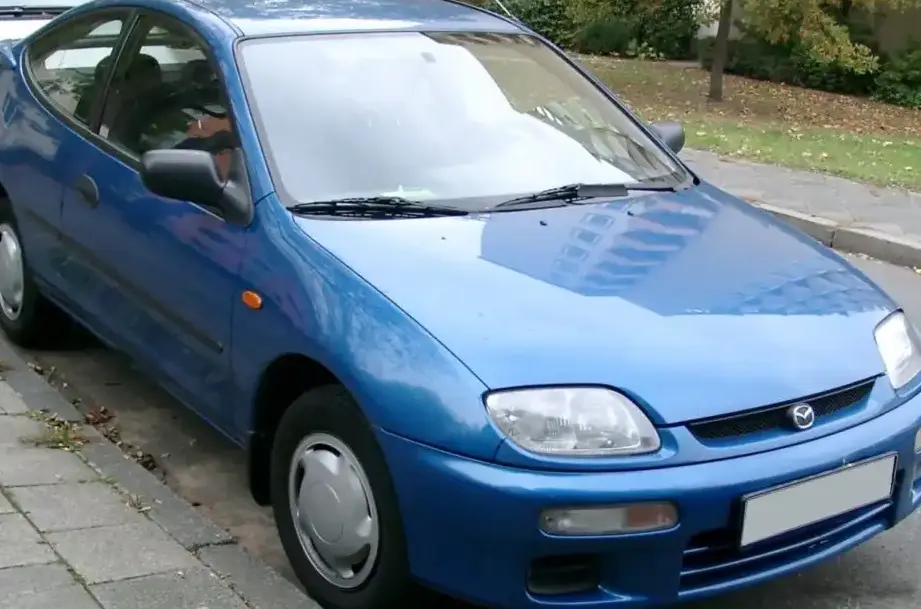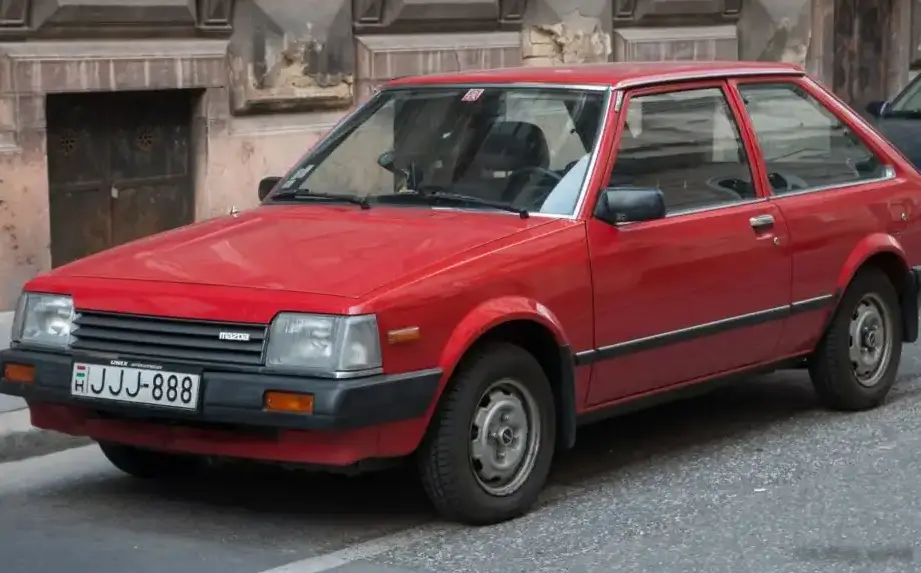
The Mazda 323 II Hatchback, internally designated as the BD series, represented Mazda’s entry into the competitive compact hatchback market of the early 1980s. Produced between 1980 and 1985, the BD series aimed to provide affordable and practical transportation, particularly in Europe and Japan, where smaller, fuel-efficient cars were highly sought after. The 1.1-liter (54 horsepower) variant was the base model, positioned as the most economical and accessible option within the 323 II range. It served as a stepping stone for buyers entering the Mazda family, prioritizing affordability over outright performance. This model played a crucial role in establishing the 323 as a popular choice for first-time car buyers and those seeking a reliable city vehicle.
Technical Specifications
| Brand | Mazda |
| Model | 323 |
| Generation | 323 II Hatchback (BD) |
| Type (Engine) | 1.1 (54 Hp) |
| Start of production | 1980 |
| End of production | 1985 |
| Powertrain Architecture | Internal Combustion Engine |
| Body type | Hatchback |
| Fuel Type | Petrol (Gasoline) |
| Power | 54 Hp |
| Engine aspiration | Naturally Aspirated |
Powertrain & Engine Architecture
The heart of the 323 II 1.1 was the Mazda B11 engine, a 1.1-liter (1088cc) inline-four cylinder gasoline engine. This engine utilized a naturally aspirated configuration, meaning it did not employ a turbocharger or supercharger. The B11 featured a single overhead camshaft (SOHC) valvetrain, operating two valves per cylinder. Fuel delivery was managed by a carburetor, a common feature for vehicles of this era, prioritizing simplicity and cost-effectiveness over the more advanced fuel injection systems. The engine produced a modest 54 horsepower at approximately 6000 rpm, and 68 lb-ft of torque at 3000 rpm.
The 1.1-liter engine was typically paired with a four-speed manual transmission, although a three-speed automatic transmission was offered as an option. The automatic transmission, while providing ease of use, did noticeably impact the vehicle’s acceleration and fuel economy. The transmission was a conventional hydraulic automatic, lacking the electronic controls found in later designs. The drivetrain was front-wheel drive, a relatively modern configuration for the time, contributing to improved handling and traction compared to rear-wheel drive layouts.
Driving Characteristics
The 1.1-liter Mazda 323 II Hatchback offered a utilitarian driving experience. Acceleration was leisurely, with 0-60 mph times estimated to be around 16-18 seconds. The engine’s limited horsepower meant that overtaking maneuvers required careful planning. However, the car’s light weight (approximately 1,700 lbs) helped to mitigate the lack of power to some extent. The four-speed manual transmission allowed drivers to make the most of the available power, while the optional automatic transmission prioritized convenience over performance.
The 323 II’s suspension consisted of MacPherson struts at the front and a twist-beam axle at the rear. This setup provided a comfortable ride quality, suitable for navigating city streets and uneven road surfaces. Steering was light and responsive, making the car easy to maneuver in tight spaces. Compared to the 1.3 and 1.5-liter versions of the 323 II, the 1.1 felt noticeably slower, particularly when fully loaded with passengers or cargo. The manual transmission variants offered a more engaging driving experience, while the automatic version prioritized ease of use for urban commuting.
Equipment & Trim Levels
The 1.1-liter 323 II Hatchback was typically offered in a base trim level, focusing on essential features to keep the price point low. Standard equipment generally included cloth upholstery, vinyl floor covering, and basic instrumentation consisting of a speedometer, fuel gauge, and temperature gauge. The interior was functional and durable, designed for practicality rather than luxury.
Optional extras were available, such as a radio, upgraded seat fabric, and a rear window wiper. Higher trim levels, available with the larger engines, offered features like power steering, electric windows, and a more comprehensive instrument cluster. The 1.1-liter model was often seen as a blank canvas for buyers who prioritized affordability and were willing to forego some of the more desirable features.
Chassis & Braking
The Mazda 323 II Hatchback utilized a monocoque body construction, providing a good balance of strength and weight. The front suspension employed MacPherson struts, offering a relatively comfortable ride and predictable handling. The rear suspension featured a twist-beam axle, a cost-effective and space-efficient design.
Braking on the 1.1-liter model typically consisted of disc brakes at the front and drum brakes at the rear. This configuration was common for vehicles in this price range during the early 1980s. The braking system provided adequate stopping power for normal driving conditions, but lacked the performance of more advanced systems found on higher-end vehicles. Stabilizer bars were often omitted from the base 1.1-liter model to further reduce costs.
Market Reception & Comparison
The 1.1-liter Mazda 323 II Hatchback was generally well-received as an affordable and reliable city car. Critics praised its fuel efficiency and ease of driving, but noted its lack of power. Compared to competitors like the Ford Fiesta and Volkswagen Polo, the 323 II offered a slightly more spacious interior and a more refined driving experience. However, the Fiesta and Polo often boasted more sophisticated engine options and a wider range of trim levels.
Fuel economy was a key selling point for the 1.1-liter model, achieving around 45-50 mpg in mixed driving conditions. Reliability was also a strong suit, with the B11 engine proving to be durable and relatively maintenance-free. However, the carburetor required periodic adjustment and could be prone to issues in cold weather. The automatic transmission, while convenient, was less fuel-efficient and required more frequent servicing than the manual transmission.
Legacy
The Mazda 323 II 1.1-liter Hatchback, while not a performance icon, holds a significant place in Mazda’s history as a crucial entry-level model. Its affordability and reliability made it a popular choice for first-time car buyers and those seeking a practical city vehicle. Today, these cars are relatively rare, and well-maintained examples are sought after by collectors and enthusiasts. The B11 engine, while simple in design, proved to be remarkably durable, and many examples are still running today.
In the used car market, the 1.1-liter 323 II is valued for its simplicity and low running costs. Parts availability can be a challenge, but many components are still available through specialist suppliers. The car’s enduring appeal lies in its honest and unpretentious character, representing a bygone era of affordable and reliable motoring. It remains a testament to Mazda’s commitment to providing practical and accessible transportation to a wide range of customers.