Technical Specifications
| Brand | Jeep |
| Model | Cherokee |
| Generation | Cherokee V (KL) |
| Type (Engine) | 2.4 MultiAir2 TIGERSHARK (184 Hp) Automatic |
| Start of production | 2013 |
| End of production | 2017 |
| Powertrain Architecture | Internal Combustion engine |
| Body type | SUV |
| Seats | 5 |
| Doors | 5 |
| Fuel consumption (urban) | 10.7 l/100 km (22 US mpg) |
| Fuel consumption (extra urban) | 7.6 l/100 km (30.9 US mpg) |
| Fuel consumption (combined) | 9.4 l/100 km (25 US mpg) |
| Fuel Type | Petrol (Gasoline) |
| Emission standard | LEV II |
| Weight-to-power ratio | 9 kg/Hp |
| Weight-to-torque ratio | 7.1 kg/Nm |
| Power | 184 Hp @ 6400 rpm |
| Torque | 234 Nm @ 4600 rpm (172.59 lb.-ft. @ 4600 rpm) |
| Maximum engine speed | 6500 rpm |
| Engine layout | Front, Transverse |
| Engine Model/Code | ED6 |
| Engine displacement | 2360 cm3 (144.02 cu. in.) |
| Number of cylinders | 4 |
| Engine configuration | Inline |
| Cylinder Bore | 88 mm (3.46 in.) |
| Piston Stroke | 97 mm (3.82 in.) |
| Compression ratio | 10:1 |
| Number of valves per cylinder | 4 |
| Fuel injection system | Multi-port manifold injection |
| Engine aspiration | Naturally aspirated engine |
| Valvetrain | SOHC, MultiAir |
| Engine oil capacity | 5.2 l (5.49 US qt | 4.58 UK qt) |
| Coolant capacity | 6.7 l (7.08 US qt | 5.9 UK qt) |
| Kerb Weight | 1658-1669 kg (3655.26 – 3679.52 lbs.) |
| Max. weight | 2291 kg (5050.79 lbs.) |
| Max load | 622-633 kg (1371.28 – 1395.53 lbs.) |
| Trunk (boot) space – minimum | 700 l (24.72 cu. ft.) |
| Trunk (boot) space – maximum | 1667 l (58.87 cu. ft.) |
| Fuel tank capacity | 60 l (15.85 US gal | 13.2 UK gal) |
| Length | 4624 mm (182.05 in.) |
| Width | 1859 mm (73.19 in.) |
| Height | 1670 mm (65.75 in.) |
| Wheelbase | 2699 mm (106.26 in.) |
| Front track | 1580 mm (62.2 in.) |
| Rear track | 1573 mm (61.93 in.) |
| Drag coefficient (Cd) | 0.332-0.339 |
| Minimum turning circle | 11.5 m (37.73 ft.) |
| Approach angle | 16.7° |
| Departure angle | 24.6° |
| Ramp-over angle | 17.7° |
| Drivetrain Architecture | Front wheel drive |
| Number of gears | 9 |
| Gearbox type | Automatic transmission |
| Front suspension | Independent, McPherson with coil spring and anti-roll bar |
| Rear suspension | Independent multi-link with stabilizer |
| Front brakes | Ventilated discs, 330×28 mm |
| Rear brakes | Disc, 278×12 mm |
| Assisting systems | ABS |
| Steering type | Steering rack and pinion |
| Power steering | Electric |
| Tires size | 225/60 R17; 225/65 R17; 225/55 R18; 225/60 R18 |
| Wheel rims size | 7J x 17; 7J x 18 |
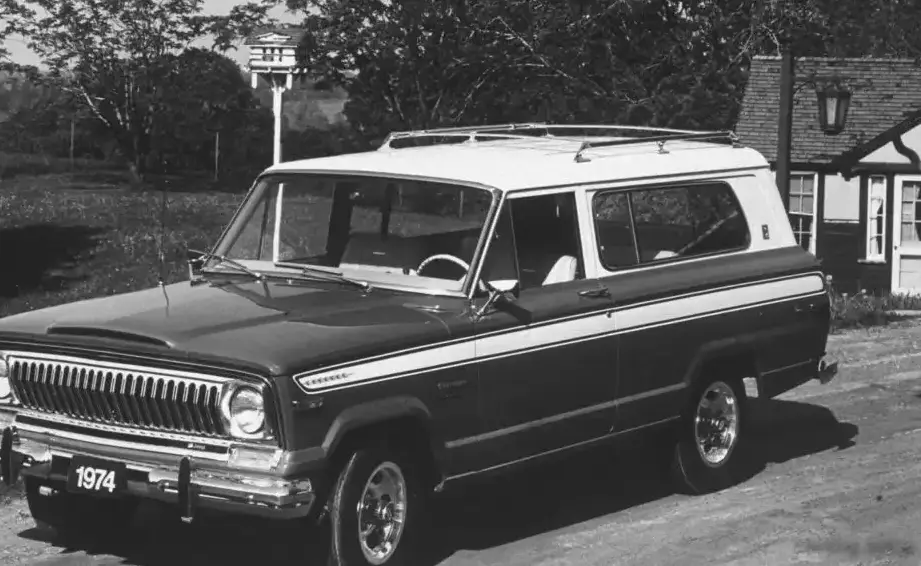
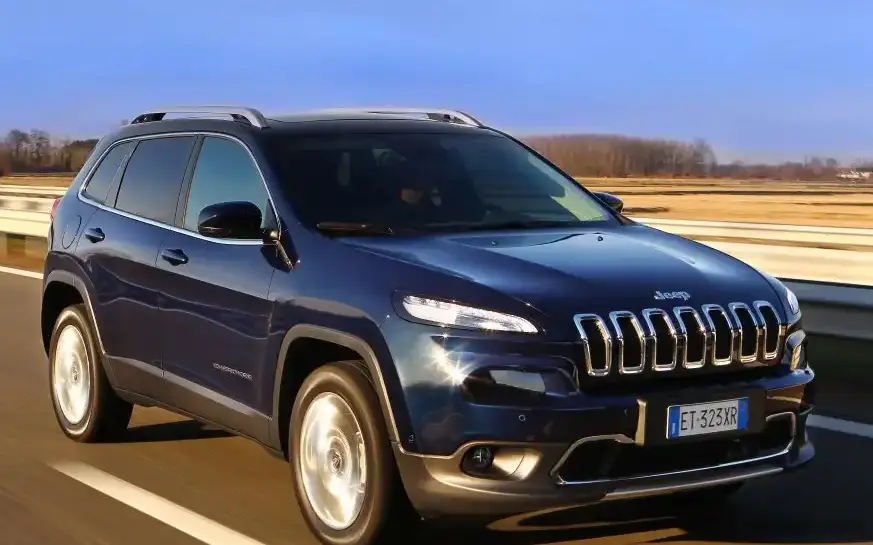
The Jeep Cherokee (KL) 2.4 MultiAir2 Tigershark, produced from 2013 to 2017, marked a significant departure for the iconic American brand. This fifth generation of the Cherokee transitioned away from the traditional body-on-frame construction of its predecessors to a more modern, unibody platform. The 2.4-liter MultiAir2 Tigershark engine, paired with a 9-speed automatic transmission, was positioned as the mainstream offering in the Cherokee lineup, aiming to strike a balance between fuel efficiency and adequate performance for everyday driving. It played a crucial role in Jeep’s strategy to expand its appeal beyond its core off-road enthusiast base, particularly within the increasingly competitive mid-size SUV segment.
Powertrain & Engine Architecture
At the heart of this Cherokee variant lies the 2.4-liter “Tigershark” inline-four engine, designated internally as the ED6. This engine incorporates Fiat’s innovative MultiAir2 electro-hydraulic valve actuation system. MultiAir2 enables independent control of intake valve timing and lift, optimizing combustion efficiency and reducing emissions. The engine utilizes multi-port fuel injection and features a relatively high 10:1 compression ratio. The 9-speed automatic transmission, sourced from ZF, was a defining characteristic of this Cherokee generation. Its wide range of gear ratios was designed to enhance both fuel economy and acceleration. However, early versions of this transmission were subject to some software-related issues and occasional jerky shifting, which were largely resolved through software updates throughout the production run.
Driving Characteristics
The combination of the 2.4-liter engine and 9-speed automatic delivered 184 horsepower and 234 lb-ft of torque, providing adequate, though not particularly thrilling, performance. Acceleration from 0 to 60 mph typically took between 8.5 and 9.5 seconds. The 9-speed transmission’s broad gear spread allowed the engine to operate at lower RPMs during highway driving, contributing to improved fuel economy. However, the transmission could sometimes exhibit hesitation during rapid acceleration or when downshifting. In comparison to the more powerful 3.2-liter V6 option, the 2.4-liter engine felt noticeably less responsive. While a manual transmission was offered on some models, the automatic was favored by many buyers for its convenience.
Equipment & Trim Levels
The 2.4-liter MultiAir2 engine was commonly found in the base “Latitude” and mid-range “Limited” trim levels. The Latitude trim came standard with features such as air conditioning, a 5-inch touchscreen infotainment system, and essential safety features like stability control and multiple airbags. The Limited trim added upgrades like leather upholstery, heated front seats, a larger 8.4-inch touchscreen, and additional driver-assistance technologies. Optional extras included a panoramic sunroof, a premium sound system, and a navigation system. The interior design was generally functional and well-constructed, although the materials weren’t as luxurious as those found in some competing vehicles.
Chassis & Braking
The Cherokee KL featured a fully independent suspension system, employing McPherson struts at the front and a multi-link setup at the rear. This configuration provided a comfortable ride quality, although handling wasn’t particularly sporty. The front brakes were ventilated discs, while the rear brakes were solid discs. Anti-lock brakes (ABS) were standard equipment. The front-wheel-drive configuration of this variant resulted in a lower curb weight compared to the four-wheel-drive models, leading to a slight improvement in fuel economy. Stabilizer bars were incorporated on both the front and rear axles to minimize body roll during cornering.
Market Reception & Comparison
Automotive critics generally acknowledged the Cherokee KL’s improvements in ride quality and interior refinement compared to previous generations. However, the 9-speed automatic transmission received mixed reviews, with some testers noting its occasional sluggishness. The 2.4-liter engine was deemed sufficient for most drivers, but it lacked the power of the V6. Fuel economy was a strong point, with the 2.4-liter achieving EPA ratings of around 25 mpg combined. When compared to competitors like the Honda CR-V and Toyota RAV4, the Cherokee offered a more rugged aesthetic and the availability of four-wheel drive, but its fuel economy and transmission performance weren’t always as competitive.
Legacy
The Jeep Cherokee KL 2.4 MultiAir2 Tigershark represents a pivotal moment for the brand, as it moved towards a more mainstream SUV offering. While the 9-speed automatic transmission initially experienced some issues, it ultimately proved to be a durable and efficient unit. The 2.4-liter MultiAir2 engine, while not renowned for exceptional longevity, generally provided reliable service with proper maintenance. In the used car market, these Cherokees offer an affordable entry point into Jeep ownership, appealing to buyers seeking a comfortable and capable SUV with a distinctive style. However, prospective buyers should be aware of the transmission’s history and verify that any vehicle they consider has received the necessary software updates.