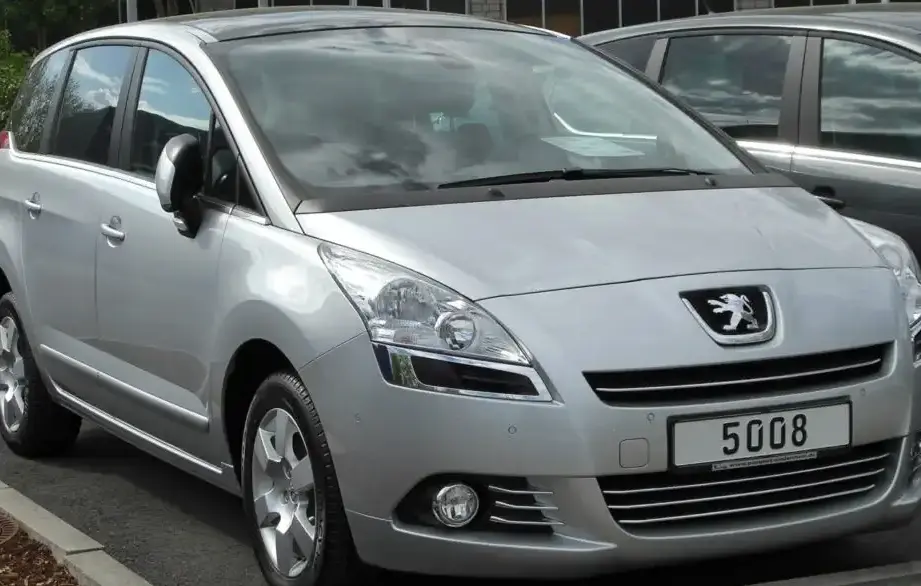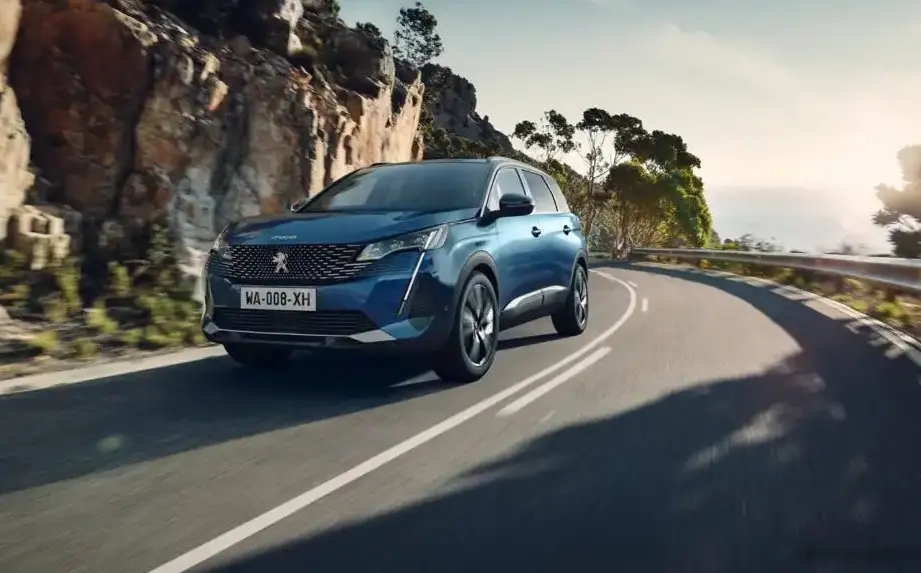
The Peugeot 5008 II, specifically the 1.5 BlueHDi variant producing 130 horsepower, represents a significant offering in the compact SUV segment. Introduced in September 2020 as part of the Phase II refresh of the second-generation 5008, this model aimed to balance fuel efficiency with practicality for families. It continued in production until March 2024. Positioned as a mid-range option within the 5008 lineup, it slotted between the lower-powered diesel variants and the more potent gasoline engines, offering a compelling blend of economy and usability. The 5008 II is built on the EMP2 platform, shared with other Peugeot and Citroën vehicles, emphasizing modularity and lightweight construction.
Technical Specifications
| Brand | Peugeot |
| Model | 5008 |
| Generation | 5008 II (Phase II, 2020) |
| Type (Engine) | 1.5 BlueHDi (130 Hp) |
| Start of production | September, 2020 |
| End of production | March, 2024 |
| Powertrain Architecture | Internal Combustion engine |
| Body type | SUV |
| Seats | 7 |
| Doors | 5 |
| Fuel consumption at Low speed (WLTP) | 4.9-5.8 l/100 km (48 – 40.6 US mpg, 57.6 – 48.7 UK mpg, 20.4 – 17.2 km/l) |
| Fuel consumption at Medium speed (WLTP) | 4.4-5.3 l/100 km (53.5 – 44.4 US mpg, 64.2 – 53.3 UK mpg, 22.7 – 18.9 km/l) |
| Fuel consumption at high speed (WLTP) | 4.1-5.0 l/100 km (57.4 – 47 US mpg, 68.9 – 56.5 UK mpg, 24.4 – 20 km/l) |
| Fuel consumption at very high speed (WLTP) | 5.2-6.3 l/100 km (45.2 – 37.3 US mpg, 54.3 – 44.8 UK mpg, 19.2 – 15.9 km/l) |
| Combined fuel consumption (WLTP) | 4.6-5.6 l/100 km (51.1 – 42 US mpg, 61.4 – 50.4 UK mpg, 21.7 – 17.9 km/l) |
| CO2 emissions (WLTP) | 122 – 148 g/km |
| Fuel Type | Diesel |
| Acceleration 0 – 100 km/h | 11.1 sec |
| Acceleration 0 – 62 mph | 11.1 sec |
| Acceleration 0 – 60 mph | 10.5 sec |
| Maximum speed | 192 km/h (119.3 mph) |
| Emission standard | Euro 6 |
| Weight-to-power ratio | 11.7 kg/Hp, 85.8 Hp/tonne |
| Weight-to-torque ratio | 5.1 kg/Nm, 198 Nm/tonne |
| Power | 130 Hp @ 3750 rpm |
| Power per litre | 86.7 Hp/l |
| Torque | 300 Nm @ 1750 rpm (221.27 lb.-ft. @ 1750 rpm) |
| Engine layout | Front, Transverse |
| Engine Model/Code | YHZ DV5RC |
| Engine displacement | 1499 cm3 (91.47 cu. in.) |
| Number of cylinders | 4 |
| Engine configuration | Inline |
| Number of valves per cylinder | 4 |
| Fuel injection system | Diesel Commonrail |
| Engine aspiration | Turbocharger, Intercooler |
| Engine oil capacity | 4 l (4.23 US qt | 3.52 UK qt) |
| Kerb Weight | 1515 kg (3340 lbs.) |
| Max. weight | 2200 kg (4850.17 lbs.) |
| Max load | 685 kg (1510.17 lbs.) |
| Trunk (boot) space – minimum | 702 l (24.79 cu. ft.) |
| Trunk (boot) space – maximum | 2150 l (75.93 cu. ft.) |
| Fuel tank capacity | 56 l (14.79 US gal | 12.32 UK gal) |
| AdBlue tank | 17 l (4.49 US gal | 3.74 UK gal) |
| Permitted trailer load with brakes (12%) | 1300 kg (2866.01 lbs.) |
| Permitted towbar download | 70 kg (154.32 lbs.) |
| Length | 4641 mm (182.72 in.) |
| Width | 1844 mm (72.6 in.) |
| Height | 1646 mm (64.8 in.) |
| Wheelbase | 2840 mm (111.81 in.) |
| Front track | 1601 mm (63.03 in.) |
| Rear (Back) track | 1610 mm (63.39 in.) |
| Front overhang | 926 mm (36.46 in.) |
| Rear overhang | 875 mm (34.45 in.) |
| Ride height (ground clearance) | 236 mm (9.29 in.) |
| Minimum turning circle (turning diameter) | 11.2 m (36.75 ft.) |
| Drivetrain Architecture | The Internal combustion engine (ICE) drives the front wheels of the vehicle. |
| Drive wheel | Front wheel drive |
| Number of gears and type of gearbox | 6 gears, manual transmission |
| Front suspension | Coil spring, Independent type McPherson |
| Rear suspension | Semi-independent, coil spring |
| Front brakes | Ventilated discs |
| Rear brakes | Disc |
Powertrain & Engine Architecture
The heart of this 5008 variant is the 1.5 BlueHDi engine, specifically the YHZ DV5RC code. This is a four-cylinder, inline diesel engine displacing 1499cc. It utilizes a turbocharger with an intercooler to boost power and efficiency. The engine employs a Diesel Commonrail fuel injection system, delivering fuel at high pressure for optimized combustion. A key feature of the BlueHDi technology is its Selective Catalytic Reduction (SCR) system, which uses AdBlue (Diesel Exhaust Fluid) to reduce nitrogen oxide (NOx) emissions, ensuring compliance with Euro 6 emission standards. The engine produces 130 horsepower at 3750 rpm and 300 Nm (221 lb-ft) of torque at 1750 rpm. This engine is paired with a 6-speed manual transmission, chosen for its efficiency and driver engagement. While an automatic transmission was available on other 5008 models, the 1.5 BlueHDi 130 hp was exclusively offered with the manual gearbox.
Driving Characteristics
The 1.5 BlueHDi 130 hp 5008 offers a comfortable and practical driving experience. Acceleration is adequate, with a 0-60 mph time of around 10.5 seconds, but it’s not particularly sporty. The engine delivers a good amount of low-end torque, making it easy to navigate city streets and handle everyday driving situations. The manual transmission allows for greater control, but requires more driver involvement than an automatic. Compared to the more powerful gasoline engines, the 1.5 BlueHDi prioritizes fuel economy over outright performance. The gear ratios are tuned for efficiency, meaning the engine doesn’t rev as high as some of its petrol counterparts. This results in a more relaxed driving experience, particularly on longer journeys. Compared to the 1.6 BlueHDi, the 1.5 offers a slight improvement in refinement and responsiveness.
Equipment & Trim Levels
The 1.5 BlueHDi 130 hp trim typically came with a good level of standard equipment. This included features like air conditioning, a touchscreen infotainment system with Apple CarPlay and Android Auto compatibility, Bluetooth connectivity, and a suite of safety features such as automatic emergency braking, lane departure warning, and speed limit recognition. Interior upholstery was typically cloth, with options for upgrading to leather. Higher trim levels added features like a panoramic sunroof, heated seats, and a more advanced infotainment system. The 5008 is known for its spacious interior, offering comfortable seating for up to seven passengers. The rear seats can be folded flat to create a large cargo area.
Chassis & Braking
The 5008 II utilizes a McPherson strut front suspension and a semi-independent coil spring rear suspension. This setup provides a good balance between comfort and handling. The front brakes are ventilated discs, while the rear brakes are solid discs. ABS (Anti-lock Braking System) is standard, along with Electronic Stability Control (ESC). The steering is electric power-assisted, providing a light and responsive feel. The 5008’s suspension is tuned for comfort, absorbing bumps and imperfections in the road well. The relatively low weight of the 1.5 BlueHDi engine contributes to balanced handling.
Market Reception & Comparison
The Peugeot 5008 II, and specifically the 1.5 BlueHDi 130 hp variant, was generally well-received by critics. It was praised for its stylish design, spacious interior, and fuel efficiency. However, some reviewers noted that the engine could feel underpowered when fully loaded or tackling steep hills. Compared to other trims, the 1.5 BlueHDi offered the best fuel economy, making it an attractive option for drivers who prioritize running costs. The manual transmission was seen as a positive by driving enthusiasts, but some buyers preferred the convenience of an automatic. Competitors in this segment included the Volkswagen Tiguan, Nissan Qashqai, and Hyundai Tucson.
Legacy
The 1.5 BlueHDi engine has proven to be a reliable unit, although, like all diesel engines, it requires regular maintenance, including oil changes and AdBlue refills. The 5008 II, in general, has a good reputation for build quality and durability. On the used car market, the 1.5 BlueHDi 130 hp variant represents a good value proposition, offering a practical and economical family SUV. Its fuel efficiency and relatively low running costs make it an appealing choice for budget-conscious buyers. However, potential buyers should be aware of the potential for diesel particulate filter (DPF) issues, particularly if the vehicle has been primarily used for short journeys.