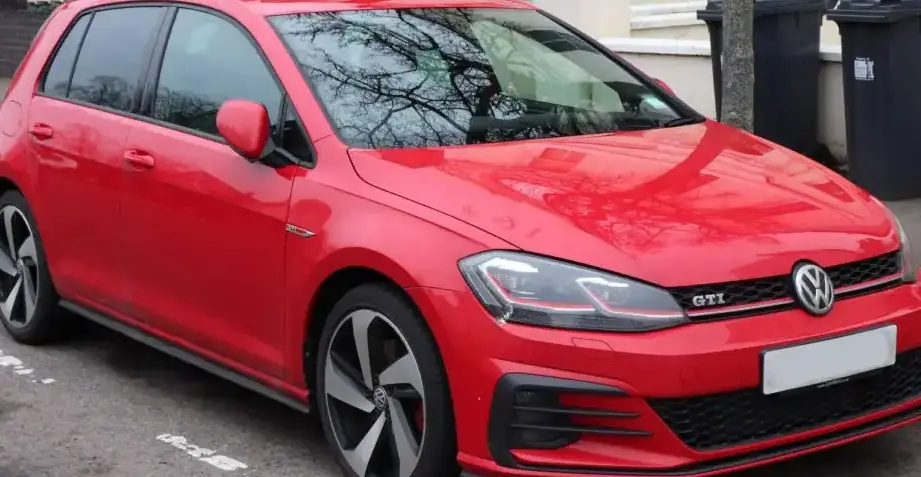
The Volkswagen Golf VII, produced from 2012 to 2014, represented a significant evolution of Volkswagen’s iconic hatchback. Among the various engine and transmission combinations offered, the 1.4 TSI (140 hp) with a six-speed manual transmission occupied a key position in the lineup, appealing to buyers seeking a balance of performance, fuel efficiency, and affordability. This variant was particularly popular in European markets, where fuel economy and practicality are highly valued. It served as a step up from the base models, offering more power and refinement without the higher price tag of the range-topping trims.
Technical Specifications
| Brand | Volkswagen |
| Model | Golf |
| Generation | Golf VII (5-door) |
| Type (Engine) | 1.4 TSI (140 Hp) ACT |
| Start of production | 2012 |
| End of production | 2014 |
| Powertrain Architecture | Internal Combustion engine |
| Body type | Hatchback |
| Seats | 5 |
| Doors | 5 |
| Fuel consumption (urban) | 5.8 l/100 km (40.6 US mpg, 48.7 UK mpg, 17.2 km/l) |
| Fuel consumption (extra urban) | 4.2 l/100 km (56 US mpg, 67.3 UK mpg, 23.8 km/l) |
| Fuel consumption (combined) | 4.7 l/100 km (50 US mpg, 60.1 UK mpg, 21.3 km/l) |
| Fuel Type | Petrol (Gasoline) |
| Acceleration 0 – 100 km/h | 8.4 sec |
| Acceleration 0 – 62 mph | 8.4 sec |
| Acceleration 0 – 60 mph | 8 sec |
| Maximum speed | 212 km/h (131.73 mph) |
| Weight-to-power ratio | 9.1 kg/Hp, 110.2 Hp/tonne |
| Weight-to-torque ratio | 5.1 kg/Nm, 196.9 Nm/tonne |
| Power | 140 Hp @ 4500-6000 rpm |
| Power per litre | 100.4 Hp/l |
| Torque | 250 Nm @ 1500-3500 rpm (184.39 lb.-ft. @ 1500-3500 rpm) |
| Engine layout | Front, Transverse |
| Engine Model/Code | CHPA |
| Engine displacement | 1395 cm3 (85.13 cu. in.) |
| Number of cylinders | 4 |
| Engine configuration | Inline |
| Fuel injection system | Direct injection |
| Engine aspiration | Turbocharger, Intercooler |
| Engine oil capacity | 4 l (4.23 US qt | 3.52 UK qt) |
| Kerb Weight | 1270 kg (2799.87 lbs.) |
| Max. weight | 1780 kg (3924.23 lbs.) |
| Max load | 510 kg (1124.36 lbs.) |
| Trunk (boot) space – minimum | 380 l (13.42 cu. ft.) |
| Trunk (boot) space – maximum | 1270 l (44.85 cu. ft.) |
| Fuel tank capacity | 50 l (13.21 US gal | 11 UK gal) |
| Length | 4255 mm (167.52 in.) |
| Width | 1799 mm (70.83 in.) |
| Height | 1452 mm (57.17 in.) |
| Wheelbase | 2637 mm (103.82 in.) |
| Front track | 1549 mm (60.98 in.) |
| Rear (Back) track | 1520 mm (59.84 in.) |
| Minimum turning circle | 10.9 m (35.76 ft.) |
| Drivetrain Architecture | Front wheel drive |
| Number of gears | 6 gears, manual transmission |
| Front brakes | Ventilated discs |
| Assisting systems | ABS (Anti-lock braking system) |
| Steering type | Steering rack and pinion |
| Power steering | Electric Steering |
Powertrain & Engine Architecture
The heart of this Golf variant is the 1.4-liter TSI (Turbocharged Stratified Injection) engine, specifically the CHPA engine code. This engine is a four-cylinder, inline configuration, utilizing direct fuel injection and a turbocharger with an intercooler to boost power and efficiency. The TSI technology allows for precise fuel delivery and optimized combustion, contributing to both performance and reduced emissions. A key feature of this engine is its Active Cylinder Technology (ACT), which can shut down two cylinders under light load conditions to further improve fuel economy. The six-speed manual transmission provides drivers with a direct connection to the engine, offering precise control and a more engaging driving experience. The gearbox ratios are tuned to balance acceleration with fuel efficiency, providing adequate power for both city driving and highway cruising.
Driving Characteristics
The 1.4 TSI 140 hp configuration delivers a respectable driving experience. Acceleration from 0 to 60 mph takes approximately 8 seconds, making it adequately quick for everyday driving. The turbocharger provides a noticeable boost in power, particularly in the mid-range, allowing for confident overtaking maneuvers. Compared to the base 1.2 TSI engine, the 1.4 TSI offers a significant improvement in performance. However, it doesn’t match the outright speed of the higher-output 1.8 TSI or the diesel-powered TDI variants. The manual transmission allows for precise gear selection, and the clutch feel is generally light and easy to modulate. The ACT system is largely seamless in operation, with minimal noticeable disruption during cylinder deactivation.
Equipment & Trim Levels
The 1.4 TSI 140 hp Golf VII typically came equipped with a solid range of standard features. These included air conditioning, power windows, power mirrors, a CD/MP3 stereo system, and alloy wheels. Higher trim levels, such as Trendline and Comfortline, added features like automatic climate control, a touchscreen infotainment system, and parking sensors. Optional extras included a panoramic sunroof, leather upholstery, and a navigation system. Interior upholstery was typically cloth, with higher trims offering partial leather options. The dashboard layout was clean and modern, with a focus on ergonomics and ease of use.
Chassis & Braking
The Golf VII chassis is well-engineered, providing a comfortable yet controlled ride. The front suspension utilizes MacPherson struts, while the rear suspension employs a multi-link setup. This configuration provides a good balance between ride comfort and handling precision. The 1.4 TSI variant typically came equipped with ventilated disc brakes on the front wheels and drum brakes on the rear. ABS (Anti-lock Braking System) was standard, providing enhanced braking performance and stability. The steering is precise and responsive, thanks to the electric power steering system.
Market Reception & Comparison
The 1.4 TSI 140 hp Golf VII was generally well-received by automotive critics. It was praised for its fuel efficiency, comfortable ride, and refined engine. However, some critics noted that the engine could feel slightly strained when pushed hard, and that the performance wasn’t as exhilarating as some of its rivals. Compared to the 1.6 TDI, the 1.4 TSI offered more power but slightly lower fuel economy. The 1.8 TSI provided significantly more performance but came at a higher price point. The 1.4 TSI struck a good balance between these two extremes, making it a popular choice for buyers seeking a versatile and economical hatchback.
Legacy
The 1.4 TSI engine, in various iterations, has proven to be a relatively reliable powertrain. However, like all turbocharged engines, it requires regular maintenance, including oil changes and spark plug replacements. The timing chain is a potential weak point and should be monitored for wear. In the used car market, the 1.4 TSI Golf VII represents a good value proposition. It offers a comfortable and practical driving experience, with reasonable running costs. Its popularity ensures that parts are readily available, and maintenance is relatively straightforward. The combination of fuel efficiency, performance, and practicality has ensured that this variant remains a desirable option for used car buyers.