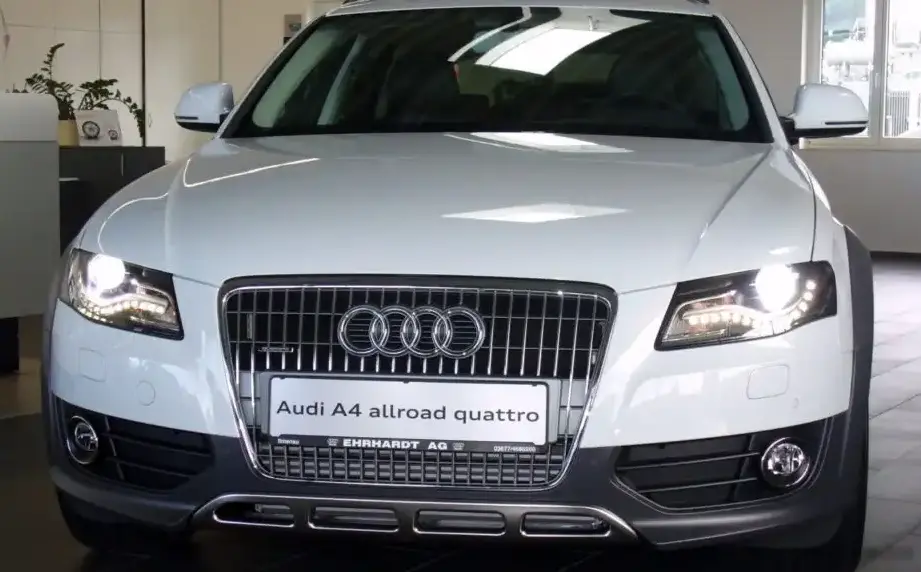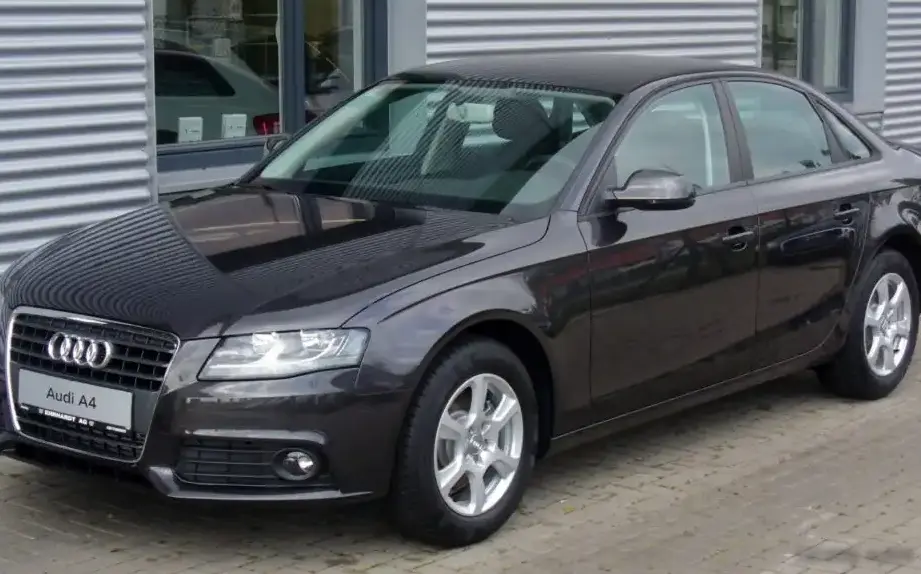
The Audi A4 (B8 8K) 2.7 TDI V6 with the Multitronic transmission, produced from May 2007 to 2011, represented a sophisticated blend of performance and efficiency within the Audi A4 lineup. Positioned as a mid-to-upper range offering, it catered to buyers seeking a refined driving experience with strong torque delivery and the convenience of an automatic transmission. This variant was part of the B8 generation (internally designated 8K), which brought significant advancements in technology, chassis refinement, and interior quality compared to its predecessor. The 2.7 TDI model aimed to provide a compelling alternative to petrol-powered A4s, particularly in European markets where diesel engines were favored for their fuel economy and low-end power.
Technical Specifications
| Brand | Audi |
| Model | A4 |
| Generation | A4 (B8 8K) |
| Type (Engine) | 2.7 TDI V6 (190 Hp) Multitronic |
| Start of production | May, 2007 |
| End of production | 2011 |
| Powertrain Architecture | Internal Combustion engine |
| Body type | Sedan |
| Seats | 5 |
| Doors | 4 |
| Fuel consumption (urban) | 8.1 l/100 km (35.6 US mpg, 42.8 UK mpg, 15.2 km/l) |
| Fuel consumption (extra urban) | 5.7 l/100 km (41.3 US mpg, 49.6 UK mpg, 17.5 km/l) |
| Fuel consumption (combined) | 6.6 l/100 km (35.6 US mpg, 42.8 UK mpg, 15.2 km/l) |
| CO2 emissions | 176 g/km |
| Fuel Type | Diesel |
| Acceleration 0 – 100 km/h | 7.7 sec |
| Acceleration 0 – 62 mph | 7.7 sec |
| Acceleration 0 – 60 mph | 7.3 sec |
| Maximum speed | 226 km/h (140.43 mph) |
| Emission standard | Euro 4 |
| Weight-to-power ratio | 8.4 kg/Hp, 119.1 Hp/tonne |
| Weight-to-torque ratio | 4 kg/Nm, 250.8 Nm/tonne |
| Power | 190 Hp @ 3500-4400 rpm |
| Power per litre | 70.4 Hp/l |
| Torque | 400 Nm @ 1400-3250 rpm (295.02 lb.-ft. @ 1400-3250 rpm) |
| Engine layout | Front, Longitudinal |
| Engine Model/Code | EA896 / CGKA |
| Engine displacement | 2698 cm3 (164.64 cu. in.) |
| Number of cylinders | 6 |
| Engine configuration | V-engine |
| Cylinder Bore | 83 mm (3.27 in.) |
| Piston Stroke | 83.1 mm (3.27 in.) |
| Compression ratio | 16.8:1 |
| Number of valves per cylinder | 4 |
| Fuel injection system | Diesel Commonrail |
| Engine aspiration | Turbocharger, Intercooler |
| Valvetrain | DOHC |
| Engine oil capacity | 6.9 l (7.29 US qt | 6.07 UK qt) |
| Coolant | 12 l (12.68 US qt | 10.56 UK qt) |
| Kerb Weight | 1595 kg (3516.37 lbs.) |
| Max. weight | 2145 kg (4728.92 lbs.) |
| Max load | 550 kg (1212.54 lbs.) |
| Trunk (boot) space – minimum | 480 l (16.95 cu. ft.) |
| Trunk (boot) space – maximum | 962 l (33.97 cu. ft.) |
| Fuel tank capacity | 65 l (17.17 US gal | 14.3 UK gal) |
| Max. roof load | 75 kg (165.35 lbs.) |
| Permitted trailer load with brakes (8%) | 1900 kg (4188.78 lbs.) |
| Permitted trailer load with brakes (12%) | 1700 kg (3747.86 lbs.) |
| Permitted trailer load without brakes | 750 kg (1653.47 lbs.) |
| Permitted towbar download | 80 kg (176.37 lbs.) |
| Length | 4703 mm (185.16 in.) |
| Width | 1826 mm (71.89 in.) |
| Height | 1427 mm (56.18 in.) |
| Wheelbase | 2808 mm (110.55 in.) |
| Front track | 1564 mm (61.57 in.) |
| Rear (Back) track | 1551 mm (61.06 in.) |
| Drag coefficient (Cd) | 0.28 |
| Minimum turning circle (turning diameter) | 11.4 m (37.4 ft.) |
| Drivetrain Architecture | The Internal combustion engine (ICE) drives the front wheels of the vehicle. |
| Drive wheel | Front wheel drive |
| Number of gears and type of gearbox | automatic transmission Multitronic |
| Front suspension | Independent multi-link suspension |
| Rear suspension | Independent multi-link spring suspension with stabilizer |
| Front brakes | Ventilated discs |
| Rear brakes | Disc |
| Assisting systems | ABS (Anti-lock braking system) |
| Steering type | Steering rack and pinion |
| Power steering | Electric Steering |
| Tires size | 225/55 R16; 225/50 R17; 245/40 R18 |
| Wheel rims size | 7.5J x 16; 7.5J x 17; 8J x 18 |
Powertrain & Engine Architecture
The heart of this A4 variant is the EA896 engine family, specifically the 2.7-liter V6 diesel (CGKA engine code). This engine utilizes a common rail direct injection system, delivering fuel at extremely high pressures for optimized combustion. The engine features a single turbocharger with an intercooler to increase air density and boost power output. The double overhead camshaft (DOHC) valvetrain, with four valves per cylinder, contributes to efficient gas exchange. The Multitronic transmission is a continuously variable transmission (CVT) offering smooth, stepless gear changes. Unlike traditional automatic transmissions with fixed gear ratios, the Multitronic uses a chain-driven system to provide an infinite number of ratios within its operating range, optimizing engine efficiency and responsiveness.
Driving Characteristics
The 2.7 TDI with the Multitronic provided a distinctly different driving experience compared to the 2.0 TDI or the petrol-powered A4s. The 400 Nm (295 lb-ft) of torque, available from a low 1400 rpm, delivered strong acceleration and effortless cruising. The Multitronic transmission, while smooth, lacked the direct feel of a traditional automatic or manual gearbox. In “Drive” mode, it prioritized fuel efficiency, while “Sport” mode held gears longer and provided quicker responses. Compared to the 2.0 TDI, the 2.7 TDI offered significantly more power and refinement, but at the cost of slightly higher fuel consumption. The 0-60 mph time of around 7.3 seconds was respectable for the era, placing it firmly in the performance category for a mid-size sedan.
Equipment & Trim Levels
The 2.7 TDI typically came equipped with a generous level of standard features. Interior appointments included cloth or leather upholstery (depending on options), automatic climate control, a multi-function steering wheel, and an Audi Concert audio system. Optional extras included navigation, sunroof, heated seats, and parking sensors. Trim levels varied by market, but generally, the 2.7 TDI was positioned above the base 2.0 TDI models and below the higher-performance S4. The SE trim, common in the UK, offered a balance of comfort and equipment, while the Sport trim emphasized a more dynamic driving experience with firmer suspension and sport seats.
Chassis & Braking
The B8 A4 featured a fully independent suspension system, with multi-link setups at both the front and rear. This provided a comfortable ride and precise handling. The 2.7 TDI models typically came equipped with ventilated front disc brakes and solid rear discs. Anti-lock Braking System (ABS) was standard. Stabilizer bars were fitted front and rear to reduce body roll during cornering. The suspension tuning was generally softer than the S4, prioritizing comfort over outright sportiness.
Market Reception & Comparison
The Audi A4 2.7 TDI Multitronic was generally well-received by automotive critics. It was praised for its refined engine, smooth transmission, and comfortable ride. However, some reviewers noted the lack of engagement from the Multitronic transmission compared to a manual gearbox. Fuel economy was considered excellent for a vehicle of its size and performance. Compared to the 2.0 TDI, the 2.7 TDI offered a more premium experience, but at a higher price point. Reliability was generally good, although the Multitronic transmission required regular servicing to ensure optimal performance.
Legacy
The EA896 2.7 TDI engine proved to be a robust and reliable powerplant when properly maintained. The Multitronic transmission, however, has a reputation for being more complex and potentially expensive to repair than traditional automatic transmissions. Today, used examples of the A4 2.7 TDI are relatively common, and well-maintained cars can still provide years of reliable service. However, prospective buyers should be aware of the potential maintenance costs associated with the Multitronic transmission and ensure a thorough inspection before purchase. The B8 A4 2.7 TDI remains a popular choice for those seeking a comfortable, refined, and fuel-efficient executive sedan.