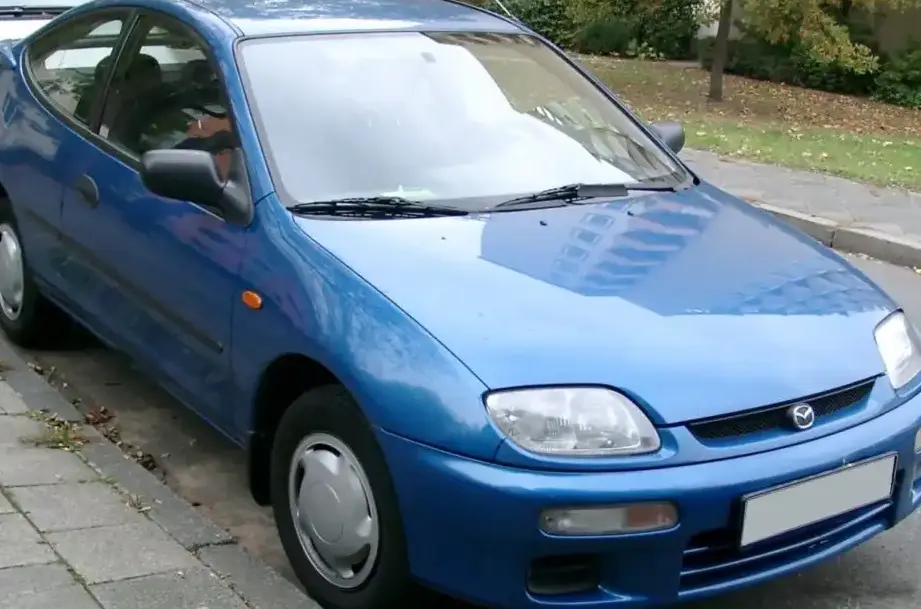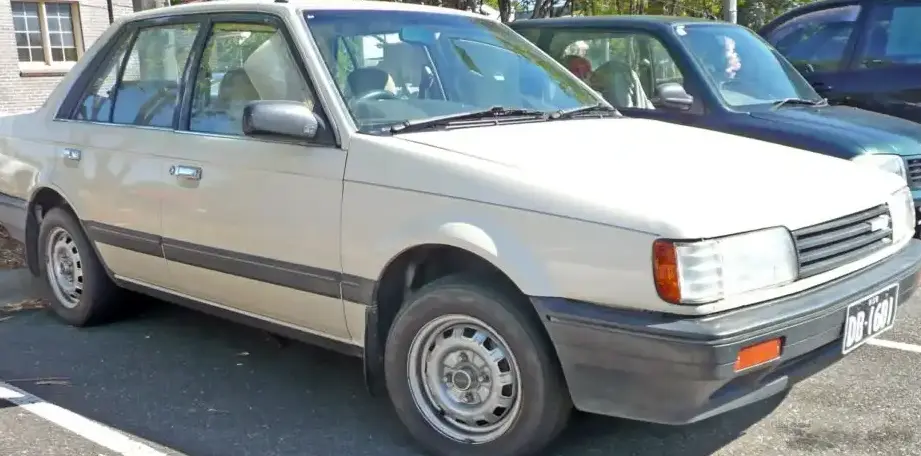
The Mazda 323 III (BF) 1.5 i Turbo, produced between 1985 and 1989, represented a significant step forward for Mazda’s compact offering. Falling within the third generation of the 323, designated the BF platform, this turbocharged variant aimed to provide a more spirited driving experience than the naturally aspirated models. Positioned as a mid-range performance option, it bridged the gap between the base models and any potential higher-performance trims offered within the BF series. The 323 III was a crucial model for Mazda, designed to compete in the increasingly competitive global compact car market, particularly against rivals from Japan, Europe, and the United States. It was sold in various body styles, including a sedan, hatchback, and coupe, with the 1.5 i Turbo primarily available as a sedan in many markets.
Technical Specifications
| Brand | Mazda |
| Model | 323 |
| Generation | 323 III (BF) |
| Type (Engine) | 1.5 i Turbo (115 Hp) |
| Start of production | 1985 |
| End of production | 1989 |
| Powertrain Architecture | Internal Combustion engine |
| Body type | Sedan |
| Fuel Type | Petrol (Gasoline) |
| Power | 115 Hp |
| Engine aspiration | Turbocharger |
Powertrain & Engine Architecture
The heart of the 323 III 1.5 i Turbo was its 1498cc inline-four cylinder engine. This engine, internally designated with various codes depending on the specific market, featured a single overhead camshaft (SOHC) valvetrain and a turbocharger. The turbocharger was a key element, significantly boosting power output compared to the naturally aspirated 1.5-liter engine. Fuel delivery was managed by a multi-point fuel injection system, a relatively advanced feature for its time, contributing to improved fuel efficiency and smoother operation. The turbocharger itself was typically a Garrett unit, although specific models varied. The engine’s compression ratio was moderately reduced compared to the naturally aspirated version to accommodate the increased pressures from the turbocharger, preventing pre-ignition. While specific transmission options varied by region, the 1.5 i Turbo was commonly paired with either a five-speed manual transmission or a four-speed automatic transmission. The automatic transmission, while offering convenience, was geared more towards comfortable cruising than outright performance.
Driving Characteristics
The 1.5 i Turbo offered a noticeable performance upgrade over the standard 323 III models. The turbocharger provided a surge of power in the mid-range, making overtaking maneuvers and highway merging considerably easier. However, turbo lag was present, a common characteristic of turbochargers of that era. Drivers needed to be mindful of this lag, anticipating throttle response. The four-speed automatic transmission, while smooth, did detract somewhat from the engine’s potential. Gear ratios were spaced to prioritize fuel economy and drivability, rather than maximizing acceleration. Compared to the five-speed manual, the automatic version felt less engaging and slightly slower. The suspension, while tuned for comfort, provided adequate handling, although it wasn’t particularly sporty. The car felt stable and predictable, but lacked the sharp responsiveness of some of its rivals. The power-to-weight ratio, while improved by the turbocharger, wasn’t exceptional, resulting in a 0-60 mph time estimated around 9-10 seconds.
Equipment & Trim Levels
The 323 III 1.5 i Turbo typically came with a reasonable level of standard equipment for its price point. This included features such as power steering, a basic audio system (often a cassette player), and cloth upholstery. Air conditioning was frequently an optional extra, as were power windows and central locking. Interior trim levels varied depending on the market, but generally featured a functional and durable design. The dashboard layout was straightforward and easy to use, with clearly marked gauges and controls. Higher trim levels might have included upgraded upholstery, additional soundproofing, and alloy wheels. The exterior styling was relatively conservative, in line with the design trends of the mid-1980s, with a focus on practicality and aerodynamics. The 1.5 i Turbo often featured subtle styling cues to differentiate it from the base models, such as a small rear spoiler or unique wheel covers.
Chassis & Braking
The 323 III utilized a front-engine, front-wheel-drive layout. The suspension consisted of MacPherson struts at the front and a torsion beam axle at the rear. This setup provided a good balance between ride comfort and handling. Braking systems varied depending on the market and trim level. Base models typically featured drum brakes on the rear wheels, while the 1.5 i Turbo often came equipped with disc brakes all around, providing improved stopping power. The braking system was generally adequate for the car’s performance, but lacked the sophistication of more modern systems. Stabilizer bars were fitted to both the front and rear axles to reduce body roll during cornering. Steering was unassisted in some markets, while power steering was standard or optional in others. The chassis was relatively lightweight, contributing to the car’s overall agility.
Market Reception & Comparison
The Mazda 323 III 1.5 i Turbo was generally well-received by automotive critics. It was praised for its responsive engine, comfortable ride, and reasonable price. However, some critics noted the presence of turbo lag and the limitations of the four-speed automatic transmission. Compared to its rivals, such as the Toyota Corolla and Honda Civic, the 323 III offered a more sporty driving experience, but lacked the same level of refinement. The 1.5 i Turbo’s fuel economy was comparable to other turbocharged cars of the era, typically achieving around 25-30 mpg in mixed driving conditions. Reliability was generally good, although the turbocharger did add a potential point of failure. Compared to the naturally aspirated 323 models, the 1.5 i Turbo required more frequent maintenance and was more susceptible to issues related to the turbocharger system.
Legacy
The Mazda 323 III 1.5 i Turbo holds a modest but respected place in automotive history. It demonstrated Mazda’s willingness to experiment with forced induction in the compact car segment. Today, well-maintained examples are becoming increasingly sought after by enthusiasts and collectors. The powertrain, while not particularly powerful by modern standards, is relatively durable and can provide years of reliable service with proper maintenance. The availability of spare parts is becoming more limited, but many components are still obtainable. The 1.5 i Turbo represents a snapshot of 1980s automotive technology, offering a unique blend of performance, practicality, and affordability. Its legacy lies in its contribution to Mazda’s reputation for building fun-to-drive and reliable cars.