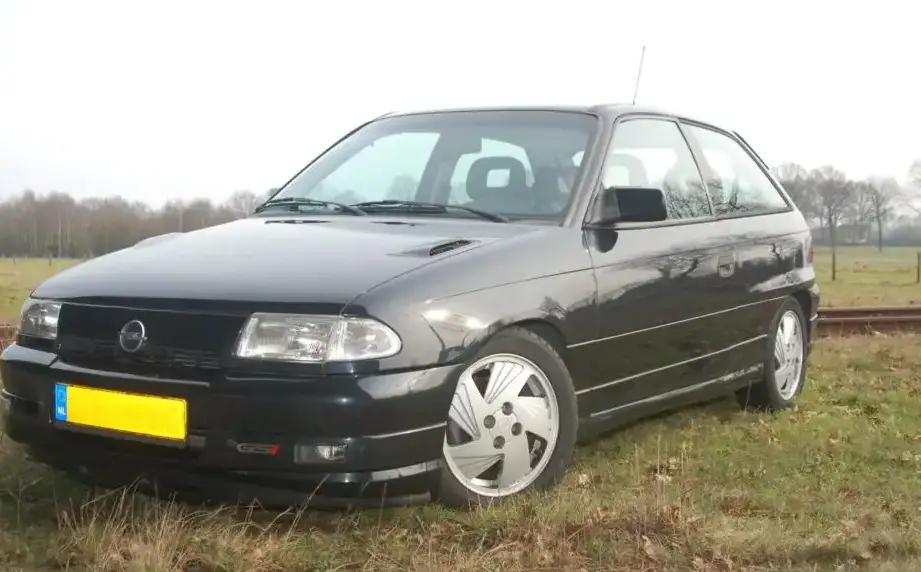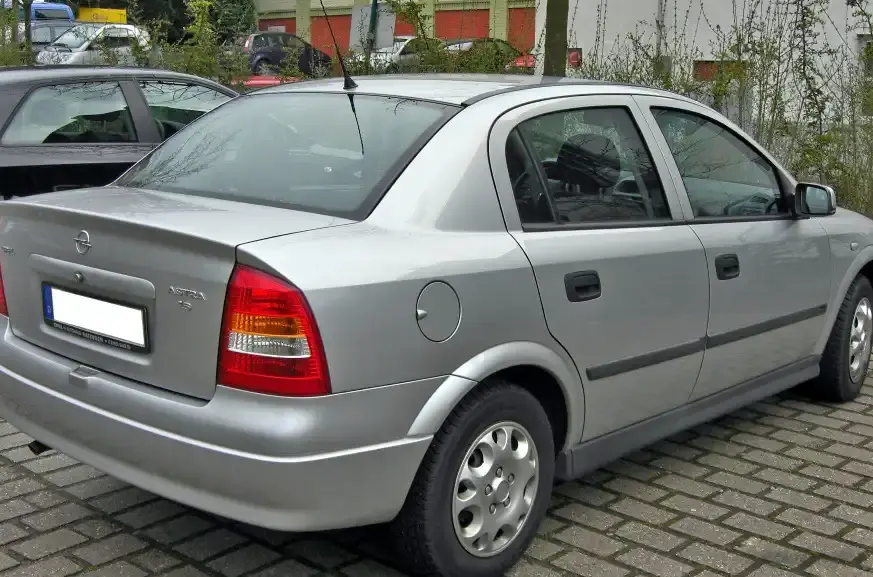
The Opel Astra G Classic 1.8i 16V, produced from July 2000 to February 2004, represented a significant iteration within the Astra G generation. Positioned as a mainstream offering within the range, this variant aimed to balance performance with affordability, primarily targeting family buyers and commuters. It was a key model in the European market, offering a practical and relatively efficient sedan option. The “Classic” designation denoted a continuation of the G platform after the introduction of the more modern Astra H, offering a lower-cost alternative. This model was built on the GM T-platform (also known as the 1HX0/A3 platform), shared with other vehicles like the Zafira and Vectra.
Technical Specifications
| Brand | Opel |
| Model | Astra |
| Generation | Astra G Classic |
| Type (Engine) | 1.8i 16V (125 Hp) |
| Start of production | July, 2000 |
| End of production | February, 2004 |
| Powertrain Architecture | Internal Combustion engine |
| Body type | Sedan |
| Seats | 5 |
| Doors | 4 |
| Fuel consumption (urban) | 11 l/100 km (21.4 US mpg, 25.7 UK mpg, 9.1 km/l) |
| Fuel consumption (extra urban) | 6 l/100 km (39.2 US mpg, 47.1 UK mpg, 16.7 km/l) |
| Fuel consumption (combined) | 7.8 l/100 km (30.2 US mpg, 36.2 UK mpg, 12.8 km/l) |
| CO2 emissions | 190 g/km |
| Fuel Type | Petrol (Gasoline) |
| Acceleration 0 – 100 km/h | 9.5 sec |
| Acceleration 0 – 62 mph | 9.5 sec |
| Acceleration 0 – 60 mph | 9 sec |
| Maximum speed | 205 km/h (127.38 mph) |
| Emission standard | Euro 3 |
| Weight-to-power ratio | 9.3 kg/Hp, 107.8 Hp/tonne |
| Weight-to-torque ratio | 6.8 kg/Nm, 146.6 Nm/tonne |
| Power | 125 Hp @ 5600 rpm |
| Power per litre | 69.6 Hp/l |
| Torque | 170 Nm @ 3800 rpm (125.39 lb.-ft. @ 3800 rpm) |
| Engine layout | Front, Transverse |
| Engine Model/Code | Z18XE |
| Engine displacement | 1796 cm3 (109.6 cu. in.) |
| Number of cylinders | 4 |
| Engine configuration | Inline |
| Cylinder Bore | 80.5 mm (3.17 in.) |
| Piston Stroke | 88.2 mm (3.47 in.) |
| Compression ratio | 10.5:1 |
| Number of valves per cylinder | 4 |
| Fuel injection system | Multi-port manifold injection |
| Engine aspiration | Naturally aspirated engine |
| Valvetrain | DOHC |
| Engine oil capacity | 4.25 l (4.49 US qt | 3.74 UK qt) |
| Coolant | 6.3 l (6.66 US qt | 5.54 UK qt) |
| Kerb Weight | 1160 kg (2557.36 lbs.) |
| Max. weight | 1680 kg (3703.77 lbs.) |
| Max load | 520 kg (1146.4 lbs.) |
| Trunk (boot) space – minimum | 460 l (16.24 cu. ft.) |
| Fuel tank capacity | 52 l (13.74 US gal | 11.44 UK gal) |
| Max. roof load | 100 kg (220.46 lbs.) |
| Permitted trailer load with brakes (12%) | 1300 kg (2866.01 lbs.) |
| Permitted trailer load without brakes | 605 kg (1333.8 lbs.) |
| Permitted towbar download | 75 kg (165.35 lbs.) |
| Length | 4252 mm (167.4 in.) |
| Width | 1709 mm (67.28 in.) |
| Width including mirrors | 1967 mm (77.44 in.) |
| Height | 1425 mm (56.1 in.) |
| Wheelbase | 2606 mm (102.6 in.) |
| Front track | 1464 mm (57.64 in.) |
| Rear (Back) track | 1452 mm (57.17 in.) |
| Front overhang | 791 mm (31.14 in.) |
| Rear overhang | 855 mm (33.66 in.) |
| Ride height (ground clearance) | 130 mm (5.12 in.) |
| Drag coefficient (Cd) | 0.29 |
| Minimum turning circle (turning diameter) | 10.8 m (35.43 ft.) |
| Drivetrain Architecture | The Internal combustion engine (ICE) drives the front wheels of the vehicle. |
| Drive wheel | Front wheel drive |
| Number of gears and type of gearbox | 5 gears, manual transmission |
| Front suspension | Independent, type McPherson with coil spring and anti-roll bar |
| Rear suspension | Semi-independent, coil spring |
| Front brakes | Ventilated discs |
| Rear brakes | Disc |
| Assisting systems | ABS (Anti-lock braking system) |
| Steering type | Steering rack and pinion |
| Power steering | Hydraulic Steering |
| Tires size | 195/60 R15 |
| Wheel rims size | 6.5J x 15 |
Powertrain & Engine Architecture
The heart of the Astra G Classic 1.8i 16V is the Z18XE engine, a 1.8-liter inline-four cylinder gasoline engine. This engine belongs to the Opel/Vauxhall Ecotec family, known for its relatively lightweight construction and focus on fuel efficiency. The Z18XE features a dual overhead camshaft (DOHC) valvetrain with four valves per cylinder, contributing to its improved breathing and power output. Fuel delivery is managed by a multi-port fuel injection system, providing precise fuel metering for optimal combustion. The engine produces 125 horsepower at 5600 rpm and 170 Nm (125 lb-ft) of torque at 3800 rpm. The engine’s design prioritized smooth operation and reasonable power delivery over outright performance. The standard transmission was a five-speed manual, but a four-speed automatic transmission was also offered, impacting the driving experience as detailed below.
Driving Characteristics
The 1.8i 16V with the manual transmission offered a reasonably engaging driving experience. Acceleration from 0-60 mph took around 9 seconds, making it competitive within its class. The automatic transmission, however, noticeably dulled performance. The four-speed automatic lacked the responsiveness of a modern gearbox, and the gear ratios were spaced to prioritize fuel economy over acceleration. This resulted in a slower 0-60 mph time of around 9.5 seconds. In everyday driving, the automatic provided convenience, but overtaking maneuvers required more planning. The engine itself was relatively quiet and refined, offering a comfortable cruising experience. The suspension, tuned for comfort, provided a compliant ride, although it wasn’t particularly sporty.
Equipment & Trim Levels
The Astra G Classic 1.8i 16V typically came equipped with features considered standard for a family sedan of its time. This included power steering, central locking, electric front windows, and an adjustable steering column. Higher trim levels, such as the “Comfort” or “Elegance” packages, added features like air conditioning, alloy wheels, a CD player, and upgraded interior trim. Interior upholstery was typically cloth, with options for upgraded materials on higher trims. Safety features included ABS brakes and driver and passenger airbags.
Chassis & Braking
The Astra G Classic utilized a McPherson strut front suspension and a semi-independent torsion beam rear suspension. This setup provided a good balance between ride comfort and handling. The front brakes were ventilated discs, offering good stopping power, while the rear brakes were solid discs. The steering was a hydraulic rack and pinion system, providing precise and responsive steering feel. The car’s relatively lightweight construction contributed to its nimble handling characteristics.
Market Reception & Comparison
The Astra G Classic 1.8i 16V was generally well-received by automotive critics as a practical and affordable family car. However, the automatic transmission was often criticized for its lack of responsiveness and impact on fuel economy. Compared to the more powerful 1.8i 16V with a manual transmission, the automatic version offered less engaging performance. The diesel variants, such as the 1.7 TDI, offered superior fuel economy but lacked the refinement of the gasoline engine. The 1.8i 16V positioned itself as a middle-ground option, appealing to buyers who prioritized comfort and convenience over outright performance.
Legacy
The Z18XE engine, while not known for being exceptionally durable, proved to be reasonably reliable with proper maintenance. Common issues included oil leaks and occasional sensor failures. The four-speed automatic transmission, however, was more prone to issues, particularly with age and high mileage. Today, the Astra G Classic 1.8i 16V can be found as an affordable used car, appealing to budget-conscious buyers. Parts availability is generally good, and the car’s relatively simple mechanical design makes it relatively easy to maintain. While not a collector’s item, it remains a practical and dependable option for those seeking a classic European sedan.