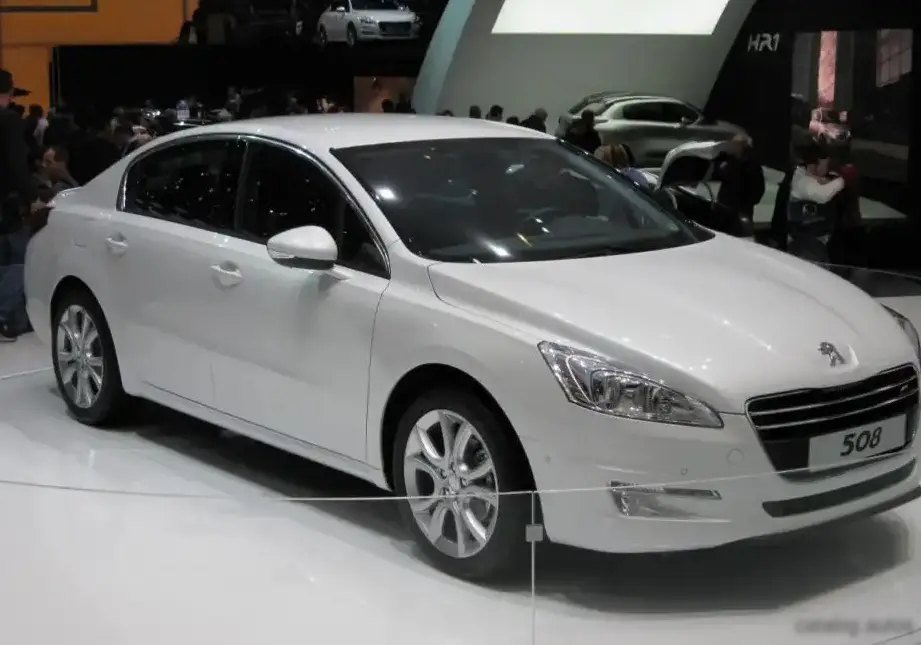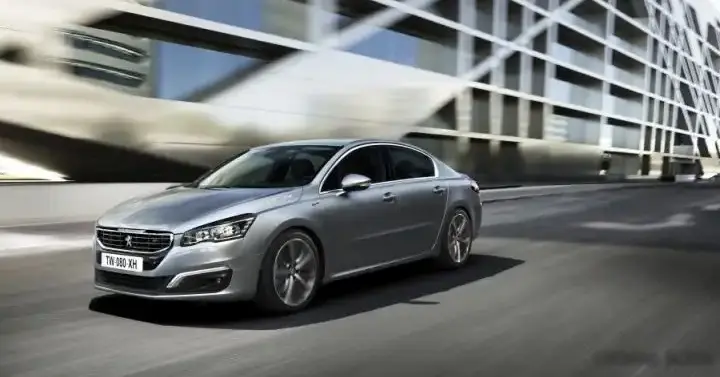
The Peugeot 508 I (Phase II), specifically the 1.6 e-HDi 115 horsepower variant with a manual transmission, was a key model in Peugeot’s lineup from 2014 to 2015. Positioned as an entry-level to mid-range offering within the 508 range, it aimed to provide a balance of fuel efficiency, reasonable performance, and affordability. This iteration of the 508, a large family car, represented a significant refresh of the original model launched in 2010, incorporating styling updates and revised engine options to remain competitive in the European market. The 508 competed directly with vehicles like the Ford Mondeo, Volkswagen Passat, and Opel/Vauxhall Insignia.
Technical Specifications
| Brand | Peugeot |
| Model | 508 |
| Generation | 508 I (Phase II, 2014) |
| Type (Engine) | 1.6 e-HDi (115 Hp) FAP |
| Start of production | 2014 |
| End of production | 2015 |
| Powertrain Architecture | Internal Combustion engine |
| Body type | Sedan |
| Seats | 5 |
| Doors | 4 |
| Fuel consumption (urban) | 5 l/100 km (47 US mpg, 56.5 UK mpg, 20 km/l) |
| Fuel consumption (extra urban) | 3.6 l/100 km (65.3 US mpg, 78.5 UK mpg, 27.8 km/l) |
| Fuel consumption (combined) | 4.1 l/100 km (57.4 US mpg, 68.9 UK mpg, 24.4 km/l) |
| CO2 emissions | 109 g/km |
| Fuel Type | Diesel |
| Acceleration 0 – 100 km/h | 11.3 sec |
| Acceleration 0 – 62 mph | 11.3 sec |
| Acceleration 0 – 60 mph | 10.7 sec |
| Maximum speed | 200 km/h (124.27 mph) |
| Emission standard | Euro 5 |
| Weight-to-power ratio | 12.3 kg/Hp, 81.6 Hp/tonne |
| Weight-to-torque ratio | 5.6 kg/Nm, 180.1 Nm/tonne |
| Power | 115 Hp @ 3600 rpm |
| Power per litre | 73.7 Hp/l |
| Torque | 254 Nm @ 1500-3000 rpm (187.34 lb.-ft. @ 1500-3000 rpm) |
| Engine layout | Front, Transverse |
| Engine Model/Code | 9HL DV6C |
| Engine displacement | 1560 cm3 (95.2 cu. in.) |
| Number of cylinders | 4 |
| Engine configuration | Inline |
| Number of valves per cylinder | 2 |
| Fuel injection system | Diesel Commonrail |
| Engine aspiration | Turbocharger, Intercooler |
| Engine oil capacity | 3.75 l (3.96 US qt, 3.3 UK qt) |
| Coolant capacity | 6 l (6.34 US qt, 5.28 UK qt) |
| Kerb Weight | 1410 kg (3108.52 lbs) |
| Max. weight | 2005 kg (4420.27 lbs) |
| Max load | 595 kg (1311.75 lbs) |
| Trunk (boot) space (minimum) | 473 l (16.7 cu. ft.) |
| Fuel tank capacity | 72 l (19.02 US gal, 15.84 UK gal) |
| Length | 4830 mm (190.16 in) |
| Width | 1828 mm (71.97 in) |
| Height | 1456 mm (57.32 in) |
| Wheelbase | 2817 mm (110.91 in) |
| Front track | 1579 mm (62.17 in) |
| Rear track | 1552 mm (61.1 in) |
| Ride height (ground clearance) | 146 mm (5.75 in) |
| Minimum turning circle | 12.2 m (40.03 ft) |
| Drivetrain Architecture | Front wheel drive |
| Number of gears | 5 |
| Gearbox type | Manual transmission |
| Front suspension | Independent, McPherson with coil spring and anti-roll bar |
| Rear suspension | Independent multi-link suspension |
| Front brakes | Ventilated discs |
| Rear brakes | Disc |
| Assisting systems | ABS (Anti-lock braking system) |
| Steering type | Steering rack and pinion |
| Tires size | 215/60 R16; 215/55 R17 |
| Wheel rims size | 16; 17 |
Powertrain & Engine Architecture
The heart of this 508 variant is the 9HL DV6C engine, a 1.6-liter inline-four cylinder diesel. This engine is part of the DV6 family, a widely used engine in PSA Group (Peugeot-Citroën) vehicles. The “e-HDi” designation signifies the inclusion of Stop & Start technology for improved fuel economy. The engine utilizes a common rail direct injection system, delivering fuel at very high pressure for efficient combustion. A turbocharger with an intercooler is employed to boost power output, providing 115 horsepower at 3600 rpm and a respectable 254 Nm (187 lb-ft) of torque between 1500 and 3000 rpm. The engine features two valves per cylinder and is known for its relatively simple construction, contributing to its potential for long-term reliability. The 5-speed manual transmission was the standard offering, providing a direct connection between the engine and the front wheels.
Driving Characteristics
The 1.6 e-HDi 115 hp 508 offered a comfortable, rather than sporty, driving experience. Acceleration from 0-60 mph took around 10.7 seconds, making it adequate for everyday driving but not particularly quick. The engine’s torque delivery was its strong suit, providing sufficient pulling power for overtaking and cruising on highways. The manual transmission allowed for driver control, but the gear ratios were tuned for fuel efficiency rather than performance. Compared to the more powerful 2.0-liter HDi variants, this engine felt noticeably less responsive, especially at higher speeds. However, it offered a significant improvement in fuel economy, making it a popular choice for drivers prioritizing efficiency.
Equipment & Trim Levels
The 1.6 e-HDi 115 hp model typically came equipped with a reasonable level of standard features. These included air conditioning, electric front windows, a basic audio system with USB connectivity, and ABS brakes. Higher trim levels, such as Allure or Feline, added features like alloy wheels, automatic headlights and wipers, a more advanced infotainment system, and parking sensors. Interior upholstery was typically cloth, with options for leather upgrades on higher trims. Dashboard design was functional and modern for its time, with a focus on ergonomics. Optional extras included a panoramic sunroof, navigation system, and a premium sound system.
Chassis & Braking
The 508 I featured a McPherson strut front suspension and a multi-link rear suspension, providing a comfortable ride quality. The suspension was tuned to prioritize comfort over handling sharpness. Front brakes were ventilated discs, while rear brakes were solid discs. ABS (Anti-lock Braking System) was standard, enhancing safety. The 1.6 e-HDi models generally had a slightly softer suspension setup compared to the higher-powered variants to accommodate the lower weight and power output. Stabilizer bars were fitted front and rear to reduce body roll during cornering.
Market Reception & Comparison
The Peugeot 508 1.6 e-HDi was generally well-received by critics for its fuel efficiency and comfortable ride. However, some reviewers found the engine to be underpowered, particularly when fully loaded or tackling steep hills. Compared to the 2.0-liter HDi models, the 1.6 e-HDi offered significantly better fuel economy – around 4.1 l/100km combined – but at the expense of performance. It was considered a more practical and economical choice for urban commuters and long-distance drivers who didn’t require the extra power of the larger engines. Reliability reports were generally positive, with the DV6 engine proving to be relatively robust.
Legacy
The 1.6 e-HDi engine became a mainstay in Peugeot and Citroën vehicles for several years. While the 508 I has been replaced by subsequent generations, the 1.6 e-HDi variant remains a relatively common sight on the used car market. The engine is known for its fuel efficiency and reasonable reliability, although potential buyers should be aware of the possibility of diesel particulate filter (DPF) issues, particularly if the vehicle has primarily been used for short journeys. Overall, the 508 1.6 e-HDi represents a practical and economical choice for those seeking a comfortable and fuel-efficient family car.