
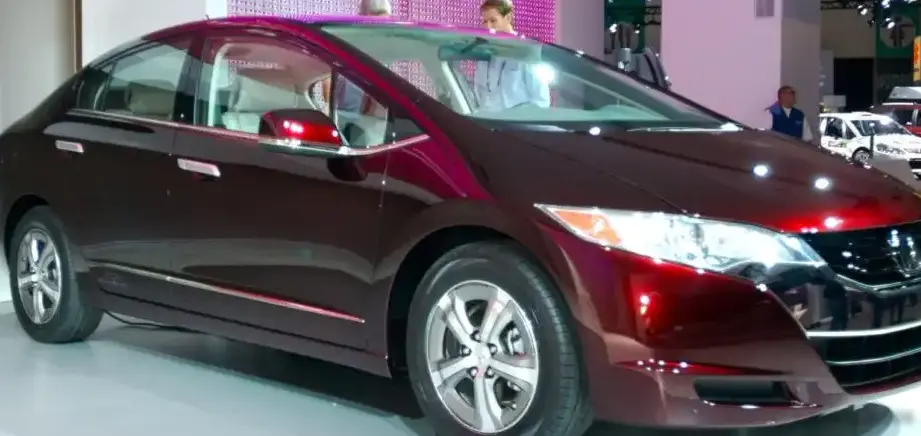
The Honda FCX Clarity, produced from 2008 to 2014, represented Honda’s second generation of fuel cell vehicles, following the earlier FCX. This four-door sedan was a significant step forward in hydrogen fuel cell technology, designed to showcase Honda’s commitment to alternative fuel vehicles. The FCX Clarity was never intended for mass-market production in the traditional sense; instead, it was primarily leased to customers in California and Japan, allowing Honda to gather real-world data and refine the technology. The 134 horsepower variant, paired with a Continuously Variable Transmission (CVT), was the sole powertrain offered throughout its production run. It was positioned as a technology demonstrator, not competing directly with conventional gasoline or hybrid vehicles, but rather establishing Honda as a leader in the emerging field of hydrogen-powered transportation.
Technical Specifications
| Brand | Honda |
| Model | Clarity |
| Generation | FCX Clarity |
| Type (Engine) | (134 Hp) CVT |
| Start of production | 2008 |
| End of production | 2014 |
| Powertrain Architecture | FCEV (Fuel Cell Electric Vehicle) |
| Body type | Sedan |
| Seats | 4 |
| Doors | 4 |
| Fuel Type | Hydrogen / electricity |
| Acceleration 0 – 60 mph | 9.7 sec |
| Maximum speed | 161 km/h (100.04 mph) |
| Weight-to-power ratio | 12.1 kg/Hp, 82.5 Hp/tonne |
| Weight-to-torque ratio | 6.3 kg/Nm, 157.5 Nm/tonne |
| Battery voltage | 288 V |
| Battery technology | Lithium-ion (Li-Ion) |
| Battery location | Under the rear seats |
| All-electric range | 460 km (285.83 mi) |
| Electric motor power | 134 Hp @ 12500 rpm |
| Electric motor Torque | 256 Nm (188.82 lb.-ft.) |
| Electric motor location | Front, Transverse |
| Electric motor type | Synchronous |
| System power | 134 Hp @ 12500 rpm |
| System torque | 256 Nm (188.82 lb.-ft.) |
| Kerb Weight | 1625 kg (3582.51 lbs) |
| Trunk (boot) space – maximum | 457 l (16.14 cu. ft.) |
| Length | 4835 mm (190.35 in) |
| Width including mirrors | 1845 mm (72.64 in) |
| Height | 1470 mm (57.87 in) |
| Wheelbase | 2800 mm (110.24 in) |
| Front track | 1580 mm (62.2 in) |
| Rear (Back) track | 1595 mm (62.8 in) |
| Minimum turning circle (turning diameter) | 10.8 m (35.43 ft) |
| Drivetrain Architecture | One electric motor drives the front wheels |
| Drive wheel | Front wheel drive |
| Number of gears and type of gearbox | automatic transmission CVT |
| Front suspension | Double wishbone |
| Rear suspension | Independent multi-link suspension |
| Front brakes | Ventilated discs |
| Rear brakes | Disc |
| Assisting systems | ABS (Anti-lock braking system) |
| Steering type | Steering rack and pinion |
| Power steering | Electric Steering |
Powertrain & Engine Architecture
The Honda FCX Clarity’s powertrain is fundamentally different from internal combustion engine vehicles. It utilizes a fuel cell stack, which combines hydrogen gas with oxygen from the air to produce electricity, with water as the only emission. This electricity powers a 134 horsepower synchronous electric motor located transversely at the front of the vehicle. The fuel cell stack itself is a sophisticated assembly of hundreds of individual fuel cells. The Clarity employed a stacked configuration, improving efficiency and durability compared to earlier fuel cell designs. A lithium-ion battery pack, positioned under the rear seats, provides supplemental power during acceleration and acts as a buffer for regenerative braking. The battery’s capacity is relatively small, as it’s not the primary energy source. The CVT transmission was chosen for its smooth, seamless power delivery, optimizing efficiency and contributing to a quiet driving experience. The fuel injection system, in this case, manages the flow of hydrogen to the fuel cell stack, precisely controlling the amount of fuel needed based on driving conditions.
Driving Characteristics
The FCX Clarity offered a unique driving experience. Acceleration from 0 to 60 mph took approximately 9.7 seconds, which was comparable to some small gasoline-powered cars of the era, but not particularly sporty. The CVT transmission contributed to a linear, almost effortless acceleration feel. The lack of engine noise was striking, creating a very quiet cabin. The car felt well-balanced, thanks to the low center of gravity afforded by the battery pack’s placement. Compared to a manual transmission version (which wasn’t offered), the CVT eliminated any shift shock and provided a smoother ride. Compared to potential future, higher-output fuel cell vehicles, the 134 hp variant prioritized efficiency and range over outright performance. The CVT’s gear ratios were optimized for fuel economy, rather than aggressive acceleration.
Equipment & Trim Levels
Given its role as a technology demonstrator, the FCX Clarity was relatively well-equipped. Standard features included automatic climate control, power windows and locks, a navigation system, and a premium audio system. Interior upholstery was typically a combination of cloth and synthetic leather. The dashboard design was modern and functional, with a focus on displaying information related to the fuel cell system’s performance. Optional extras were limited, reflecting the car’s specialized nature. Available options included a voice-activated control system and upgraded audio components. The interior was designed to be comfortable and practical, rather than luxurious.
Chassis & Braking
The FCX Clarity utilized a front-wheel-drive layout. The front suspension consisted of a double wishbone design, providing good handling and ride comfort. The rear suspension employed an independent multi-link setup, further enhancing ride quality and stability. The braking system featured ventilated discs at the front and solid discs at the rear, providing adequate stopping power. An Anti-lock Braking System (ABS) was standard. The steering system was a rack and pinion type with electric power assistance, offering precise and responsive steering feel. The chassis was engineered to accommodate the weight and packaging requirements of the fuel cell system without compromising handling or safety.
Market Reception & Comparison
The FCX Clarity received generally positive reviews from automotive critics, who praised its innovative technology and environmental credentials. However, its limited range, the scarcity of hydrogen refueling stations, and the high cost of hydrogen fuel were frequently cited as drawbacks. Compared to other fuel cell vehicles of the time, the Clarity offered a competitive range and a more refined driving experience. In terms of fuel economy, the Clarity achieved the equivalent of approximately 70 mpg in combined city/highway driving, but this figure was heavily dependent on driving style and hydrogen availability. Reliability was generally good, although the long-term durability of the fuel cell stack remained a concern. Compared to gasoline-powered vehicles, the Clarity offered zero tailpipe emissions, making it a significantly cleaner alternative.
Legacy
The Honda FCX Clarity played a crucial role in advancing fuel cell technology and raising awareness of hydrogen as a potential transportation fuel. While it didn’t achieve widespread commercial success, it provided valuable data and experience that informed the development of Honda’s subsequent fuel cell vehicles, such as the Clarity Fuel Cell (released in 2016). The powertrain, while complex, proved to be relatively reliable in real-world use. Today, the FCX Clarity is considered a pioneering vehicle in the history of alternative fuel technology. On the used car market, examples are rare and command a premium price, primarily due to their historical significance and technological uniqueness. The lessons learned from the FCX Clarity continue to influence the development of hydrogen-powered vehicles and the infrastructure needed to support them.
