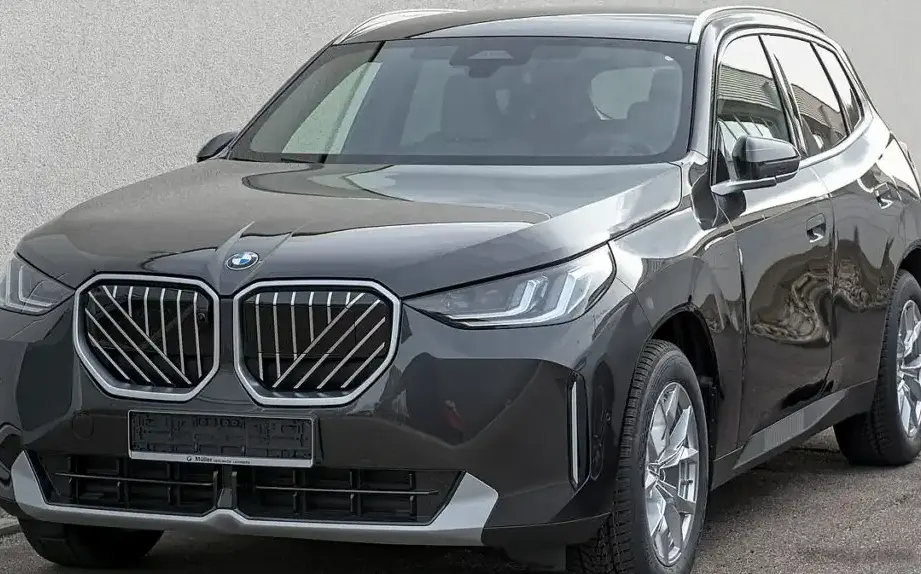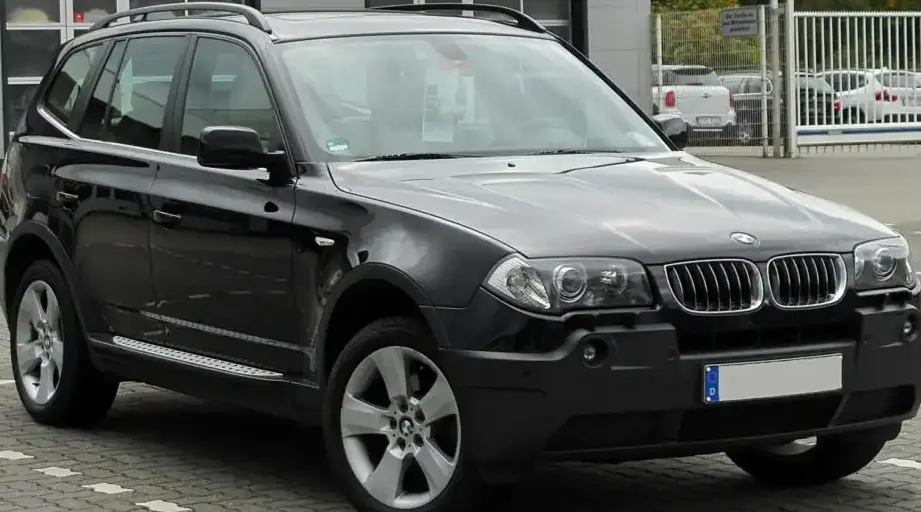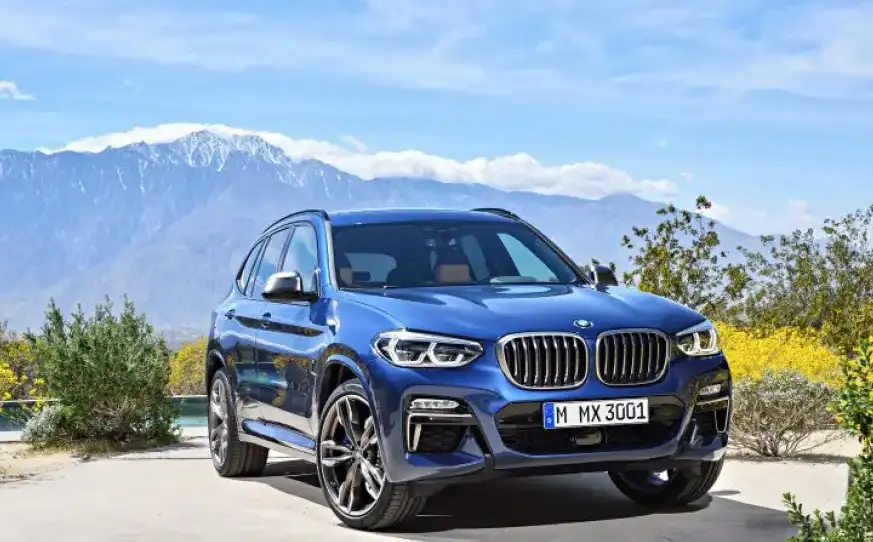
The BMW X3 G01 30e, a plug-in hybrid variant of the popular compact luxury SUV, was produced from December 2019 to June 2021. Positioned as a bridge between traditional internal combustion engine (ICE) X3 models and fully electric vehicles, the 30e offered a blend of performance, efficiency, and all-weather capability. It utilized BMW’s xDrive all-wheel-drive system and was part of the G01 generation, which represented the third iteration of the X3. The 30e aimed to appeal to buyers seeking a more environmentally conscious option without sacrificing the driving experience associated with the BMW brand.
Technical Specifications
| Brand | BMW |
| Model | X3 |
| Generation | X3 (G01) |
| Type | 30e (292 Hp) Plug-in Hybrid xDrive Steptronic |
| Start of production | December, 2019 |
| End of production | June, 2021 |
| Powertrain Architecture | PHEV (Plug-in Hybrid Electric Vehicle) |
| Body type | SAV |
| Seats | 5 |
| Doors | 5 |
| Fuel consumption (combined) | 2.1-2.4 l/100 km (112 – 98 US mpg, 134.5 – 117.7 UK mpg, 47.6 – 41.7 km/l) |
| CO2 emissions | 49-54 g/km |
| Fuel Type | Petrol / electricity |
| Acceleration 0 – 100 km/h | 6.1 sec |
| Acceleration 0 – 62 mph | 6.1 sec |
| Acceleration 0 – 60 mph | 5.8 sec |
| Maximum speed | 210 km/h (130.49 mph) |
| Emission standard | Euro 6d-TEMP |
| Weight-to-power ratio | 6.8 kg/Hp, 146.7 Hp/tonne |
| Weight-to-torque ratio | 4.7 kg/Nm, 211.1 Nm/tonne |
| Gross battery capacity | 12 kWh |
| Battery voltage | 354 V |
| Battery technology | Lithium-ion (Li-Ion) |
| Battery location | Under the rear seats |
| Recuperation output | 20 kW |
| All-electric range | 51-55 km (31.69 – 34.18 mi) |
| Average Energy consumption | 16.4-17.2 kWh/100 km (26.39 – 27.68 kWh/100 mi, 128 – 122 MPGe, 6.1 – 5.8 km/kWh, 3.8 – 3.6 mi/kWh) |
| Max speed (electric) | 135 km/h (83.89 mph) |
| Electric motor power | 109 Hp @ 3170 rpm (195.45 lb.-ft. @ 0-3170 rpm) |
| System power | 292 Hp |
| System torque | 420 Nm (309.78 lb.-ft.) |
| Engine Power | 184 Hp @ 5000-6500 rpm |
| Engine Torque | 300 Nm @ 1350-4000 rpm (221.27 lb.-ft. @ 1350-4000 rpm) |
| Engine layout | Front, Longitudinal |
| Engine Model/Code | B48B20A |
| Engine displacement | 1998 cm3 (121.93 cu. in.) |
| Number of cylinders | 4 |
| Engine configuration | Inline |
| Cylinder Bore | 82 mm (3.23 in.) |
| Piston Stroke | 94.6 mm (3.72 in.) |
| Compression ratio | 11:1 |
| Number of valves per cylinder | 4 |
| Fuel injection system | Direct injection |
| Engine aspiration | Twin-power turbo, Intercooler |
| Valvetrain | VALVETRONIC |
| Engine oil capacity | 5.25 l (5.55 US qt | 4.62 UK qt) |
| Coolant capacity | 11.2 l (11.83 US qt | 9.85 UK qt) |
| Kerb Weight | 1990 kg (4387.2 lbs.) |
| Max. weight | 2620 kg (5776.11 lbs.) |
| Max load | 630 kg (1388.91 lbs.) |
| Trunk (boot) space – minimum | 450 l (15.89 cu. ft.) |
| Trunk (boot) space – maximum | 1500 l (52.97 cu. ft.) |
| Fuel tank capacity | 50 l (13.21 US gal | 11 UK gal) |
| Max. roof load | 100 kg (220.46 lbs.) |
| Permitted trailer load with brakes (12%) | 2000 kg (4409.25 lbs.) |
| Permitted trailer load without brakes | 750 kg (1653.47 lbs.) |
| Permitted towbar download | 100 kg (220.46 lbs.) |
| Length | 4708 mm (185.35 in.) |
| Width | 1891 mm (74.45 in.) |
| Height | 1676 mm (65.98 in.) |
| Wheelbase | 2864 mm (112.76 in.) |
| Front track | 1620 mm (63.78 in.) |
| Rear track | 1636 mm (64.41 in.) |
| Ride height (ground clearance) | 204 mm (8.03 in.) |
| Drag coefficient (Cd) | 0.29 |
| Minimum turning circle | 12 m (39.37 ft.) |
| Approach angle | 25.6° |
| Departure angle | 22.8° |
| Ramp-over angle | 20° |
| Wading depth | 500 mm (19.69 in.) |
| Drivetrain Architecture | ICE and electric motor drive all four wheels in full electric or mixed mode. |
| Drive wheel | All wheel drive (4×4) |
| Number of gears | 8 |
| Gearbox type | automatic transmission Steptronic |
| Front suspension | Double wishbone |
| Rear suspension | Independent multi-link spring suspension with stabilizer |
| Front brakes | Ventilated discs |
| Rear brakes | Ventilated discs |
| Assisting systems | ABS (Anti-lock braking system) |
| Steering type | Steering rack and pinion |
| Power steering | Electric Steering |
| Tires size | 225/60 R18 104W XL |
| Wheel rims size | 7J x 18 |
INTRODUCTION
The BMW X3 G01 30e represented BMW’s foray into offering a plug-in hybrid option within its popular X3 lineup. Introduced in late 2019 and available through 2021, it combined a 2.0-liter turbocharged four-cylinder gasoline engine with an electric motor integrated into the eight-speed Steptronic automatic transmission. This configuration allowed for both all-electric driving for shorter distances and the combined power of both systems for longer journeys. The 30e was positioned as a mid-range offering, slotting between the base gasoline-powered X3 models and the higher-performance M40i variant.
Powertrain & Engine Architecture
At the heart of the X3 30e lies the BMW B48B20A 2.0-liter inline-four cylinder engine. This engine utilizes direct fuel injection and BMW’s Valvetronic technology for precise control of valve timing and lift, optimizing efficiency and power delivery. The engine produces 184 horsepower and 221 lb-ft of torque. Coupled with this is an electric motor, delivering 109 horsepower and 195 lb-ft of torque, integrated directly between the engine and the transmission. The combined system output is 292 horsepower and 309 lb-ft of torque. The 12 kWh lithium-ion battery pack is located under the rear seats, minimizing impact on cargo space. The Steptronic eight-speed automatic transmission is specifically tuned to work seamlessly with the electric motor, providing smooth and efficient gear changes. The electric motor draws power from the battery, and the vehicle can operate in various modes, including all-electric, hybrid, and sport, allowing the driver to prioritize efficiency or performance.
Driving Characteristics
The X3 30e offers a unique driving experience compared to its gasoline-only counterparts. In all-electric mode, the vehicle provides near-silent operation and instant torque, resulting in brisk acceleration. The electric motor’s torque is available from 0 rpm, providing a responsive feel. The combined output of the engine and motor delivers a 0-60 mph time of around 5.8 seconds, making it competitive with other performance-oriented SUVs. The eight-speed automatic transmission is well-matched to the powertrain, providing smooth shifts and efficient power delivery. While the added weight of the battery pack (approximately 300 lbs) does slightly impact handling compared to lighter X3 models, the xDrive all-wheel-drive system provides excellent traction and stability in various conditions. The hybrid system’s regenerative braking feature helps recapture energy during deceleration, further enhancing efficiency.
Equipment & Trim Levels
The X3 30e typically came well-equipped, reflecting its position as a premium vehicle. Standard features included BMW’s iDrive infotainment system with a touchscreen display, navigation, Apple CarPlay compatibility, leatherette upholstery, automatic climate control, and a suite of advanced driver-assistance systems such as lane departure warning and forward collision warning. Optional extras included premium leather upholstery, a panoramic sunroof, a Harman Kardon sound system, and adaptive cruise control. Trim levels were generally aligned with other X3 models, offering options for enhanced aesthetics and additional features. The 30e often included unique badging and interior accents to distinguish it from other X3 variants.
Chassis & Braking
The X3 30e utilizes a double-wishbone front suspension and an independent multi-link rear suspension, providing a comfortable and controlled ride. Stabilizer bars are fitted to both axles to minimize body roll during cornering. The braking system consists of ventilated discs on all four wheels, providing ample stopping power. The ABS (Anti-lock Braking System) and electronic stability control systems work in conjunction to enhance safety and stability. Due to the added weight of the battery pack, the suspension components were often slightly reinforced compared to standard X3 models to maintain optimal handling characteristics.
Market Reception & Comparison
The X3 30e was generally well-received by automotive critics, who praised its blend of performance, efficiency, and practicality. The all-electric range of 31-34 miles was considered adequate for daily commutes, while the combined hybrid system offered the flexibility of longer-distance travel. Compared to the gasoline-powered X3 30i, the 30e offered improved fuel economy and lower emissions. However, it came at a higher price point. Compared to the X3 M40i, the 30e offered less overall performance but a significantly better fuel economy. Some critics noted that the battery pack slightly reduced cargo space compared to non-hybrid X3 models.
Legacy
The BMW X3 30e served as an important stepping stone in BMW’s electrification strategy. It demonstrated the feasibility of integrating plug-in hybrid technology into a popular SUV model. While production was relatively short-lived, the 30e has established a reputation for reliability, with the powertrain proving to be generally robust. On the used car market, the X3 30e remains a desirable option for buyers seeking a fuel-efficient and technologically advanced luxury SUV. The battery pack’s longevity is a key consideration for potential buyers, but BMW’s battery warranty provides some peace of mind. The X3 30e paved the way for future BMW plug-in hybrid models and contributed to the growing acceptance of electric vehicles.