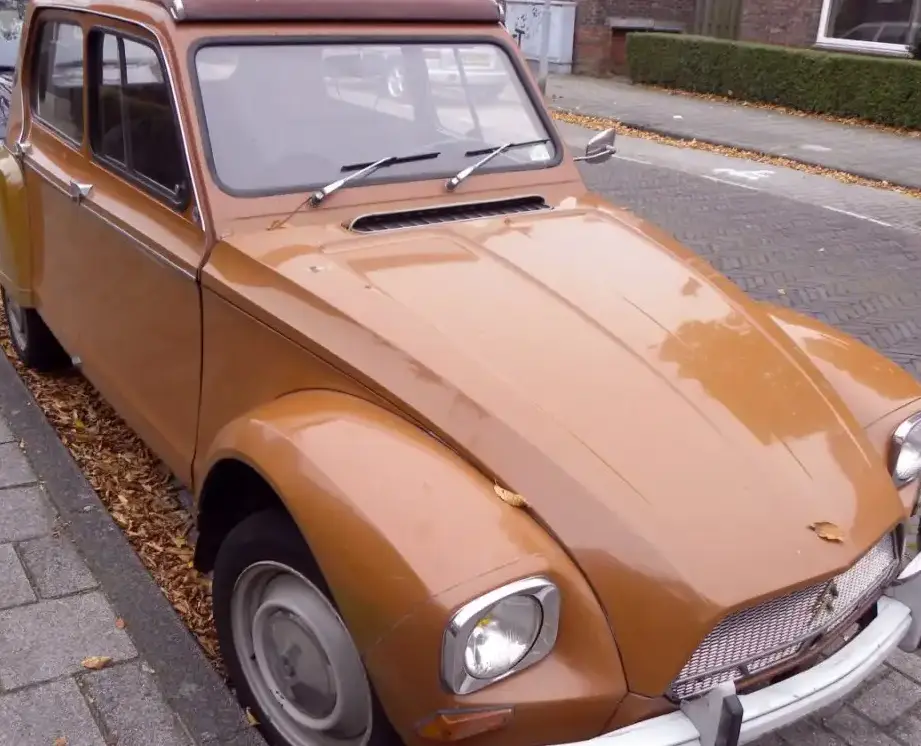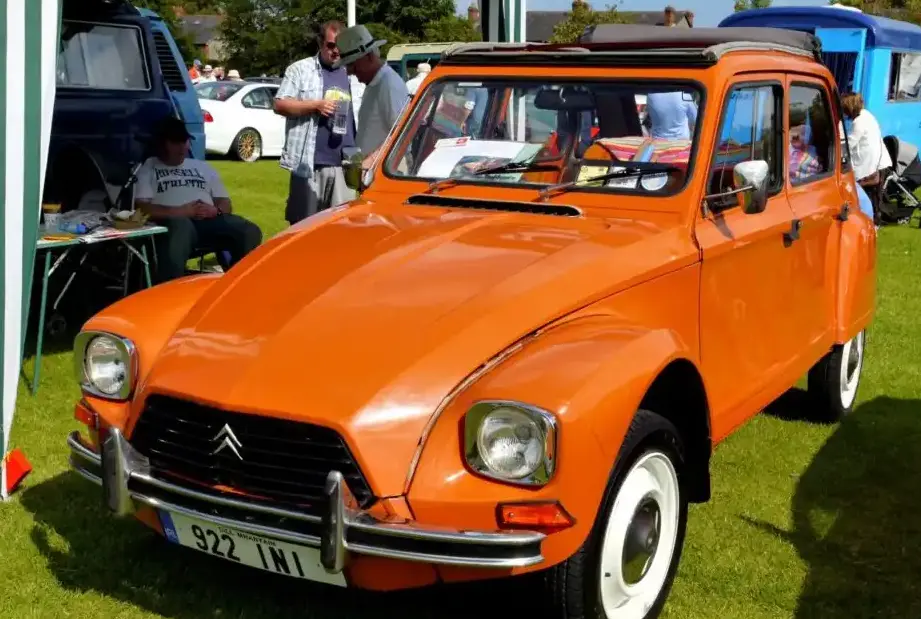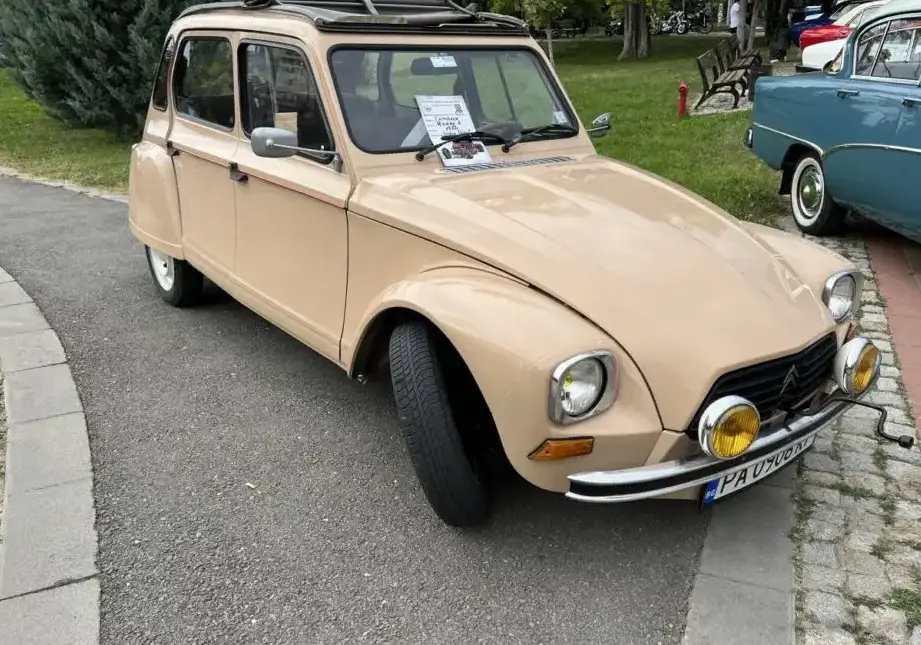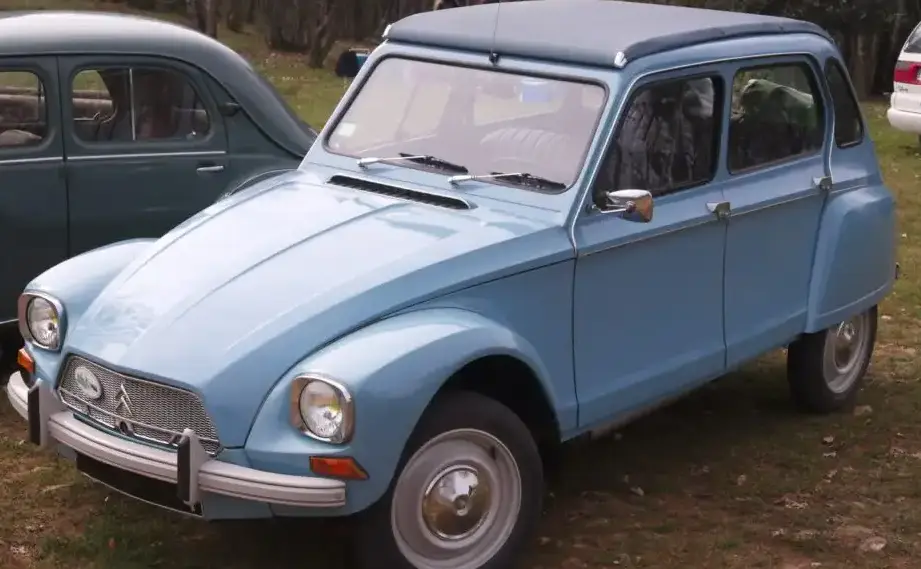
The Citroën Dyane I (Phase II) Dyane 4, produced between 1970 and 1974, represented an entry-level offering within the broader Dyane range. Positioned as a practical and economical city car, it served as a more affordable alternative to the Citroën Ami, sharing many of its mechanical components but offering a slightly more utilitarian and spacious interior. The Dyane itself was conceived as a replacement for the 2CV, though the 2CV continued in production alongside it for many years. The Dyane 4, with its modest 24 horsepower engine, was aimed at buyers prioritizing fuel efficiency and low running costs over outright performance. It was a popular choice in France and other European markets where small, economical cars were in high demand.
Technical Specifications
| Brand | Citroen |
| Model | Dyane |
| Generation | Dyane I (Phase II) |
| Type (Engine) | Dyane 4 (24 Hp) |
| Start of production | 1970 |
| End of production | 1974 |
| Powertrain Architecture | Internal Combustion engine |
| Body type | Sedan, Fastback |
| Seats | 4 |
| Doors | 5 |
| Fuel consumption (combined) | 5.4 l/100 km (43.6 US mpg, 52.3 UK mpg, 18.5 km/l) |
| Fuel Type | Petrol (Gasoline) |
| Maximum speed | 105 km/h (65.24 mph) |
| Weight-to-power ratio | 24.6 kg/Hp, 40.7 Hp/tonne |
| Weight-to-torque ratio | 19.7 kg/Nm, 50.8 Nm/tonne |
| Power | 24 Hp @ 6750 rpm |
| Power per litre | 55.2 Hp/l |
| Torque | 30 Nm @ 4000 rpm (22.13 lb.-ft. @ 4000 rpm) |
| Engine Model/Code | AYA2, A79/1 |
| Engine displacement | 435 cm3 (26.55 cu. in.) |
| Number of cylinders | 2 |
| Engine configuration | Boxer |
| Cylinder Bore | 68.5 mm (2.7 in.) |
| Piston Stroke | 59 mm (2.32 in.) |
| Compression ratio | 8.5:1 |
| Fuel injection system | Carburettor |
| Engine aspiration | Naturally aspirated engine |
| Engine oil capacity | 2.25 l (2.38 US qt | 1.98 UK qt) |
| Kerb Weight | 590 kg (1300.73 lbs.) |
| Max. weight | 925 kg (2039.28 lbs.) |
| Max load | 335 kg (738.55 lbs.) |
| Trunk (boot) space – minimum | 250 l (8.83 cu. ft.) |
| Trunk (boot) space – maximum | 1340 l (47.32 cu. ft.) |
| Fuel tank capacity | 20 l (5.28 US gal | 4.4 UK gal) |
| Length | 3870 mm (152.36 in.) |
| Width | 1500 mm (59.06 in.) |
| Height | 1540 mm (60.63 in.) |
| Wheelbase | 2400 mm (94.49 in.) |
| Front track | 1260 mm (49.61 in.) |
| Rear (Back) track | 1260 mm (49.61 in.) |
| Front overhang | 705 mm (27.76 in.) |
| Rear overhang | 765 mm (30.12 in.) |
| Ride height (ground clearance) | 155 mm (6.1 in.) |
| Drag coefficient (Cd) | 0.41 |
| Minimum turning circle (turning diameter) | 11 m (36.09 ft.) |
| Drivetrain Architecture | The Internal combustion engine (ICE) drives the front wheels of the vehicle. |
| Drive wheel | Front wheel drive |
| Number of gears and type of gearbox | 4 gears, manual transmission |
| Front brakes | Drum |
| Rear brakes | Drum |
| Steering type | Steering rack and pinion |
Powertrain & Engine Architecture
The Dyane 4 was powered by the Citroën AYA2 engine, a 435cc two-cylinder, air-cooled boxer engine. This engine, also known as the A79/1, was a derivative of the unit found in the 2CV, but with a slightly reduced compression ratio and different carburetor settings to prioritize fuel economy. The engine utilized a simple Solex carburetor for fuel delivery. The boxer configuration, with horizontally opposed cylinders, contributed to a low center of gravity, aiding in handling. The engine featured a single overhead camshaft operating two valves per cylinder. Power was transmitted to the front wheels via a four-speed manual transmission. This transmission was known for its long throws and somewhat agricultural feel, but was robust and reliable.
Driving Characteristics
The Dyane 4, with its 24 horsepower, was not a performance car. Acceleration was leisurely, and top speed was around 65 mph. However, the light weight of the vehicle (approximately 1300 lbs) meant that it felt reasonably sprightly in urban environments. The four-speed manual transmission required frequent shifting to maintain momentum, especially on hills. Compared to the more powerful Dyane 6 (with around 35 horsepower), the Dyane 4 felt significantly slower. The suspension, while simple, provided a surprisingly comfortable ride, absorbing bumps and imperfections in the road well. The steering was light and precise, making it easy to maneuver in tight spaces.
Equipment & Trim Levels
The Dyane 4 was a fairly basic vehicle, reflecting its position as the entry-level model. Standard equipment included cloth upholstery, a simple dashboard with basic instrumentation (speedometer, fuel gauge), and manually operated windows. Optional extras included a heated rear window, a radio, and upgraded upholstery. Interior trim was typically utilitarian, with hard-wearing materials designed for durability. The seats were relatively flat and offered limited support, but were adequate for short journeys.
Chassis & Braking
The Dyane utilized a torsion bar suspension system, a hallmark of Citroën engineering. This system provided a comfortable ride and good handling characteristics. The front suspension was independent, while the rear suspension was a trailing arm design. Braking was provided by drum brakes on all four wheels. The braking system was adequate for the vehicle’s performance, but lacked the stopping power of more modern cars. The steering was a rack and pinion system, providing precise control.
Market Reception & Comparison
The Dyane 4 was generally well-received as an affordable and practical city car. Critics praised its fuel efficiency, comfortable ride, and ease of parking. However, its lack of performance and basic interior were often noted. Compared to the Dyane 6, the Dyane 4 offered significantly less power and refinement, but at a lower price point. The Dyane 4 competed with other small European cars such as the Renault 4 and the Fiat 500. Its fuel economy was comparable to these rivals, but its ride quality was generally considered superior.
Legacy
The Citroën Dyane, including the Dyane 4 variant, remains a popular classic car among enthusiasts. The simple mechanical design and readily available parts make it relatively easy to maintain. The 435cc engine, while modest in output, is known for its reliability. Today, Dyane 4s in good condition are sought after by collectors and are often used for vintage rallies and events. While not a high-performance vehicle, the Dyane 4 represents a charming and practical example of 1970s French automotive engineering. Rust is a common issue with these vehicles, so finding a well-preserved example is crucial.