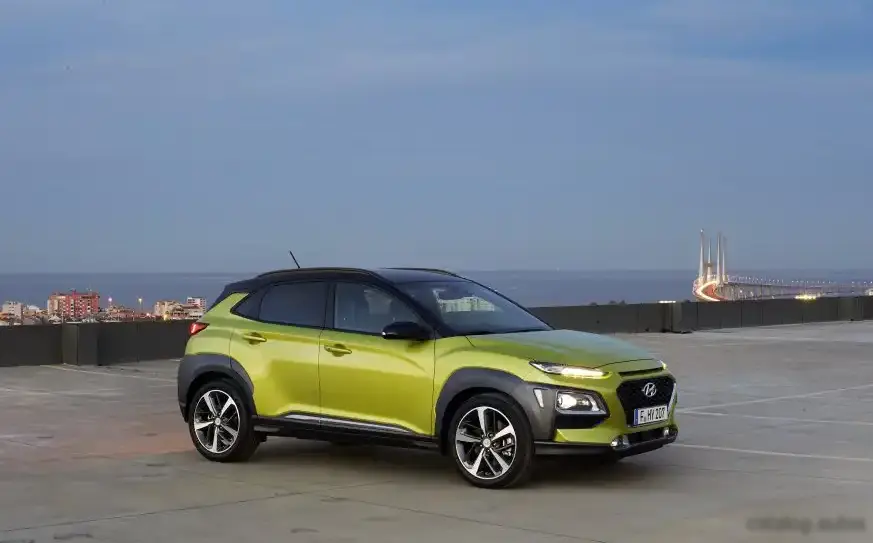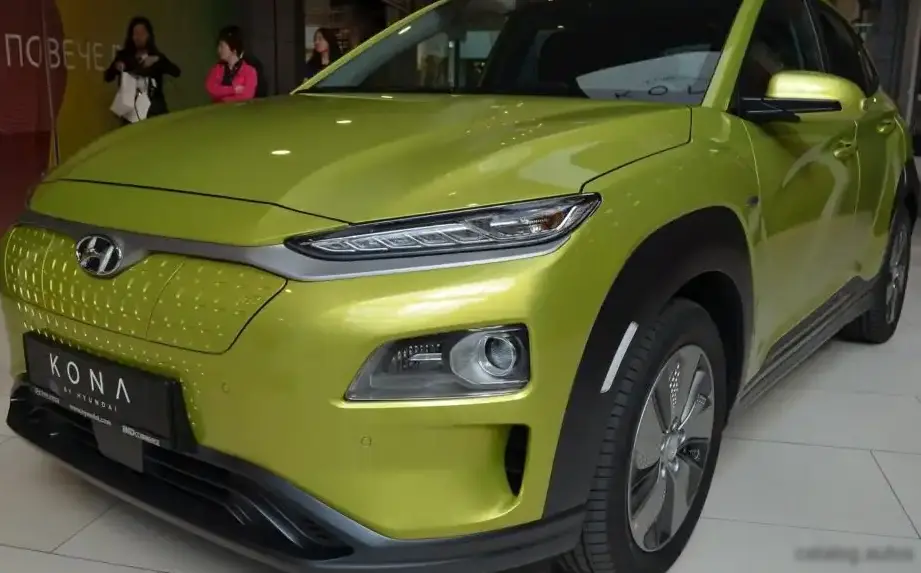
The Hyundai Kona I 42 kWh Electric, launched in 2018, represents Hyundai’s initial foray into the subcompact electric SUV market. Produced primarily for the European and Asian markets, with limited availability in North America, this variant served as the entry point into the Kona Electric lineup. It offered a compelling blend of practicality, affordability, and zero-emission driving. Production of this specific configuration concluded in December 2018, superseded by models with larger battery packs and increased range. The Kona I, built on Hyundai’s B-segment platform, aimed to attract buyers seeking a stylish and efficient urban vehicle.
Technical Specifications
| Brand | Hyundai |
| Model | Kona |
| Generation | Kona I |
| Type (Engine) | 42 kWh (136 Hp) Electric |
| Start of production | 2018 |
| End of production | December, 2018 |
| Powertrain Architecture | BEV (Electric Vehicle) |
| Body type | SUV |
| Seats | 5 |
| Doors | 5 |
| Fuel Type | Electricity |
| Acceleration 0 – 100 km/h | 9.7 sec |
| Acceleration 0 – 62 mph | 9.7 sec |
| Acceleration 0 – 60 mph | 9.2 sec |
| Maximum speed | 155 km/h (96.31 mph) |
| Weight-to-power ratio | 11.3 kg/Hp, 88.6 Hp/tonne |
| Weight-to-torque ratio | 3.9 kg/Nm, 257.3 Nm/tonne |
| Gross battery capacity | 42 kWh |
| Net (usable) battery capacity | 39.2 kWh |
| Battery voltage | 327 V |
| Battery technology | Lithium-polymer (LiPo) |
| Battery location | Below the floor |
| All-electric range (WLTP) | 312 km (193.87 mi) |
| Average Energy consumption (WLTP) | 13.9 kWh/100 km (22.37 kWh/100 mi) |
| MPGe | 151 |
| km/kWh | 7.2 |
| mi/kWh | 4.5 |
| Electric motor power | 136 Hp |
| Electric motor Torque | 395 Nm (291.34 lb.-ft.) |
| Electric motor model/code | EM16 |
| Electric motor location | Front axle, Transverse |
| System power | 136 Hp |
| System torque | 395 Nm (291.34 lb.-ft.) |
| Kerb Weight | 1535 kg (3384.1 lbs.) |
| Max. weight | 2020 kg (4453.34 lbs.) |
| Max load | 485 kg (1069.24 lbs.) |
| Trunk (boot) space – minimum | 332 l (11.72 cu. ft.) |
| Trunk (boot) space – maximum | 1114 l (39.34 cu. ft.) |
| Max. roof load | 80 kg (176.37 lbs.) |
| Length | 4180 mm (164.57 in.) |
| Width | 1800 mm (70.87 in.) |
| Width including mirrors | 2070 mm (81.5 in.) |
| Height | 1570 mm (61.81 in.) |
| Wheelbase | 2600 mm (102.36 in.) |
| Front track | 1564 mm (61.57 in.) |
| Rear (Back) track | 1575 mm (62.01 in.) |
| Front overhang | 860 mm (33.86 in.) |
| Rear overhang | 720 mm (28.35 in.) |
| Ride height (ground clearance) | 158 mm (6.22 in.) |
| Minimum turning circle | 10.6 m (34.78 ft.) |
| Drivetrain Architecture | One electric motor drives the front wheels. |
| Drive wheel | Front wheel drive |
| Number of gears | 1 |
| Gearbox type | Automatic transmission |
| Front suspension | Independent type McPherson |
| Rear suspension | Independent multi-link suspension |
| Front brakes | Ventilated discs |
| Rear brakes | Disc |
| Assisting systems | ABS (Anti-lock braking system) |
| Steering type | Steering rack and pinion |
| Power steering | Electric |
| Tires size | 215/55 R17 |
| Wheel rims size | 7J x 17 |
Powertrain & Engine Architecture
The Kona I 42 kWh Electric utilizes a permanent magnet synchronous motor (PMSM) producing 136 horsepower and 291 lb-ft of torque. The EM16 motor, positioned transversely at the front axle, drives the front wheels exclusively. Power is delivered through a single-speed automatic transmission, typical of most electric vehicles. The 42 kWh lithium-polymer battery pack is mounted under the floor, contributing to a low center of gravity and maximizing interior space. The battery employs active thermal management to maintain optimal operating temperatures. The vehicle features a standard onboard charger capable of accepting both AC and DC fast charging, allowing for relatively quick replenishment of the battery. The charging port location varies by market.
Driving Characteristics
The 42 kWh Kona Electric offers brisk acceleration for its class, achieving 0-60 mph in approximately 9.2 seconds. While not as quick as the larger-battery variants, the 136 hp motor provides sufficient power for everyday driving and highway merging. The single-speed transmission delivers smooth, linear acceleration. The car’s regenerative braking system allows for adjustable levels of deceleration, enhancing efficiency and extending range. Steering is light and precise, making it easy to maneuver in urban environments. The low center of gravity contributes to stable handling, although the suspension is tuned for comfort rather than outright sportiness.
Equipment & Trim Levels
The Kona I 42 kWh Electric typically came equipped with a respectable array of standard features. These included a 7-inch touchscreen infotainment system with Apple CarPlay and Android Auto compatibility, a rearview camera, automatic climate control, and a suite of safety features such as lane departure warning and forward collision avoidance assist. Interior upholstery was generally cloth, with options for leather available on higher trim levels. Available optional extras included a sunroof, heated front seats, and a premium audio system. Trim levels varied by market, but generally followed a progression from base to mid-range to fully equipped.
Chassis & Braking
The Kona I utilizes a front-wheel-drive configuration with an independent McPherson strut suspension at the front and an independent multi-link suspension at the rear. This setup provides a comfortable ride and decent handling characteristics. Front brakes are ventilated discs, while rear brakes are solid discs. The electric power steering system offers light and responsive steering feel. The vehicle’s relatively low weight, thanks to the battery pack’s placement and the absence of a traditional internal combustion engine, contributes to its agility. Standard safety features include ABS (Anti-lock Braking System) and Electronic Stability Control.
Market Reception & Comparison
The Kona I 42 kWh Electric was generally well-received by automotive critics. It was praised for its stylish design, practical interior, and competitive range. However, some reviewers noted that the 42 kWh battery pack offered a shorter range compared to rivals, particularly those with larger battery options. Compared to the later Kona Electric models with 64 kWh batteries, the 42 kWh version offered a more affordable entry point but sacrificed range and performance. Against competitors like the Nissan Leaf and Volkswagen e-Golf, the Kona Electric stood out with its more modern design and longer warranty.
Legacy
The Hyundai Kona I 42 kWh Electric played a crucial role in establishing Hyundai as a serious contender in the electric vehicle market. While the 42 kWh version was short-lived, it paved the way for the more popular and long-range 64 kWh models. Today, used examples of the 42 kWh Kona Electric represent a relatively affordable entry point into electric vehicle ownership. The powertrain has proven to be generally reliable, with few widespread issues reported. Battery degradation is a common concern with all electric vehicles, and potential buyers should have the battery health checked before purchase. The Kona Electric’s success demonstrated the growing demand for compact, affordable electric SUVs, influencing the development of subsequent electric vehicles from Hyundai and other manufacturers.